How to Integrate Elementor Forms with Moosend using Pabbly Connect?

How to Integrate Elementor Multi Step Forms with MooSend using Pabbly Connect

Tired of searching for ways to Integrate Elementor Forms with Moosend using Pabbly Connect? Then, you have come to the right place, as in this article, we are going to use ‘Pabbly Connect’ as a switch between Elementor Multi-Step Forms and Moosend.

How to Integrate Elementor Multi Step Forms with MooSend using Pabbly Connect

Well, we understand how tiring it is to add every single lead data one by one in Moosend manually whenever Elementor Forms gets filled. No wonder why you might be looking for ways to connect Elementor Forms with Moosend so that you can automate the whole process and save yourself from all the trouble.

Hence, here we have the perfect tool suggestion for you i.e, Pabbly Connect that can help you to integrate Elementor Forms to Moosend and transfer data between services in no time. Besides, Pabbly Connect offers you easy data transmission amid numerous applications. Plus, using this software, one can surely avoid monotonous tasks.

Apart from that, it also provides you various amazing features such as filters, path routers, formatters, and many more to ease-up the entire automation procedure without any coding skills. So, without wasting any of your time, lets go through the steps to Integrate Elementor Forms to Moosend.

Step 1: Sign up to Pabbly Connect

Sign up to Pabbly Connect to Integrate Elementor Forms with Google Sheets

The process begins by doing sign up to Pabbly Connect that will further help in the Elementor Forms integration process. And for that, you need to enter all the details manually or else you can sign-up via Google account.

Step 2: Access Pabbly Connect

Access Pabbly Connect to Integrate Elementor Forms with Google Sheets

Once you complete the signup process, just click on the “Access Now” button of Connect (a service of Pabbly for automated integration & data transmission).

Step 3: Create a WorkFlow for Elementor Forms & Moosend Integration

(a) Start with a New Workflow
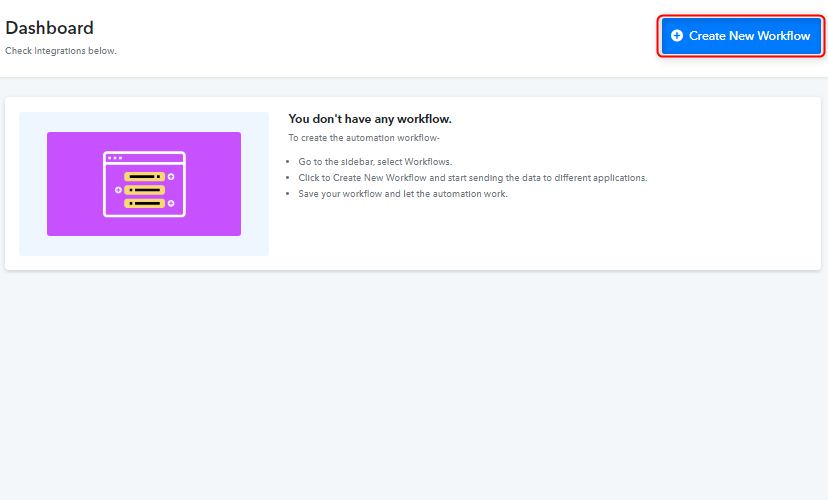
Start with a New Workflow to Integrate Elementor Forms with Google Sheets

Start with creating a workflow for your project by pressing the ‘Create New Workflow’ button.

(b) Name the Workflow
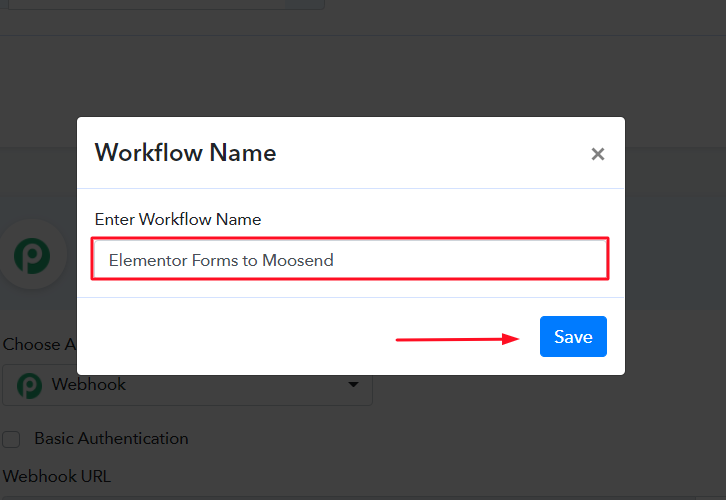
Name the Workflow

The following step is to add the name the workflow that is “Elementor Forms to Moosend”. Yet, you can always change the name of your workflow whenever you want to as per your needs.

Step 4: Setting Trigger to Integrate Moosend with Elementor Forms
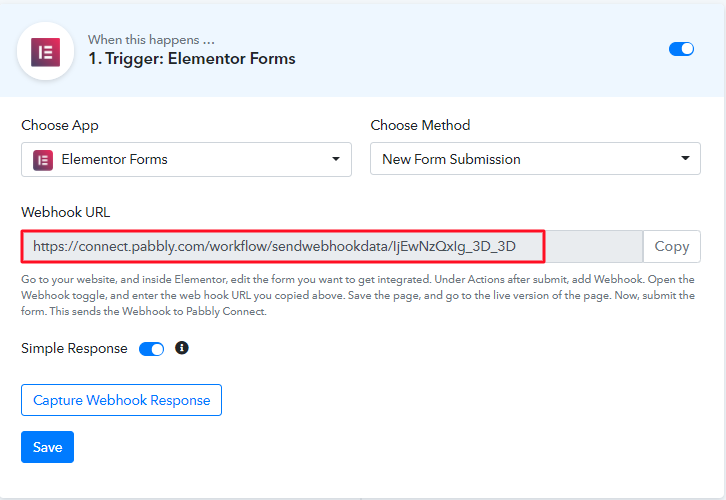
Copy the Webhook URL

After the workflow is created, now you need to choose the application which you want to integrate, i.e, “Elementor Forms”. Then, simply copy the webhook URL. Using this trigger, now we can start the process of automation & integrated the first service with Pabbly Connect. Subsequently, just select the app that you want to integrate, in this case, i.e, Elementor Forms.

Step 5: Paste the Webhook URL in Elementor Forms

The next step is to paste the copied Webhook URL in your form builder dashboard and to do so, you need to first log in to the  Elementor Forms.

(a) Click on “Action After Submit”
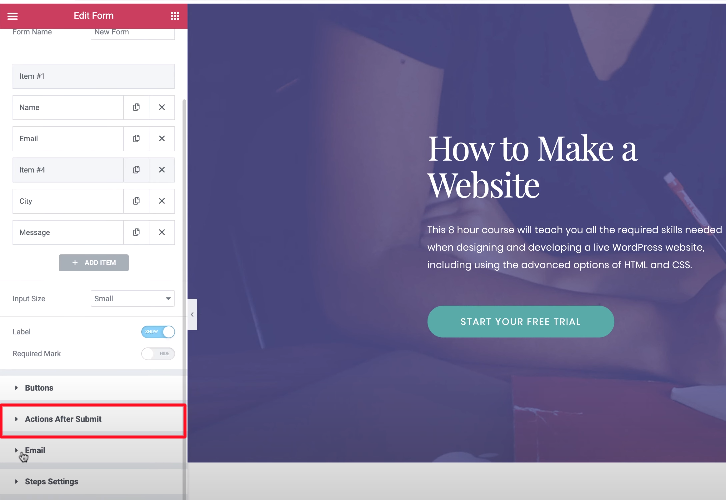
Click on "Action After Submit"

After entering the Elementor Forms dashboard, you need to create a form from scratch. And once the form is created, just hit the “Action After Submit” setting of the form.

(b) Select Webhook Option & Paste Webhook URL
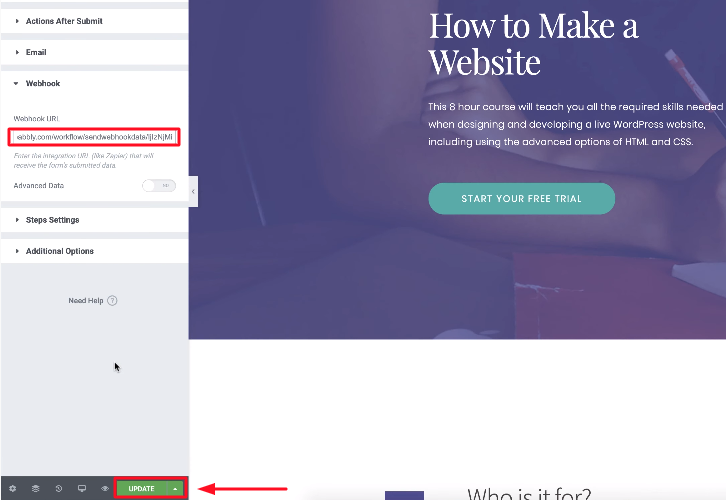
Select Webhook Option & Paste Webhook URL

After that, you need to search the webhook option by typing in the search box and then click on the Webhook option. Once the webhook is opened, now you have to paste the copied URL. Then, just simply click on the “Update” button. Now, its time to test the form, and to do so you need to fill the details of the form that you have recently created.

Step 6: Test the Submission in Pabbly Connect Dashboard
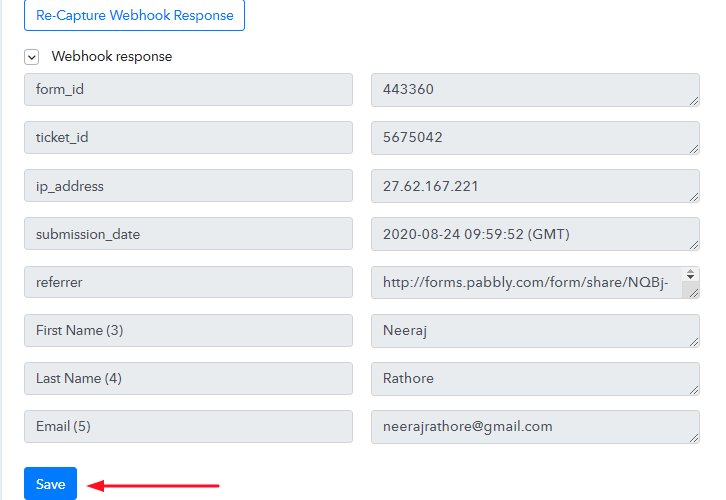
Test the Submission in Pabbly Connect Dashboard

Once you fill out the form details your entry will appear in the “Pabbly Connect” dashboard. After clicking on the button “Capture Webhook Response”. Then, once it catches all the details of the form, simply click on the “Save” option.

Step 7: Set-up an Action to Integrate Elementor Forms & Moosend

Once the trigger is all set & working as expected, now its time to start defining an action for completing the Pabbly Subscription Billing & Moosend integration.

(a) Add an Action
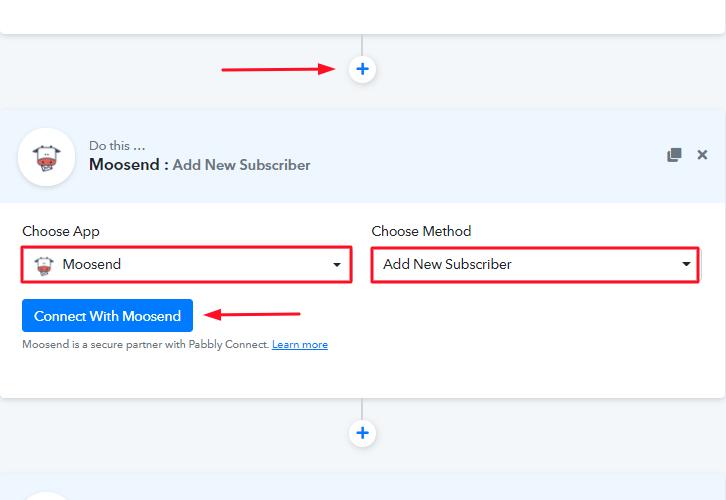
Add an Action

First of all, click the ‘+’ button and choose an app for integration here i.e, ‘Moosend’ from the drop-down list. After making a choice for the app to integrate, make sure for the method to be as ‘Add New Subscriber’. Then simply hit the ‘Connect to Moosend’ button available which will slide open the window from the right side, asking for an API key.

 (b) Copy Moosend API Key
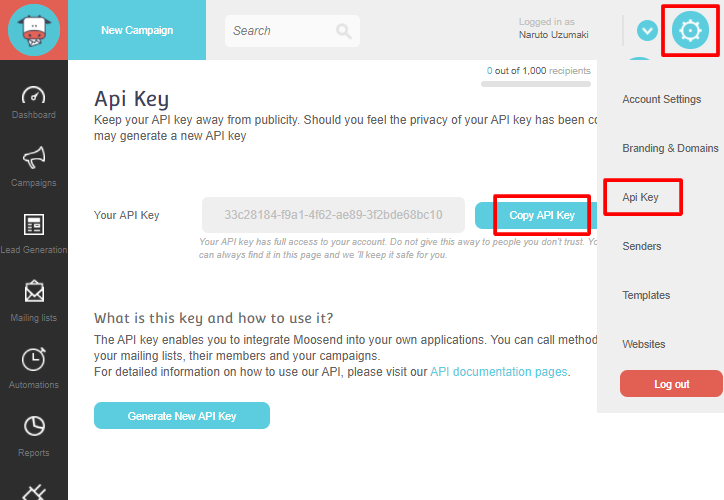
Copy Moosend API Key

In order to get a Moosend API key,  you need to go to your Moosend account. After that, just click the gear icon on the top-right corner, a drop-down menu will open up. Now, select the ‘API Key’ option from the list & a page containing API key will open up. Ultimately, press the ‘Copy API Key’ button and the key will get copied.

(c) Paste the Moosend API in Pabbly Connect Action
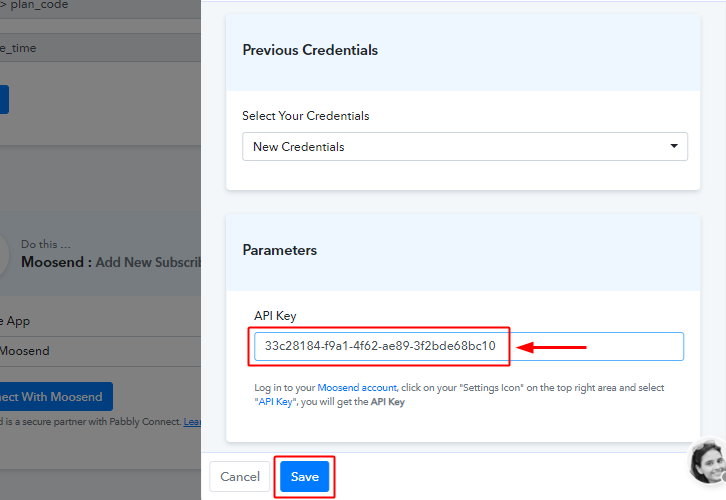
Paste Moosend API

Return to the Pabbly Connect and paste the copied key in the API key text area.

Step 8: Fill up All the Fields
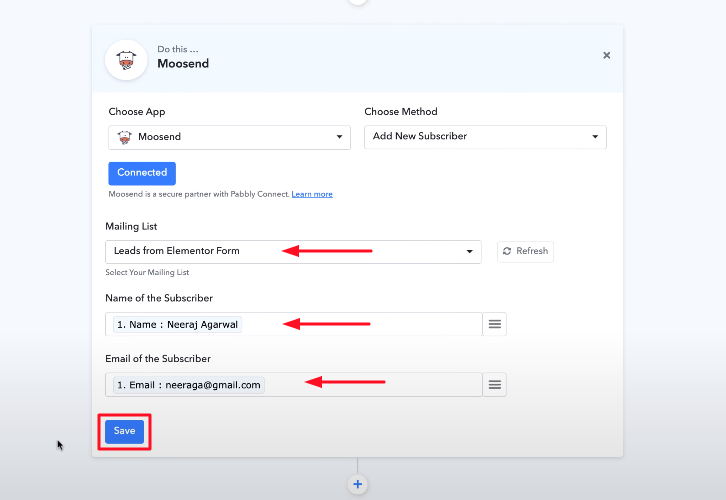
Mapping the Keys & Values

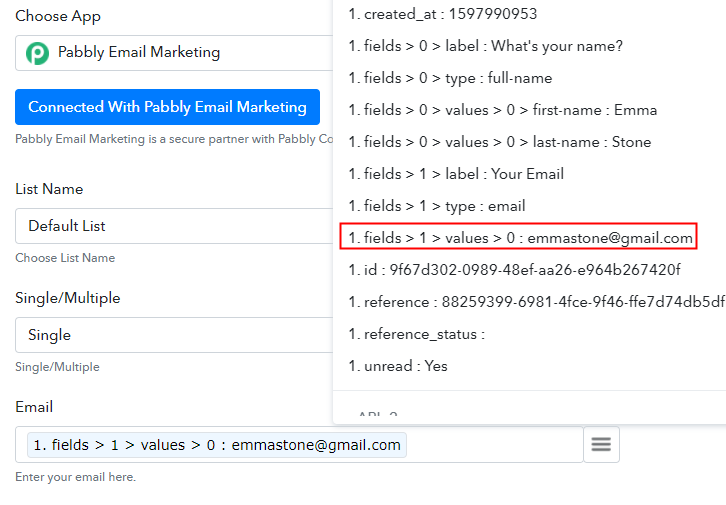
In this step, you need to map the response by selecting the values you want to send to the Moosend account. Just map the response and hit the “Save” button.

Step 9: Send Test Request to Moosend
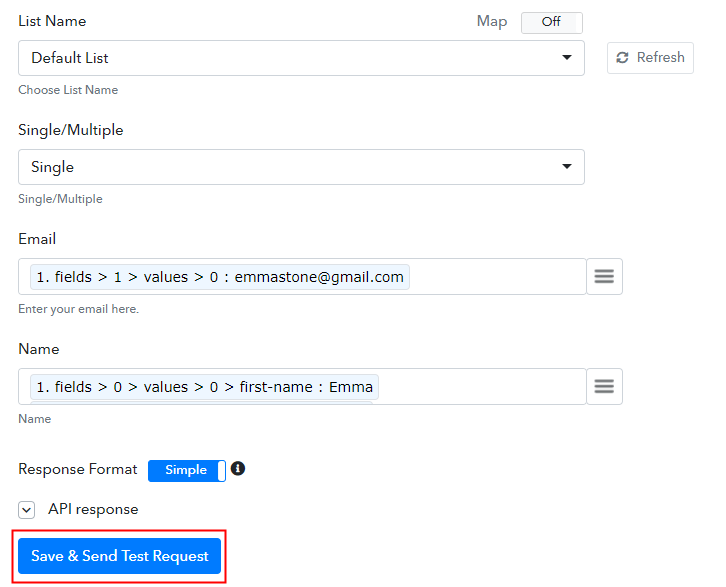
Send Test Request

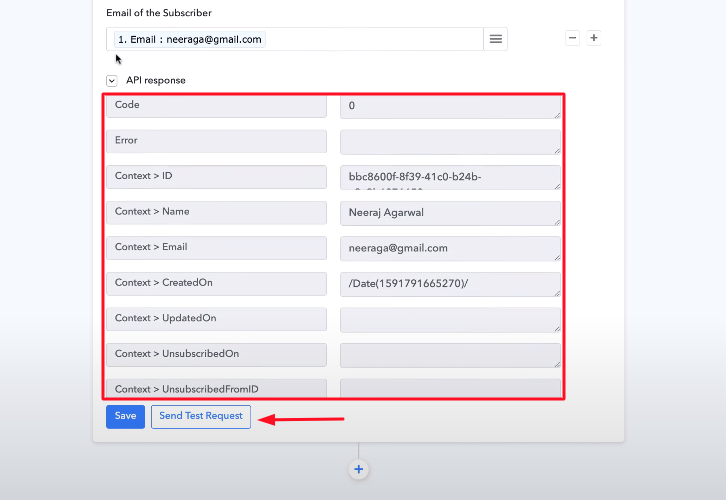
Once you click on the save button, you will see a button stating “Send Test Request”. Just click on that button to send the test request to Moosend. And once the request is send, you can see the API response that has been captured in the image.

Step 10: Check Moosend
Check Moosend

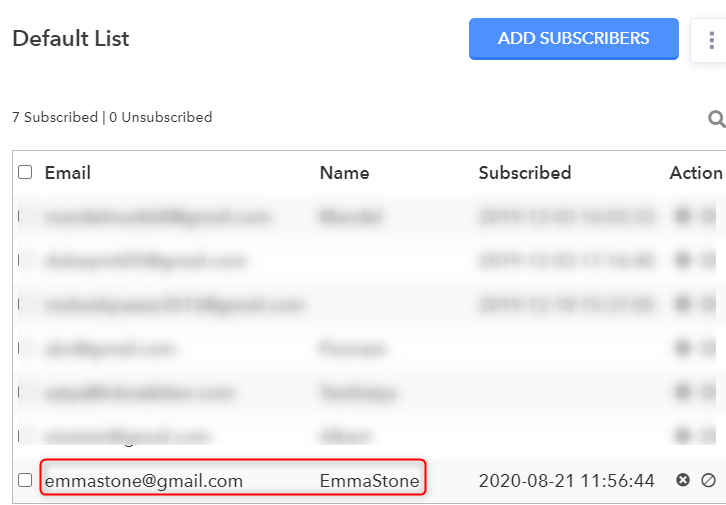
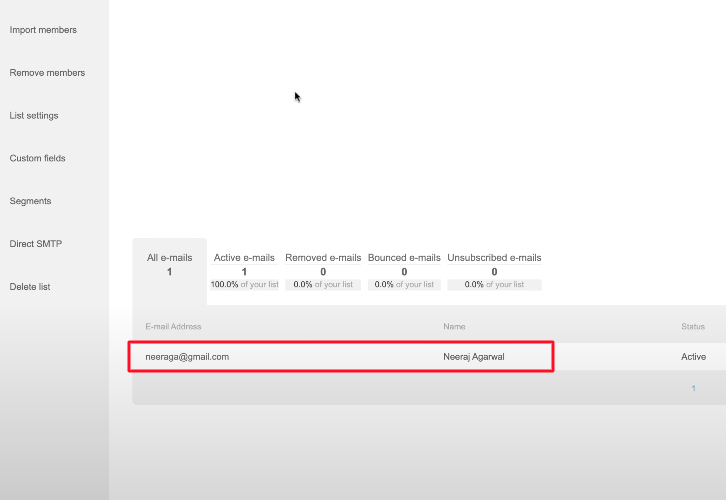
Now, go back to Moosend and refresh the page. Voila! all the details are now visible on Moosend. FYI, you only have to do this procedure once and now whenever someone is going to fill the Elementor Form, you will get the data directly on Moosend all because on Pabbly Connect integration.

Conclusion –

There you Go! Now you know all the steps that you need to follow for integrating Elementor Forms with Moosend. So, what are you waiting for? Go ahead and integrate your Elementor Forms with Moosend using Pabbly Connect and save yourself from all the hassle of manual work. Besides, if you have any queries or suggestions, don’t forget to write it in the comment section below. We will get back to you as soon as possible.
You May Also Like to Read –

How to Integrate Instamojo to ActiveCampaign Using Pabbly Connect

How to Integrate Instamojo to ActiveCampaign Using Pabbly Connect

In this article, we are going to integrate Instamojo to ActiveCampaign. Instamojo is an online payment software using which you can sell different products online and ActiveCampaign is an email marketing service. And we’ll be connecting these to application together using Pabbly Connect so that, whenever a sell happens in Instamojo the information will be automatically transferred to ActiveCampaign in real-time.

How to Integrate Instamojo to ActiveCampaign Using Pabbly Connect

Pabbly Connect will work as a switch in between these two services. Moreover, it is capable of creating an unlimited number of workflows, apply formatters, filters, routers etc to send or receive data to various integrated services. You can also make multi-step calls & set-up multiple triggers and action in minutes.

So, let’s get started with the step by step procedure to integrate Instamojo to ActiveCampaign using Pabbly Connect.

Step 1: Sign up to Pabbly Connect

Sign Up

Firstly, visit the Pabbly official website and click on the ‘Sign-Up Free‘ button. On the signup page, either use your existing Google account or manually fill out the registration form details to get in.

Try Pabbly Connect for FREE

Step 2: Access Pabbly Connect

Select Connect

Once you successfully sign up, click on the ‘Access Now’ button next to the Pabbly application ‘Connect’.

Step 3: Create a New WorkFlow

(a) Click over the Create New Workflow Button

Create New Workflow

Start with creating a workflow to integrate Intsmojo to ActiveCampaign and hit the ‘Create New Workflow’ button.

(b) Name the Workflow

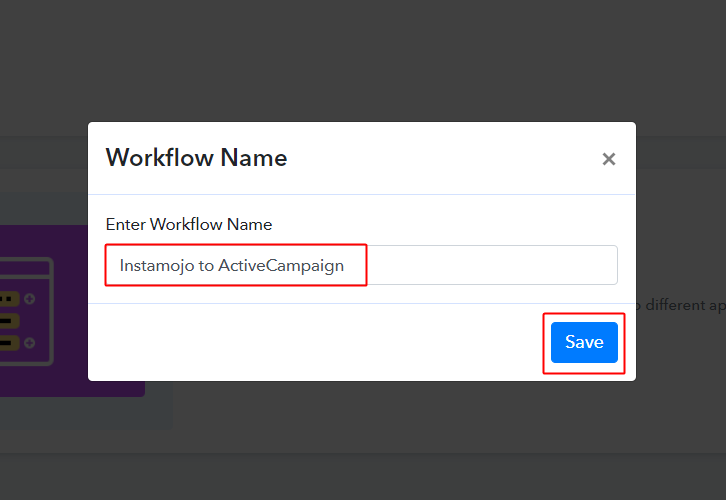
Instamojo to ActiveCampaign

Name the Workflow as per your need (for instance: Instamojo to Active Campaign’) and hit the ‘Save’ button.

Step 4: Set-up A Trigger to Integrate Instamojo to ActiveCampaign

(a) Select Application to Integrate as Instamojo

Setup Trigger Instamojo

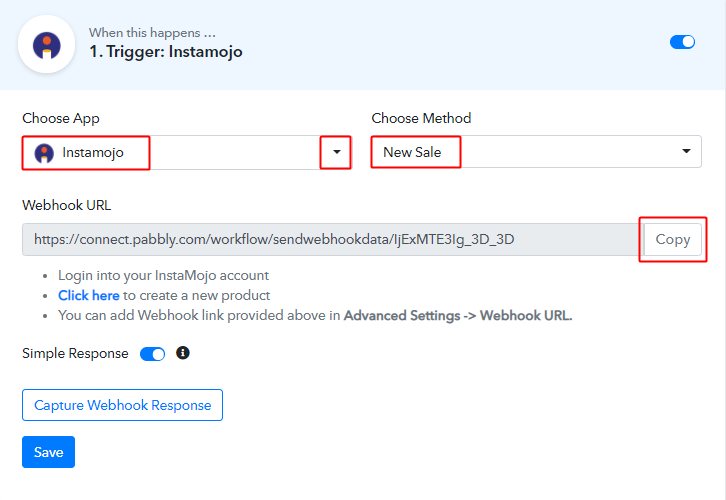
When you save a workflow after naming it, a trigger window will open up asking for setting up a trigger condition. Select the app to integrate as Instamojo from the ‘Choose App’ field from the drop-down.

Make sure the method is ‘New Sale’ here.

Finally, copy the Webhook URL by clicking the button named ‘Copy’.

(b) Go to your Instamojo Account > Add Product

Instamojo Add Product

Now, to complete setting up the Instamojo trigger, you must paste the copied Webhook URL (from Pabbly Connect) in an Instamojo product.

For doing this, you must have a product. If you already have a product then simply edit it.

And if you haven’t created any product yet then go to your Instamojo account dashboard & click the ‘Add Product’ button.

(c) Fill Up the Product Details

Instamojo Product Details

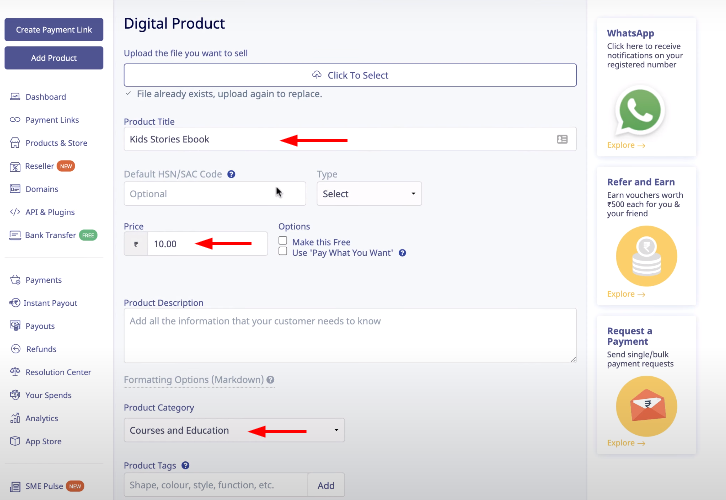
Now, fill in the product details such as the product title, its price, product category, product image etc.

(d) Paste the Copied URL on Instamojo

Paste Webhook URL Instamojo

As all the required product information are filled until now, we can move forward the integration.

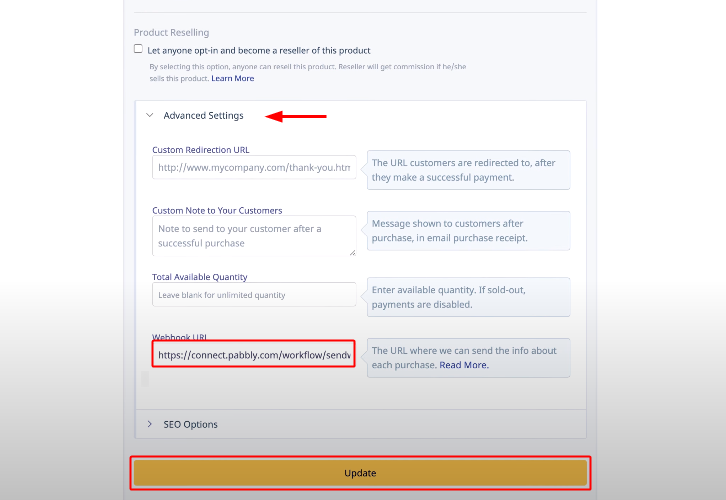
So, click on ‘Advanced Setting’ available on this same page and paste the copied Webhook URL (from Pabbly Connect) in the field named as ‘Webhook URL’.

Lastly, save the product settings.

Step 5: Make a Purchase to Test the Trigger’s Working

To test whether the trigger that we just set-up is working as expected or not, we can make a purchase. For this, follow these steps.

(a) Copy the URL of the Product Page

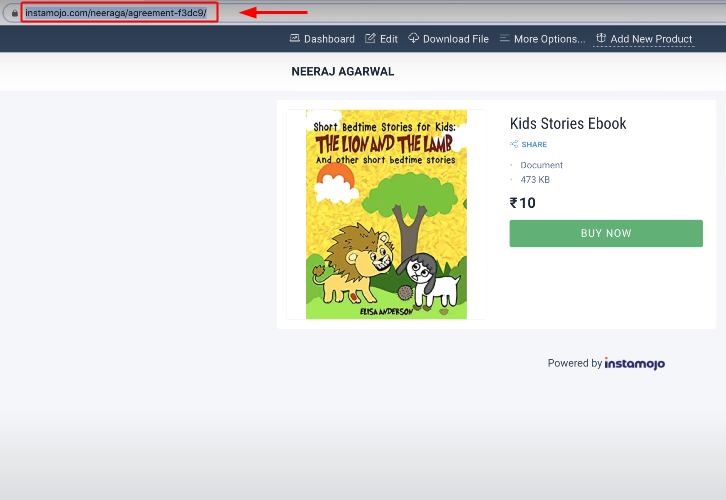
Copy Checkout Page URL Instamojo

Make sure whether the product link is working properly.

For this, copy the product URL from the address bar of your browser.

(b) Paste the Copied Product Page URL on Incognito Window

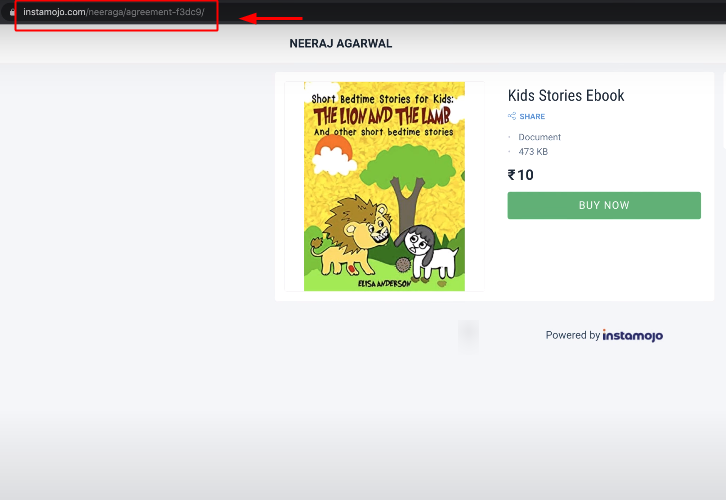
Paste URL on Incognito

Now, paste the copied product URL in an Incognito window.

If the product is visible the link is working fine else there is some error in creating the product.

(c) Go Back to Pabbly Connect & Capture Webhook Response

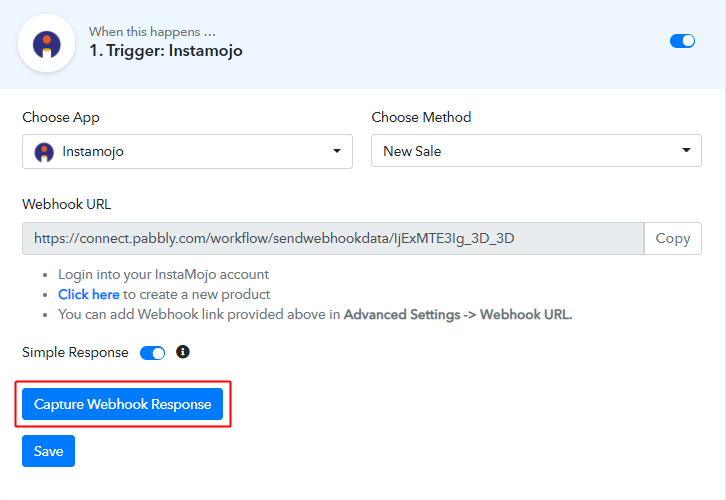
Capture Webhook Response of Instamojo

Now, go back to the Pabbly Connect trigger window and hit ‘Capture Webhook Response’ button.

This is to alert the trigger for receiving the response.

(d) Click the Buy Now Button on Instamojo

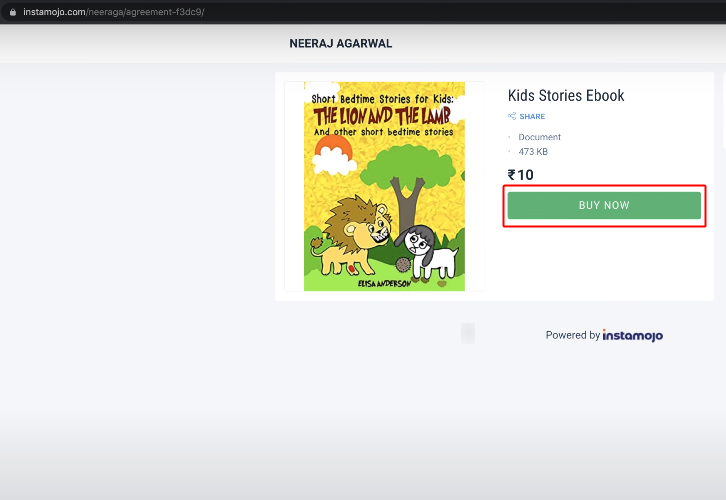
Make Purchase Instamojo

Next, you will have to make an actual payment for setting up the trigger. So, click the ‘Buy Now’ button of the created product.

(e) Make a Purchase

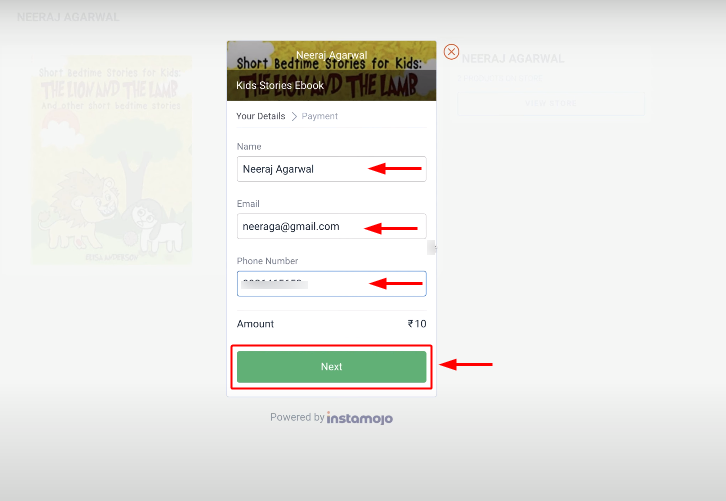
Make a Purchase

Fill out the entries in the checkout page and click ‘Next’.

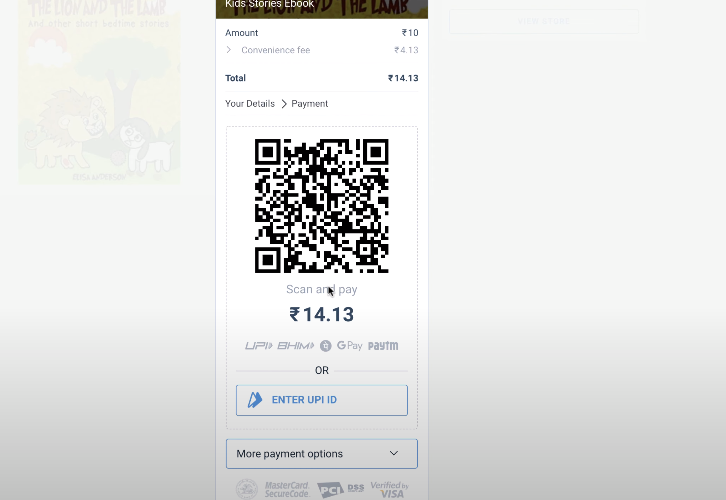
(f) Make Payment

Make Payment

Complete the purchase as directed by Instamojo.

(g) Check the Payment Success

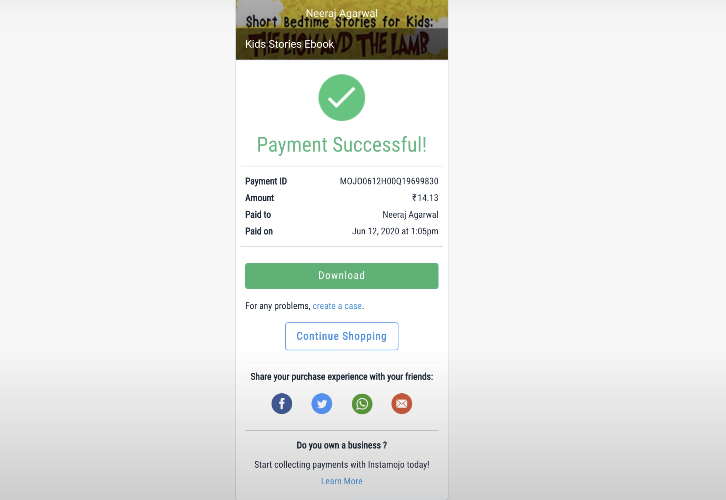
Payment Success

Check the successful payment response after your purchase.

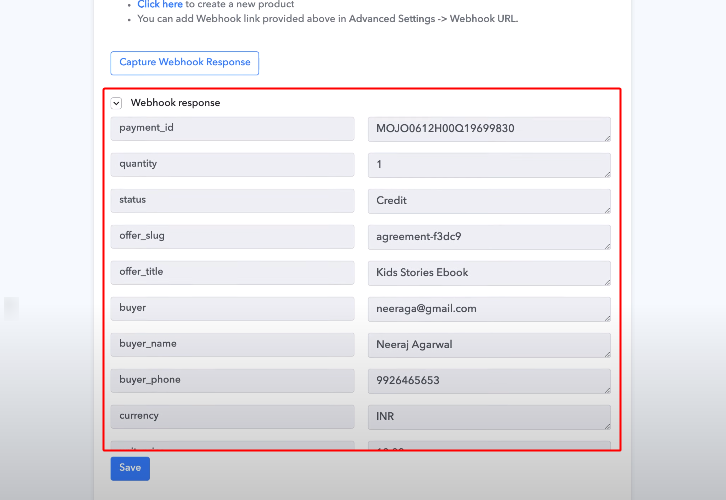
(h) Check the Webhook Response

Observe Webhook Response

Go back to the Pabbly Connect trigger and check your purchase response that has been recorded.

Step 6: Set-up an Action to Integrate Instamojo & ActiveCampaign

Up to step 5, our trigger condition is ready and working perfectly as expected. And from now on we can start working on the action step.

(a) Select Application to Integrate as ActiveCampaign

Setup Action ActiveCamapign

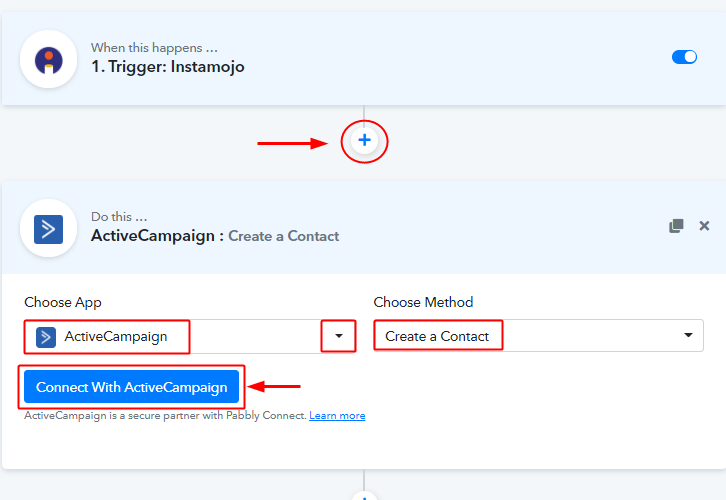
First, click the plus (+) button that is present at the button of your trigger.

In the action window, select the app to integrate as ActiveCampaign from the ‘Choose App’ field drop-down.

Make sure the method here is chosen as ‘Create a Contact’.

And hit the ‘Connect with ActiveCampaign’ button lastly.

(b) Copy the ActiveCamapign API Key

Copy Active Campaign API Key

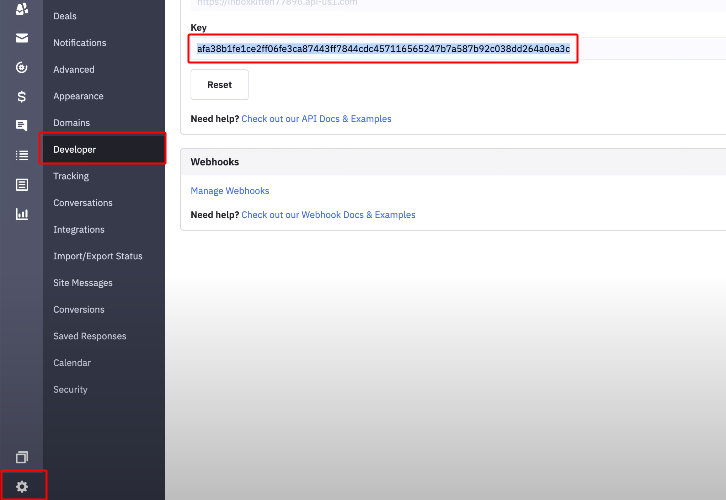
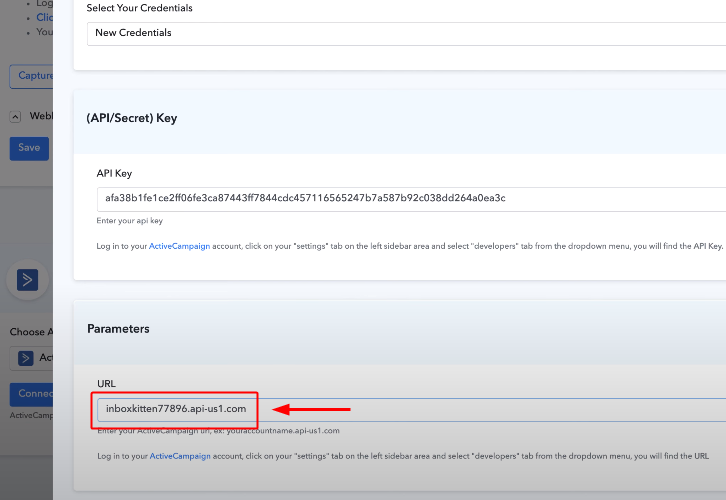
To complete the ActiveCampaign integration you must bring the API Key and URL from ActiveCampaign and paste them in Pabbly Connect action step.

For this, first, go to your ActiveCampaign account and click the gear icon (or settings) available at the bottom left corner with a tooltip ‘Settings’.

After clicking the setting button another menu opens up. Hit the ‘Developer’ option from the available menu options.

Lastly, manually select and copy the API ‘Key’ mentioned in here.

(c) Paste the Copied ActiveCampaign API Key under Pabbly Connect

Paste ActiveCampaign API Key in Pabbly Connect

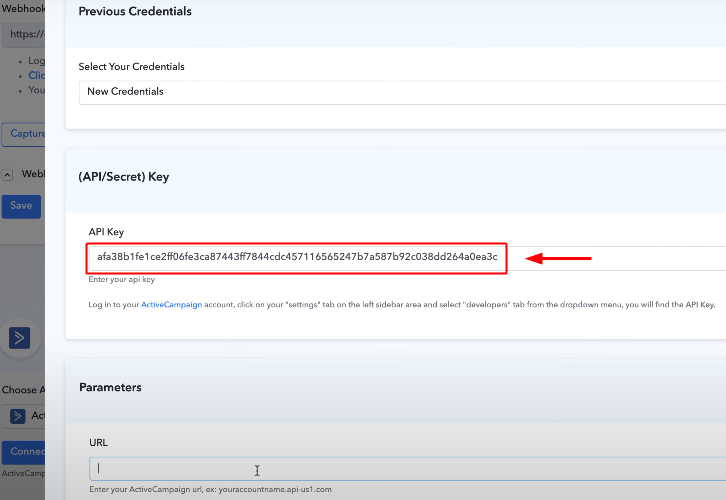
Come back to the Pabbly Connect ActiveCampaign action integration page and paste the copied API Key under the field named ‘API Key’.

(d) Copy the URL form ActiveCampaign without https://

Copy URL ActiveCamapign

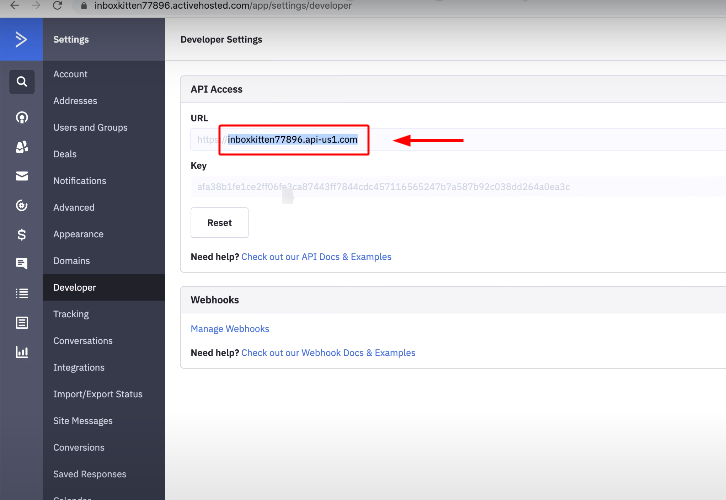
Then, go back to ActiveCampaign and copy the URL given above the key.

Remember, don’t copy the ‘https://’ part from the URL.

(d) Paste ActiveCampaign API URL in Pabbly Connect Action

Paste ActiveCmapign API URL in Pabbly Connect Action

Now, come back on Pabbly Connect and paste the copied URL under the field named URL.

(e) Save All the Settings

Save ActiveCampaign Integration Settings

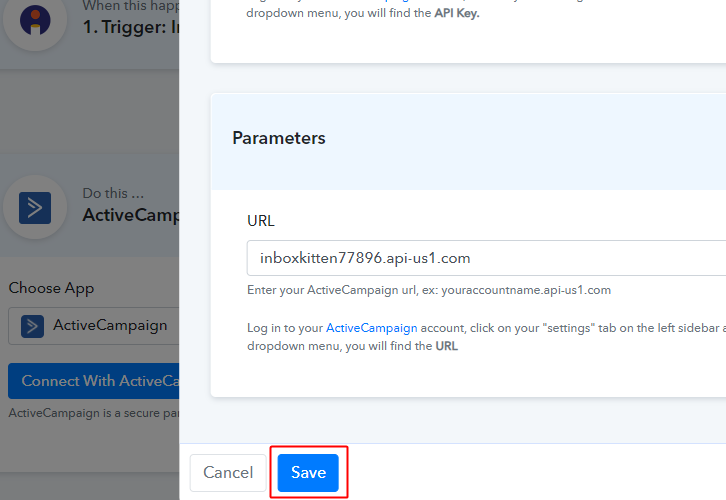
Finally, click the ‘Save’ button to save the settings that you just did.

Step 7: Map the Values

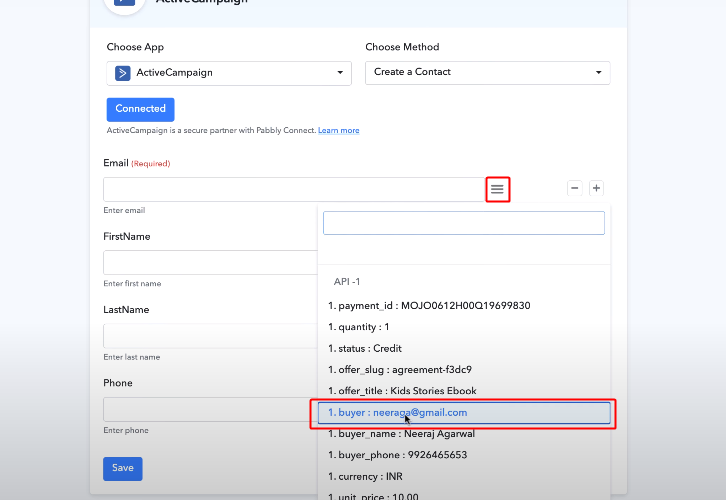
Once the ActiveCamapign integration is done perfectly, the action step starts showing the field values to carry further. You can map the values from your Instamojo response to send to ActiveCampaign.

(a) Map the FirstName

Map the Values

Click the menu icon (three verticle line) next to a field and select the respective value from the response options in the drop-down.

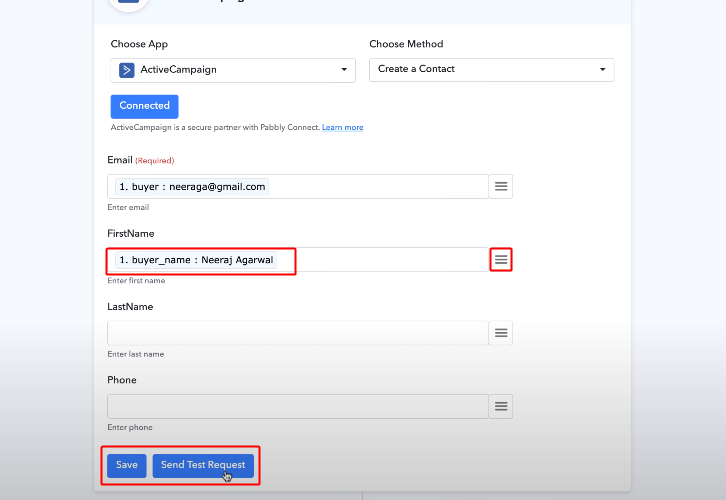
Similarly, map all the other field values carefully.

(b) Save the Action

Save & Send Test Request

After mapping all the keys and values that you want to send to ActiveCamapign, click the ‘Save & Send Test Request’ button.

You can check the response below your request within some time.

Step 8: Check the Final Response in your ActiveCampaign Account

Observe the Response in ActiveCamapign Acoount

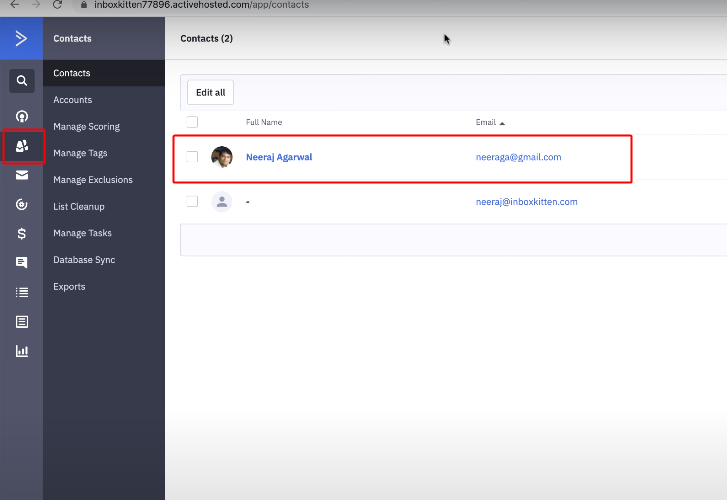
To check the response of the complete integration set-up that you just did, head back to your ActiveCampaign account and click on ‘Contacts’ in the verticle menu. Check the response of the integration, you can see all the values that you mapped are visible in here.

This means the integration is working as expected & will work the same for all further sales on the Instamojo product.

Wind-Up

Well, this is ‘How to integrate Instamojo to ActiveCampaign using Pabbly Connect. Consequently, after completing this procedure, you will end up getting sales data from Instamojo to ActiveCamapign smoothly.

For any further queries, do comment below.

You May Also Like to Read:

How to Add Form Data to Google Sheets Easily Using Pabbly Connect

How to Add Data to Google Sheets Using Pabbly Connect

Entering data by hand (typing it in) is likely the most common and least efficient way to get data into a spreadsheet. This manual process of entering data implies you to regularly interact with spreadsheets and this is where your data is kept.

How to Add Data to Google Sheets Using Pabbly Connect

Manual input is betters preferable to data that doesn’t update as frequently so we did not dive into this process here. Instead, we’ll focus on other automated tools or real-time methods of getting data into spreadsheets. One of them is Pabbly Connect, you can automatically create and edit spreadsheets with data. When you put Pabbly Connect to work with Google Sheets, you can automate all of your spreadsheet tasks to save you time.

Basically, Pabbly Connect is an integration platform that automates all your integrations tasks without any manual efforts. With this, you can create unlimited multi-step calls for connecting unlimited applications in your workflows at the cheap rates. Apart from this, it is the only software that offers advanced features like instant triggers, formatters, filters, path routers, etc even with its basic plan without any restrictions.

How to Add Data to Google Sheets Using Pabbly Connect (step by step)

Now, let’s take a look at how to add data to Google sheets using Pabbly Connect.

Step 1: Sign-up to Pabbly Connect

Sign Up

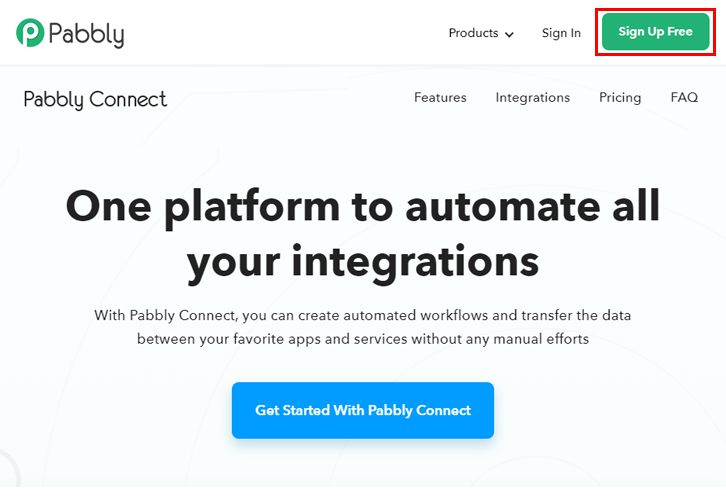
Firstly, browse the Pabbly Connect website and click on the Signup button. Here, you can either fill your account manually or sign-up through your Google account.

Try Pabbly Connect for FREE

Step 2: Access Pabbly Connect

Access Pabbly Connect

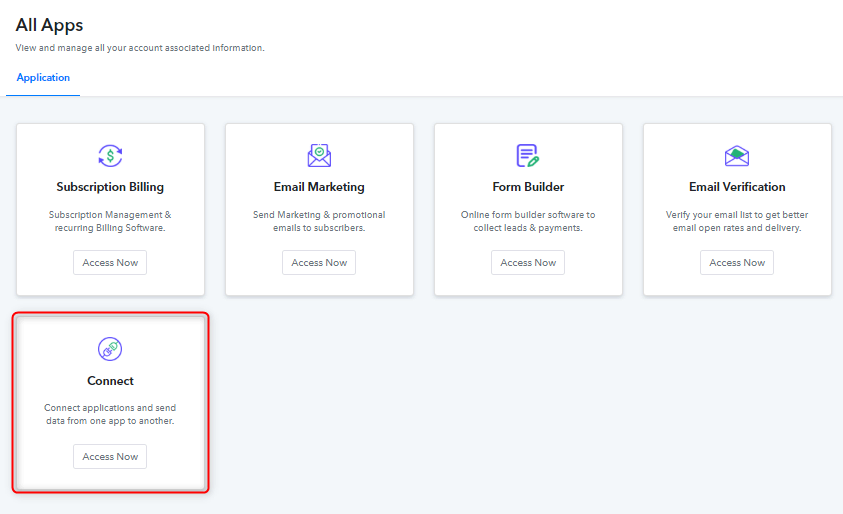
After signing-up to your account go to the “Connect” option and click on the “Access Now” button.

Step 3: Create a WorkFlow to Add Data to Google Sheets

(a) Create New Workflow

Create New Workflow

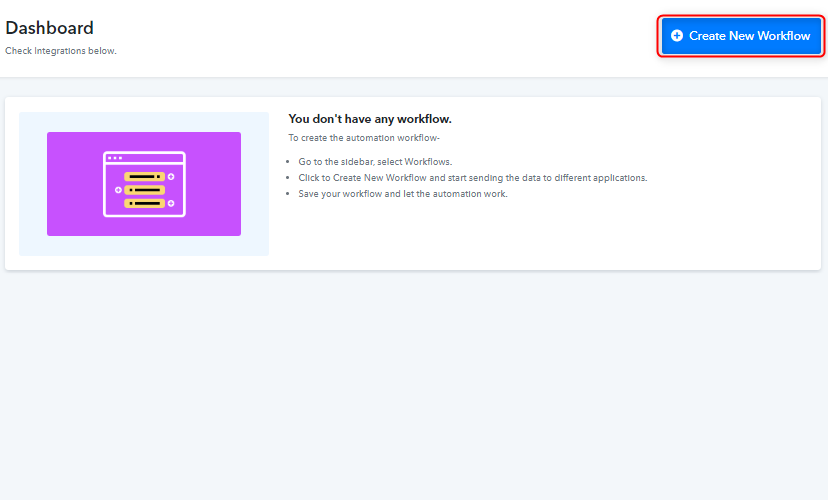
Let’s begin the process of creating a workflow to add data to Google sheets using Pabbly Connect by hitting the ‘Create New Workflow’ button.

(b) Name the Workflow

Name the Workflow - Add Data To Google Sheets

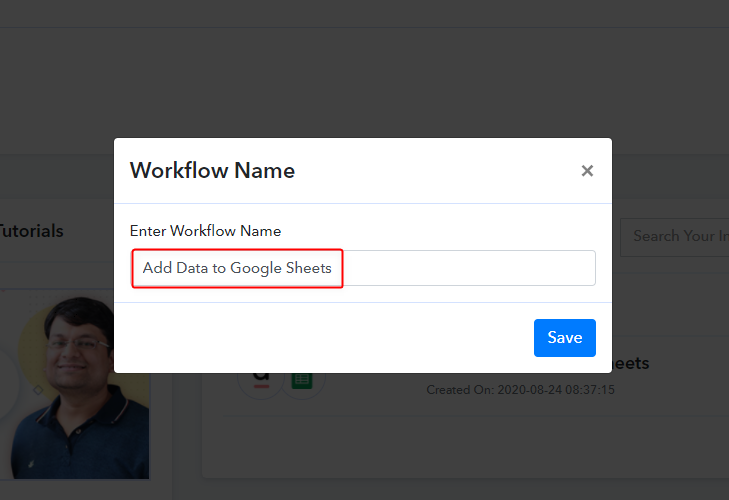
Now, named your workflow which in our case is “Add data to Google sheets.”

Step 4: Setting Trigger

After creating a workflow, you will have to select the application you want to integrate

(a) Select Application you want to Integrate

Setting Trigger - Add Data to Google Sheets

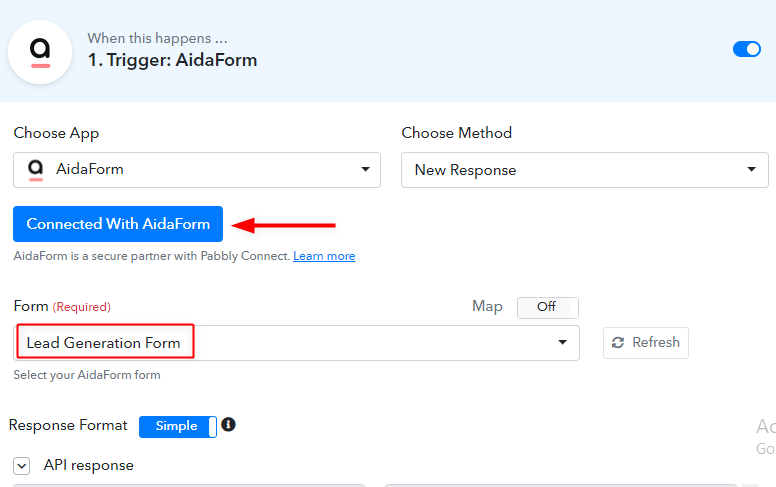
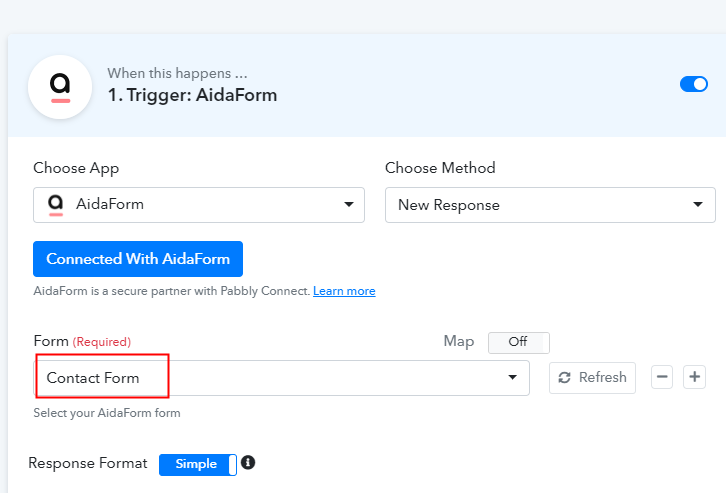
In this step, choose the trigger app whose data you want to add to Google Sheets. Here, we are using AidaForm. Next, connect your form with Pabbly Connect using the API key which is available in your app settings and select your form whose data you want to add in the Google Sheet.

(b) Save & Send Test Request

Save & Send Test Request - Add Data to Google Sheets using Pabbly Connect

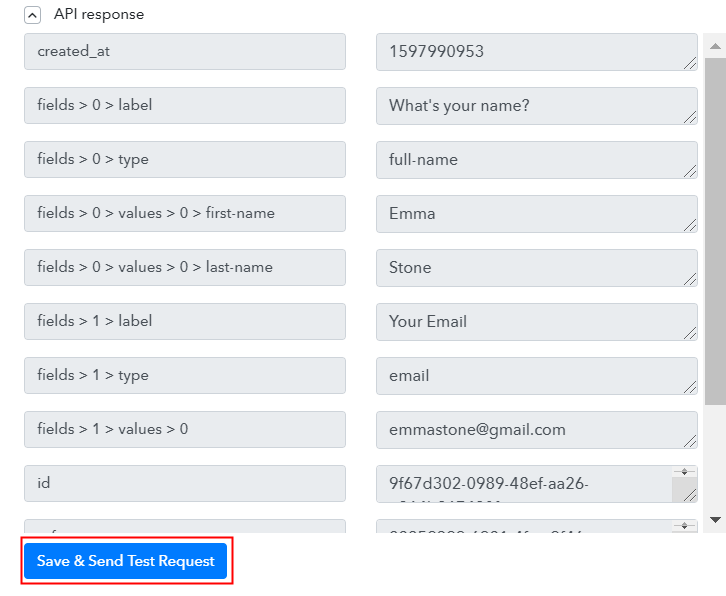
As soon as you filled your form the data is captured by Pabbly Connect. So click on the “Save & Send Test Request” button. It gives all the data which you can map directly inside the Google Sheet.

Step 5: Create New Spreadsheet to Capture Data

Create New Spreadsheet

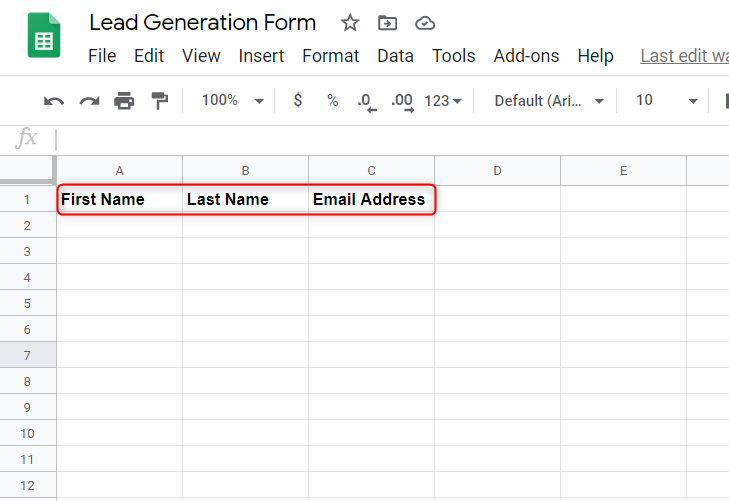
For capturing the data create new spreadsheet and add the header rows to push your form data inside Google Sheet.

Step 6: Setting Action

After setting a trigger, you will have to select the action for which you have to select the application you want to integrate.

(a) Select Application you want to Integrate

Setting Action

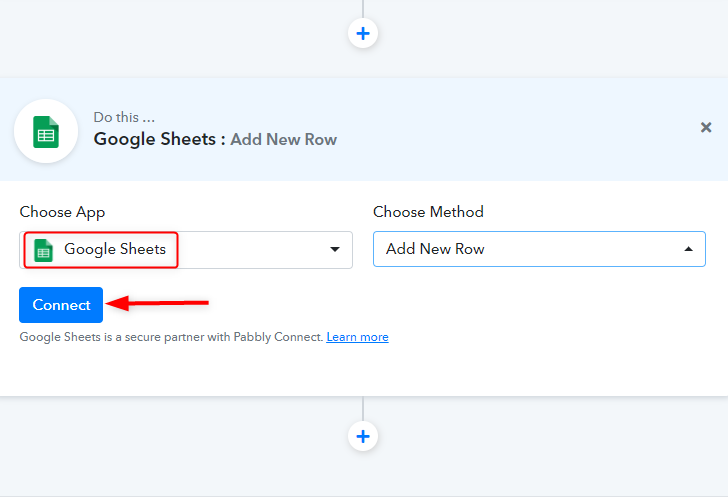
Here, click on the “+” icon to add an action for your trigger. Select “Google Sheets” from the drop-down list, choose the “Add New Row” option as a method, and hit the “Connect” button.

(b) Authorize Account

Authorize Account

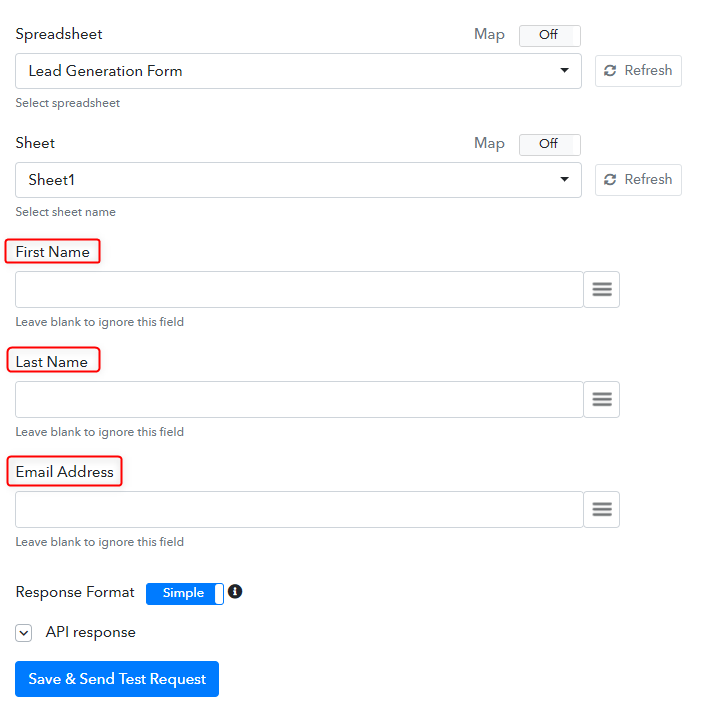
As soon as, you authorize your Google account and give permission to access files it automatically pulled spreadsheet headers in Pabbly Connect’s dashboard. Further, select the sheet in which you want to add data which in our case is “Leads Generation Forms”.

(c) Add Field Data

Map Data Module

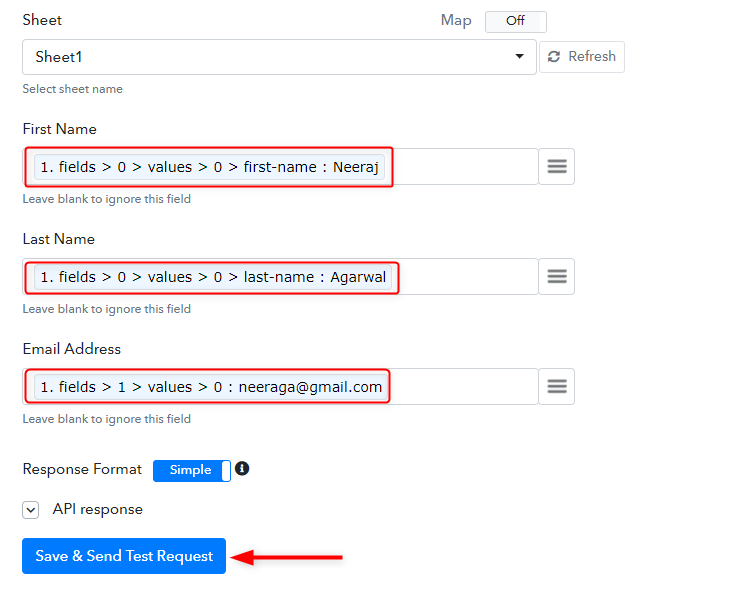
Now, click on the three-line symbol to map the data such as email with “Your Email Address” and name with “Your Name”. After, doing all the changes hit the “Save & Send Test Request” button.

Step 7: Check Test Data

Check Test Data

As soon as, you hit the send test request button data will appear on the Google sheet.

Wrapping Up

Hopefully, this article helps you to add the data to Google Sheets. You can get live data into Excel spreadsheet or a Google Sheet by using Pabbly Connect. All you have to do is follow all the above-mentioned steps and get almost any data into a spreadsheet.

You May Also Like To Read:

How to Send Facebook Lead Ads Data to Gmail Automatically

Send Facebook Lead Ads Leads Data to Gmail Automatically

If you want to send all Facebook Lead Ads leads to a Gmail account automatically then we can tell you how. Well, all we need here is some kind of switch that can send data from one service to another.

In this article, we’re using Pabbly Connect as a switch between Facebook Lead Ads and Gmail. It allows you to automatically send information between these two apps within a few minutes. This way you will get an email as soon as a lead arrives.

Send Facebook Lead Ads Leads Data to Gmail Automatically

With Pabbly Connect you can easily set-up a trigger and its respective action. Here, we’ll simply set-ut a trigger on Facebook Lead Ads that whenever a lead arrives, take action to send an email instantly on your Gmail account.

Pabbly Connect allows you to create unlimited workflows with instant triggers and multi-step calls. Also, it allows you to set filters and route data smoothly.

Let’s get started with the step by step procedure to send Facebook Lead Ads data to Gmail automatically.

How to Send Facebook Lead Ads Data to Gmail Automatically (step by step)

Step 1: Sign up to Pabbly Connect

Sign Up

Firstly, visit the Pabbly official website and click on the ‘Sign-Up Free‘ button. On the signup page, either use your existing Google account or manually fill out the registration form details to get into the software.

Step 2: Access Pabbly Connect

Select Connect

Once you successfully sign up, click on the ‘Access Now’ button next to the Pabbly application ‘Connect’.

Step 3: Create a New WorkFlow

(a) Click over the Create New Workflow Button

Create New Workflow

Start with creating a workflow to send Facebook Lead Ads data to Gmail automatically and hit the ‘Create New Workflow’ button.

(b) Name the Workflow

Workflow Name Send Facebook Lead Ads Leads Data to Gmail Automatically

Name the Workflow as per your need and hit the ‘Save’ button.

Step 4: Set-up A Trigger to Send Facebook Lead Ads Data to Gmail

(a) Select Application to Integrate as Facebook Lead Ads

Set Trigger Facebook Leads to Send Facebook Lead Ads Leads Data to Gmail Automatically

After creating a workflow, you’ll be asked to set-up a trigger.

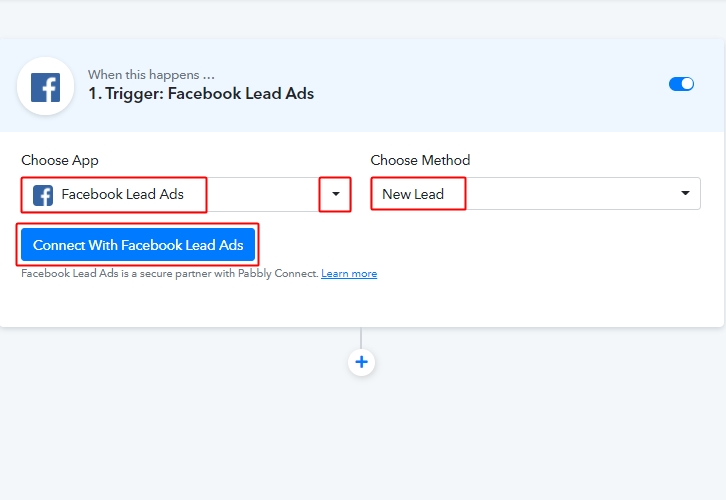
Select the application to integrate as Facebook Lead Ads.

The method as ‘New Lead’.

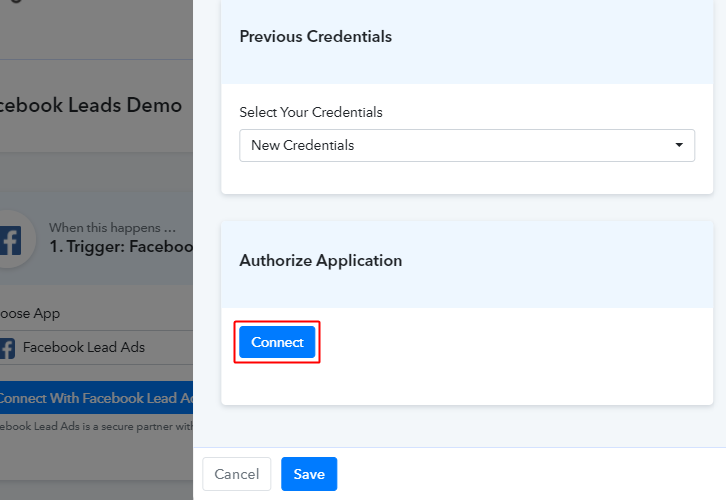
And hit the ‘Connect with Facebook Lead Ads’ button.

(b) Authorize the Facebook Account

Authorize Account

(c) Facebook Lead Ads Trigger Settings

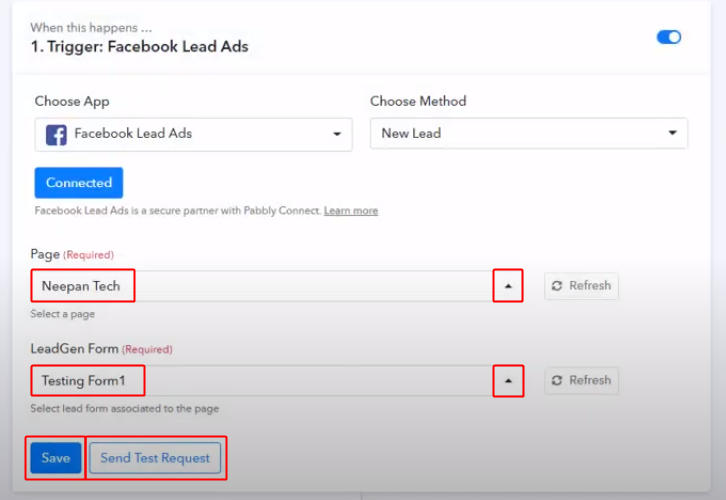
Facebook Lead Ads Trigger Settings

After authorizing the Facebook Lead Ads account, you need to fill out the page and lead form details.

Select a Page from the dropdown & also a Lead generation form too.

Then, hit the Save & Send Test Request button.

(e) Observe the Trigger’s Response

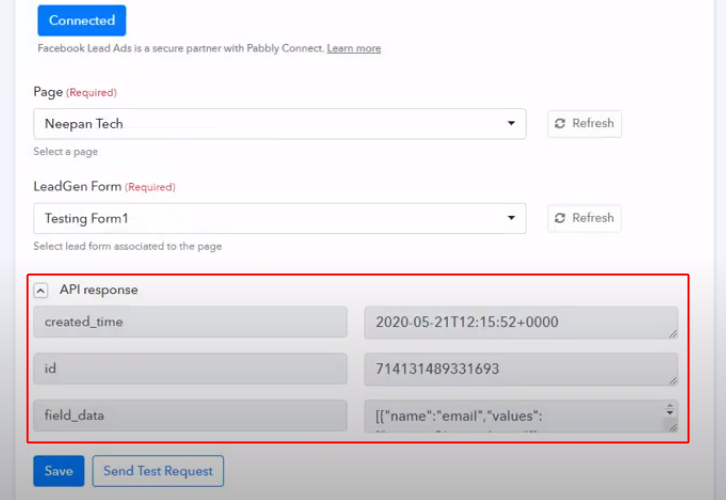
Observe Trigger Response

Observe the lead generation form data entries in the API response.

Step 5: Set-up an Action to Send Facebook Lead Ads Data to Gmail

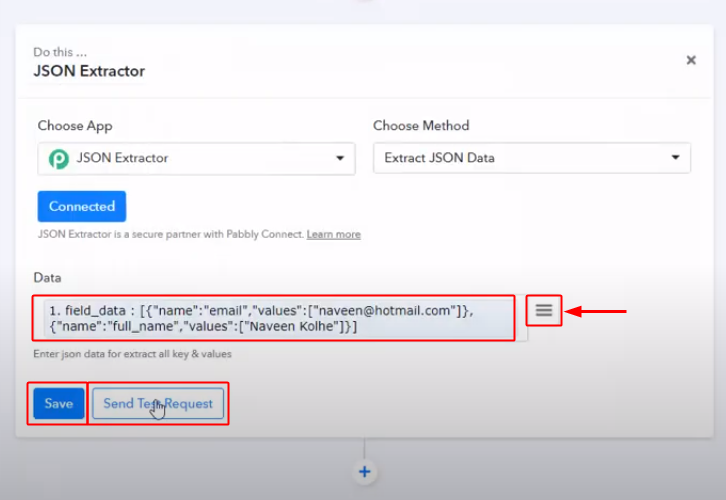
In the trigger step, you will see that the field data is in JSON format. So, to perform an action over the data the data should be in plain text format. So,  you must extract plain text from this JSON. And for this, we’ll need a JSON extractor.

(a) Integrate JSON Extractor to Extract Values from Response

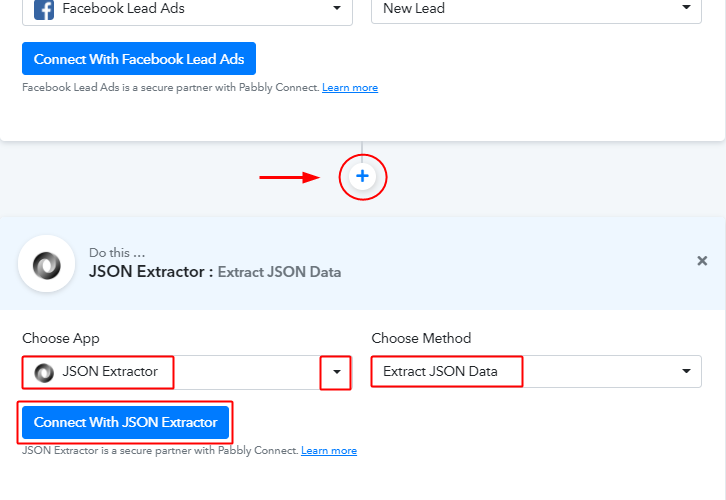
Integrate JSON Extractor

Click over the plus button next to the trigger window.

Select the app to integrate as ‘JSON Extractor’, the method as ‘Extract JSON Data’ and strike the ‘Connect with JSON Extractor’ button.

(b) Map the Response Value in JSON Extractor

Map Response Value to JSON Extractor

Now, map the data that you want to extract by clicking the three vertical lines next to the data field.

Then save and send a test request to extract the data.

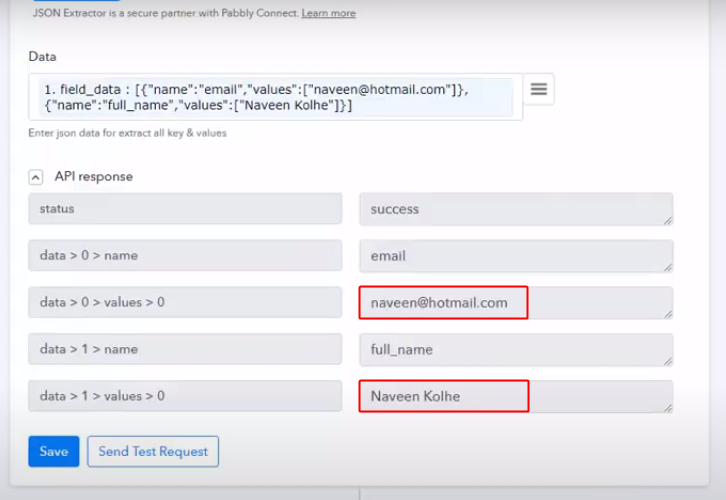
(c) Observe the Value After Extraction

Observe Extraction Response

Observe the JSON extraction response and you’ll see the data that was in JSON format in now available in plain text.

Note: As Pabbly Connect is upgrading very fast so it is possible that they there will be no use of an JSON extractor in future. So, observe the data in step 4 and if you found elements like [{” around your data then only follow step 5 otherwise, simply skip it.

Step 6: Send the Lead Data via Gmail

(a) Select the App to Integrate as Gmail

Integrate Gmail

To send the leads data, we can use Gmail or any other email marketing service. Here, I’m using Gmail to send emails to the leads.

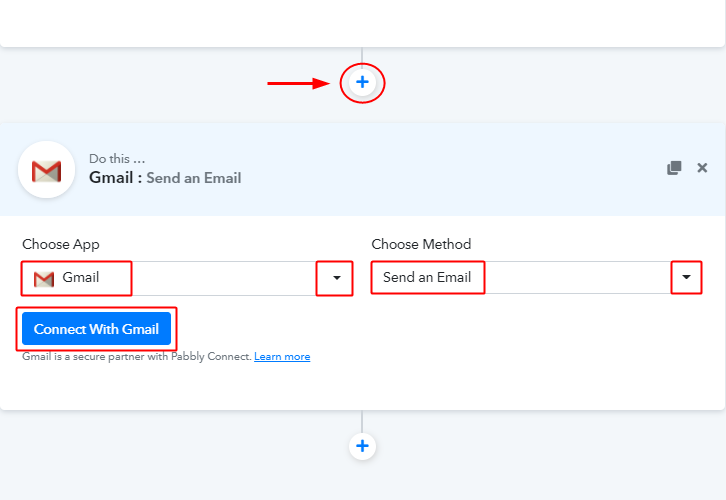
Firstly, click the’+’ button next to the JSON extractor window integration.

Select the app to integrate as Gmail from the drop-down. Check the method to be ‘Send an Email’ and hit the ‘Connect with Gmail’ button.

(b) Authorize the Gmail Account

Authorize Account

Just like the Facebook account authorization, you have to authorize the Gmail account too. As all the emails would be sent to your Facebook leads through this account.

(c) Send Email to the Captured Leads

Send Email to Lead

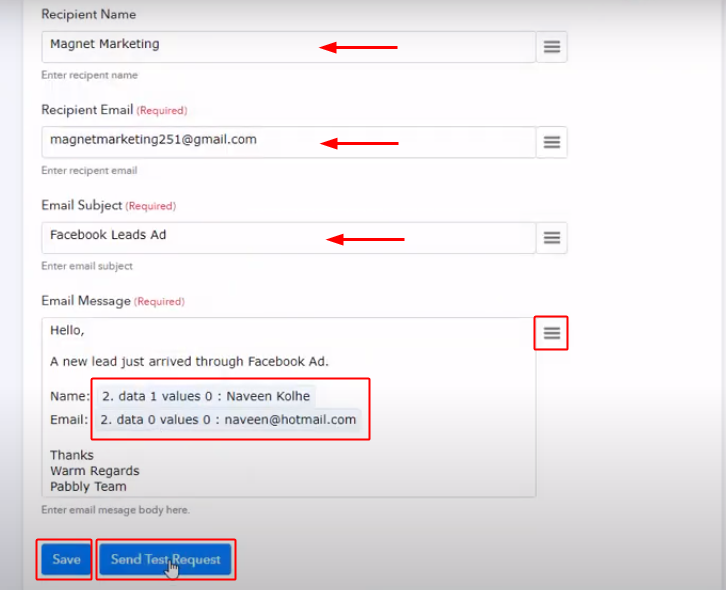
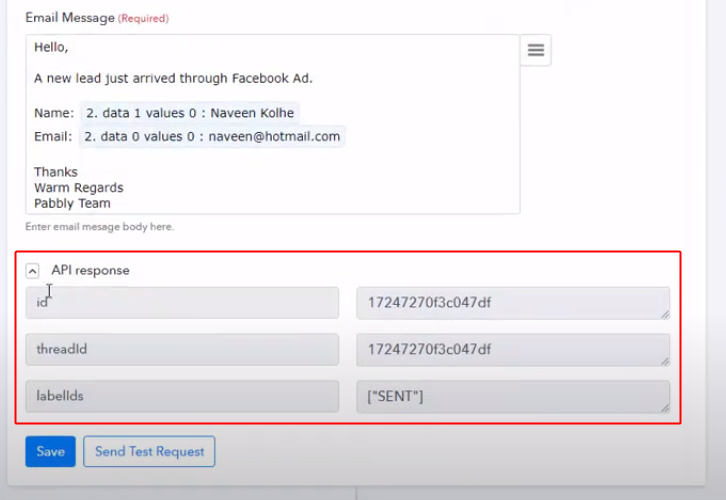
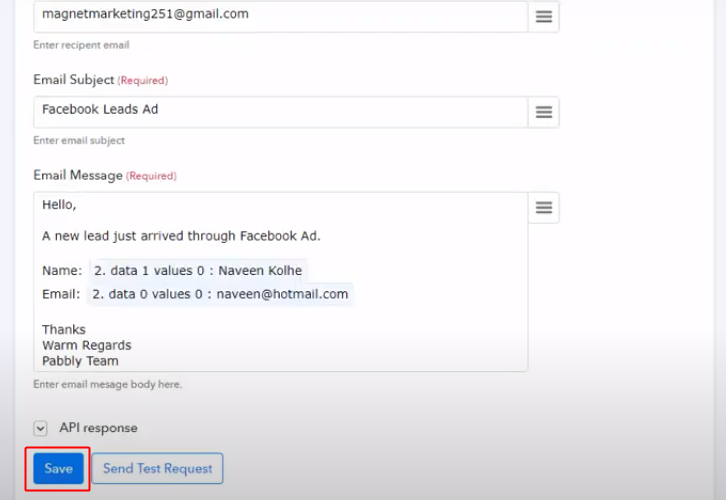
Once you authorize the Gmail account the system will ask you to fill out the email contents. Fill in the recipient’s name, recipients email, email subject & the email message. You can also use the data that you got from the API response such as the name, email etc.

When you are done with all the details, save & send a test request.

(d) Observe the Response for Sending Email to the Lead

Observe Email Sent Response to Send Facebook Lead Ads Leads Data to Gmail Automatically

(e) Check the Email Received in your Account

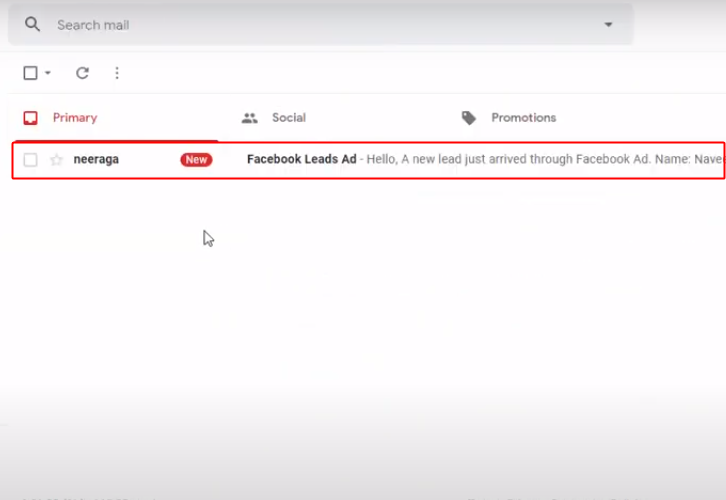
Email Received in the Lead's Account to Send Facebook Lead Ads Leads Data to Gmail Automatically

Step 7: Save the Response

Save the Response Send Facebook Lead Ads Leads Data to Gmail Automatically

As we can see, the workflow is working as expected. So, simply save the workflow. And all future Leads will automatically arrive at your Gmail from now on.

Wind-up

This was the entire procedure to send Facebook lead ads data to Gmail automatically. Just follow the simple steps as described in this article and you’ll end up receiving an email instantly as a lead arrives at your Facebook Leads Ads account.

I hope this has helped you! For any further queries comment below.

You May Also Like to Read:

How to Integrate Viral Loops with Automizy | Step by Step

How to Integrate Viral Loops With Automizy

Are you tired of updating every single referral entered in Viral Loops to your Automizy account manually? Then you don’t have to worry anymore as we have a perfect solution for your problems called Pabbly Connect. With the help of this software, you can integrate unlimited applications and automate your projects just like that.

How to Integrate Viral Loops With Automizy

Viral Loops is a viral and referral marketing platform, which is used to create campaigns for your projects by providing referral codes to invite people. Today we will be integrating Viral Loops with Automizy, an email marketing software with the help of Pabbly Connect. On this software, you can integrate any two applications and automate your entire workflow. With the help of this integration, whenever someone new will join your Viral Loops campaign, the data will be transferred automatically in your Automizy account.
Why Choose This Method Of Integration?

In contrast with other integration services-

  • Pabbly Connect does not charge you for its in-built apps like filters, Iterator, Router, Data transformer and more
  • Create “Unlimited Workflows” and smoothly define multiple tasks for each action
  • As compared to other services which offer 750 tasks at $24.99, Pabbly Connect proffers 50000 tasks in the starter plan of $29 itself
  • Unlike Zapier, there’s no restriction on features. Get access to advanced features even in the basic plan
  • Try before you buy! Before spending your money, you can actually signup & try out the working of Pabbly Connect for FREE

Sign Up To Pabbly Connect 

Aside from this integration, Pabbly Connect comes with many other helpful features such as unlimited automation workflows, fire unlimited triggers, and actions, choose unlimited applications that you want to integrate, and you can access all these features even with the free plan.

Hence, let’s not waste any more time and get started with the integration process.

Step 1 : Sign up to Pabbly Connect


Sign Up

Let’s begin the process by signing up for Pabbly Connect. Quickly fill in the details manually or sign-up via your Google account.

Try Pabbly Connect for FREE

Step 2 : Access Pabbly Connect


Select Connect

After completing the signup process, you will be redirected to the dashboard where you have to click on the Connect section to access Pabbly Connect.

Step 3 : WorkFlow for Viral Loops with Automizy Integration

(a) Create New Workflow

Create New Workflow

Start with creating a workflow for your project by clicking on the ‘Create New Workflow’ button.

(b) Name the Workflow for Viral Loops with Automizy

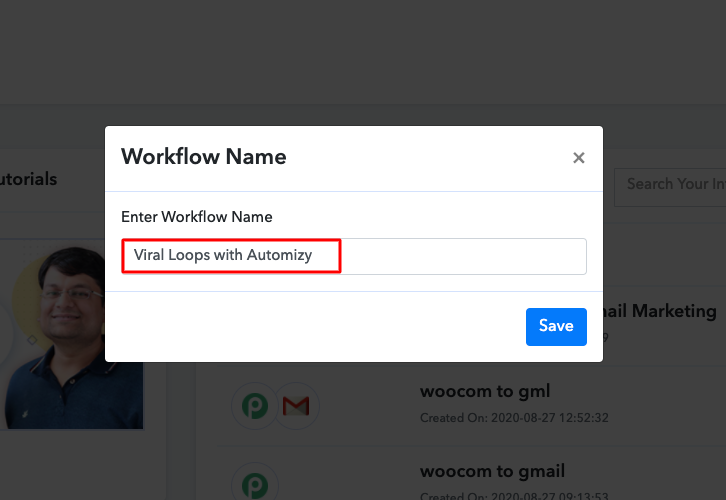
Name the Workflow

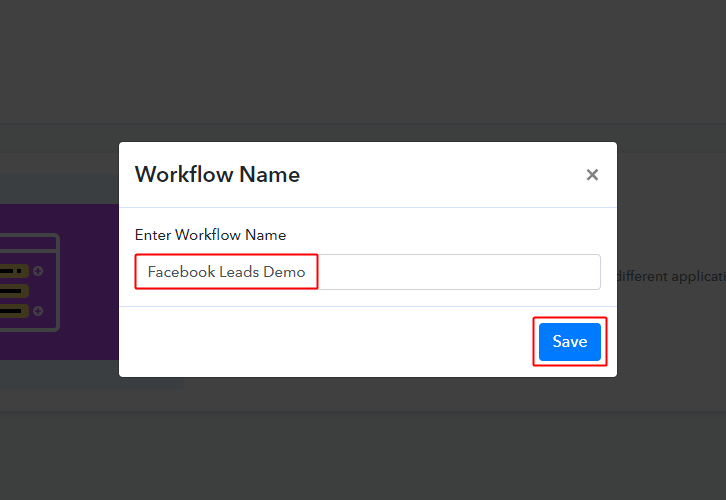
Next, you need to name the workflow just like in the above-shown image. I named the workflow as Viral Loops with Automizy, you can obviously name the workflow as per your requirements.

Step 4 : Setting Triggers for Viral Loops with Automizy Integration

As soon as you are done with creating a workflow, you will have to select the application you want to integrate. With the help of Pabbly Connect, you can integrate thousands of applications, click here to create your free account.

(a) Select Application you want to Integrate

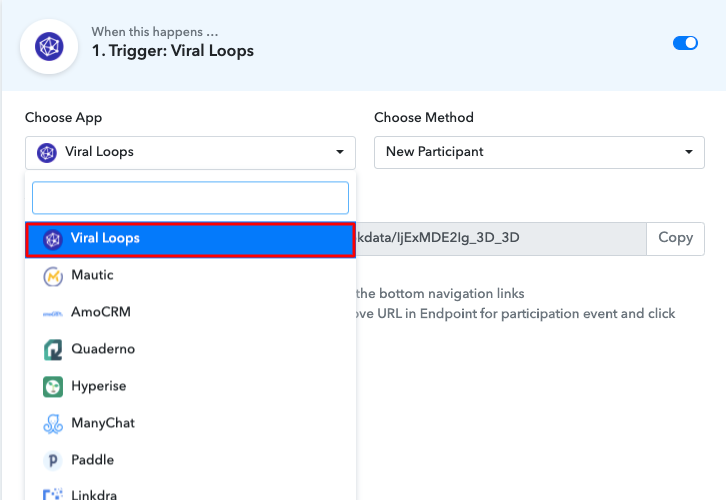
Select Viral Loops

Next, you have to select a trigger application that you want to integrate. In this case, we are selecting Viral Loops, as we have to integrate Viral Loops with Automizy.

(b) Copy the Webhook URL

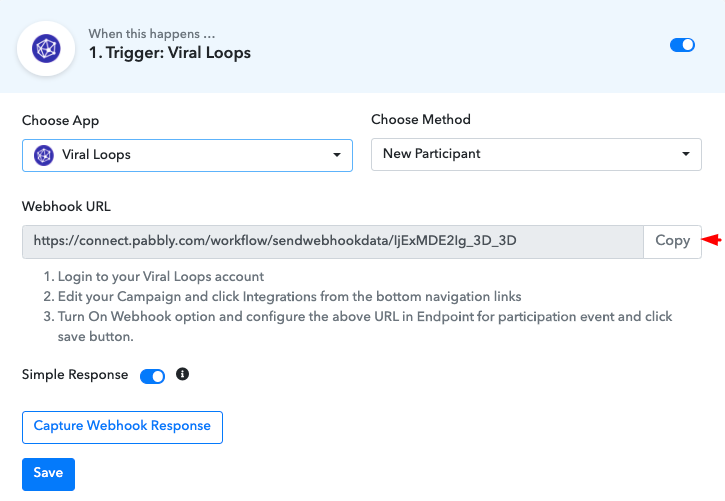
Copy URL

Further, to move forward now we have to copy the webhook URL shown in the image. This is an important step in the integration process.

Step 5 : Paste the Webhook URL in Viral Loops

To connect with Viral Loops, you have to paste the copied Webhook URL in your Viral Loops campaign’s webhook integration section.

(a) Click on Integration

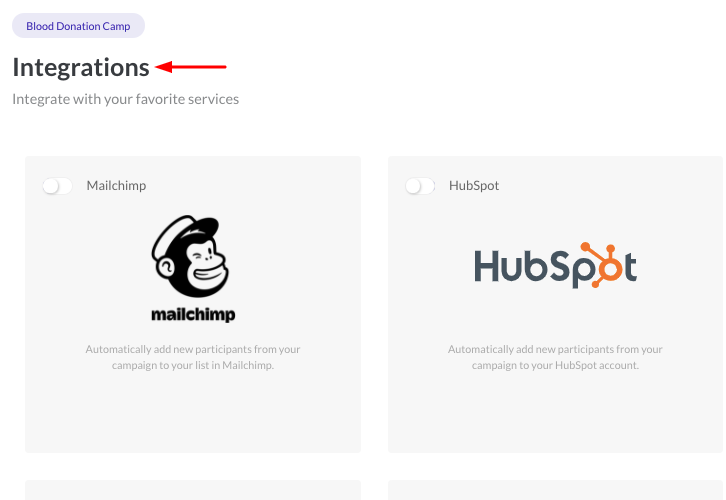
Integrate Viral Loops with Automizy

Go to your Viral Loops campaign that you want to integrate and go to it’s integration section.

(b) Select Webhook

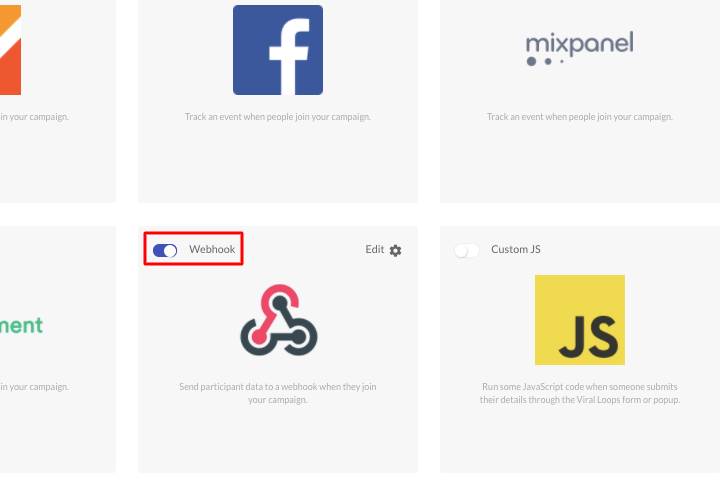
Integrate Viral Loops with Automizy

In the integration section, you can see there are several applications available to integrate. Among these applications, you have to click on the “Webhooks”.

(c) Paste the Webhook URL in Viral Loops to Integrate

Paste the URL

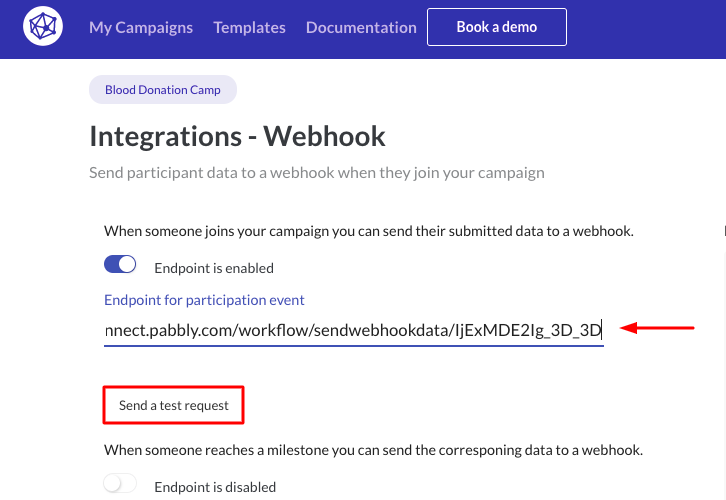
After selecting the “Webhooks” option, paste the copied webhook URL and press the “Send a Test Request” button to check whether the integration between Pabbly Connect and Viral Loops is working or not.

Step 6 : Test the Submission in Pabbly Connect Dashboard 

Capture Webhook

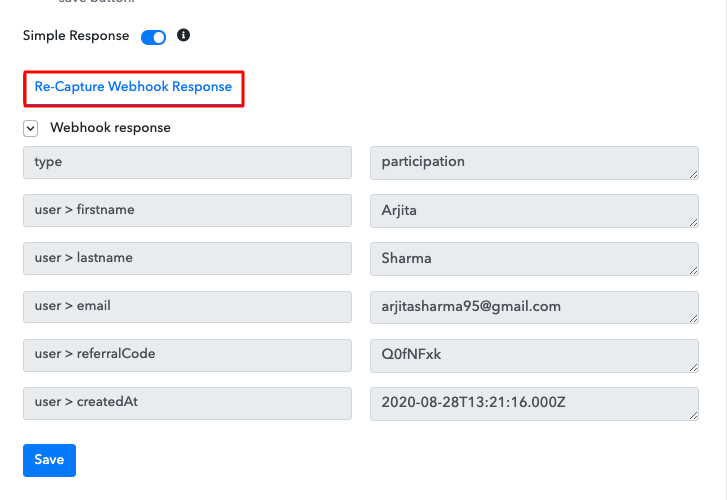
To test the Viral Loops integration you have to click on “Capture Webhook Response” in Pabbly Connect and fill out your Viral Loops campaign form. As soon as you click on the “Capture Webhook Response” in Pabbly Connect the entry from your form will appear on the Pabbly Connect dashboard. Then, click on the “Save” button.

Step 7 : Setting Action for Viral Loops with Automizy Integration

In this step, we will be adding an action for your trigger.

Select Application you Want to Integrate

Select Automizy

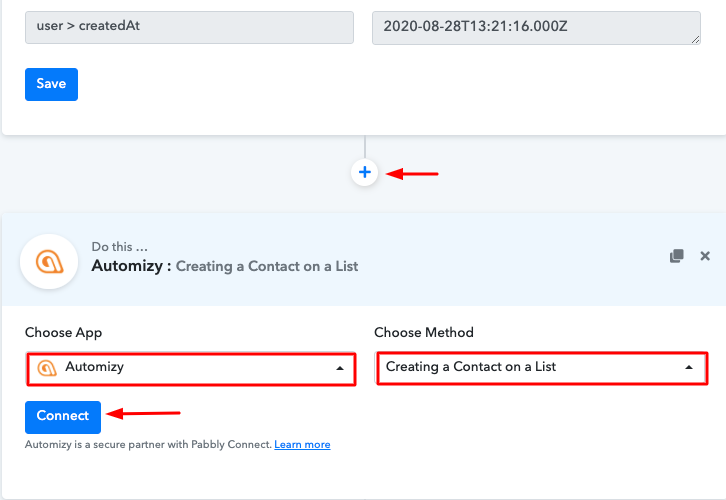
Now in this step, click on the + button below and choose Automizy among various other applications. After choosing Automizy, now you have to select “Create a contact on a list” and then click on the “Connect” button.

Step 8 : Connecting ‘Automizy’ to Pabbly Connect

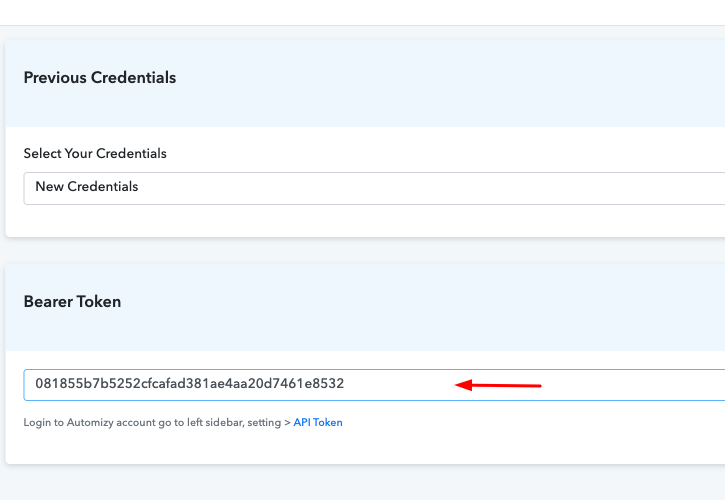
To connect Automizy with Pabbly Connect, you have to add an API token from your Automizy account into Pabbly Connect dashboard.

(a) Add API Token

Add API

After clicking on the button, a pop-up window will appear where you have to add the API token, which you can get from your Automizy account.

(b) Send a Test Request

Save Workflow

After saving your workflow map up all the required fields like your email list in Automizy, email address of the recipient, the status of the recipient, etc and click on the “Send Test Request” button to see if the integration between Automizy and Viral Loops is working perfectly or not.

API Response

You can see as you send a test request, all the required info from your Viral Loops campaign form is collected and delivered to your Automizy account automatically. Now whenever someone will fill out your form, the details of that individual will be transferred to your Automizy account after this integration.

Conclusion –

Conclusively, now you can easily integrate Viral Loops with Automizy just by following these few steps. After this integration, all the important info will be shared from one application to another without you sweating it out.

Apart from this integration, you can integrate thousands of other applications on Pabbly Connect. Because of Pabbly Connect now data transmission is a piece of cake. Every information you want to transmit from one application to another can now be updated automatically. You don’t have to worry about anything. In case of any doubts, please leave your comments below.

You May Also Like to Read –

How to Integrate Landingi with Automizy

How to Integrate Landingi with Automizy

Are you looking for a way to integrate Landingi with Automizy? If so, then this article might help you as we are going to discuss the integration process.

How to Integrate Landingi with Automizy

But before moving any further, let’s put light on the software. About our first software which is Landingi, it lets you create beautiful landing pages in a couple of minutes. From that landing page, you can build leads, organize marketing campaigns, and much more. And using Automizy i.e. an email marketing software, you can send customized emails to customers.

Now, suppose you want all your leads generated from Landingi into Automizy so that you can send automated emails to prospects. But filling every entity manually requires a lot of effort and time. Now, the real question is how you gonna do that? And the answer is quite simple which is with the help of software named Pabbly Connect.

The software allows you to automate all the repetitive tasks which save a lot of effort and time. Using Pabbly Connect, one can create seamless workflows for data transmission. Plus, with this lifetime deal, you can get access to unlimited premium applications, workflows, and much more. Also, Pabbly Connects requires no coding skill, just create a simple workflow in no time and you’re good to go.

Here, in this article, we will understand how one can integrate Landingi with Automizy using Pabbly Connect.

So, let’s begin the process.

Step 1: Sign up to Pabbly Connect

Sign Up

Initiate the process of connecting Landingi to Automizy by clicking on the “Sign Up Free” icon on the Pabbly Connect dashboard. Further, either manually fill-up all the details or sign up using Gmail credentials.

Try Pabbly Connect for FREE

Step 2: Access Pabbly Connect

Select Connect

After signing into the account, click on the “Access Now” button of Connect.

Step 3: WorkFlow for Landingi with Automizy Integration

(a) Start with a New Workflow

Create New Workflow

Start the process of building a workflow for your automation by pressing the “Create New Workflow” button.

(b) Name the Workflow

Name the Workflow

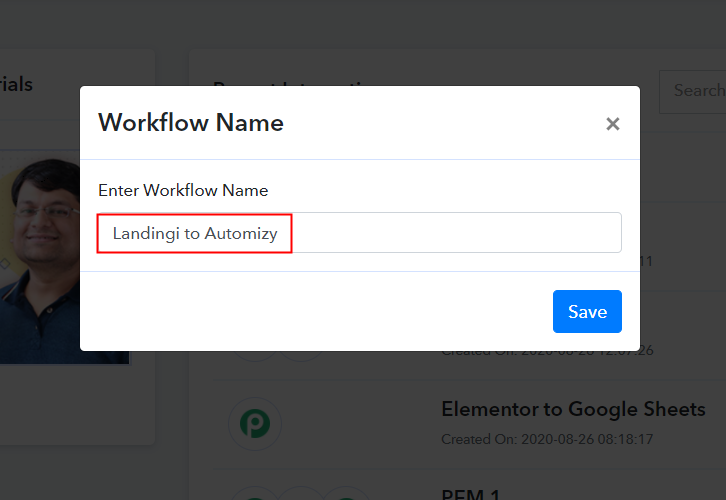
Subsequently, add the name of workflow which in our case is “Landingi to Automizy”. Nonetheless, you can name the workflow according to your needs.

Step 4: Setting Trigger for Landingi Automizy Integration

Now after creating a workflow, you have to choose the application you want to integrate.

(a) Select Application you Want to Integrate

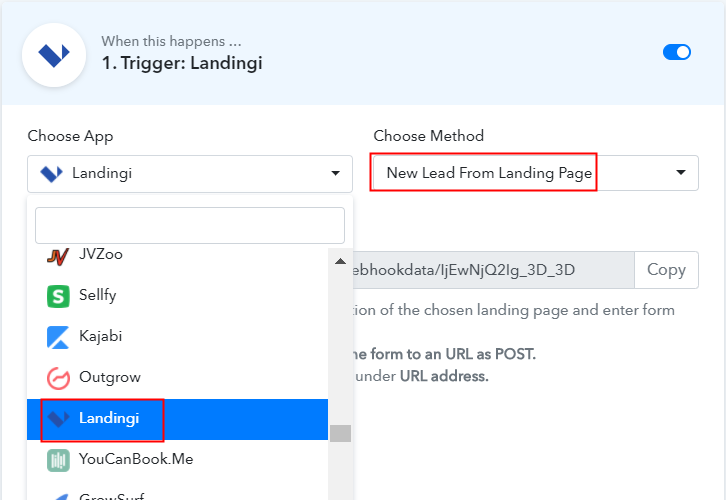
Select Landingi Application

The following step is to select “Landingy” from the dropdown, then choose the “New Lead from Landing Page” option.

(b) Copy the Webhook URL

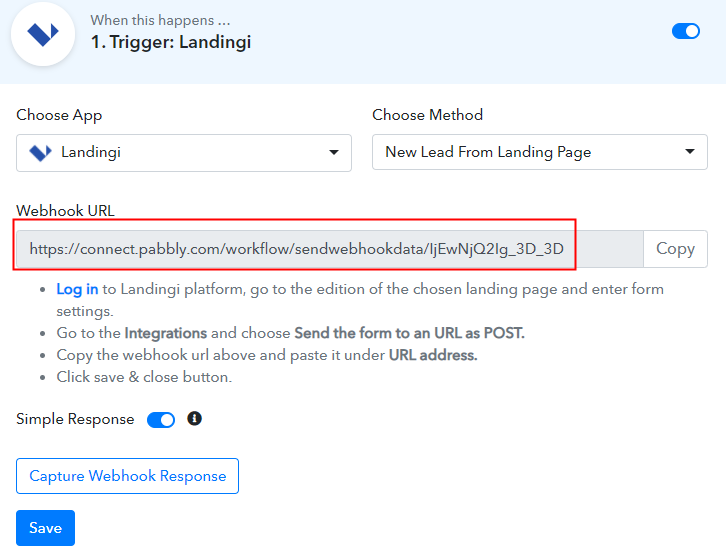
Copy the Webhook URL

Then copy the Webhook URL appearing on the dashboard.

Step 5: Paste the Webhook URL

To smooth the whole Landingi with Automizy integration process, you have to paste the webhook URL for which you have to log in to your Landingi account.

(a) Create a Landing Page

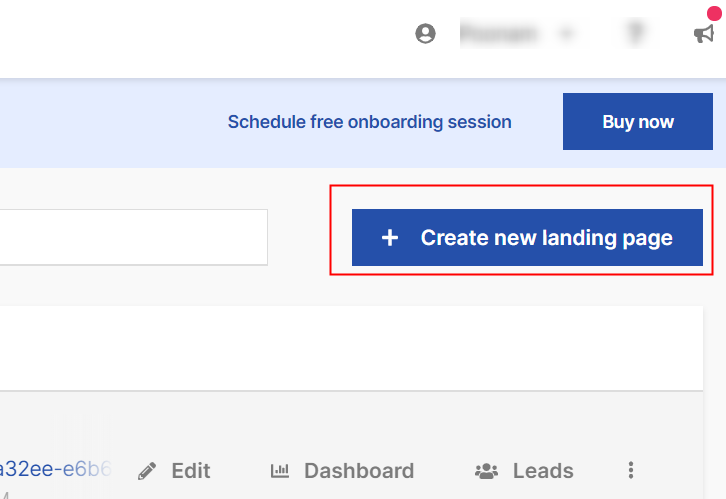
Create a Landing Page

After login to your Landingi account, click on “Create New Landing Page” Option.

(b) Click on Setting Option

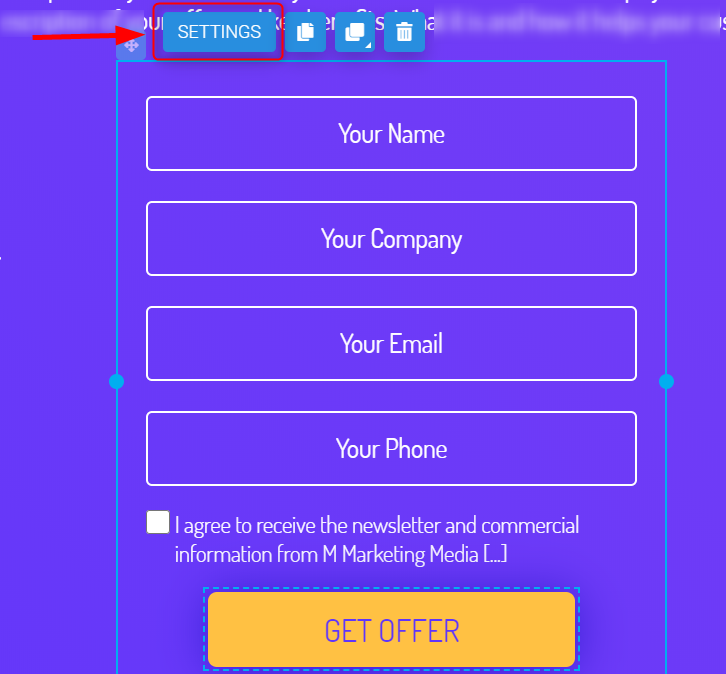
Setting Option

Further, on that landing page, move to the lead generation tab. After doing that, select the “Setting” icon.

(c) Select Integrations

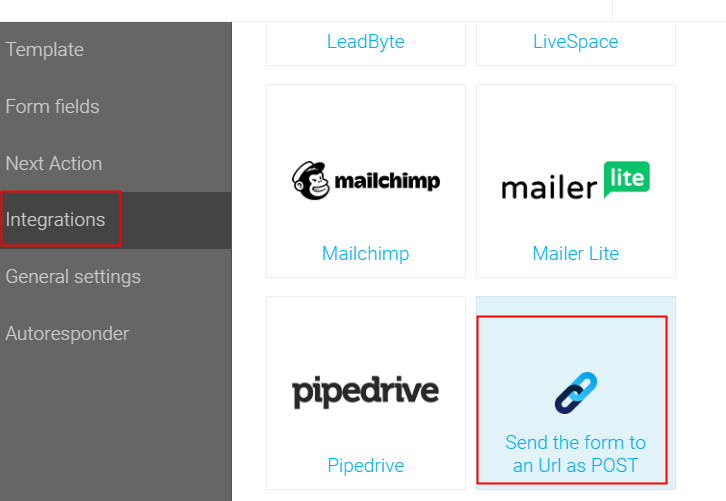
Integration Option

Then click on the”Integrations” option which will provide certain choices, simply select “Send the URL as a Post” option.

(d) Paste the Webhook URL

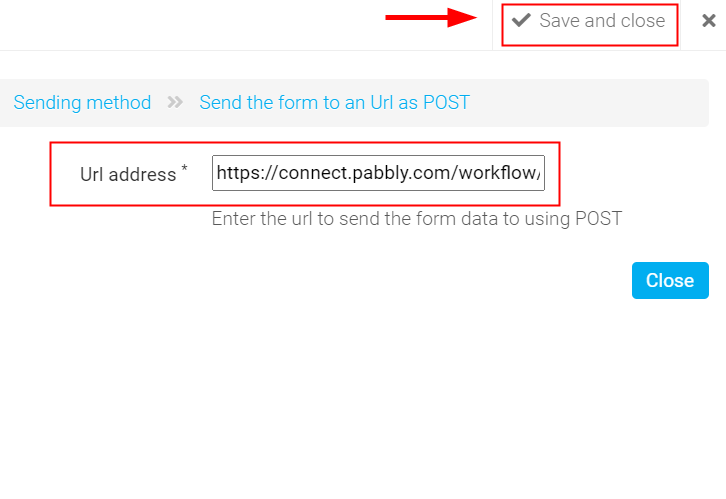
Paste The Webhook URL

Now as soon as you click on the “Send the URL as a Post” option, it will open up the tab.  Just paste the copied Webhook URL as shown in the above image. Further, click on the “Save and Close” button.

Step 6: Fill the Form to Test Landingi Integration

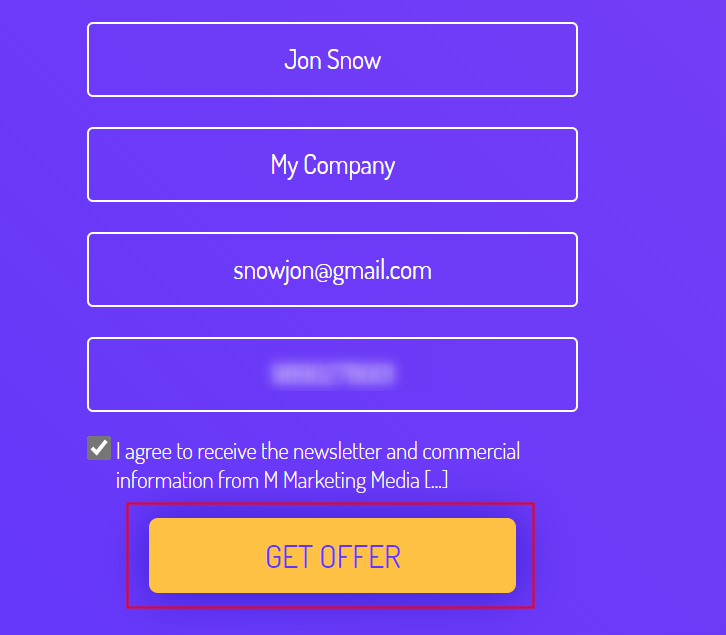
Fill the Form

Now after publishing the landing page, make a dummy entry in the form to test the workflow. Fill all the necessary details and click on the “Get Offer” button.

Step 7: Test the Response in Pabbly Connect Dashboard

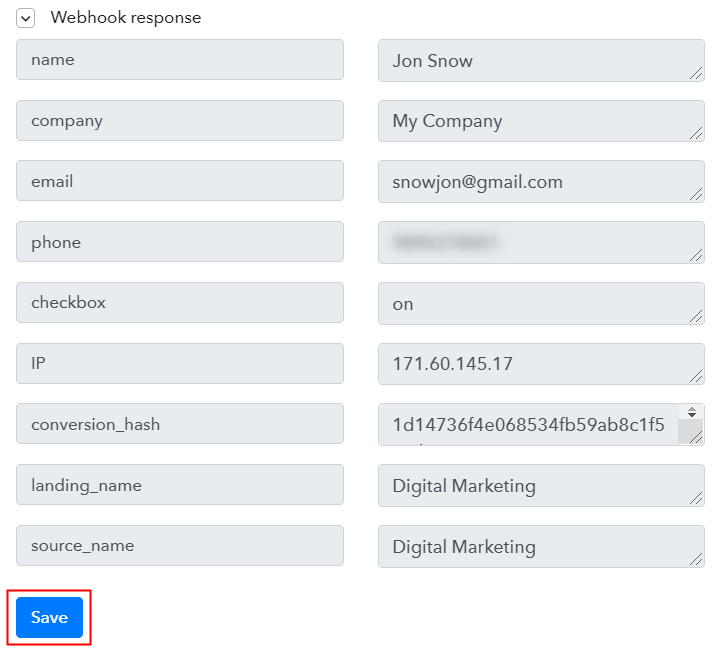
Test the Submission

As soon as you submit the response, go back to the Pabbly Connect dashboard where you will see the submitted entry. Then, click on the “Save” button to continue the workflow.

Step 8: Setting Action for Landingi Automizy Integration

Now the next step is to set a trigger, select the action for your trigger. For this, you have to choose the application you want to integrate.

(a) Select Application you Want to Integrate

Select Automizy

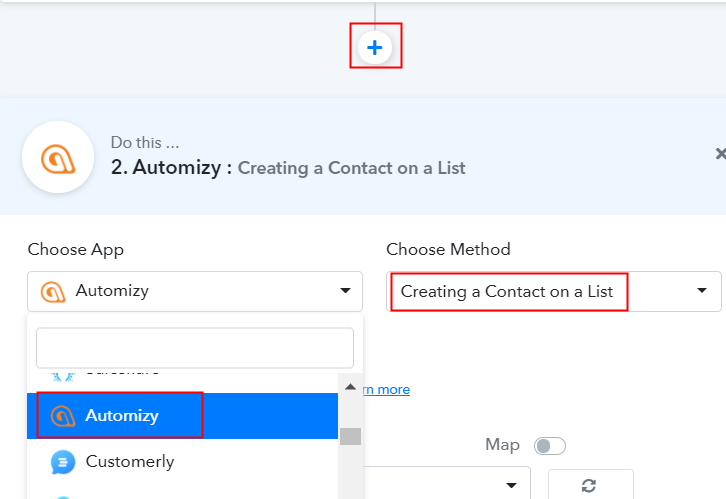
Next, click on the “+” icon to add an action for your trigger. Here we are going to select “Automizy” from the dropdown. Then, select the “Creating a Contact on a List” option.

(b) Click the Connect Button

Click the Connect Button

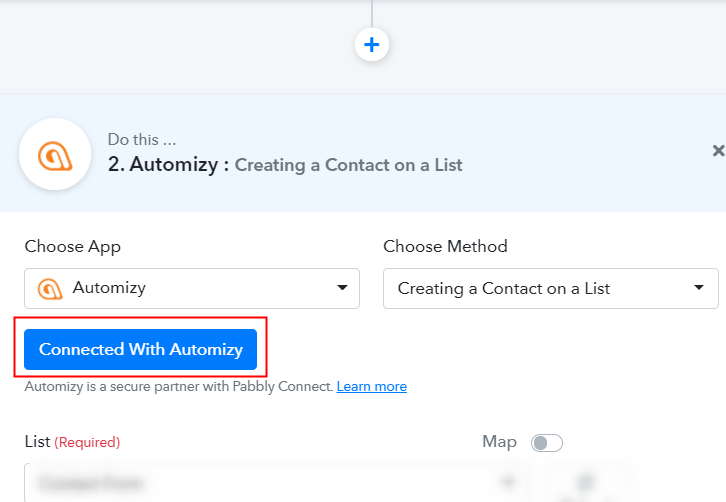
Now, after making all the necessary changes, click on the “Connected with Automizy” button. Further, it will ask for “Bearer Token”, for which you have to visit the Automizy account.

Step 9: Connecting Automizy to Pabbly Connect

To copy the “Bearer Token”, you have to log in to your Automizy account.

(a) Click on Setting

Setting Option

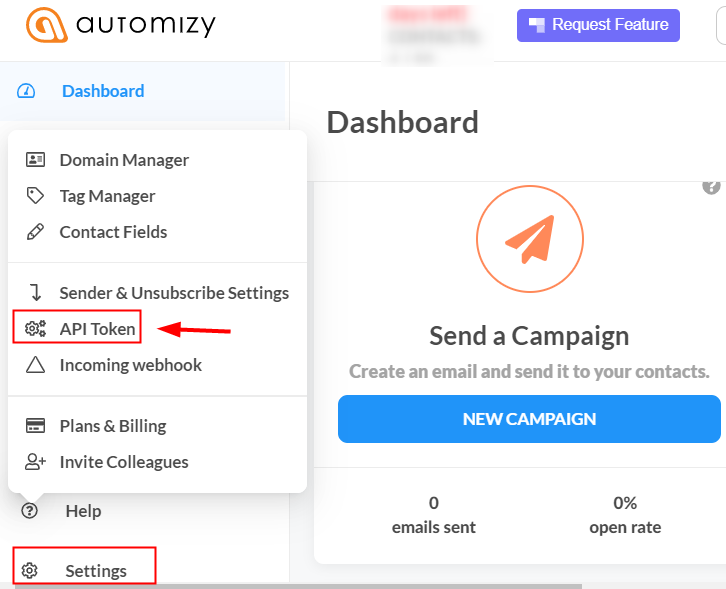
After login into your Automizy account, select the “Setting” option. Further, click on the API token option.

(b) Copy API Token

Copy API Token

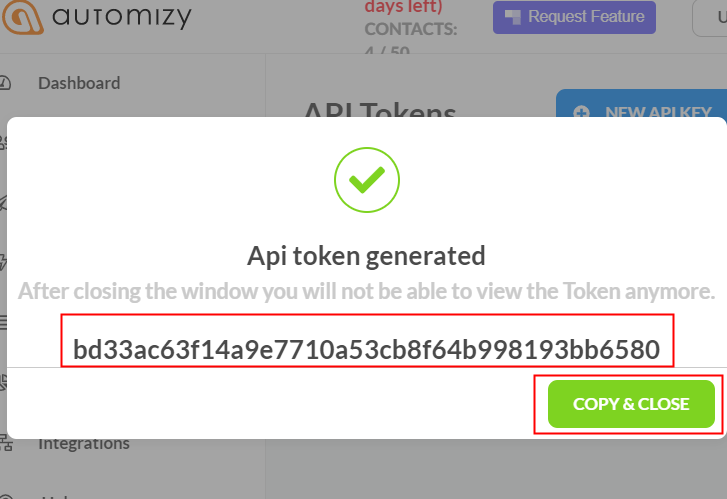
The API token option will open up the tab with the “New API key” option, simply click on it which will generate the key. Just copy your generated key and close the pop-up window.

(c) Paste API Token in Pabbly Connect Dashboard

Paste API Token in Pabbly Connect

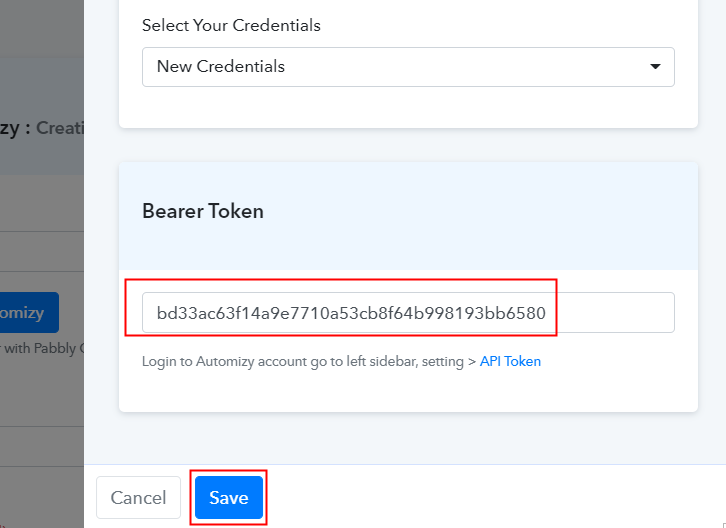
Now to paste the copied API token, go back to the “Pabbly Connect” dashboard. As soon as you click on the “Connected with Automizy” button, the page will open with the option “New Credentials”. Below on this page, you will see the option of “Token”, just paste your copied token there. After that, hit the “Save” button.

(d) Add Field Data

Add Field Data in Pabbly Connect

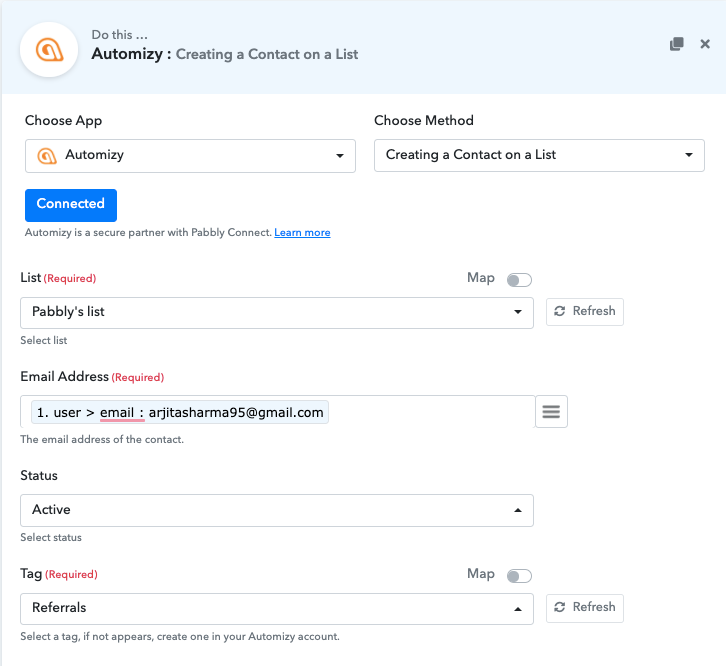
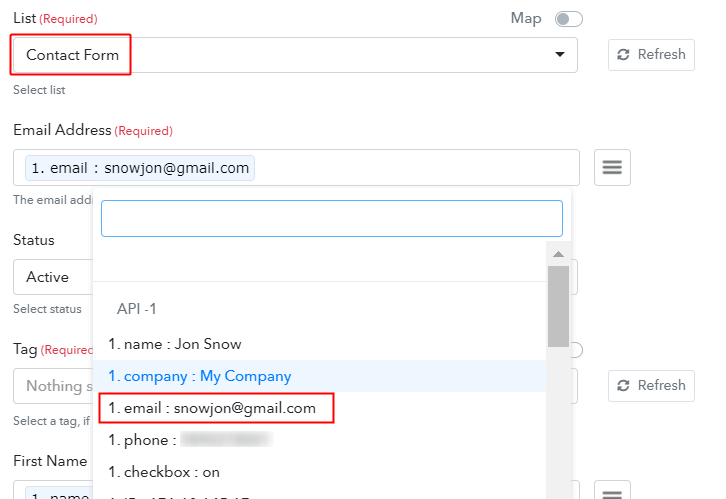
Now, select the list from the dropdown in which you want your subscribers to get added. Then, add the required field from drop-down such as for the email field, select the email option, and for name field select the name option.

(e) Save and Send Test Request

Save and Send Test Request

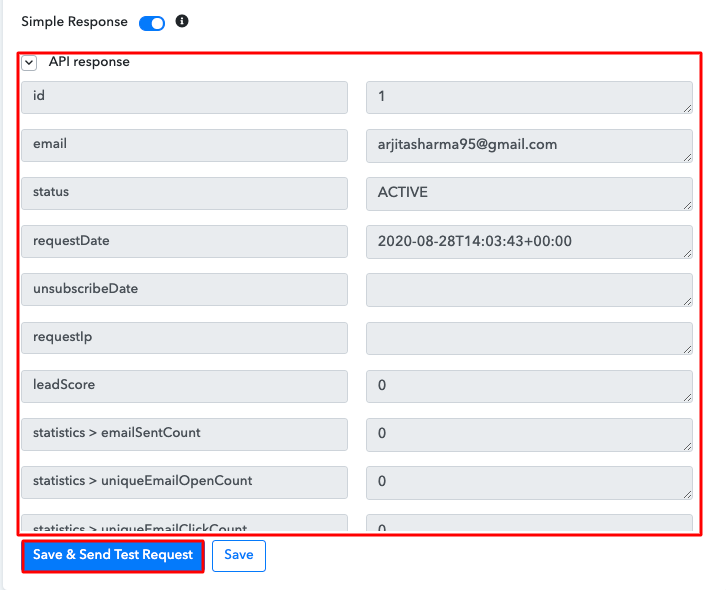
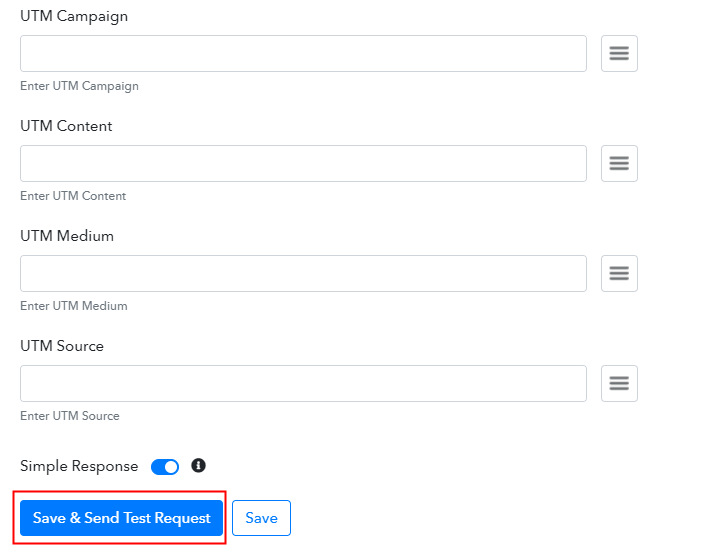
After making all the changes, save the setting and then “Send Test Request” to test the process.

Step 10: Check Responses in Automizy Dashboard

Check Submission In Automizy Dashboard

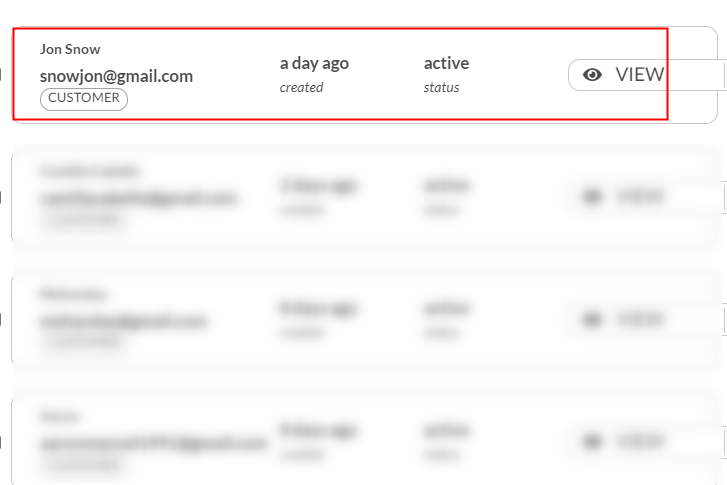
Finally, when you check the subscriber list in Automizy, your response will appear there.

So, just like that, all the form submissions will automatically get added to your subscriber list after that simple procedure.

Conclusion –

Alright! Now you see, how easy is to integrate Landingi with Automizy using software Pabbly Connect. Not just the automation task, but it also offers features like filters, path routers, etc for easy data transmission. And, you don’t need to have any coding skills for operating this amazing software. Just get the software and it is ready to roll.

In case you have any queries regarding software, you can always reach out to support staff of software.

You May Also Like To Read –

How to Automatically Deliver Coupon Codes on Successful Sales

How to Automatically Deliver Coupon Codes on Successful Sales using Pabbly Connect

This article holds the step by step procedure towards the most frequently asked use case i.e, How to automatically deliver coupon codes on successful sales? Well, we can do this by using Pabbly Connect and whenever someone buys something from any shopping cart software automatically receives a coupon via email.

Sellers use to offer coupons to increase sales and want to automate the coupon sending process based on certain conditions. In here, I’m taking a simple example for sending different coupons on every successful purchase.

Pabbly Connect works much like a switch in between services. You can define simple trigger condition and associated actions to automate a task. In this particular case, I’m going to put all the coupons in a Google Sheet and whenever a sale happens in ThriveCart, I’ll send an email through Gmail containing the coupon code.

How to Automatically Deliver Coupon Codes on Successful Sales using Pabbly Connect

The process is pretty simple but requires a simple strategy to carry out. Now, I hope the whole idea is pretty clear to you. So, let’s jump onto the step by step procedure to automatically deliver coupon codes on successful sales using Pabbly Connect.

Step 1: Sign up to Pabbly Connect

Sign Up

To get started, visit the official website of Pabbly and click ‘Sign-Up Free‘ button to sign-up for Pabbly Connect. On the next page redirect, either make use of an existing Google account or do fill out the registration form details manually.

Try Pabbly Connect for FREE

Step 2: Access Pabbly Connect

Select Connect

Once you successfully sign up, click on the ‘Access Now’ button next to ‘Connect’.

Step 3: Create a New WorkFlow

(a) Click over the Create New Workflow Button

Create New Workflow

Start with creating a workflow to integrate Pabbly Subscription Billing & Moosend and hit the ‘Create New Workflow’ button.

(b) Name the Workflow

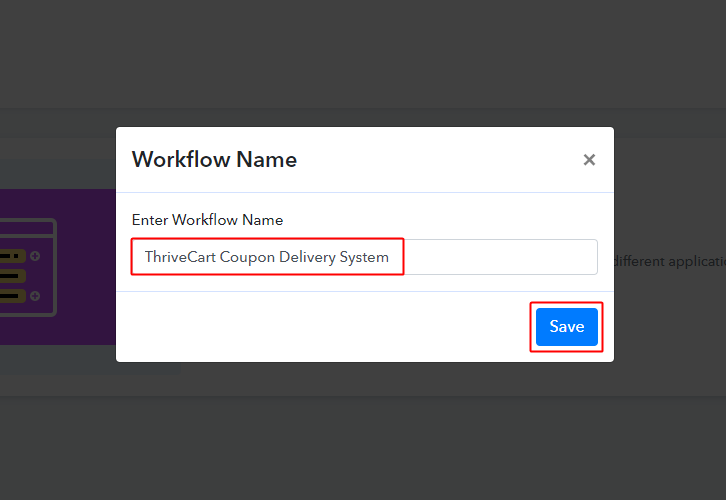
ThriveCart Coupon Delivery System

Name the Workflow as per your need and hit the ‘Save’ button.

Step 4: Set-up A Trigger to Automatically Deliver Coupon Codes on Successful Sales

(a) Select Application to Integrate

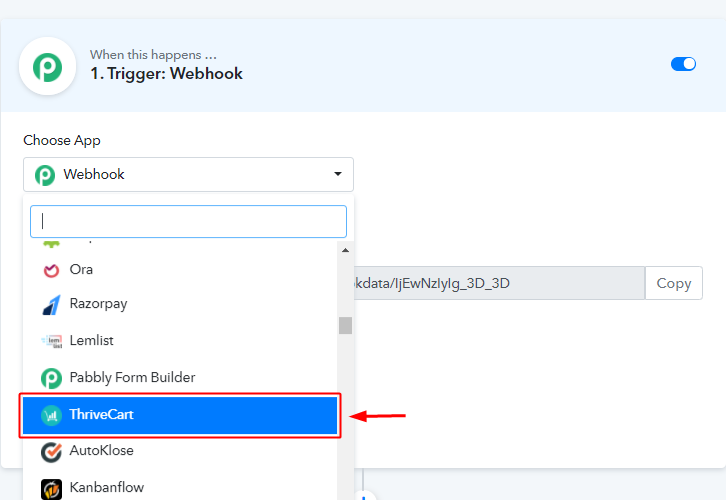
Select ThriveCart

Once you name a workflow & save it a trigger window will appear. Select the ‘ThriveCart’ app to integrate.

(b) Check Method, Copy the Webhook URL & Capture Webhook Response

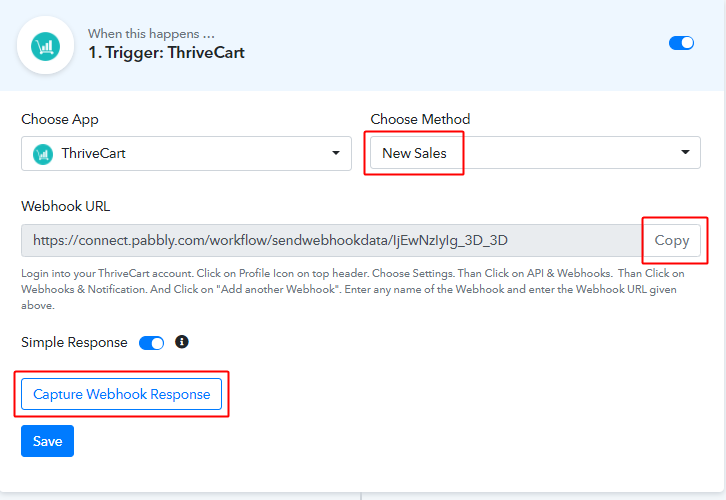
Set Up Trigger

When you select ‘ThriveCart app’ the window loads all its methods. Now, check for the method to be ‘New Sales’.

This trigger window will also carry a webhook URL. Click the ‘Copy’ button right next to the URL.

Lastly, click the ‘Capture Webhook Response’ button.

(c) Go to Your ThriveCart Account & Access Settings

ThriveCart Settings

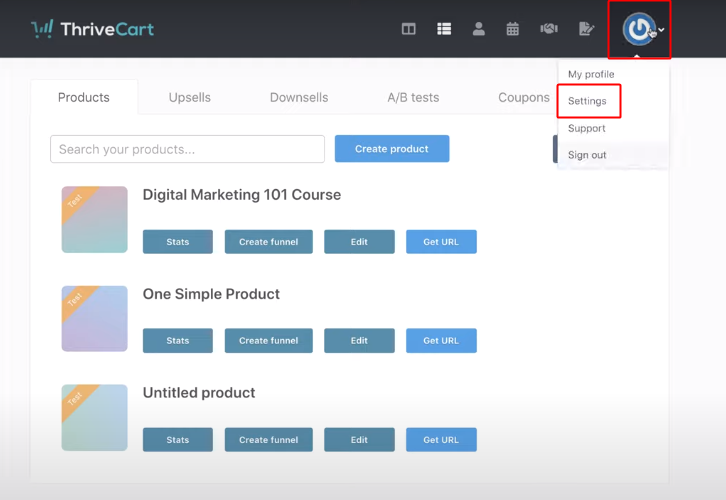
Now, to go forward in setting up the trigger, you must paste the copied Pabbly Connect Webhook URL in ThriveCart Webhook. So, go to your ThriveCart account, press the power button icon on the top-right corner and click on the ‘Settings’ option in the drop-down menu.

(d) Inside Settings Click over API & Webhooks

ThriveCart > Settings > Webhooks

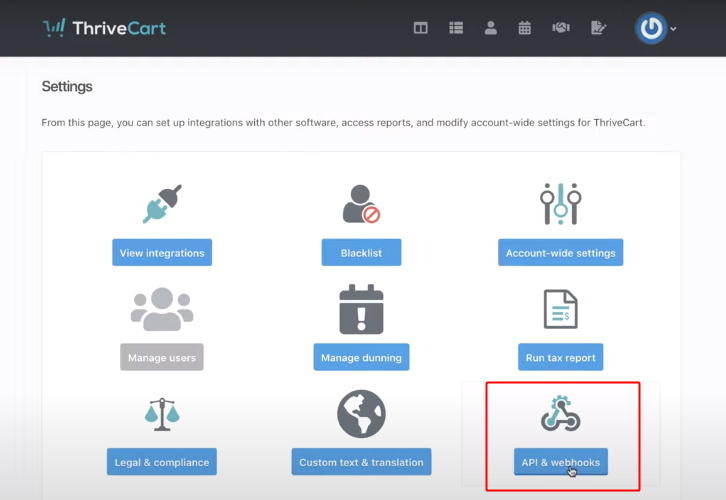
When you click over settings a page will open up containing various ThriveCart settings. Select the ‘API & Webhooks’ setting in here.

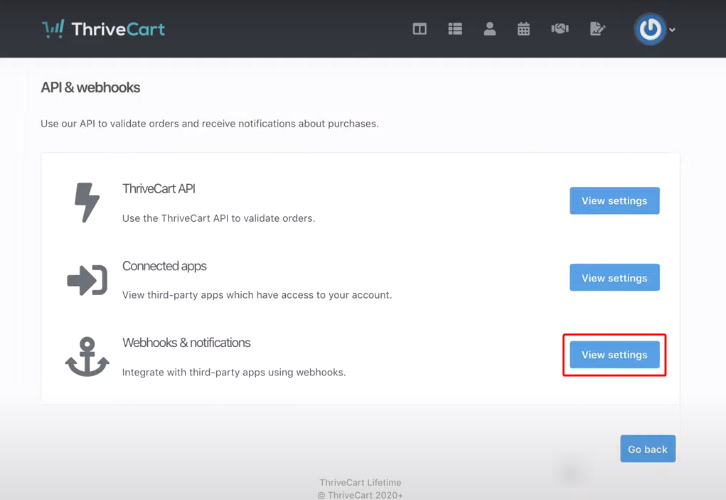
(e) ClickView Settings next to Webhooks & Notifications

ThriveCart Webhooks & Notifications

(f) Create New Webhook on ThriveCart

ThriveCart Create Webhook

Click the ‘Create Webhook’ button.

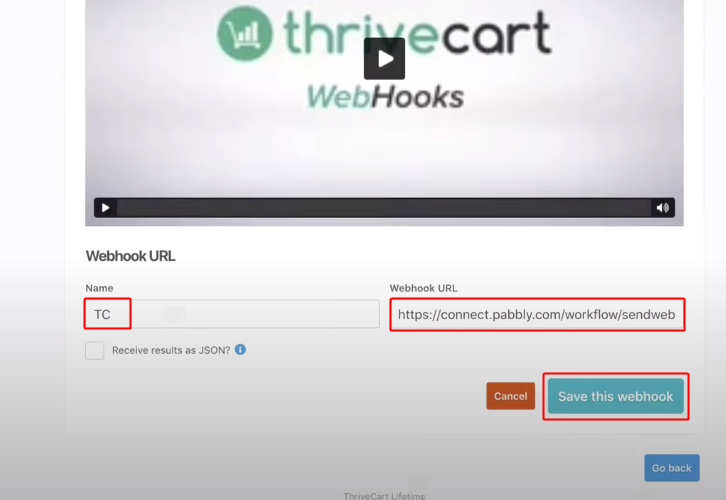
Enter a name for the Webhook, paste the copied webhook URL of Pabbly Connect trigger and hit the ‘Save this webhook’ button.

Step 5: Run Test Purchase to Check the Trigger Response

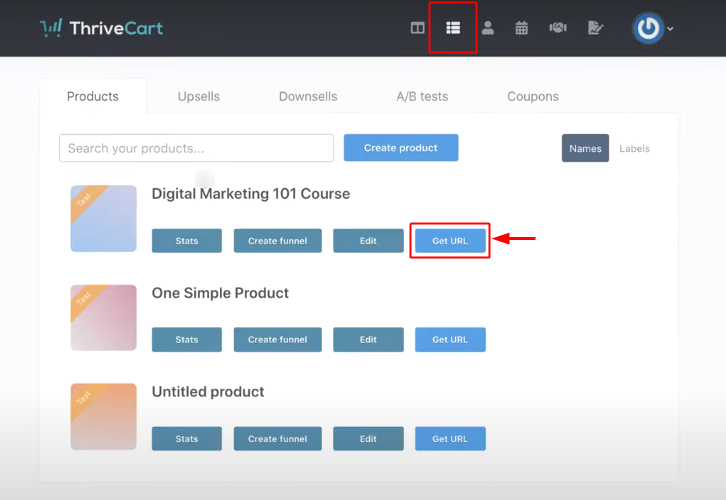
(a) Go to ThriveCart Product > Get URL

ThriveCart Product

Now, click the product icon present in the horizontal menu bar and click the ‘Get URL’ button of a product.

(b) Click on View Checkout

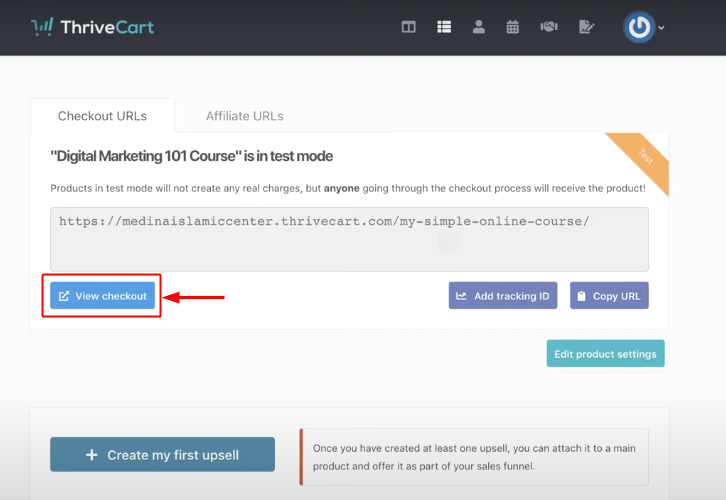
ThriveCart View Checkout

In the next page that opens up click the ‘View checkout’ button.

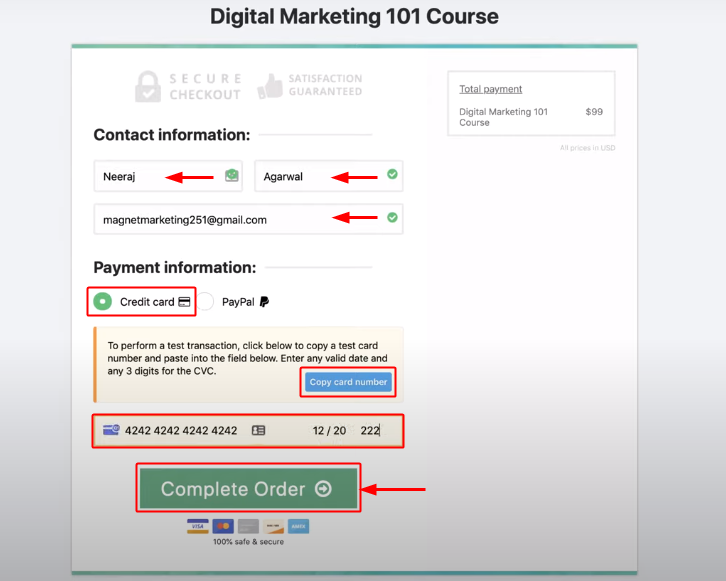
(c) Fill ThriveCart Test Checkout

Fill ThriveCart Test Checkout

Fill in all the required entries in the checkout page and complete the order.

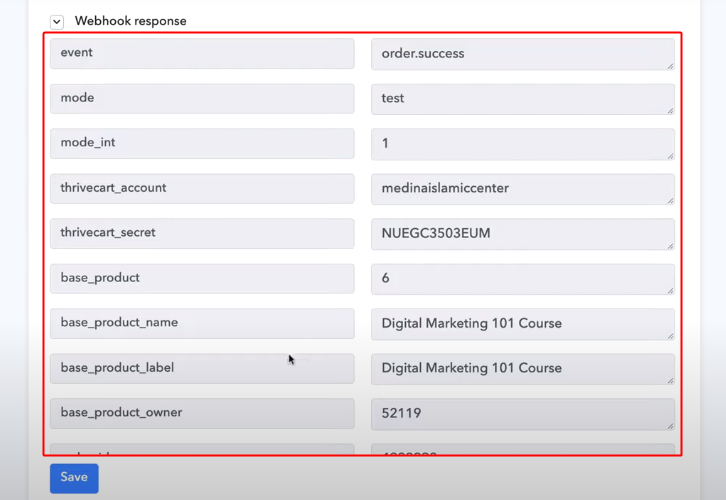
(d) Acknowledge the Checkout Response in Pabbly Connect

Webhook Response

You can see the response of filling the ThriveCard checkout page in the Pabbly Connect Webhook trigger.

Step 6: Set Up an Action to Automatically Deliver Coupon Codes on Successful Sales

Till now, we’ve set-up a trigger successfully and to automatically deliver coupon codes on successful sales, we must set-up the associated action. For this, I’ve created a Google Sheet and placed all the coupon codes to send in it. So, we’ll integrate the Google Sheets more further.

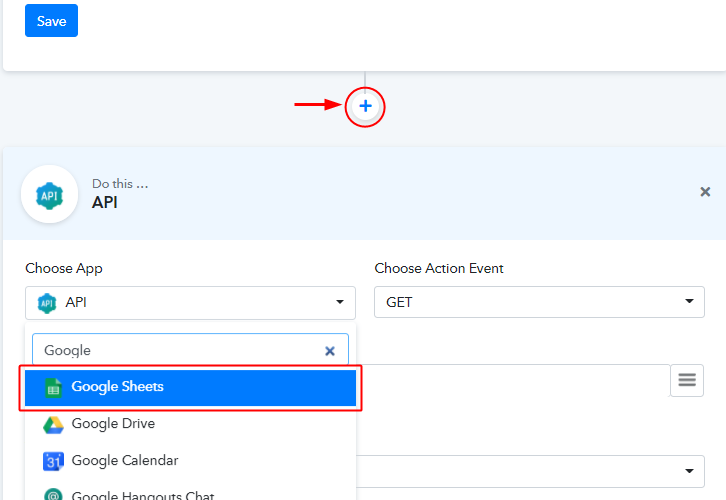
(a) Click the Plus Button & Select App for Integration as Google Sheets

Connect with Google Sheets

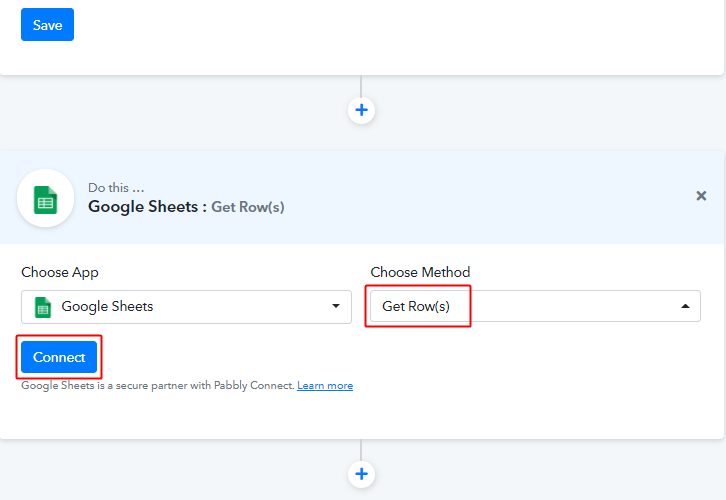
(b) Check the Method and Connect

Select Method Google Sheet

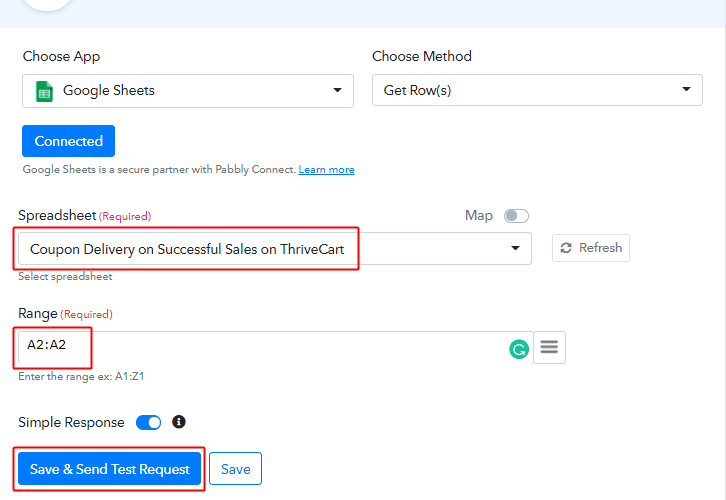
Once you select ‘Google Sheets’ in the app choice, make sure to select the method to be ‘Get Row(s)’ and then strike ‘Connect’.

(c) Authorize a Google Account

Authorize Google Account

To connect a Google Sheet, you must authorize a Google account in which your sheet is residing.

(d) Select the Sheet & Send Test Request

Send Test Request

Once you authorize an account, all the sheets within got populated automatically. So, choose the sheet in which you’ve stored all the coupon codes to send.

Select a range as the row position that you want to send.

Lastly, hit the ‘Save & Send Test Request’ button.

(e) Observe the Google Sheets API Response

API Response

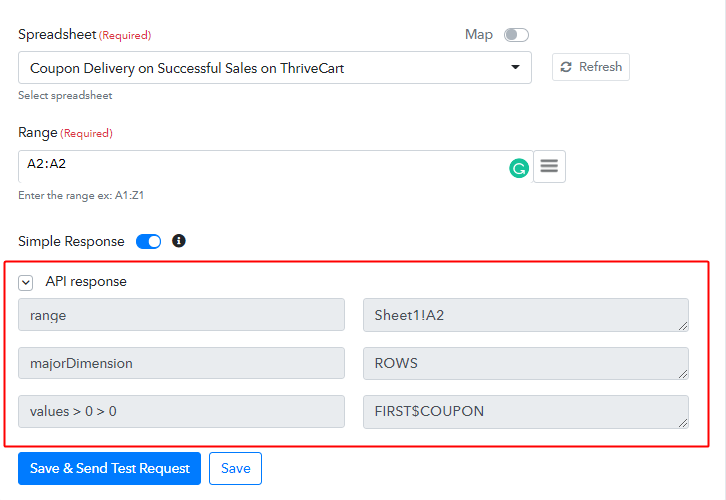
When you send a test request to the sheet the values that you have set in the range will be brought.

Now, I’m going to send an email to the customer who has filled the checkout page. So, I’ll send an email to the customer containing the coupon code.

I’m using Gmail here but you can also choose any bulk email marketing service too such as Pabbly Email Marketing, Moosend etc.

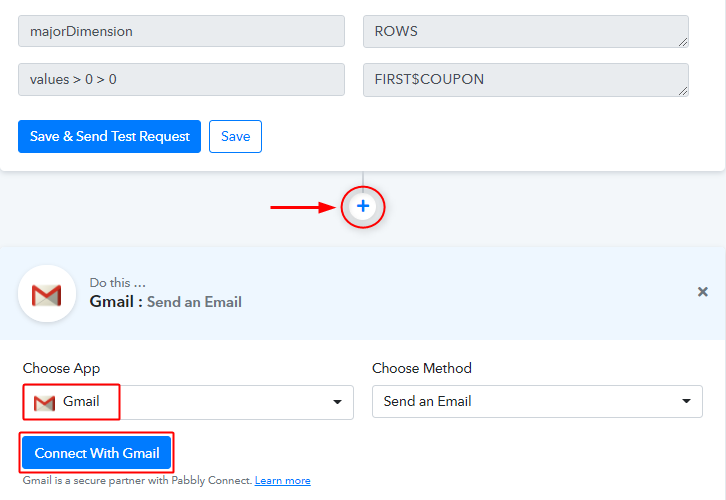
(f) Select App To Integrate as Gmail

Connect Gmail

First, click the plus button and then select the ‘Gamil’ app from the Choose App drop-down.

(g) Authorize Gmail Account

Authorize Google Account

Just like the Google sheets authorization, you can authorize a Gmail account for the Gmail integration as well.

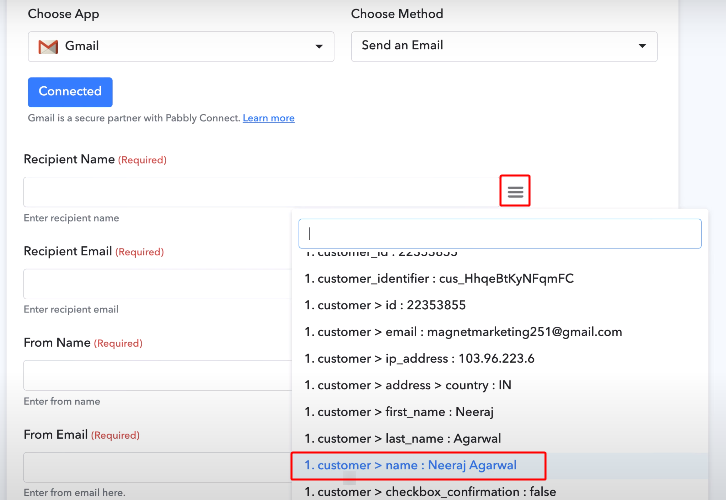
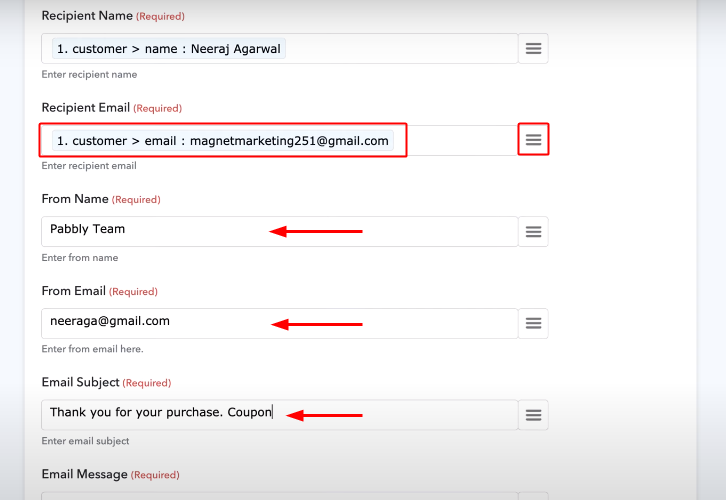
(h) Map Keys & Values to Automatically Deliver Coupon Codes on Successful Sales

Map Keys & Values

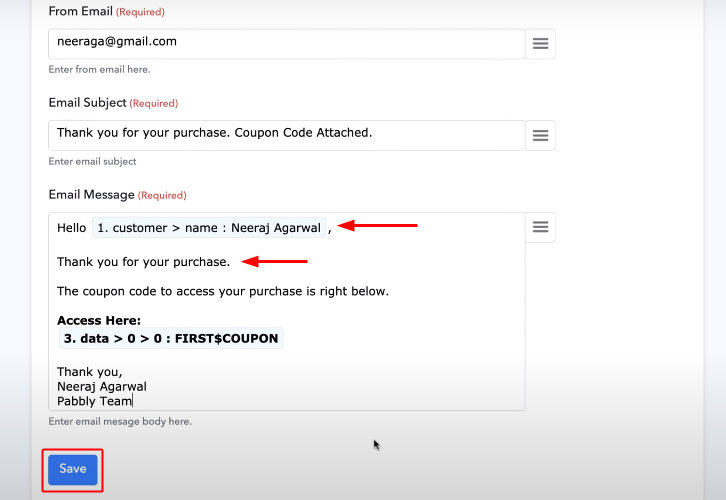
(i) Map & fill all the other values

Map & Fill All Values

(j) Save the Email Settings

Save Email Settings

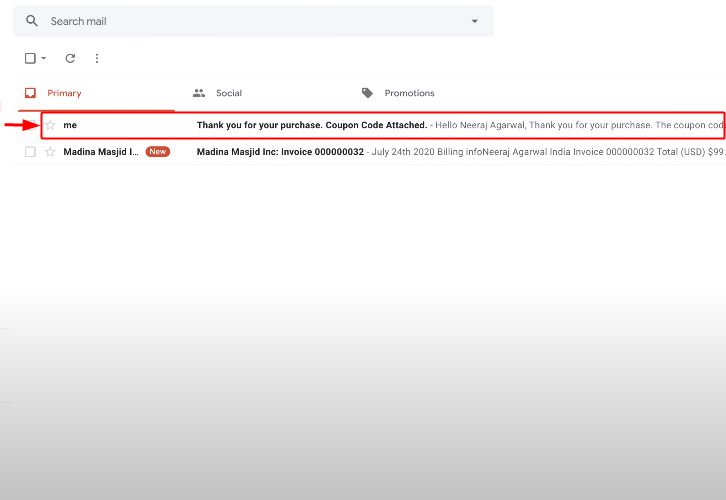
(k) Check the Email Sent

Sent Email

Step 7: Integrate a Number Formatter

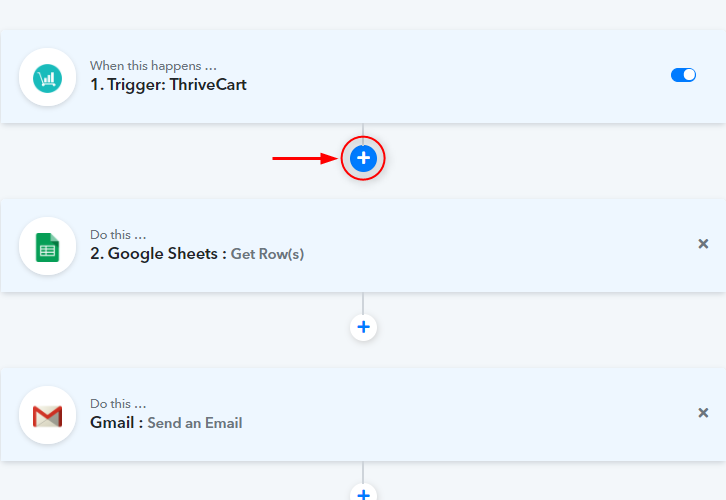
Up to this point on, you can definitely see that the workflow is working fine but a single row will be sent every time from the Google Sheet. Resulting in sending a single coupon code again and again. So, what we need to do is simply add-up something to the workflow which can append the value of the Google Sheet range.

(a) Click the Plus Button Present Next to the Trigger

Add Counter

Press the ‘+’ button that is in the middle of the first ThriveCart trigger and Google Sheets action.

(b) Select App for Integration as Number Formatter

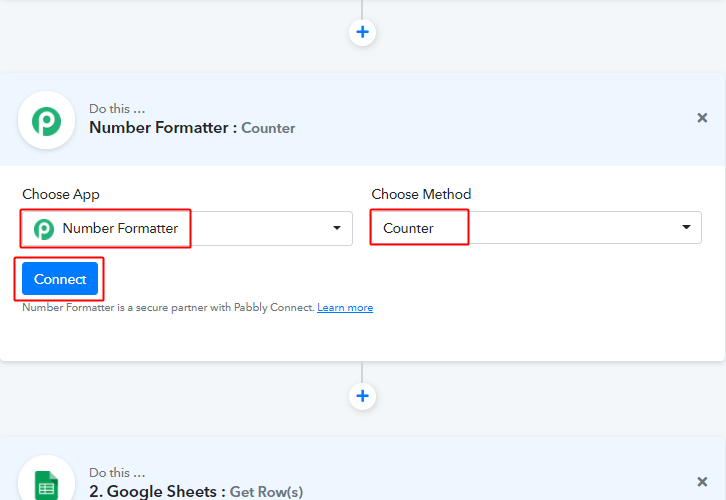
Number Formatter

Choose the app to integrate as ‘Number Formatter’, the method as ‘Counter’ and hit the ‘Connect’ button.

(c) Number Formatter Settings

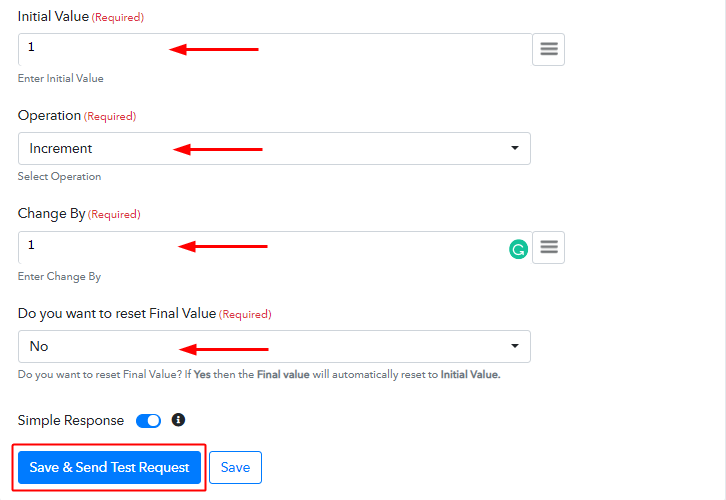
Number Formatter Settings

After pressing the ‘Connect’ button the Number Formatter will asks for some settings. Put ‘1’ in the Initial Value field, and ‘1’ in the Change By field. Observe the other two values to be as shown in the image.

(d) Observe the Number Formatter Response

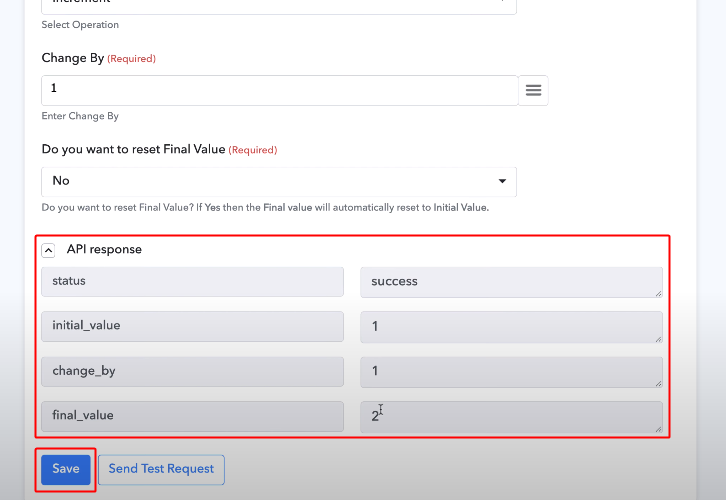
Number Formatter Response

Observe the app response and save it.

Step 8: Reload the Page/Workflow

As we’ve added a step in between the workflow and the values haven’t traversed through the entire workflow. We must reload this workflow page.

Step 9: Fix the Google Sheet Range

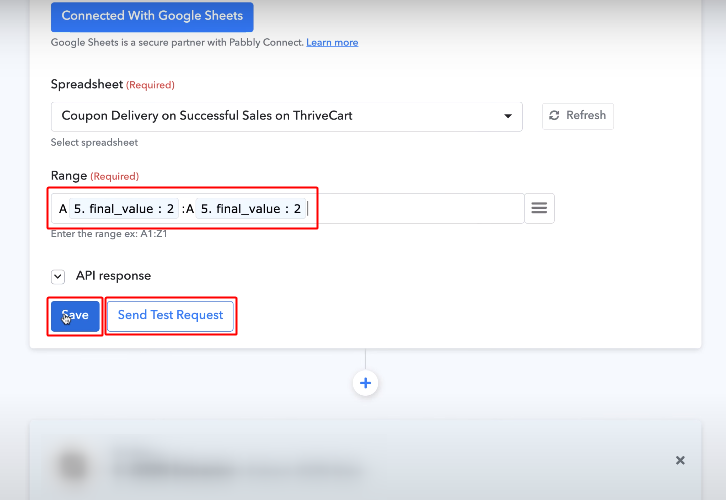
Replace both the Range Values and Save

Replace Both Range Values & Save

Wind-up

This was all the steps involved in the procedure to automatically deliver coupon codes on successful sales. You can test whether the workflow is working properly or not by filling out the associated checkout page multiple times. Observe the flow by checking out the email that’s sent.

For any further queries, do comment below we’ll be happy to help!

You May Also Like to Read

How to Send Bulk Emails via Google Sheets & SMTP Service | Step by Step

How to Send Bulk Emails via Google Sheets & SMTP Service

Do you send emails to every recipient manually? Have ever wondered if all this can be done automatically and you can save a lot of time and can invest that into some other work?

How to Send Bulk Emails via Google Sheets & SMTP Service

Well, if the answer to these questions is yes, then we have a solution to your problem called Pabbly Connect. Through this amazing software, you can easily integrate one application to another to transmit data with a few simple steps. You just have to make few clicks in the software and you are ready to roll.

Why Choose This Method Of Integration?

In contrast with other integration services-

  • Pabbly Connect does not charge you for its in-built apps like filters, Iterator, Router, Data transformer and more
  • Create “Unlimited Workflows” and smoothly define multiple tasks for each action
  • As compared to other services which offer 750 tasks at $24.99, Pabbly Connect proffers 50000 tasks in the starter plan of $29 itself
  • Unlike Zapier, there’s no restriction on features. Get access to advanced features even in the basic plan
  • Try before you buy! Before spending your money, you can actually signup & try out the working of Pabbly Connect for FREE

Sign Up To Pabbly Connect

Pabbly Connect also offers so many great and helping features for your projects like you can create unlimited workflows, integrate thousands of applications, set unlimited triggers, set unlimited actions to those triggers, and you get all these features even with the free plan.

In this blog, we are talking about how you can send bulk emails via Google Sheets and SMTP service. Hence, without taking any more of your time, let’s get started with the blog.

Step 1 : Sign up to Pabbly Connect

Sign Up

Start the process by signing up for Pabbly Connect. Quickly fill in the details manually or sign-up via your Google account.

Try Pabbly Connect for FREE

Step 2 : Access Pabbly Connect

Select Connect

After completing the signup process, click on the Connect section on the dashboard.

Step 3 : WorkFlow for Google Sheets to SMTP Integration

(a) Create New Workflow

Create New Workflow

Start with creating a workflow for your project by clicking on the ‘Create New Workflow’ button.

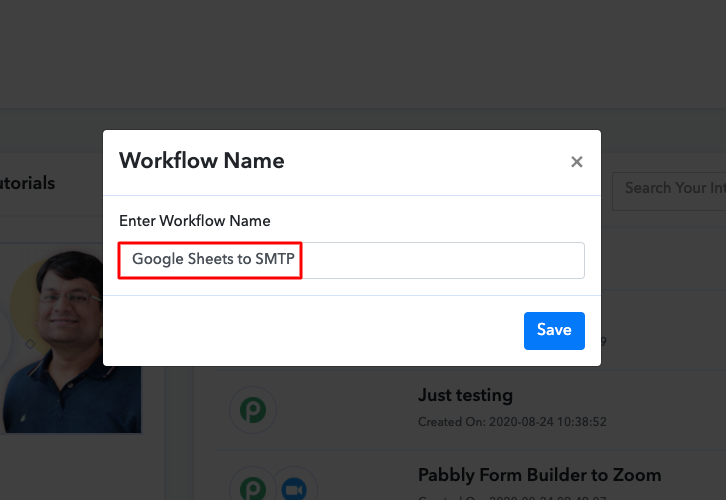
(b) Name the Workflow for Google Sheets to SMTP

Name the Workflow

Next, you need to name the workflow just like in the above-shown image. I named the workflow as Google Sheets to SMTP, you can obviously name the workflow as per your requirements.

Step 4 : Setting Triggers for Google Sheets to SMTP Integration

As soon as you are done with creating a workflow, you will have to select the application you want to integrate. Using Pabbly Connect one can bind or connect unlimited apps, click here to create your free account.

(a) Select Application you want to Integrate

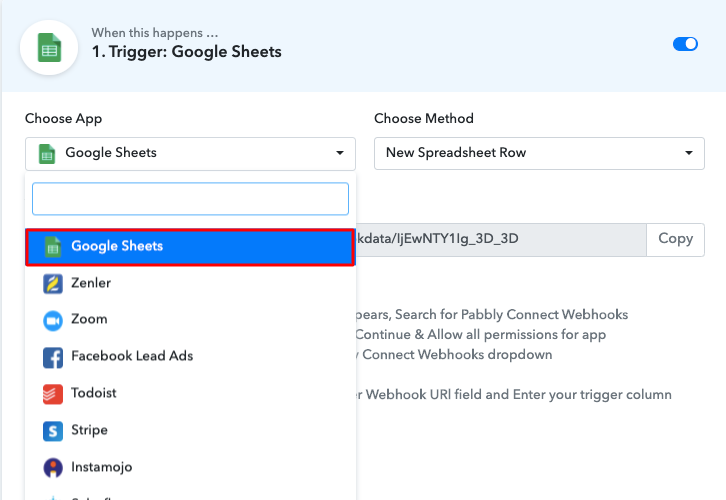
select application

Now, you have to select the application that you want to integrate. In this case, we are choosing “Google Sheets” for integration.

(b) Copy the Webhook URL

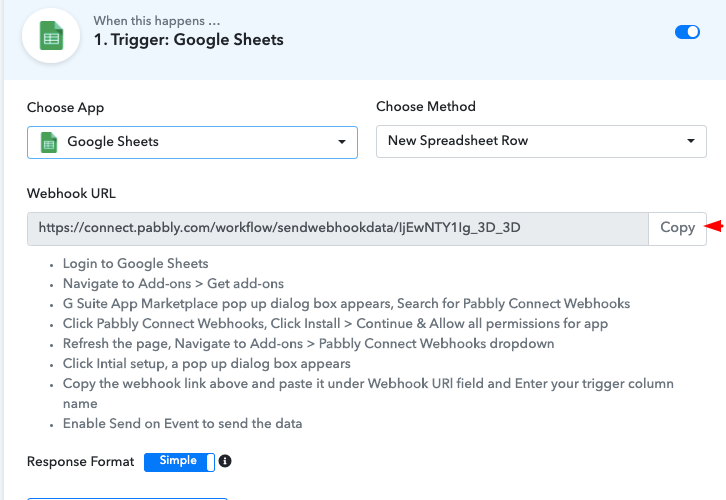
copy url

After selecting the application, now you have to copy the webhook URL just like in the above-shown image to take further the integration process.

Step 5 : Paste the Webhook URL in Google Sheets

To connect with Google Sheets, you have to paste the copied Webhook URL in your Google Sheet Add-ons section.

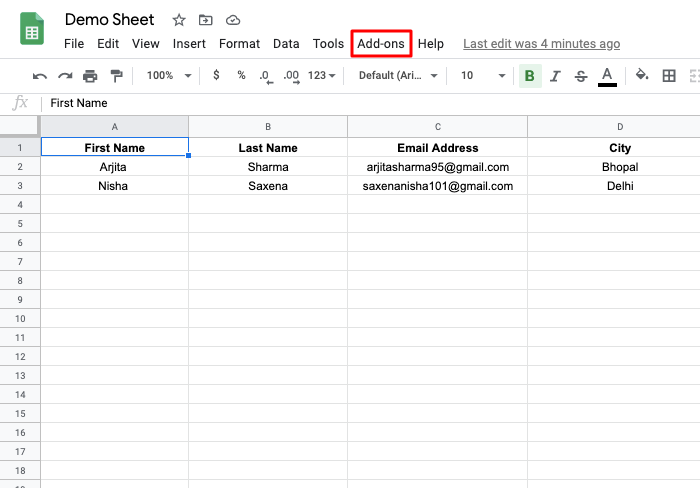
(a) Click on Add-ons

Click on Add ons

Go to your Google Sheet that you want to integrate and click on the “Add-ons” option above and then select the add-ons. We have selected “Pabbly Connect Add-on” and if you don’t have them, then you can also install the add-ons.

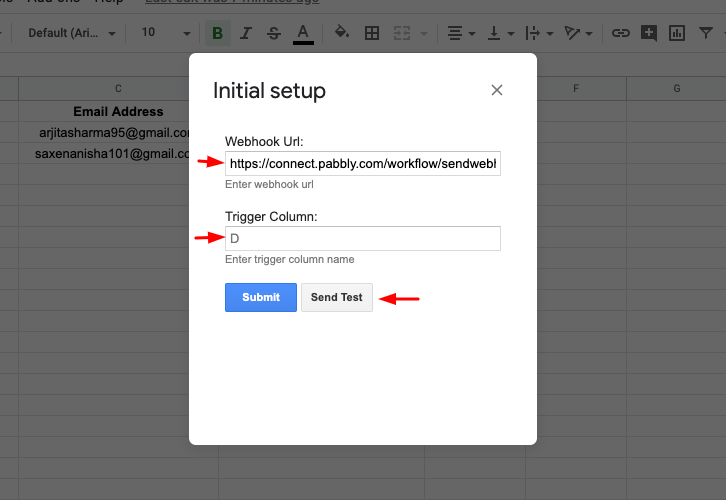
(b) Paste the Webhook URL

Paste URL

After selecting the add-ons, click on “Initial Set-up” and then paste the copied webhook URL. Once you have pasted the URL, now you have to mention the trigger column and then click on the “Send Test” button.

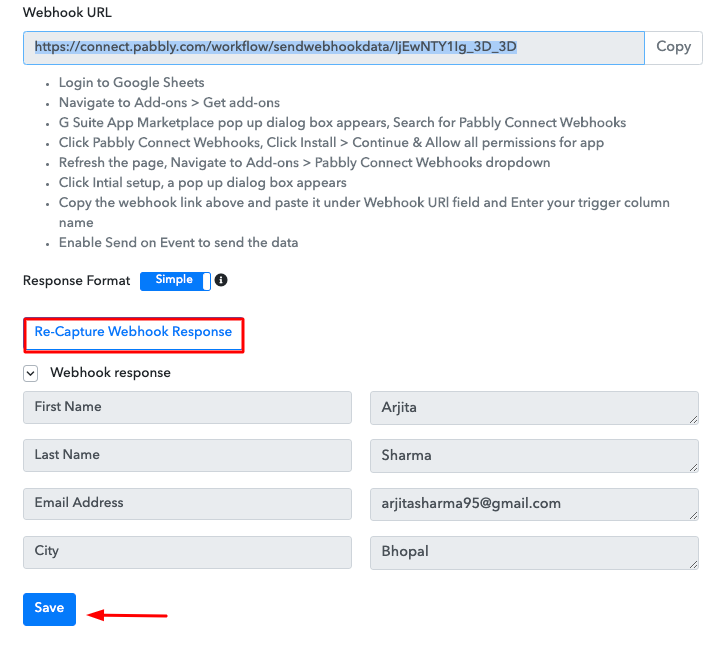
Step 6 : Test the Submission in Pabbly Connect Dashboard 

Capture Webhook

To test the Google Sheet data you have to click on “Capture Webhook Response” in Pabbly Connect. As soon as you click on the “Send Test” in Google Sheet and “Capture Webhook Response” in Pabbly Connect the entry will appear on the Pabbly Connect dashboard. Then, click on the “Save” option.

Step 7 : Setting Action for Google Sheets to SMTP Integration

In this step, we will be adding an action for your trigger.

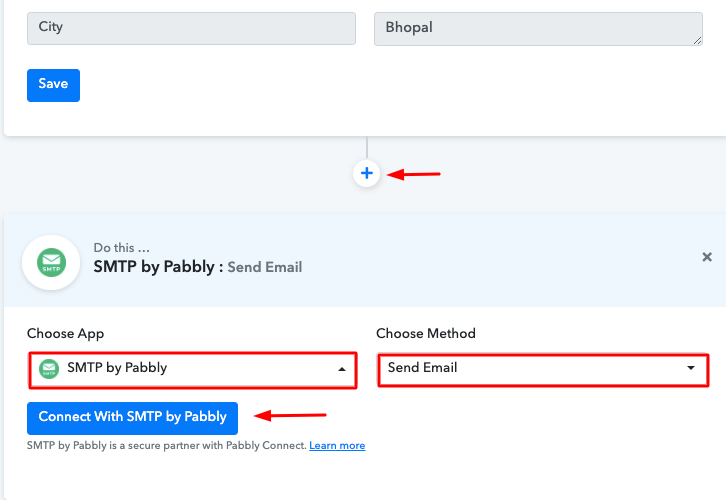
(a) Select SMTP by Pabbly

Select SMTP

Now in this step, click on the + button below and choose SMTP by Pabbly among various other applications. After choosing SMTP by Pabbly, now you have to select “Send Email” and then click on the “Connect with SMTP by Pabbly” button.

Step 8 : Connecting ‘SMTP by Pabbly’ to Pabbly Connect

To connect SMTP by Pabbly to Pabbly Connect, you have to enter parameters provided by your SMTP server in Pabbly Connect dashboard.

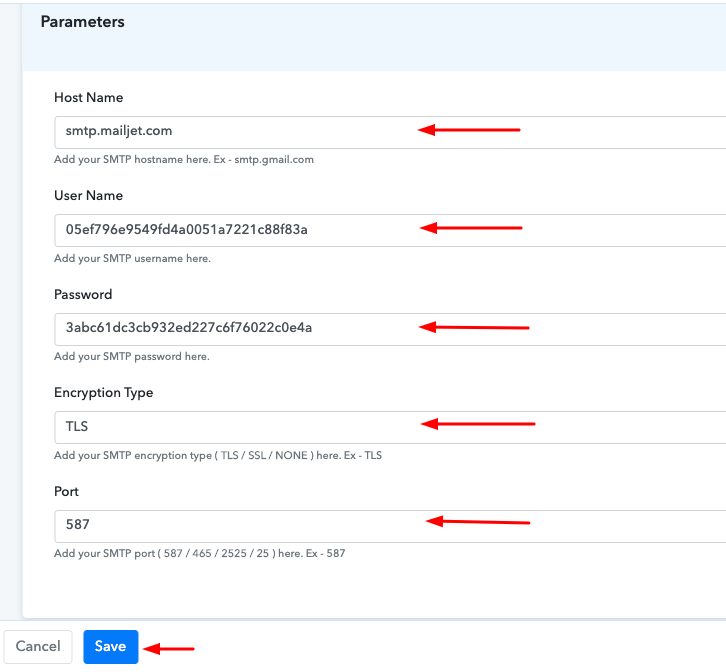
(a) Add Parameters

Send Bulk Emails via Google Sheets & SMTP Service

After clicking on the button, a pop-up window will appear where you have to add the hostname, username, password, encryption type, and port of your SMTP service. You can use any SMTP provider for this.

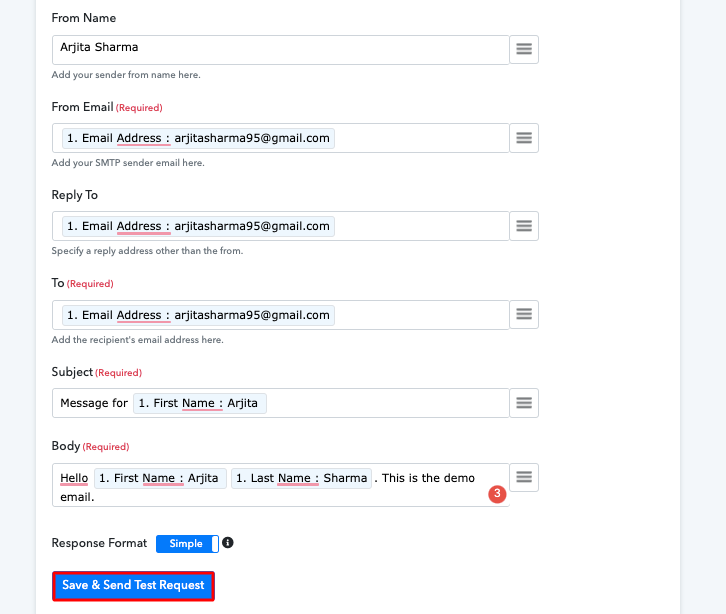
(b) Send a Test Request

send bulk emails via google sheets and smtp service

After saving your workflow map up all the required fields and click on the “Send Test Request” button.

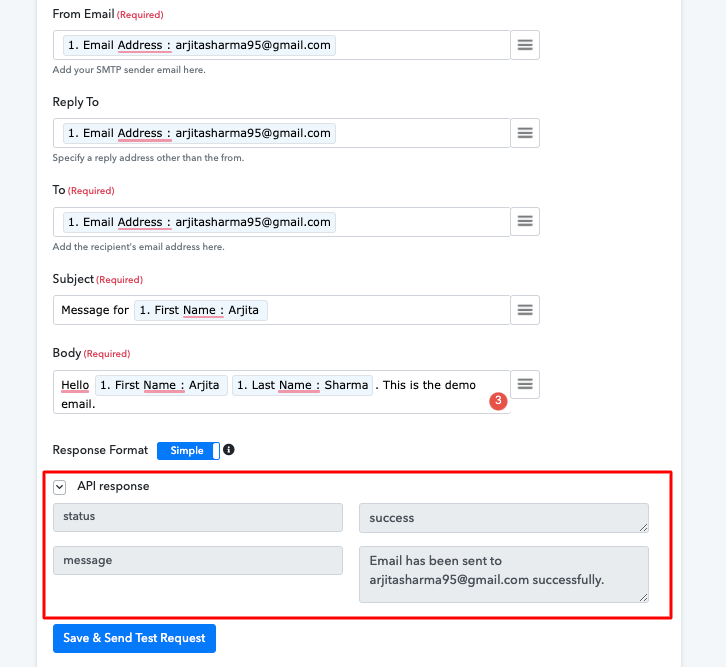
send bulk emails via google sheets and smtp service

You can see as you send a test request, the email is delivered to the recipient picked from the Google Sheet. Now, whenever you want to send emails automatically to bulk recipients you can choose in add-ons “Send All Data” while doing the integration.

Conclusion –

Now, that you know how to send bulk emails via Google Sheets and SMTP service, you can integrate any applications just by following these simple steps.

Other than this integration, you can integrate thousands of other applications on Pabbly Connect. All thanks to Pabbly Connect now data transmission is an easy task. Every information you want to transmit from one application to another can now be updated automatically. You don’t have to worry about anything. Therefore, integrate, and relax. For any doubts, please leave your comments below.

You May Also Like to Read –

How to Integrate Aidaform with Pabbly Email Marketing

How to Integrate Aidaform to Pabbly Email Marketing

Are you looking for a way to integrate Aidaform with Pabbly Email Marketing? If so, then put a halt on your search as we are going to walk you through the process.

How to Integrate Aidaform with Pabbly Email Marketing

But before moving further, let’s put light on Aidaform. Basically, Aidaform is a form builder that lets you build a responsive form in minutes. Using a form, one can collect data from customers. And, many times we want this collected data into our email marketing software. So that we can send email to our prospects whenever needed. Collecting data through forms and then adding the same data into email marketing software is a lot of work.

That’s when people start searching for software that can make all this process a cakewalk. And here we are revealing one such software named Pabbly Connect that makes automation tasks a walk in the park. It offers seamless data transmission between multiple applications. With the help of software, one can avoid repetitive tasks. Other than this, there are various features available like filters, path routers, formatters, and much more to ease-up the whole automation process.

Here, in this article, we will understand the process of integrating Aidaform with Pabbly Email Marketing.

So, let’s get started.

Step 1: Sign up to Pabbly Connect

Sign Up

Start the process by clicking on the “Sign Up Free” icon on the Pabbly Connect dashboard. Moreover, either manually enters all the details or sign up using Gmail credentials.

Try Pabbly Connect for FREE

Step 2: Access Pabbly Connect

Select Connect

After signing into the account, click on the “Access Now” button of Connect.

Step 3: WorkFlow for Aidaform Pabbly Email Marketing Integration

(a) Start with a New Workflow

Create New Workflow

Begin the process of building a workflow for your automation by tapping the “Create New Workflow” button.

(b) Name the Workflow

Name the Workflow

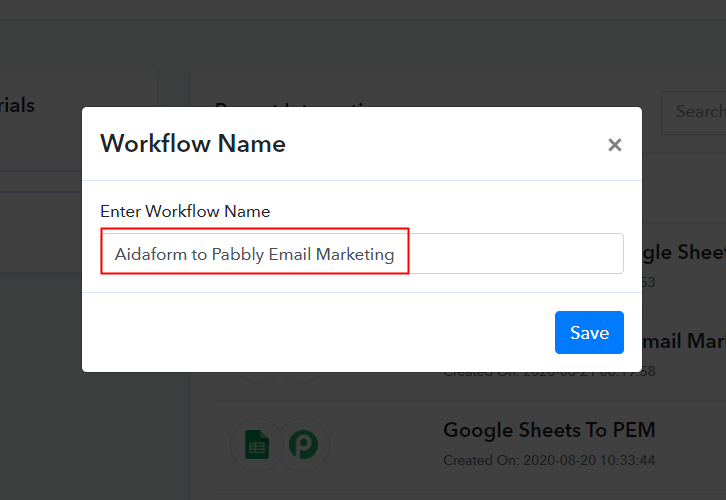
Next, add the name of workflow which in our case is “Aidaform to Pabbly Email Marketing”. Nevertheless, you can name the workflow according to your needs.

Step 4: Setting Trigger for Aidaform – Pabbly Email Marketing

After creating a workflow, you need to pick the application you want to integrate.

(a) Select Application you want to Integrate

Select Application

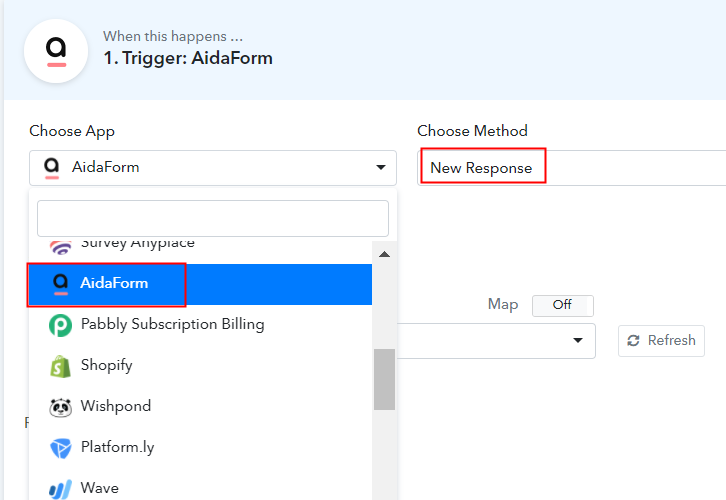
The succeeding step is to select “Aidaform” from the dropdown, then choose the “New Response” option.

(b) Click the Connect Button

Click the Connect Button

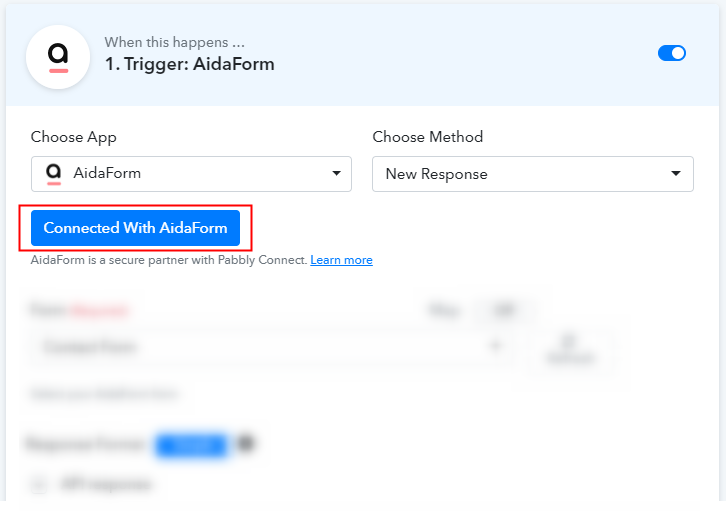
Further, click on the “Connected With Aidaform” button. It will open up the form where you have to submit the API key.

Step 5: Copy the API Key from Aidaform

To start the integration process, you have to copy the API key from Aidaform. For this, you have to sign in to your Aidaform account.

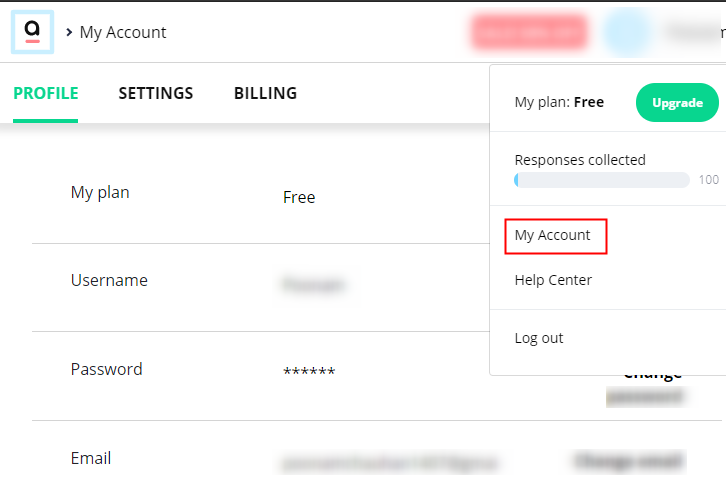
(a) Click on My Account

My Account

After login to your Aidaform account, simply click on the “My Account” option.

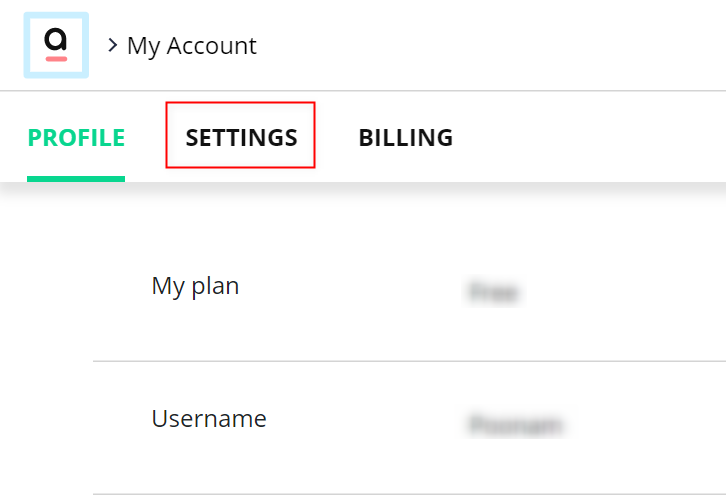
(b) Click on Setting Option

Setting Option

Now, choose the “Setting” option which is appearing on the screen.

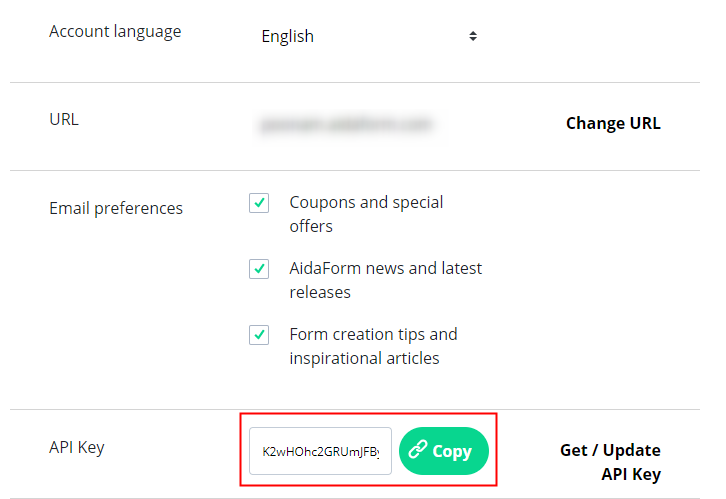
(c) Copy the API Key

Copy the API Key

Next, in the setting option, the API key will appear. Simply copy the key from there.

Step 6: Connecting Aidaform to Pabbly Connect

To send your Aidaform entries to email marketing software, you gotta paste the API key into the Pabbly Connect dashboard.

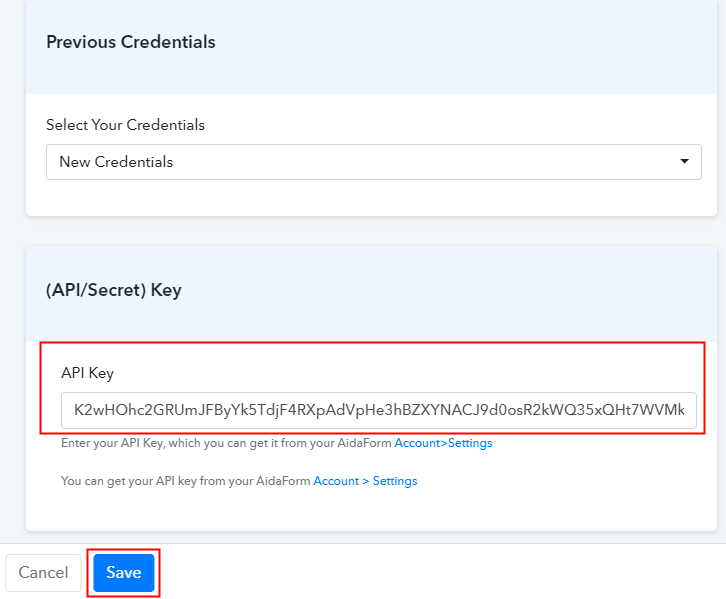
(a) Paste the API Key

Paste the API Key

As we told you earlier when you click on the “Connected With Aidaform” button, it will open up the form.  Just paste the API key. Then, click on the “Save” button.

(b) Add Form

Add Form

Now, all your forms will appear on the dropdown. Select the one you want to integrate into email marketing software.

Step 7: Fill the Form

Fill the Form

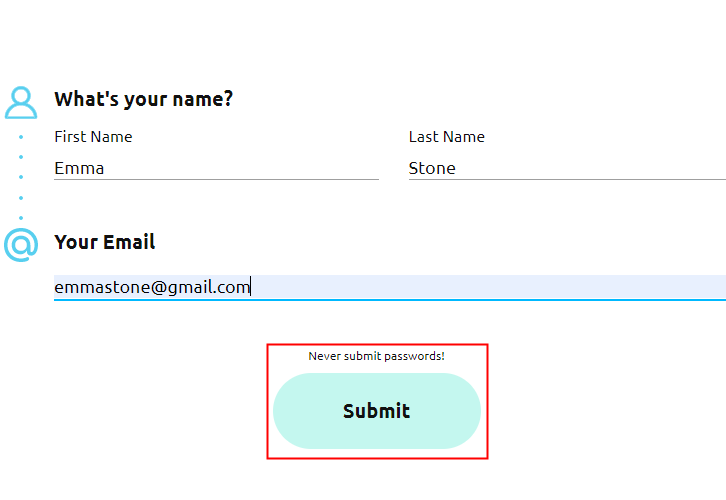
To test the form, make an entry in Aidaform. Just fill all the details in the template and then click on the “Submit” option.

Step 8: Test the Submission in Pabbly Connect Dashboard

Test the Submission

After filling the form, go back to the Pabbly Connect dashboard where the filled entry will appear automatically. Simply click on “Save and Send Test Request” for further process.

Step 9: Setting Action Aidaform – Pabbly Email Marketing

After setting a trigger, select the action for your trigger. For this, you have to select the application you want to integrate.

(a) Select Application you want to Integrate

Select Pabbly Email Marketing

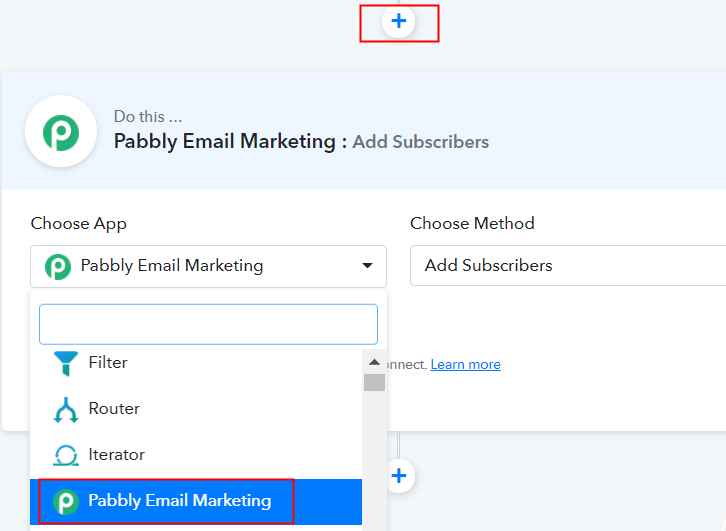
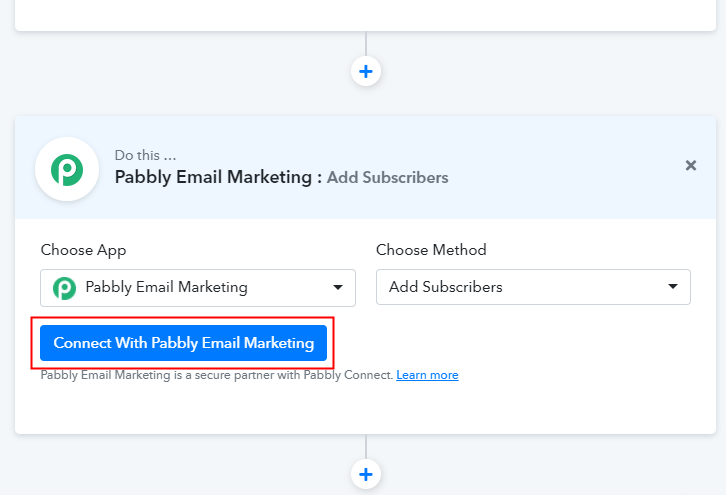
Next, click on the “+” icon to add an action for your trigger. Here we are going to select “Pabbly Email Marketing” from the dropdown. Then, select the “Add subscriber” option.

(b) Click the Connect Button

Click on Connect Button

Now, after making all the necessary changes, click on the “Connect with Pabbly Email Marketing” button. Further, it will ask for “Bearer Token”, for which you have to log in to Pabbly Email Marketing account.

Step 10: Connecting Pabbly Email Marketing to Pabbly Connect

To copy the “Bearer Token”, you have to log in to your Pabbly Email Marketing account.

(a) Click on Integrations

Integration Option

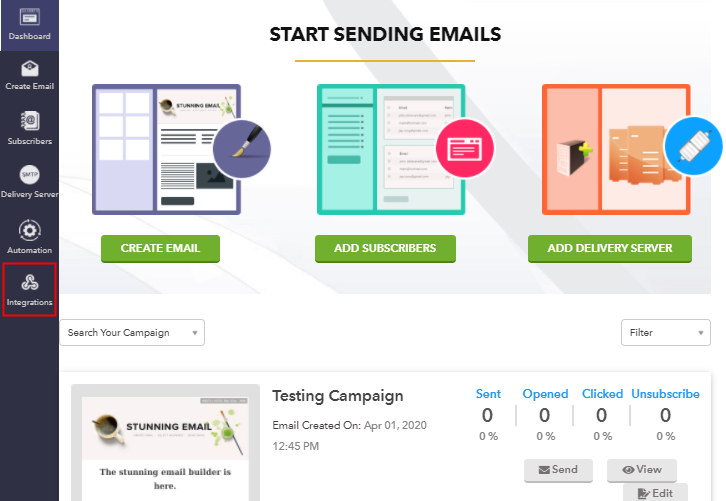
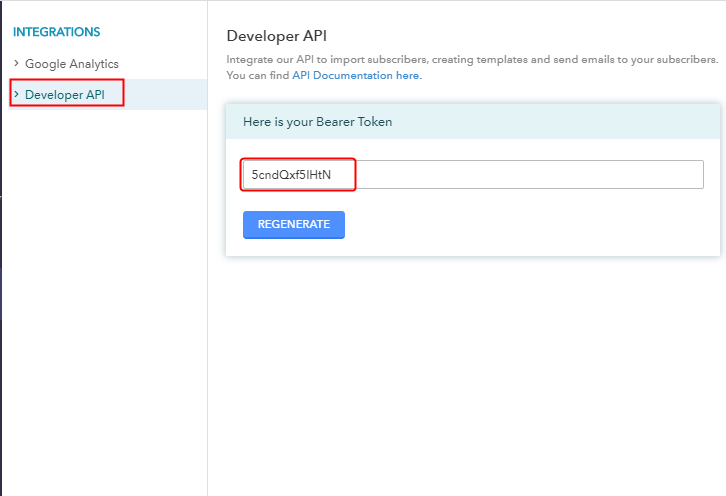
Login to your Pabbly Email Marketing account and select the “Integrations” option from the tab on the left. Then, further, click on the developer API option.

(b) Copy Bearer Token

Copy the Bearer Token

Next, copy the “Bearer Token” code provided as shown in the above image.

(c) Paste Bearer Token in Pabbly Connect Dashboard

Paste Bearer Token

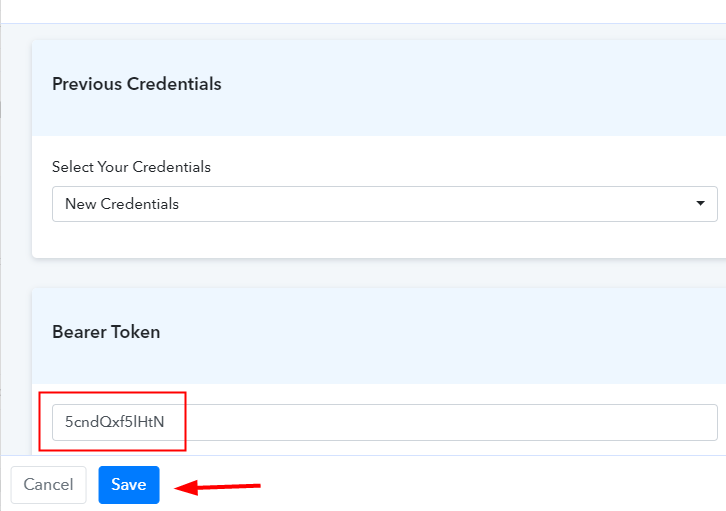
To paste your bearer token, go back to the “Pabbly Connect” dashboard. Then click on the “Connected” button which will open the page. Below on this page, you will see the option of “Bearer Token”, just paste your copied token there.

(d) Add Field Data

Add Field Data

Further, the “Default List” will appear in the “List Name” field. Now, all you have to do is add the required field from drop-down such as for the email field, select the email option, and for name field select the name option.

(e) Save and Send Test Request

Save and Send Test Request

After making all the changes, save the setting and then “Send Test Request”.

Step 11: Check the Submission

Check the Submission

Finally, when you check the default subscriber list in Pabbly Email Marketing software, your added entry will appear there. This is a single time process, after that, all the form submissions will automatically get appended to your subscriber list.

Conclusion –

Alright! Here we have covered all the essential steps to integrate Aidaform with Pabbly Email Marketing. All you have to do is follow all the above-mentioned steps and nothing else. Other than avoiding repetitive tasks, Pabbly Connects allows you to sort the data using filter feature. In case of any difficulty regarding workflow, you can always reach out to support staff of software.

So, what is stopping you now? Go and grab a deal.

You May Also Like To Read –

How to Integrate Elementor Forms with Google Sheets?

How to Integrate Elementor Forms with Google Sheets using Pabbly Connect?

Looking for ways to Integrate Elementor Forms to Google Sheets? Then, look no further, as here you will get a step by step guide to do so.

How to Integrate Elementor Forms with Google Sheets using Pabbly Connect?

We know how hectic it gets when you are supposed to fill all the data of every single Elementor Forms in google sheet manually. That must be the reason why you might be searching for ways to connect Elementor Forms with Google Sheets in order to automate the whole process and save yourself from all the hassle.
Therefore, here we have the perfect tool recommendation for you i.e, Pabbly Connect through which you can integrate Elementor Forms to Google Sheets and transfer data between services in no time. Moreover, Pabbly Connect provides you seamless data transmission among various applications. Besides, using this software, one can easily avoid repetitive tasks.
Not only that, but it also offers you several amazing features like filters, path routers, formatters, etc to ease-up the entire automation process. So, without wasting any of your time, let me take you through the steps that you need to follow to Integrate Elementor Forms to Google Sheets.

Step 1: Sign up to Pabbly Connect

Sign up to Pabbly Connect to Integrate Elementor Forms with Google Sheets

Lets begin the process by doing sign up to Pabbly Connect which will further help in the Elementor Forms integration process. And to do so, you need to fill out all the details manually or else you can sign-up via your Google account.

Step 2: Access Pabbly Connect

Access Pabbly Connect to Integrate Elementor Forms with Google Sheets

Once you complete the sign up process, now its time to access Connect (a service of Pabbly for automated integration & data transmission).

Step 3: Create a WorkFlow for Elementor Forms Integration

(a) Start with a New Workflow

Start with a New Workflow to Integrate Elementor Forms with Google Sheets

Now, start with creating a workflow for your project by clicking on the ‘Create New Workflow’ button.

(b) Name the Workflow

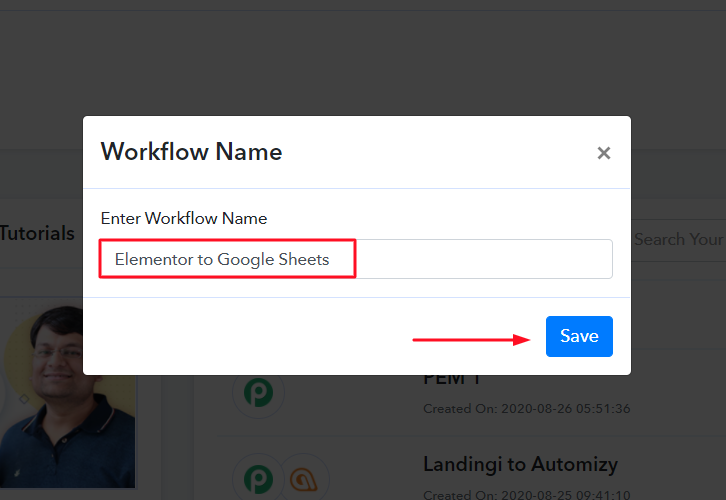
Elementor Forms to Google Sheets

Next, its time to add the name the workflow that is “Elementor Forms to Google Sheets”. However, you can change the name of your workflow whenever you want to as per your requirements.

Step 4: Setting Trigger

Copy the Webhook URL

After creating the workflow, the following step is to choose the application which you want to integrate, i.e, “Elementor Forms”. Now, just copy the webhook URL. With the help of this trigger, we can initiate the process of automation and integrated the first service with Pabbly Connect for further data transfer. Consequently, now its time to go the app that you wish to integrate, in this case, i.e, Elementor Forms.

Step 5: Paste the Webhook URL in Elementor Forms

The succeeding step is to paste the copied Webhook URL in your form builder dashboard and for that, you need to first log in to the  Elementor Forms.

(a) Click on “Action After Submit”

Click on "Action After Submit"

Once you enter the Elementor Forms dashboard, now its time to create a form from scratch. After creating the form, now its time to click on the “Action After Submit” setting of the form.

(b) Select Webhook Option & Paste Webhook URL

Select Webhook Option & Paste Webhook URL

After that, you need to click on the Webhook option where you have to paste the copied URL. Then, just simply click on the “Update” button. Now, its time to test the form, and to do so you need to fill the details of the form that you have recently created.

Step 6: Test the Submission in Pabbly Connect Dashboard

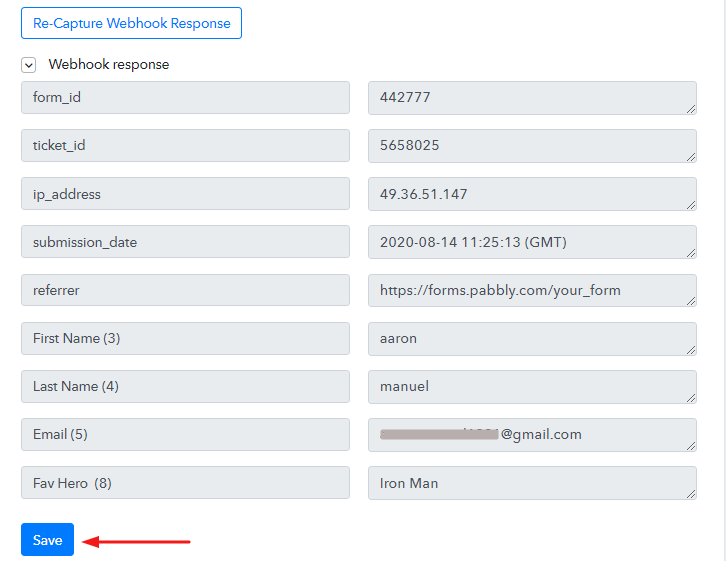
Test the Form

Once you fill out the form details your entry will appear in the “Pabbly Connect” dashboard. Then, click on the “Save” option.

Step 7: Set Action to Integrate Elementor Forms with Google Sheets

(a) Select Google Sheets

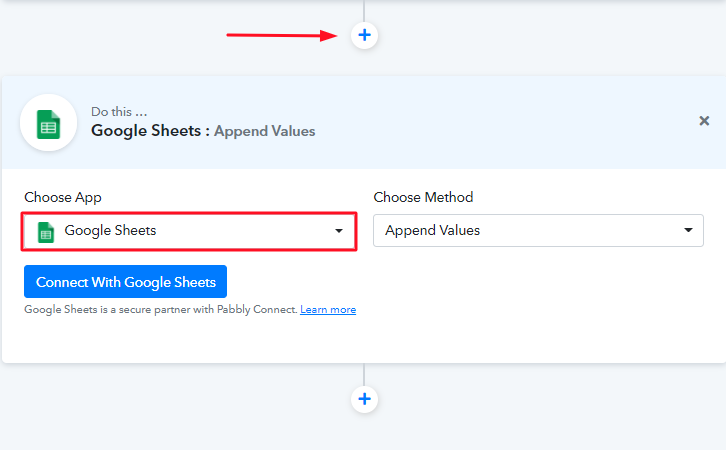
Select Google Sheets to Integrate Elementor Forms with Google Sheets

In order to connect the Elementor Forms to Google Sheets, just click on the “(+)” button. Later, you need to select Google Sheet from the drop-down option and tap on the button entitled ” Connect With Google Sheets”.

(b) Click on “Connect”

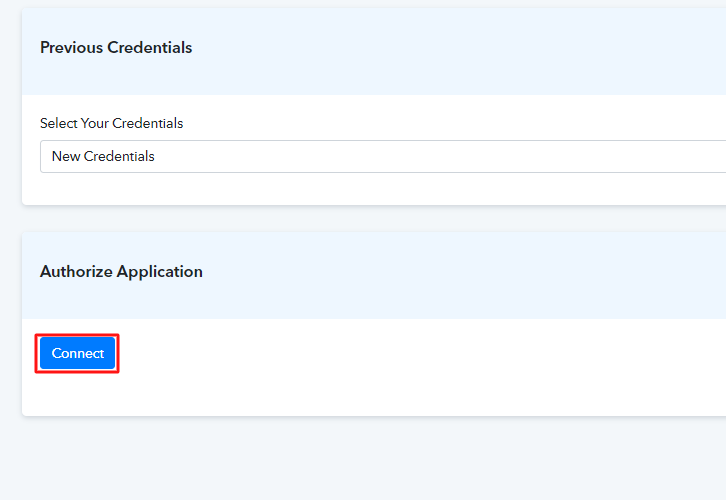
Authorize Application to Integrate Elementor Forms with Google Sheets

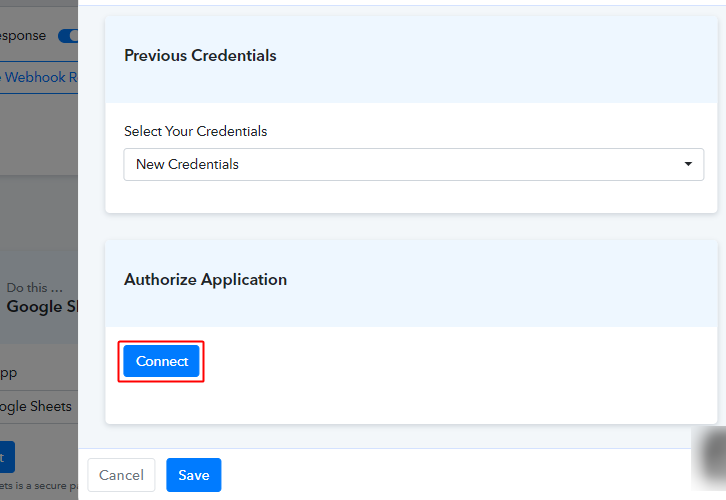
The next step is to connect with Google Sheet by pressing on the “Connect” button. After pressing the ‘Connect ‘ button, a window will pop-up asking you to select/fill a Google Account to authorize access to Google Sheets you want to integrate.

Step 8: Fill up All the Fields

Fill up All the Fields to Integrate Elementor Forms with Google Sheets

Once your google sheet is connected, now its time to fill up the required fields manually. And after entering all the details, just tap on the “Save & Send Test Request” button so that you can complete the whole procedure.

Step 9: Check the Google Sheet

Check the Google Sheet to Integrate Elementor Forms with Google Sheets

Voila! As you can see that, all the form details are now visible in your google sheet and your automation is now set. Now, whenever someone is going to fill the form, Google Sheet will get updated automatically. Isn’t it great?

Conclusion

There you go! See how easy it is to integrate Elementor Forms to Google Sheets using Pabbly Connect. All you need to do is follow all the steps mentioned in the blog just one time and your integration is ready to roll. Now, whenever someone is going to fill the form your sheet will get updated automatically. Isn’t it amazing? So, don’t wait anymore and sign in to Pabbly Connect to get hassle-free work experience.

You May Also Like To Read –