How to Migrate from Pabbly Email Marketing V1 to V2 (Important Points)

Watch Step By Step Video Tutorial Below


1. Accessing Pabbly Connect for Migration

To start migrating from Pabbly Email Marketing V1 to V2, you need to access Pabbly Connect. This platform facilitates the migration process seamlessly. Begin by signing in to your Pabbly account and navigating to the Pabbly Email Marketing section.

Once logged in, you will see options for both Classic and New Beta versions. Click on “Access Now” for the New Beta version to proceed with your migration. This step is crucial for ensuring that your data transfers correctly.


2. Setting Up Your Business Details in Pabbly Connect

After accessing the New Beta version, you will be prompted to enter your business details. This step is necessary for a successful setup in Pabbly Connect. Ensure you fill in all required fields accurately, including business name, address, and website.

  • Business Name
  • Business Address
  • Website URL

Once you have filled in the business details, click on “Save”. This action will allow you to proceed to the next step of the migration process in Pabbly Connect.


3. Migrating Subscribers from V1 to V2 Using Pabbly Connect

With your business details saved, you can now migrate your subscribers. In Pabbly Connect, locate the migration option. This is essential for transferring your existing subscriber data from Pabbly Email Marketing V1 to V2.

Before proceeding, ensure that the number of subscribers you allocate in V2 matches or exceeds those in V1. This ensures a smooth transition without any data loss. Click on the migration button to start the process.

  • Confirm migration request
  • Monitor migration progress
  • Check for completion

After initiating the migration, you will see a progress indicator. This will inform you of the percentage of subscribers successfully migrated. Once completed, you can confirm the migration within Pabbly Connect.


4. Post-Migration Setup in Pabbly Connect

After successfully migrating your subscribers, it’s essential to set up your email campaigns and automation workflows in Pabbly Connect. Note that templates and automation from V1 will not transfer automatically, so you’ll need to recreate them in V2.

Additionally, segments from your V1 account will appear as new lists in V2. Ensure you check the delivery servers and create new ones if necessary. This setup is crucial for maintaining your email marketing effectiveness.


5. Conclusion

In conclusion, migrating from Pabbly Email Marketing V1 to V2 using Pabbly Connect is a straightforward process. By following the steps outlined, you can ensure a smooth transition while preserving your subscriber data. Remember to set up your campaigns and workflows in V2 to continue your marketing efforts effectively.

Fix Duplicate Leads Using AI Automation

Watch Step By Step Video Tutorial Below


1. Accessing Pabbly Connect for Automation

To start using Pabbly Connect, you need to navigate to the Pabbly Connect website. If you are a new user, click on the ‘Sign up free’ button to create your account. Existing users can directly sign in to access their dashboard.

Once logged in, you will be directed to the dashboard where you can create workflows. Click on the ‘Create Workflow’ button to begin setting up your automation process. This is where you will build the integration that detects duplicate leads.


2. Setting Up the Webhook in Pabbly Connect

In this step, you will set up a webhook to capture data from your Google Form. Start by clicking on the ‘Add Trigger’ button in your workflow. Select the ‘Webhook’ application and choose the ‘Catch Hook’ event. This will generate a unique webhook URL.

  • Click on ‘Add Trigger’.
  • Select ‘Webhook’ as the application.
  • Choose ‘Catch Hook’ as the event.

Copy the generated webhook URL and paste it into the code of your website or form. This allows Pabbly Connect to receive data whenever a new lead is submitted via the form.


3. Checking for Duplicates in Google Sheets

Next, you will set up an action step to check Google Sheets for existing leads. Click on the plus button to add an action application and select ‘Google Sheets’. Choose the ‘Get Rows’ event to retrieve data from your sheet.

Connect your Google Sheets account and select the spreadsheet and sheet where your leads are stored. For the range, specify the columns you want to check for duplicate entries. This setup allows Pabbly Connect to compare incoming data against existing records.


4. Using OpenAI to Identify Duplicates

In this step, you will integrate OpenAI to analyze the data retrieved from Google Sheets. Select ‘OpenAI’ as the next action application and choose the ‘ChatGPT’ event. Create a connection using your OpenAI token.

  • Select ‘OpenAI’ as the application.
  • Choose ‘ChatGPT’ as the event.
  • Input your OpenAI token to create the connection.

Map the data from the previous steps into the prompt to instruct OpenAI to check for duplicates. This integration allows Pabbly Connect to automate the detection of duplicate leads effectively.


5. Updating Google Sheets Based on Duplicate Status

Finally, set up a router in Pabbly Connect to manage the workflow based on the duplicate status returned by OpenAI. If the status is ‘new’, add a new row in Google Sheets; if it’s ‘duplicate’, update the existing row.

For each condition, select ‘Google Sheets’ as your action application. Use ‘Add New Row’ for new leads and ‘Update Row’ for duplicates. Map the necessary fields accordingly, ensuring that Pabbly Connect updates your records accurately.


Conclusion

By following this guide, you can effectively set up a system using Pabbly Connect to automatically detect duplicate leads in your CRM. This integration with Google Sheets and OpenAI streamlines your lead management process and enhances data accuracy.

I Automated My WhatsApp with AI — No More Manual Replies

Watch Step By Step Video Tutorial Below


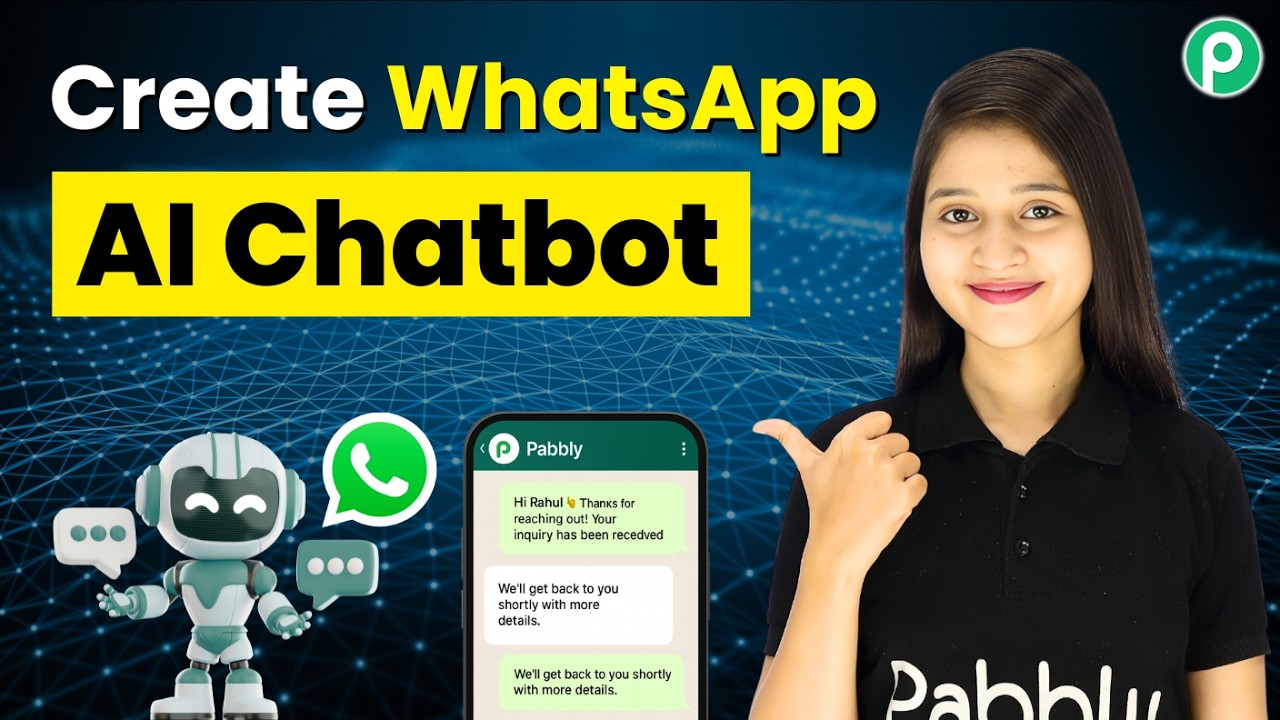
1. Create Your WhatsApp AI Assistant with Pabi

To create your WhatsApp AI assistant, start by accessing Pabi Chatflow. This platform allows you to automate customer interactions seamlessly. Simply open your browser and enter the URL: pave.com/chatflow.

Once on the homepage, you’ll see options to sign in or sign up. If you’re a new user, select the “sign up free” option to get started. This will grant you 100 free credits every month to practice using Pabi Chatflow.


2. Configuring Your AI Assistant in Pabi

After signing in, navigate to the AI assistant section in Pabi Chatflow. Here, you can create a new assistant by clicking on the “Add Assistant” button. For this example, let’s name our assistant “Lex Bridge Legal Advisor”.

In the configuration settings, you will select the instruction type as “AI Agent” and set the temperature to 0.5 for balanced responses. Make sure to enter your API key, which can be generated from the OpenAI API key page.

  • Select “AI Agent” as the instruction type.
  • Set the temperature to 0.5.
  • Enter your API key from OpenAI.

After entering all required fields, click the “Connect” button to save your settings. This will ensure your assistant is ready to respond effectively to customer queries.


3. Setting Up Your Knowledge Base for Pabi AI

To enhance your AI assistant’s capabilities, it’s essential to set up a comprehensive knowledge base. This should include details about your business, services, and frequently asked questions. You can upload your knowledge base in .txt or .pdf format.

Simply click on the “Upload File” button in the knowledge source section. Once your file is uploaded, you will see a confirmation message indicating successful processing. This knowledge base will allow your AI assistant to provide accurate responses to customer inquiries.

  • Upload your knowledge base in .txt or .pdf format.
  • Ensure it includes all necessary business details.
  • Confirm successful upload via the pop-up message.

With your knowledge base in place, your AI assistant can now engage with customers effectively, providing them with accurate information based on the data you have provided.


4. Finalizing and Activating Your AI Assistant

Once your AI assistant is configured and the knowledge base is uploaded, it’s time to finalize the setup. You can customize the appearance of your assistant by selecting theme colors and shapes in the styling tab.

After customizing, activate your assistant by toggling the activation switch. Don’t forget to save your settings by clicking the “Save AI Assistant” button. A confirmation pop-up will indicate that your assistant has been saved successfully.

To enable your AI assistant for all contacts, navigate to the settings and select “Inbox Settings”. Here, enable the “AI Auto Replies” option and select your newly created assistant from the dropdown menu.


5. Conclusion: Automate Your Customer Interactions with Pabi

Integrating Pabi with API allows you to automate customer interactions effectively. By creating an AI-powered WhatsApp assistant, you can enhance customer experience and save time.

With the steps outlined above, you can set up your assistant using Pabi Chatflow and provide accurate responses to customer queries. Start using Pabi today and transform your business communication.

Build a Sales Monitoring System with Pabbly Connect

Watch Step By Step Video Tutorial Below


1. Setting Up Pabbly Connect for Lead Management

To efficiently manage leads, first, you need to access Pabbly Connect. Open your browser and go to the Pabbly Connect website. If you are a new user, click on the ‘Sign Up Free’ button to create an account. Existing users can simply log in.

Once logged in, navigate to the dashboard. Click on the ‘Create Workflow’ button to start your automation process. You will be prompted to choose between the new beta version or the classic version of the workflow builder. Select the one you prefer, name your workflow, and choose a folder to save it in.


2. Configuring Google Sheets as a Trigger Application

The first step in your workflow is to set Google Sheets as the trigger application. Click on the plus button to add a new application. From the list, select Google Sheets. You will then need to choose an event, which in this case is ‘New or Updated Spreadsheet Row’. This triggers the workflow whenever a new row is added.

  • Select Google Sheets as the trigger application.
  • Choose ‘New or Updated Spreadsheet Row’ as the event.
  • Connect Google Sheets to Pabbly Connect.

After connecting, copy the webhook URL provided. This URL will be used to connect your Google Sheets to Pabbly Connect. Open your Google Sheets, go to Extensions, then Add-ons, and search for the Pabbly Connect Webhook add-on. Install it and paste the copied URL in the initial setup.


3. Using Router for Conditional Lead Assignment

Once your trigger is set, the next step is to assign leads conditionally using a router. Click on the plus button and select Router. This allows you to create different paths based on the lead’s source. For instance, if the lead is from Facebook, it will follow one path; if it’s from Instagram, it will follow another.

Set up filters for each path. For the Instagram filter, select the label as ‘Source’, set the condition to ‘Equal To’, and type ‘Instagram’. Do the same for the Facebook filter, but type ‘Facebook’. This way, you can route leads to the appropriate salesperson based on their source.

  • Create a router in Pabbly Connect.
  • Set filters for Instagram and Facebook leads.
  • Assign leads to specific team members based on the source.

Once the filters are set, you can proceed to assign the leads to your team members. If the lead is from Instagram, assign it to Priya; if from Facebook, assign it to Rahul. This ensures that leads are handled promptly and efficiently.


4. Updating Google Sheets and Notifying Team via Slack

After assigning leads, the next step is to update the Google Sheets with the assigned salesperson’s name. Click on the plus button and select Google Sheets again. This time, choose ‘Update Cell Value’ as the event. Connect Google Sheets to Pabbly Connect again if necessary.

Specify the spreadsheet and sheet name, and in the cell range, enter the column and row where you want to update the value. For example, if you want to update the assigned salesperson in column D, you would enter D2 for the row. Use the mapping feature to dynamically select the row index.

  • Choose ‘Update Cell Value’ for Google Sheets.
  • Map the row index to ensure it updates dynamically.
  • Add the salesperson’s name based on the lead source.

Finally, to notify the assigned salesperson, add Slack as another action application. Choose ‘Send Channel Message’, connect it to Pabbly Connect, and specify the message format. Include the lead’s name and phone number in the message for context.


5. Finalizing the Workflow and Testing

Once all steps are set, review your workflow to ensure everything is correctly configured. You can copy and paste steps to avoid redundancy, especially for similar actions like assigning leads to different salespeople. Adjust the names accordingly for each path in your router.

After finalizing, test your workflow by adding a new row in Google Sheets. Ensure that the lead gets assigned correctly and that notifications are sent via Slack. This is crucial for confirming that your setup is functioning as expected.

  • Test the workflow by adding a new lead.
  • Check Google Sheets for updates and Slack for notifications.
  • Ensure all paths in the router are functioning properly.

With your workflow successfully tested, you can now automate lead assignments and notifications, ensuring no lead goes unnoticed. This powerful automation using Pabbly Connect not only saves time but also improves your team’s responsiveness.


Conclusion

In this tutorial, we explored how to use Pabbly Connect to automate lead assignments and notifications effectively. By integrating Google Sheets and Slack, you can ensure that your sales team responds quickly to leads and improves overall efficiency.

Generate High-Ranking YouTube Tags Using AI 🤯

Watch Step By Step Video Tutorial Below


1. Accessing Pabbly Connect for YouTube Tag Generation

To start generating high-ranking YouTube tags, you need to access Pabbly Connect. Open a new tab and go to pabby.com/connect. This will lead you to the Pabbly Connect landing page.

If you are a first-time user, sign up for free. This allows you to explore the features of Pabbly Connect with 100 free tasks each month. Existing users can simply log in to access their dashboard and create workflows.


2. Creating the Workflow in Pabbly Connect

Once logged into Pabbly Connect, you can create a new workflow. This involves setting up a trigger and an action. The trigger will be Google Sheets, specifically the event of a new or updated spreadsheet row.

  • Select Google Sheets as the trigger application.
  • Choose the event as ‘New or Updated Spreadsheet Row.’
  • Click the connect button to link Google Sheets with Pabbly Connect.

After clicking connect, you will receive a webhook URL. Copy this URL and proceed to your Google Sheets to create the integration.


3. Setting Up Google Sheets with Pabbly Connect

In Google Sheets, go to Extensions > Add-ons > Get Add-ons. Search for “Pabbly Connect Webhooks” and install it. Once installed, refresh your spreadsheet.

  • Navigate back to Extensions and select Pabbly Connect Webhooks.
  • Click on Initial Setup to enter the webhook URL.
  • Set the trigger column where you will input the final data.

After submitting, make sure to enable the “Send on Event” option. This will allow Google Sheets to send new data to Pabbly Connect automatically.


4. Generating High Ranking Tags Using OpenAI

With the trigger set, you can now add an action step to generate the tags using OpenAI. Select OpenAI as the action application and choose the event as ‘ChatGPT.’

To connect OpenAI, you need to provide an API token. Go to your OpenAI account, generate a new secret key, and paste it into Pabbly Connect. After this, select the AI model you want to use for tag generation.

  • Enter the prompt for generating tags based on the video title and description.
  • Map the title and description data from the previous step.
  • Click on “Save and Send Test Request” to see the generated tags.

Once the tags are generated, you can see the output in Pabbly Connect and move on to the next step.


5. Updating Google Sheets with Generated Tags

Finally, you need to update Google Sheets with the generated tags. Add another action step in Pabbly Connect and select Google Sheets again, this time choosing the event as ‘Update Cell Value.’

Connect Google Sheets by selecting your account and granting permissions. Then, specify the spreadsheet and sheet where you want to update the tags. Map the column and row index where the tags will be placed.

  • Enter the column name (e.g., “C”) for the tags.
  • Map the row index from the previous step.
  • Click “Send Test Request” to confirm the update.

Once confirmed, the tags will be updated in your Google Sheets, completing the automation process using Pabbly Connect.


Conclusion

In this tutorial, we demonstrated how to use Pabbly Connect to automate the generation of high-ranking YouTube tags. By integrating Google Sheets and OpenAI, you can streamline your workflow and enhance your video SEO effortlessly.

How to Build AI Automations for Free | No Code

Watch Step By Step Video Tutorial Below


1. Accessing Pabbly Connect for Automation

To start using Pabbly Connect, open your browser and go to pabbl.com/connect. This is the platform where you can automate various tasks seamlessly. If you are a new user, click on “Sign Up for Free” and fill in your details to get started.

Once you sign up, you will receive 100 free tasks every month to explore Pabbly Connect. If you are an existing user, simply click on “Sign In” and log in to your account. This allows you to begin creating your automation workflows immediately.


2. Creating YouTube Thumbnails Using Pabbly Connect

The first automation involves generating YouTube thumbnails. Whenever you add a title, description, and hook in Google Sheets, Pabbly Connect will trigger the creation of a thumbnail using Gemini.

  • Open Google Sheets and enter the title, description, and hook.
  • Set up Pabbly Connect to monitor changes in Google Sheets.
  • Use Gemini to generate the thumbnail image.

Once the thumbnail is generated, its URL will be added back to your Google Sheets. This automation saves you time by eliminating the manual process of creating thumbnails.


3. Generating Product Descriptions with Pabbly Connect

The second automation focuses on generating product descriptions. By entering product details such as name, type, and features into Google Sheets, Pabbly Connect can automatically create a detailed product description.

To set this up, you will need to connect Google Sheets to Pabbly Connect and specify the necessary fields. This way, whenever you input new product information, the automation will generate the corresponding description instantly.


4. Automating Social Media Posts with Pabbly Connect

The third automation allows you to post content automatically across various social media platforms. Instead of manually copying and pasting, you can create a single post in Pabbly Connect, which will then be published on LinkedIn, Facebook, Instagram, and more.

This automation streamlines your workflow, allowing you to focus on creating content rather than posting it on multiple platforms. Set a schedule for when you want your posts to go live, and Pabbly Connect will handle the rest.


5. Extracting Details from Documents Using Pabbly Connect

The fourth automation extracts key details from documents uploaded to Google Drive. Using Pabbly Connect, you can set up a workflow that automatically reads documents and extracts important information like names, emails, and addresses.

This feature is particularly useful for businesses dealing with numerous documents daily. By automating this process, you can save time and reduce errors associated with manual data entry.


Conclusion

By utilizing Pabbly Connect, you can automate various tasks ranging from generating YouTube thumbnails to extracting details from documents. This powerful tool simplifies your workflow and enhances productivity.

How to Create Product Catalog in WhatsApp Business (Step-by-Step)

Watch Step By Step Video Tutorial Below


1. Setting Up Your Facebook Account for Now and For Integrations

To start, you need to set up your Facebook account, which is essential for creating a WhatsApp product catalog. This integration allows you to share products easily with customers through WhatsApp.

After setting up your Facebook account, create your Facebook page and then establish your Meta business portfolio. This is crucial because you cannot proceed without a business portfolio.


2. Accessing the Meta Business Suite for Product Catalogs

Now, open a new tab and search for the Meta Business Suite. Click on the option to access it. This is where you will manage your catalogs and settings.

  • Click on the ‘Get Started’ option in the Meta Business Suite.
  • Navigate to the ‘Settings’ section from the panel.
  • Under ‘Data Sources’, select the ‘Catalogs’ option.

Once you are on the Catalogs page, you can create your product catalog. This is where the integration with Now and For becomes essential for managing your product listings.


3. Creating Your Catalog with Now and For

To create a new catalog, click on the ‘Add’ button and select ‘Create a New Catalog’. You will be prompted to confirm this action. Click on the ‘Continue’ button to proceed with creating your catalog.

Next, you will need to provide basic information about your catalog. Choose the catalog type that fits your business—options include online products, local products, or services. For most users, selecting ‘Online Products’ is the best choice.

  • If you have accounts with Shopify or WooCommerce, you can connect them here.
  • Ensure your business portfolio is set up to utilize the catalog effectively.

After setting up, you will also need to give access to other people in your business. This is important for team collaboration and management of the catalog.


4. Adding Products to Your Catalog Using Now and For

To add products, you must enter at least five items to run ads effectively. Click on the ‘Next’ button to continue. You will see fields for uploading images, titles, descriptions, and prices.

For each product, you need to fill in the details accurately. For example, when adding an orange dress, you would upload an image, provide a title, and write a description that highlights its features.

  • Upload your product image by clicking ‘Choose File’.
  • Enter the product title and description in the respective fields.
  • Set the price and select the category for your product.

Once all details are filled in, you can finalize the product catalog. This step is critical for ensuring that your products are displayed correctly on WhatsApp.


5. Finalizing Your Catalog and Sharing on WhatsApp

After adding all necessary products, you can view your newly created catalog. If everything looks good, you can share it directly with your customers on WhatsApp. This feature simplifies the process of sharing products without sending individual images.

Additionally, you can manage your catalog by editing or adding more products later. This flexibility allows you to keep your offerings up-to-date and relevant.

  • Use the catalog to run ads and promote your products on Facebook.
  • Consider syncing your catalog with Pab Connect for enhanced automation.

This integration not only helps in product management but also enhances customer interaction through WhatsApp.


Conclusion

Creating a WhatsApp product catalog using Now and For integrations streamlines your product sharing process, allowing you to reach customers effectively. With the right setup, you can manage your products easily and enhance customer engagement.

Auto-Sync Instagram Leads to Privyr in Seconds

Watch Step By Step Video Tutorial Below


1. Accessing Pabbly Connect for Integration

To begin the integration of Instagram Lead Ads with Pipedrive, you first need to access Pabbly Connect. Start by visiting the official Pabbly website by typing pabbly.com in your browser. Once there, you can sign in to your existing account or create a new one if you are a first-time user.

After signing in, you will see the Pabbly apps page. Click on the Pabbly Connect icon to access the dashboard where all your workflows are managed. This is where you will set up the integration between Instagram Lead Ads and Pipedrive using Pabbly Connect.


2. Creating a New Workflow in Pabbly Connect

Now that you are in Pabbly Connect, it’s time to create a new workflow. Click on the ‘Create Workflow’ button, and you will be prompted to select the workflow builder. Choose the modern beta version for a faster experience.

  • Name your workflow as “Auto Sync Instagram Leads to Pipedrive”.
  • Select the folder where you want to save this workflow.
  • Click on ‘Create’ to finalize the workflow setup.

Once the workflow is created, you will see a prompt to enter the trigger application. In this case, select Instagram Lead Ads as your trigger application. This means the workflow will start whenever a new lead is generated through your Instagram ads.


3. Setting Up Instagram Lead Ads Trigger

For the trigger event, select “New Lead Instant” and click on “Connect”. If you have an existing connection, you can save it; otherwise, create a new one by clicking on “Connect with Instagram Lead Ads”. Make sure your Instagram account is linked to your Facebook account for smooth integration.

After successfully connecting, select the Facebook page associated with your Instagram account. In this case, choose “The Magic Makers”. Then, select the lead gen form you created earlier, which will be used to capture leads from your Instagram ads.

  • Navigate to your Facebook Ads Manager to find the correct page and form.
  • Ensure that the lead gen form is set up properly to capture user details.

Once you have selected the page and lead gen form, click on “Save and Send Test Request”. This action will change the status to “Waiting for Facebook Response”. You will now need to generate a test lead to ensure everything is working correctly.


4. Testing the Integration with Pabbly Connect

To test the integration, go back to your lead ads testing tool on Facebook and submit a test lead. Make sure to fill in the required fields such as email, first name, last name, phone number, and city. For instance, you can use the email “[email protected]” and the city “Bhopal”.

After submitting the form, return to your Pabbly Connect workflow. You should see that the details from your test lead have been captured successfully. This confirms that the connection between Instagram Lead Ads and Pabbly Connect is functioning properly.

  • Check for the response captured in Pabbly Connect.
  • Verify that all details match what you submitted in the test lead.

If everything looks good, you are ready to move on to the next step, which is adding these details to your Pipedrive CRM.


5. Adding Leads to Pipedrive CRM via Pabbly Connect

Now that you have successfully captured leads from Instagram, it’s time to add them to your Pipedrive CRM. Click on “Add Action Step” in your workflow and search for Pipedrive. Select “Create Client” as your action event and click “Connect”.

You will need to enter your Pipedrive authentication token for this connection. Follow the prompts to get your token and paste it into Pabbly Connect. Once connected, you can map the fields from your Instagram lead ads to Pipedrive.

  • Map the name, email, and phone number fields from the lead.
  • Set the lead source as “Instagram Leads”.

After mapping all the required fields, click on “Save and Send Test Request”. Check your Pipedrive CRM to confirm that the new client has been created with the correct details. This verifies that the integration is complete and functioning as intended.


Conclusion

In this tutorial, we explored how to integrate Instagram Lead Ads with Pipedrive using Pabbly Connect. By following these steps, you can automate the process of adding new leads to your CRM, enhancing your business efficiency. Utilize Pabbly Connect to streamline your workflows and optimize lead management.

Automatically Save Meta Ads Leads to Google Sheets in Real Time

Watch Step By Step Video Tutorial Below


1. Accessing Pabbly Connect for Integration

To begin the integration process, you first need to access Pabbly Connect. Open your browser and navigate to Pabbly’s official website by searching for Pabbly.com/n. This will direct you to the homepage of Pabbly Connect.

Once on the homepage, you will see two options: “Sign In” for existing users and “Sign Up Free” for new users. New users can sign up to receive 300 tasks every month to explore the software. If you already have an account, simply click on “Sign In” to access your dashboard.


2. Creating a Workflow in Pabbly Connect

After signing in, you will reach the dashboard of Pabbly Connect. Here, you need to create a workflow to automate the process of saving Meta Ads leads into Google Sheets. Click on the “Create Workflow” button to begin.

  • Select the “New Beta” option for a modern and flexible experience.
  • Name your workflow, such as “Automatically Save Meta Ads to Google Sheets in Real Time”.
  • Choose the appropriate folder for your workflow, like “Facebook Lead Ads”.

After naming your workflow and selecting the folder, click on the “Create” button to proceed with setting up the automation.


3. Setting Up the Trigger in Pabbly Connect

The next step involves setting up the trigger for your workflow. In Pabbly Connect, triggers are events that start the automation process. Here, you will select “Facebook Lead Ads” as your trigger application.

Choose the event as “New Lead Instant”. This means that every time a new lead is generated through your Facebook ads, the automation will initiate. You will then need to connect your Facebook account by selecting the desired account from the dropdown menu.


4. Configuring the Action to Google Sheets

After setting up the trigger, the next step is configuring the action that will take place in Google Sheets. In Pabbly Connect, select Google Sheets as your action application.

  • Choose the action event as “Add a New Row”.
  • Connect your Google account by selecting “Sign In with Google” and granting necessary permissions.
  • Select the spreadsheet and specific sheet where you want the leads to be saved.

After configuring the action step, you will need to map the data fields from the Facebook lead form to the corresponding columns in your Google Sheet, such as name, email, and phone number.


5. Testing and Verifying the Integration

Once you have set up the trigger and action steps in Pabbly Connect, it’s essential to test the integration. You can do this by generating a test lead using the Facebook Lead Ads testing tool. This will help ensure that the leads are being captured correctly in Google Sheets.

After generating the test lead, you should check your Google Sheet to confirm that the new lead information appears as a new row. This verifies that the integration is working correctly and that all the lead details are being saved automatically.


Conclusion

In this tutorial, we explored how to use Pabbly Connect to automate saving Meta Ads leads to Google Sheets in real-time. By following these steps, you can efficiently manage your leads without any manual effort, streamlining your workflow and enhancing productivity.

How to Generate AI Images for Free

Watch Step By Step Video Tutorial Below


1. Accessing Pabbly Connect for Automation

To start automating image generation, you need to access Pabbly Connect. If you’re a new user, visit pabbly.com/connect and click on the “Sign Up for Free” button in the top right corner. This allows you to explore the platform with 100 free tasks monthly, enabling you to generate up to 100 images without any cost.

Once logged in, navigate to the workflow builder within Pabbly Connect. This is where you will create your automation by setting up triggers and actions. A trigger is an event that starts the workflow, while an action is what happens as a result of that trigger.


2. Setting Up Google Sheets with Pabbly Connect

The first step in your automation is to set up Google Sheets as the trigger application. In the workflow builder of Pabbly Connect, click on the “Add Trigger” button and select Google Sheets. Choose the event as “New or Updated Spreadsheet Row” and click on “Connect” to receive a webhook URL.

  • Copy the webhook URL provided by Pabbly Connect.
  • Open your Google Sheets and navigate to Extensions > Add-ons > Get Add-ons.
  • Search for “Pabbly Connect Webhooks” and install it.

After installation, refresh your Google Sheets to see the Pabbly Connect Webhooks option under Extensions. Here, you will set up the initial configuration by pasting the webhook URL and defining the trigger column. This column will indicate when to send data to Pabbly Connect.


3. Generating Images Using Gemini AI

Once your Google Sheets is configured, it’s time to generate images using Gemini AI through Pabbly Connect. Click on the “Add New Action Step” and select Gemini as the action application. Choose the event “Generate and Edit Image” and connect it to your existing Gemini account.

To establish this connection, you will need an API key from your Google AI Studio. Navigate to the “Get API Key” section in Google AI Studio, create a new API key, and copy it. Paste this key in the Pabbly Connect workflow to link Gemini with Pabbly Connect.

  • Select the model (e.g., Nano Banana) that you want to use for generating images.
  • Map the details from your Google Sheets to the prompt fields in Gemini.
  • Click on “Save and Send Test Request” to generate the image.

After testing, you will receive a file URL for the generated image, which you can then use in your Google Sheets.


4. Updating Google Sheets with the Image URL

After generating the image, you need to update your Google Sheets with the image URL. Add another action step in your workflow and select Google Sheets again. This time, choose the event “Update Cell Value” and connect it to your Google account.

In this step, specify the spreadsheet and the sheet where you want to add the image URL. For the range, map the cell where you want the image URL to appear. For example, if you want to add it to cell F2, you will map it accordingly.

  • Use a slash to map the row index dynamically.
  • Map the file URL generated by Gemini as the value to be updated.
  • Click “Save and Send Test Request” to confirm the update.

Once completed, the image URL will be successfully added to your Google Sheets, completing the automation process through Pabbly Connect.


5. Finalizing Your Automation in Pabbly Connect

To ensure your automation runs smoothly, make sure the “Send On Event” option in the Pabbly Connect Webhooks settings is enabled. This ensures that whenever a new event occurs in your Google Sheets, the details will be sent to Pabbly Connect, triggering the image generation process.

With everything set up, you can now enjoy automated image generation for your projects. Test the workflow by adding new data to your Google Sheets, and watch as Pabbly Connect seamlessly generates images and updates your spreadsheet in real time.

Don’t forget that you can explore more integrations with Pabbly Connect. With its user-friendly interface and powerful capabilities, you can automate various tasks across different applications.


Conclusion

In this tutorial, we explored how to automate image generation using Pabbly Connect, Google Sheets, and Gemini AI. By following these steps, you can streamline your workflow and enhance productivity with ease. Start using Pabbly Connect today for effective automation!