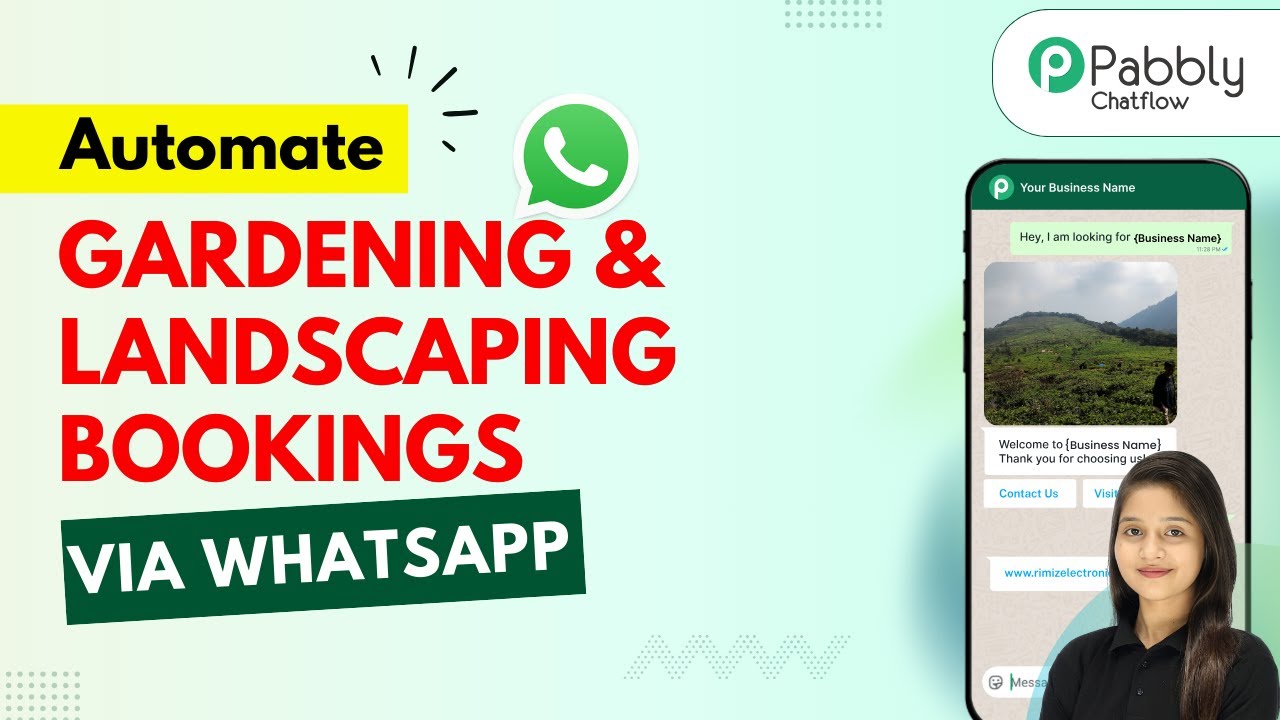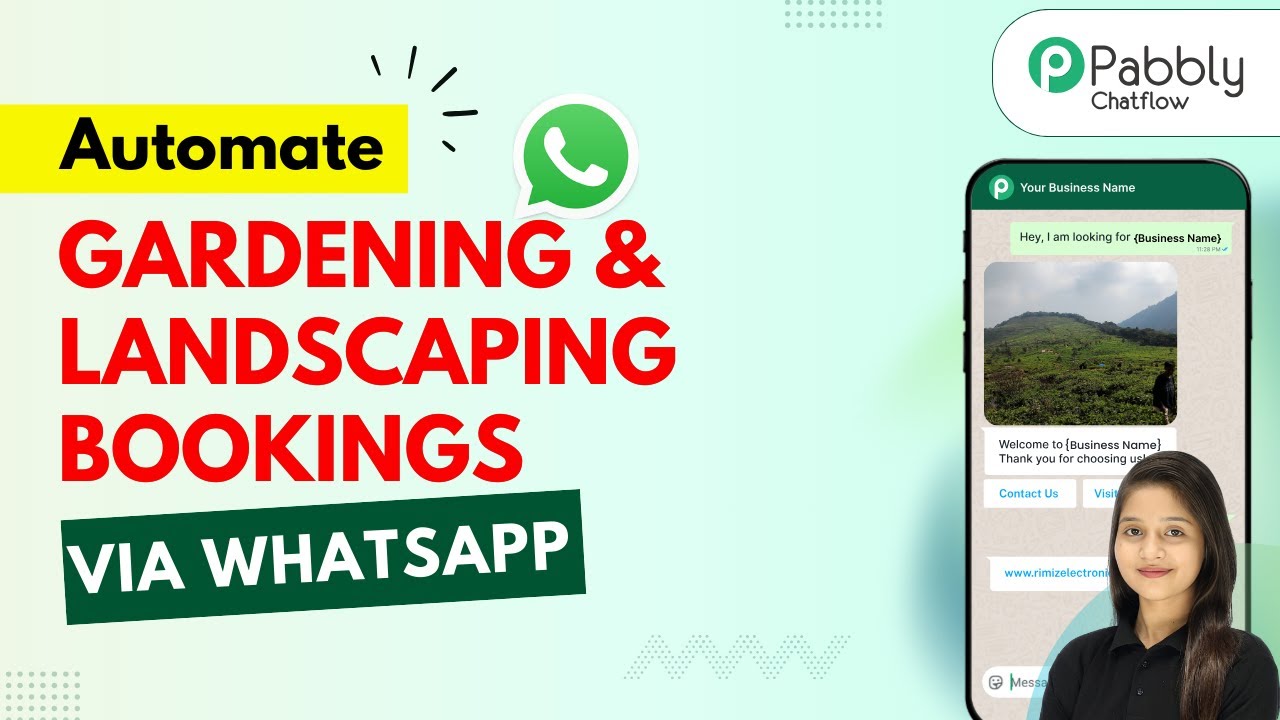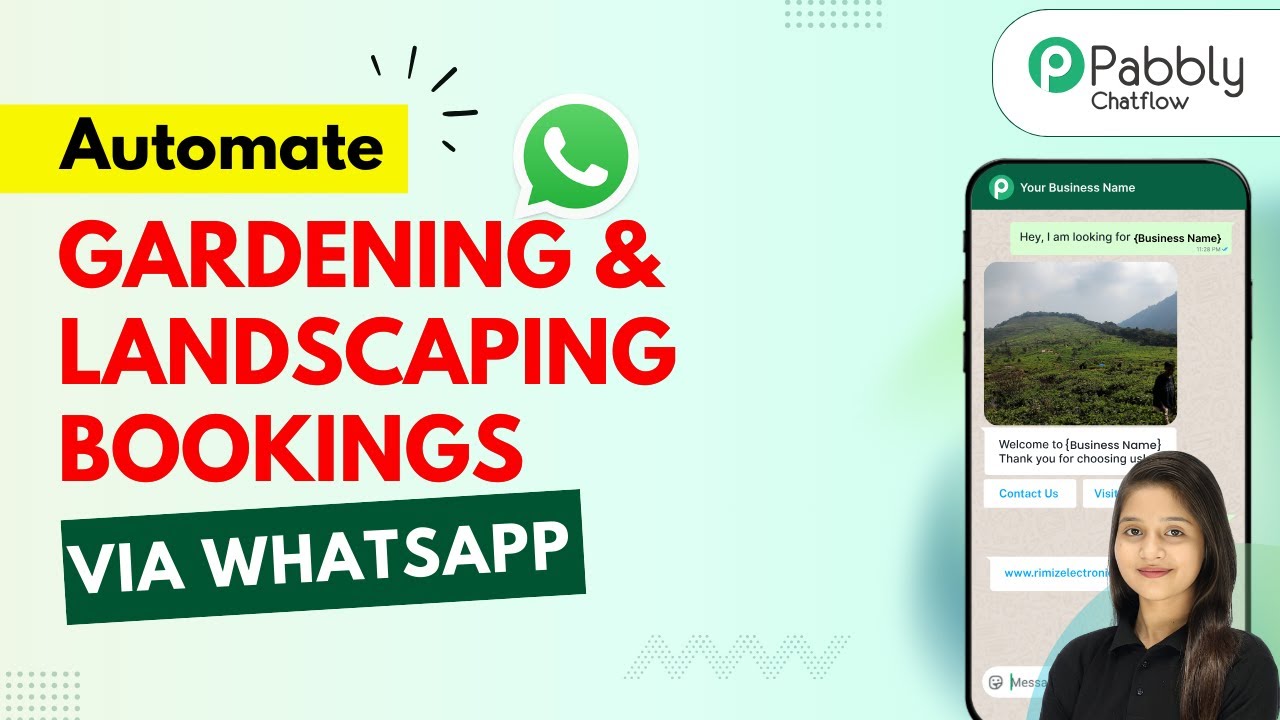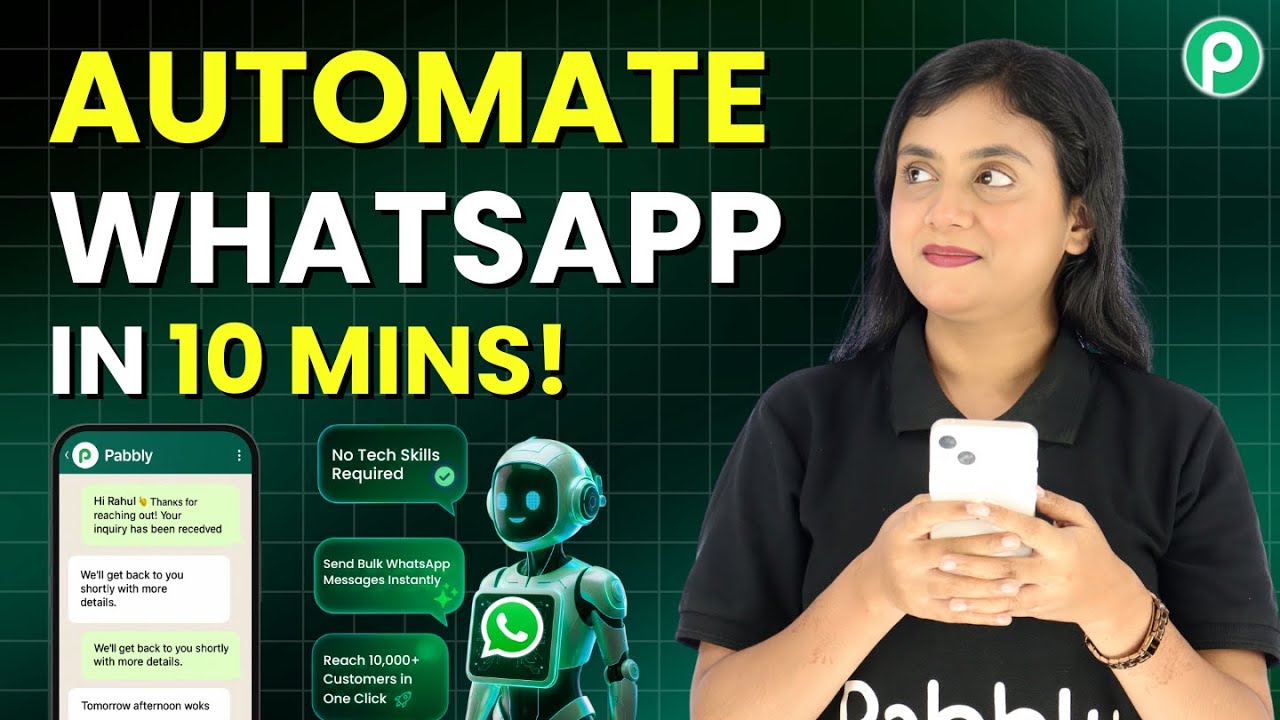
How to Take Flower & Gift Orders on WhatsApp Automatically Using Pabbly Chatflow

Learn how to automate flower and gift orders on WhatsApp using Pabbly Chatflow. Step-by-step guide to creating a WhatsApp chatbot for your business. This detailed guide shows you how to build powerful chat automation that engages visitors and converts prospects—without any coding required.

Watch Step By Step Video Tutorial Below


1. Create a WhatsApp Chatbot Using Pabbly Chatflow

To take flower and gift orders on WhatsApp automatically, you need to create a WhatsApp chatbot using Pabbly Chatflow. This chatbot will respond to customer queries 24/7, even when you are busy. Start by accessing Pabbly Chatflow by entering the URL in your browser.

Once on the Pabbly Chatflow landing page, sign in or sign up for a free account. New users will receive 100 free credits each month to practice building chatbots. After logging in, you will be directed to the dashboard where you can begin creating your chatbot.


2. Setting Up the Chatbot Flow in Pabbly Chatflow

In this section, you will set up the flow for your chatbot in Pabbly Chatflow. Click on the ‘Flows’ option in the sidebar to access the flow builder. Here, you can create a new flow by clicking the ‘Add Flow’ button. Name your flow ‘Take Flower and Gift Orders on WhatsApp Automatically’ and select the trigger event.

  • Choose the trigger event as ‘Keyword’ and specify the keywords that will initiate the chatbot, such as ‘order’.
  • Drag and drop a text button node to send a welcome message to users when they initiate the chat.

After setting the keywords, add buttons for user interaction, such as ‘View Catalog’ and ‘Place Order’. Each button will lead to different actions in the chatbot, enhancing the user experience.


3. Adding Product List and Order Collection in Pabbly Chatflow

Next, you will enhance your chatbot to provide a product list and collect orders using Pabbly Chatflow. When a user selects the ‘View Catalog’ button, you can create a list of products using the list node. Provide a header, body, and footer for the list.

  • Include items such as flowers, cakes, and personalized gifts in the catalog.
  • For the ‘Place Order’ button, prompt users to enter their product choice, quantity, name, and delivery address.

Once all the information is collected, confirm the order with a message indicating that the order has been received and that a delivery update will follow shortly. This interaction streamlines the ordering process for your customers.


4. Integrating Google Sheets with Pabbly Chatflow

To maintain a record of orders, you will integrate Google Sheets with Pabbly Chatflow. After collecting user responses, use the API request node to send this data to Google Sheets. Start by creating a workflow in Pabbly Connect, which links Pabbly Chatflow and Google Sheets.

In Pabbly Connect, select the trigger as ‘New Message Received’ from Pabbly Chatflow. Copy the webhook URL generated and paste it into the API request action in Pabbly Chatflow. Map the fields such as full name, address, product, and quantity to the corresponding fields in your Google Sheet.

Once set up, test the connection to ensure that data flows correctly from Pabbly Chatflow to Google Sheets. This integration allows you to keep track of all orders while automating the process.


5. Finalizing the Chatbot Flow in Pabbly Chatflow

After integrating Google Sheets, finalize your chatbot flow in Pabbly Chatflow. Add a final message that confirms the order to the customer, thanking them for their purchase. Save your flow to ensure all changes are recorded.

To test your chatbot, send a message to your WhatsApp number linked with Pabbly Chatflow. Observe how the chatbot responds, providing catalog options and collecting order details seamlessly. This testing phase is crucial to ensure everything functions as expected.

Once satisfied with the performance, your WhatsApp chatbot is ready to take flower and gift orders automatically, enhancing your business operations and customer experience.


Conclusion

Using Pabbly Chatflow, you can automate flower and gift orders on WhatsApp effectively. This tutorial has guided you through creating a chatbot that interacts with customers, collects orders, and maintains records in Google Sheets, streamlining your business operations.

Ensure you check out Pabbly Connect to create business automation workflows and reduce manual tasks. Pabbly Connect currently offer integration with 2,000+ applications.

Save Facebook Leads to Google Sheets Automatically Using Pabbly Connect

Learn how to automatically save Facebook leads to Google Sheets using Pabbly Connect with this detailed step-by-step tutorial. This comprehensive guide reveals exactly how to connect your applications and automate repetitive tasks — accessible for professionals of all technical backgrounds.

Watch Step By Step Video Tutorial Below


1. Accessing Pabbly Connect for Automation

To save Facebook leads to Google Sheets automatically, first, access Pabbly Connect. Open a new tab and navigate to the Pabbly Connect website at www.Pabbly.com/connect. This platform will facilitate the integration between Facebook and Google Sheets.

Once on the Pabbly Connect landing page, you will see options to sign in or sign up. If you’re an existing user, simply sign in. If you are new, you can create a free account, which offers 100 free tasks every month. After signing in, you will be directed to the Pabbly Connect dashboard.


2. Creating a New Workflow in Pabbly Connect

After accessing the dashboard, the next step is to create a new workflow in Pabbly Connect. Click on the ‘Create Workflow’ button. You can choose between the new beta method for a modern approach or the classic method for a familiar interface. For this tutorial, select the new beta method.

  • Click on ‘Create Workflow’.
  • Name your workflow as ‘Save Facebook Leads to Google Sheets Automatically’.
  • Select a folder for organization.

Once you have named your workflow, click on the ‘Create’ button. This will set up the framework for your automation, consisting of a trigger and an action step.


3. Setting Up the Trigger with Facebook Lead Ads

In this section, you will set up the trigger for the workflow using Pabbly Connect. Select Facebook Lead Ads as the trigger application. The event you want to capture is ‘New Lead Instant’. This will ensure that every time a new lead is generated, the trigger activates.

Click on the ‘Connect’ button to establish a connection with Facebook Lead Ads. If you have an existing connection, you can select it; otherwise, click on ‘Connect with Facebook Lead Ads’. Allow the necessary permissions to complete the connection.


4. Testing the Trigger and Capturing Lead Data

Once the connection is established, you will need to test the trigger to ensure it captures lead data correctly. Use the Meta’s lead ads testing tool to generate a test lead. Fill in the required fields such as skin type, first name, last name, email, and phone number.

  • Select the Facebook page associated with your ads.
  • Choose the lead generation form you created.
  • Submit the test lead.

After submitting, return to Pabbly Connect and wait for the response. You should see the lead data captured, confirming that the connection is successful.


5. Setting Up the Action to Google Sheets

Now that the trigger is working, it’s time to set up the action in Pabbly Connect to send the captured lead data to Google Sheets. Select Google Sheets as the action application and choose the event ‘Add New Row’. Click on the ‘Connect’ button to establish the connection.

Sign in with your Google account and allow the necessary permissions. Select the spreadsheet named ‘Leads Details’ and the specific sheet where you want the data to be added. Map the lead data fields such as name, email, phone number, and skin type to the corresponding columns in your Google Sheets.

After mapping the data, click on ‘Save and Send Test Request’. If you receive a positive response with the spreadsheet ID, it confirms that the data has been successfully added to your Google Sheets.


Conclusion

By following these steps, you have successfully set up an automation using Pabbly Connect to save Facebook leads directly to Google Sheets. This process eliminates the need for coding and allows for seamless data management in your business.

Ensure you check out Pabbly Connect to create business automation workflows and reduce manual tasks. Pabbly Connect currently offer integration with 2,000+ applications.

With Pabbly Connect, you can easily integrate various applications and automate your workflows, enhancing efficiency and productivity. Start utilizing this powerful tool today to streamline your lead management process.

Automate Car Rentals via WhatsApp with Pabbly Chatflow

Learn how to automate car rentals via WhatsApp using Pabbly Chatflow. Follow our step-by-step guide for seamless integration and enhanced customer communication. Learn how to create intelligent chat workflows that provide instant customer support while qualifying leads 24/7 without human intervention.

Watch Step By Step Video Tutorial Below


1. Accessing Pabbly Chatflow for Car Rentals Automation

To automate car rentals via WhatsApp, you first need to access Pabbly Chatflow. Simply visit www.Pabbly.com/chatflow in your browser. This platform is essential for creating your WhatsApp chatbot to handle customer queries efficiently.

Once on the Pabbly Chatflow website, sign in to your account. If you are a new user, click on the ‘Sign Up for Free’ option to create an account and receive 100 credits monthly. If you already have an account, click on the ‘Sign In’ button at the top right corner.


2. Setting Up WhatsApp Integration in Pabbly Chatflow

After signing in, you will see all Pabbly applications. Click on Pabbly Chatflow to access the dashboard. Here, you can manage your WhatsApp number and other settings. To connect your WhatsApp account, click on the ‘Add WhatsApp Number’ option.

  • Choose to connect via WhatsApp Connect or use a manual token.
  • Follow the prompts to complete the integration.
  • Ensure your WhatsApp number is verified for the chatbot to function.

By successfully setting up WhatsApp integration, you enable Pabbly Chatflow to send and receive messages, making it easier to manage customer inquiries automatically.


3. Creating the WhatsApp Chatbot Flow in Pabbly Chatflow

Now, it’s time to create the flow for your WhatsApp chatbot. In Pabbly Chatflow, navigate to the ‘Flows’ section and click on ‘Add Flow’. Name your flow ‘Automate Car Rentals via WhatsApp’ and select the trigger event.

For the trigger, choose ‘Keyword Regex Match’ and enter keywords like ‘car’, ‘rent’, ‘help’, and ‘hey’. This allows the chatbot to activate when users send messages containing these keywords. Additionally, set up a Regex pattern to capture variations in user messages, enhancing the chatbot’s responsiveness.


4. Building the Conversation Flow with Pabbly Chatflow

After setting up the trigger, you can start building the conversation. Use the drag-and-drop interface in Pabbly Chatflow to add text and button replies. For instance, send a welcome message asking users what type of car they would like (e.g., sedan, SUV, hatchback).

  • Add buttons for users to select their car type.
  • Follow up with questions about rental dates and user details.
  • Include an option for users to upload their driver’s license.

This structured flow ensures that your chatbot can gather all necessary information from customers efficiently. Remember to save your flow regularly to avoid losing any progress.


5. Testing and Launching the Car Rental Chatbot

Once your flow is complete, it’s crucial to test the chatbot to ensure everything works as intended. Use your WhatsApp to send a message to your chatbot and verify that you receive the correct responses based on your setup in Pabbly Chatflow.

After confirming that the flow operates correctly, activate your chatbot. This allows it to respond to customer inquiries automatically, significantly reducing manual response time and improving customer satisfaction.


Conclusion

In conclusion, automating car rentals via WhatsApp using Pabbly Chatflow enhances customer interaction and streamlines your operations. By following the steps outlined, you can create an effective chatbot that handles inquiries efficiently, allowing you to focus on growing your business.

Ensure you check out Pabbly Connect to create business automation workflows and reduce manual tasks. Pabbly Connect currently offer integration with 2,000+ applications.

How to Send Course Instructions on WhatsApp After Instamojo Payment Using Pabbly Connect

Learn how to automate sending course instructions via WhatsApp after Instamojo payments using Pabbly Connect. Follow this step-by-step tutorial. Implement the precise methodologies leading organizations use to automate repetitive tasks, illustrated with practical examples designed for immediate application.

Watch Step By Step Video Tutorial Below


1. Accessing Pabbly Connect for Integration

Pabbly Connect is the central platform that enables you to automate sending course instructions on WhatsApp after an Instamojo payment. To start, visit Pabbly Connect by entering Pabbly.com/connect in your browser.

Once on the Pabbly Connect website, you can either sign in or create a free account. New users receive 100 free tasks each month, allowing you to explore automation possibilities. After signing in, navigate to the dashboard to begin creating your workflow.


2. Creating a Workflow in Pabbly Connect

To create a workflow in Pabbly Connect, click on the ‘Create Workflow’ button on the dashboard. This action will prompt you to name your workflow. For this tutorial, name it ‘Send Course Instructions on WhatsApp After Instamojo Payments’.

  • Click on the ‘New Beta Version’ option when prompted.
  • Select the ‘Instamojo’ application as the trigger.
  • Choose the ‘Successful Payment’ event as the trigger event.

After selecting these options, click the ‘Connect’ button to generate a webhook URL. This URL is essential for linking your Instamojo account to Pabbly Connect.


3. Setting Up the Webhook in Instamojo

With the webhook URL copied from Pabbly Connect, navigate to your Instamojo account. Open the specific course settings where you want to implement this automation. In the URL settings section, paste the copied webhook URL into the designated field.

  • Select ‘Successful Payment’ as the trigger event in Instamojo.
  • Click the ‘Save and Update’ button to finalize the webhook setup.

After saving the webhook, return to Pabbly Connect to test the connection. Initiate a payment for the course to trigger the webhook and verify that it captures the payment data.


4. Configuring WhatsApp Integration in Pabbly Connect

Next, you need to configure WhatsApp as the action application in your Pabbly Connect workflow. Click the plus button to add an action step and select ‘WhatsApp Cloud API’ as your action application.

For the action event, choose ‘Send a Text Message’. You will then need to connect your WhatsApp Cloud API account to Pabbly Connect. Click on the connect button and provide the required details: Token, Phone Number ID, and WhatsApp Business Account ID.


5. Finalizing the Workflow and Sending Messages

After setting up your WhatsApp connection, fill in the necessary fields to send a message. Use mapping to dynamically include the recipient’s phone number and course details in the message. For instance, you can write, ‘Hello [User Name], you have successfully completed your payment for [Course Name]. Here is your course instruction document: [Document Link].’ using Pabbly Connect

Finally, click on the ‘Save and Send Test Request’ button. Upon successful completion, you should see the message delivered to the specified WhatsApp number, confirming that your workflow is working as intended.


Conclusion

Using Pabbly Connect, you can seamlessly automate sending course instructions via WhatsApp after Instamojo payments. This integration streamlines communication and enhances user experience, making it a valuable tool for your business.

Ensure you check out Pabbly Connect to create business automation workflows and reduce manual tasks. Pabbly Connect currently offer integration with 2,000+ applications.

How to Add Instagram Ad Leads to HubSpot Automatically Using Pabbly Connect

Learn how to automate adding Instagram Ad leads to HubSpot using Pabbly Connect with this step-by-step guide. No coding required! This comprehensive guide reveals exactly how to connect your applications and automate repetitive tasks — accessible for professionals of all technical backgrounds.

Watch Step By Step Video Tutorial Below


1. Access Pabbly Connect to Integrate Instagram and HubSpot

To automate the addition of Instagram ad leads to HubSpot, first, you need to access Pabbly Connect. Open a new tab and navigate to the Pabbly Connect website at www.Pabbly.com/connect. This is where the integration will take place, allowing you to manage leads efficiently.

Once on the Pabbly Connect landing page, you will see options to either sign in or sign up. If you are a new user, you can sign up for free and get 100 tasks every month. Existing users can simply sign in. After logging in, you will be directed to the Pabbly Connect dashboard, where you can start creating your workflow.


2. Create a Workflow in Pabbly Connect

After accessing your Pabbly Connect dashboard, the next step is to create a workflow that will connect Instagram lead ads to HubSpot. Click on the ‘Create Workflow’ button located at the top right corner. You will have the option to choose between the new beta method and the classic method. For this integration, select the new beta method for a modern and flexible workflow. using Pabbly Connect

  • Name your workflow ‘Add Instagram Leads to HubSpot Automatically’.
  • Select the folder to categorize your workflow.
  • Click the ‘Create’ button to finalize your workflow setup.

Once your workflow is created, it’s essential to set up the trigger and action steps. The trigger will initiate the process whenever a new lead is generated via Instagram ads, which is crucial for automating lead management.


3. Set Up Trigger for Instagram Lead Ads

In the newly created workflow, you will first need to set up a trigger by selecting Instagram Lead Ads as your trigger application. This step is vital as it tells Pabbly Connect to monitor for new leads generated through Instagram ads.

For the event, select ‘New Lead Instant’ and click on the ‘Connect’ button. A connection window will appear, allowing you to connect your Instagram account. Click on the ‘Connect with Instagram Lead Ads’ button and authorize the connection. Once authorized, select the appropriate Facebook page linked to your Instagram account, which will facilitate the lead collection.

  • Choose the Instagram page associated with your ads.
  • Select the lead generation form you created for your ads.
  • Toggle the button for simple response and click ‘Save and Send Test Request’.

After completing these steps, Pabbly Connect will wait for a webhook response to confirm the connection is successful. This setup is critical for capturing leads as they come in through Instagram ads.


4. Add Leads to HubSpot CRM

With the trigger set up, the next step is to add the leads captured from Instagram to HubSpot CRM. In your Pabbly Connect workflow, you will now add an action step. Click on ‘Add Action Step’ and select HubSpot CRM as your action application. using Pabbly Connect

For the event, choose ‘Create a Contact’ and click on the ‘Connect’ button. This will open another connection window where you can connect your HubSpot account. Authorize the connection, and once connected, you will be able to map the data from the previous step to create a new contact in HubSpot.

Map the email address from the Instagram lead response to the HubSpot email field. Map the first name and last name fields accordingly. Select the lead status as ‘Active’ and set the time zone.

Once all necessary fields are mapped, click on the ‘Save and Send Test Request’ button. If successful, you will see a confirmation that a new contact has been added to your HubSpot CRM. This step completes the integration, ensuring that all new leads from Instagram ads are automatically added to your CRM.


5. Conclusion

In this tutorial, we demonstrated how to use Pabbly Connect to automate the process of adding Instagram ad leads to HubSpot. By following these steps, you can streamline your lead management without any coding skills. This integration not only saves time but also ensures that you never miss a lead from your Instagram ads.

Ensure you check out Pabbly Connect to create business automation workflows and reduce manual tasks. Pabbly Connect currently offer integration with 2,000+ applications.

Using Pabbly Connect for this automation allows for seamless data flow between Instagram and HubSpot, enhancing your marketing efficiency. Start automating your processes today to improve your business outcomes!

Automate Product Ordering for E-Commerce on WhatsApp Using Pabbly Chatflow

Learn how to automate product ordering for e-commerce on WhatsApp with Pabbly Chatflow. Follow this detailed tutorial for step-by-step instructions. Discover how to design chat experiences that feel personal and responsive while handling customer inquiries automatically around the clock.

Watch Step By Step Video Tutorial Below


1. Introduction to Automating Product Ordering with Pabbly Chatflow

Automating product ordering for e-commerce on WhatsApp is made simple with Pabbly Chatflow. This tool allows businesses to respond to customer queries efficiently, eliminating the need for manual responses. By creating a WhatsApp chatbot, customers can receive instant replies, enhancing their shopping experience.

The process begins by accessing Pabbly Chatflow and setting up a flow that automates responses. This enables users to manage product inquiries and orders seamlessly, ensuring they can focus on other business operations.


2. Accessing Pabbly Chatflow to Create Your WhatsApp Chatbot

To start, visit the official Pabbly Chatflow website at Pabbly.com/chatflow. Here, you can either sign up for a new account or sign in if you are an existing user. New users can take advantage of 100 free credits to explore the features of Pabbly Chatflow.

Once logged in, navigate to the dashboard where you can manage all your WhatsApp numbers. To add a new number, click on the ‘Add WhatsApp Number’ button, which offers options for WhatsApp connect or manual token connect. This step is critical for enabling your chatbot to interact with customers directly via WhatsApp.


3. Creating Your Chatflow for Product Ordering

With Pabbly Chatflow, creating a flow involves defining trigger events and responses. Begin by clicking the ‘Add Flow’ button, naming your flow (e.g., ‘Automate Product Ordering for E-Commerce on WhatsApp’), and setting up the initial trigger event. Choose the keyword trigger to activate the bot when specific words like ‘order’ or ‘product’ are sent by users.

Next, utilize the message and action buttons to design the flow. For instance, set a welcome message that introduces the e-commerce store and provides options like ‘View Products’ and ‘Track Order’. This interaction is crucial as it guides users through the ordering process.

  • Select the keyword trigger for user engagement.
  • Design the welcome message with quick buttons.
  • Connect actions to ensure smooth navigation for users.

Ensure each message is connected correctly to maintain the flow of conversation. This setup allows your bot to respond dynamically based on user inputs, enhancing user interaction.


4. Setting Up Product Categories and Selection

Once the initial flow is established, the next step in Pabbly Chatflow is to set up product categories. After the user selects ‘View Products’, the bot should present a list of categories such as Electronics, Fashion, and Home Decor. This is done by using list buttons to display available options.

For each category selected, the bot will further prompt users to choose specific products. For example, selecting ‘Electronics’ will show options like smartphones, laptops, and headphones. Each product selection should lead to a follow-up question asking for the user’s name and contact number to finalize the order.

  • Use list buttons for product categories.
  • Prompt users for their details after product selection.
  • Ensure dynamic responses based on user inputs.

This setup simplifies the ordering process and ensures that users can easily navigate through product options, making their shopping experience smooth and efficient.


5. Finalizing Orders and User Confirmation

The final step in the automation process using Pabbly Chatflow involves confirming the user’s order. After collecting the user’s name and contact number, the bot sends a summary message including the selected product and user details. This message should also include buttons for ‘Yes, Confirm Order’ or ‘No, Change Product’ to allow users to finalize their decisions.

If the user confirms their order, the bot should respond with a message confirming the order and indicating that a call will follow for payment confirmation. This step is crucial for ensuring customer satisfaction and clarity regarding their order status.

By implementing these features in Pabbly Chatflow, businesses can create a fully automated ordering system that enhances customer engagement and streamlines the ordering process.


Conclusion

Automating product ordering for e-commerce on WhatsApp using Pabbly Chatflow significantly improves customer interaction and streamlines order management. By following the steps outlined in this tutorial, businesses can create effective chatbots that enhance the user experience and reduce manual workload.

Ensure you check out Pabbly Connect to create business automation workflows and reduce manual tasks. Pabbly Connect currently offer integration with 2,000+ applications.

Creating an AI Assistant for Retail Product Support with Pabbly Chatflow

Learn how to create an AI Assistant for retail product support using Pabbly Chatflow. Follow this detailed tutorial for step-by-step guidance. Discover how to design chat experiences that feel personal and responsive while handling customer inquiries automatically around the clock.

Watch Step By Step Video Tutorial Below


1. Accessing Pabbly Chatflow for AI Assistant Creation

To create an AI assistant for retail product support, you first need to access Pabbly Chatflow. Start by typing the URL Pabbly.com/chatflow into your browser. This will take you to the Pabbly Chatflow landing page where you can sign up or log in.

If you are a new user, click on the ‘Sign Up Free’ button to create an account. Existing users can simply sign in. Upon signing up, you will receive 100 free credits monthly to experiment with chatbots. Once logged in, you will be directed to the Pabbly dashboard.


2. Creating Your AI Assistant in Pabbly Chatflow

After accessing Pabbly Chatflow, navigate to the AI Assistant section from the sidebar. Click on ‘Add AI Assistant’ to begin creating your assistant. You will need to provide a name for your assistant, such as ‘Shop Ease Retailer AI’. Once named, click the ‘Add Assistant’ button to proceed.

  • Select the instruction type: AI agent.
  • Set the AI configuration parameters, including temperature and model.
  • Enter your OpenAI API key to connect the assistant to the AI service.

After entering the required details, you will see a confirmation that your AI assistant has been created successfully. This assistant will now be able to respond to customer queries based on the knowledge base you provide.


3. Configuring the Knowledge Base for Your AI Assistant

The next step in setting up your AI assistant with Pabbly Chatflow is to configure its knowledge base. This knowledge base contains essential information about your retail products, services, and policies. To upload your knowledge base, make sure your document is in .txt or .pdf format.

  • Upload a .txt file or a .pdf file without images (or up to 10 pages if it contains images).
  • Select the file from your computer and confirm the upload.
  • Ensure the upload is successful; you will see a confirmation message.

Once the knowledge base is uploaded, your AI assistant will be equipped to answer queries based on the information it contains. This is crucial for providing accurate and timely responses to customer inquiries.


4. Testing Your AI Assistant with Pabbly Chatflow

After successfully configuring your AI assistant and uploading the knowledge base, it’s time to test its functionality. Use WhatsApp to send a message to the number connected to your Pabbly Chatflow account. For example, you can type ‘Hey, I need help’ to initiate a conversation.

Your AI assistant should respond promptly with a message like, ‘I am ready to assist you. Could you please share what you need help with?’ This confirms that the integration is working correctly. You can further test by asking specific questions about your services or products.

Ask about product availability, returns, or current offers. Check if the assistant retrieves accurate information from the knowledge base. Ensure it can handle multiple queries effectively.


5. Activating Your AI Assistant for Customer Interactions

Finally, to activate your AI assistant for customer interactions, navigate to the settings within Pabbly Chatflow. Go to the ‘Inbox Settings’ and enable the ‘AI Auto Replies’ feature. This will allow your assistant to respond automatically to all incoming messages.

You can also select specific contacts or groups to enable the assistant for targeted interactions. This flexibility allows you to customize how and when the AI assistant engages with your customers.

Choose the AI assistant you created from the dropdown menu. Save the settings to apply the changes. Test the assistant again to ensure it responds as expected.

With these steps, your AI assistant is now fully operational and ready to enhance customer support in your retail business using Pabbly Chatflow.


Conclusion

Creating an AI assistant for retail product support using Pabbly Chatflow is a straightforward process that enhances customer interaction. By following the steps outlined in this tutorial, you can set up an effective assistant that provides timely responses to customer queries, improving overall satisfaction and efficiency.

Ensure you check out Pabbly Connect to create business automation workflows and reduce manual tasks. Pabbly Connect currently offer integration with 2,000+ applications.

Top Gemini Automations You Need to Try Right Now Using Pabbly Connect

Discover top Gemini automations using Pabbly Connect to integrate Google, Shopify, Facebook, LinkedIn, and more for efficient workflows. Implement the precise methodologies leading organizations use to automate repetitive tasks, illustrated with practical examples designed for immediate application.

Watch Step By Step Video Tutorial Below


1. Automate Facebook Posts Using Pabbly Connect

In this section, we will explore how to automate Facebook posts using Pabbly Connect. This automation allows you to schedule posts directly from your Google Sheets. Start by creating a workflow in Pabbly Connect where you set Google Sheets as the trigger application.

Once you configure your Google Sheets with the content ideas, Pabbly Connect will help you generate posts automatically. Here’s how to do it:

  • Create a new workflow in Pabbly Connect.
  • Select Google Sheets as the trigger app and set the trigger event.
  • Choose your Facebook account as the action app.
  • Map the content from Google Sheets to Facebook post fields.

After setting this up, every time you add a new row in Google Sheets, Pabbly Connect will automatically create a post on your Facebook page, saving you time and effort.


2. Generate Creative Stories Using Pabbly Connect

Next, let’s look at how to generate creative stories using Pabbly Connect. This automation leverages Google Sheets and Google Docs to create engaging content. You will input your ideas into Google Sheets, and Pabbly Connect will handle the rest.

Here’s the step-by-step process to set this automation:

  • Set up a new workflow in Pabbly Connect.
  • Choose Google Sheets as the trigger and define the trigger event.
  • Select Google Docs as the action app.
  • Map your ideas from Google Sheets to Google Docs for story generation.

Once configured, Pabbly Connect will generate a new document in Google Docs every time you input a new idea, allowing you to keep all your stories organized.


3. Automatically Reply to Reviews Using Pabbly Connect

In this section, we will discuss how to automatically reply to reviews on your Google Business Profile using Pabbly Connect. This feature is essential for maintaining customer engagement without manual effort.

Here’s how to set up this automation:

Start by creating a new workflow in Pabbly Connect. Select Google Business Profile as the trigger application. Choose the action to analyze the review. Map the generated reply back to the Google Business Profile.

With this setup, every time a new review is posted, Pabbly Connect will generate a suitable reply based on the review content, ensuring timely responses to your customers.


4. Generate LinkedIn Posts Using Pabbly Connect

Now, let’s automate LinkedIn posts with Pabbly Connect. This integration allows you to create posts directly from ideas stored in Google Sheets, making it easier to maintain your professional presence.

Follow these steps to set up the automation:

Create a workflow in Pabbly Connect. Select Google Sheets as the trigger and define the trigger event. Choose LinkedIn as the action app. Map the content from Google Sheets to LinkedIn post fields.

After this setup, Pabbly Connect will automatically create a LinkedIn post each time you add a new entry in Google Sheets, keeping your profile active with minimal effort.


5. Create WhatsApp Chatbot Using Pabbly Connect

Finally, let’s explore how to create a WhatsApp chatbot using Pabbly Connect. This automation allows you to respond to WhatsApp messages automatically, enhancing customer interaction.

To set up this automation, follow these steps:

Initiate a new workflow in Pabbly Connect. Select WhatsApp Cloud API as the trigger application. Define the action to generate a response based on incoming messages. Map the response back to the WhatsApp sender.

With this automation, Pabbly Connect will automatically reply to WhatsApp messages, streamlining communication with your customers.


Conclusion

In summary, using Pabbly Connect to automate workflows with Google, Shopify, Facebook, LinkedIn, and more can significantly enhance your productivity. By implementing these Gemini automations, you can save time and streamline your business processes effectively.

Ensure you check out Pabbly Connect to create business automation workflows and reduce manual tasks. Pabbly Connect currently offer integration with 2,000+ applications.

Build an Interactive WhatsApp FAQ Bot with Pabbly Chatflow

Learn how to create an Interactive WhatsApp FAQ Bot using Pabbly Chatflow. Follow our detailed tutorial for seamless integration with YouTube and more! Master conversational marketing with practical techniques for creating chatbots that engage visitors at exactly the right moment in their journey.

Watch Step By Step Video Tutorial Below


1. Accessing Pabbly Chatflow for Your WhatsApp Bot

To build an Interactive WhatsApp FAQ Bot, you first need to access Pabbly Chatflow. Open a new tab in your browser and visit the landing page by typing ‘Pabbly.com/chatflow’. This will take you to the Pabbly Chatflow interface, where you can manage your bots.

Upon reaching the landing page, you will see two options: ‘Sign In’ and ‘Sign Up for Free’. If you are a new user, select the ‘Sign Up for Free’ option to receive 100 credits every month. Existing users can directly sign in to their accounts. Once signed in, navigate to the Pabbly Chatflow app by clicking on ‘Access Now’.


2. Creating Your Interactive WhatsApp FAQ Bot

After accessing Pabbly Chatflow, the next step is to create your FAQ bot. On the left-hand side, find the option for ‘AI Assistant’ and select ‘Add AI Assistant’. You will be prompted to name your assistant. For this tutorial, we will name it ‘FAQ Bot’ and click on the ‘Add Assistant’ button.

  • Name your assistant as ‘FAQ Bot’.
  • Select the instruction type for your bot.
  • Choose a pre-built example or a custom prompt.

Once you have named your assistant, you will see a new window where you can select the instruction type. You can either choose a pre-built example like ‘Customer Support Agent’ or create a custom prompt. After selecting, the instructions will be automatically populated, and you can modify them as needed.


3. Configuring Your AI Assistant Settings in Pabbly Chatflow

Next, you will configure your AI assistant settings in Pabbly Chatflow. This includes setting the temperature for responses, which determines how creative the AI’s answers will be. A lower temperature (e.g., 0.2) yields more focused responses, while a higher temperature allows for more creative answers.

For the AI to operate, you need to select OpenAI as the AI provider and choose the model (e.g., GPT-4 Mini). You will also need to input your OpenAI API key, which you can generate by logging into your OpenAI account and creating a new secret key. After entering the API key in Pabbly Chatflow, click on ‘Connect’ to save the key.


4. Uploading Knowledge Source for Your FAQ Bot

To enhance your bot’s capabilities, you must upload a knowledge source. This is where Pabbly Chatflow shines. Prepare a document with frequently asked questions and answers in a Google Doc, then download it as a TXT or PDF file. It is recommended to use the TXT format for better compatibility.

  • Create a knowledge source document with FAQs.
  • Download the document in TXT or PDF format.
  • Upload the file in Pabbly Chatflow.

In Pabbly Chatflow, click on ‘Choose File’ to upload your knowledge source. Once uploaded, you will see a confirmation message indicating that the file has been successfully added. This knowledge base will allow the AI assistant to respond accurately to user queries.


5. Testing Your Interactive WhatsApp FAQ Bot

After setting up your bot in Pabbly Chatflow, it’s time to test its functionality. You can initiate a conversation through WhatsApp by sending a message like ‘Hey’. The AI assistant should respond promptly with a greeting and ask how it can assist you today.

To further test the bot, ask specific questions such as ‘Can I change my delivery address?’ or ‘How can I track my order?’ The assistant should accurately provide responses based on the knowledge source you uploaded. This real-time interaction showcases the effectiveness of your FAQ bot.


Conclusion

In this tutorial, we explored how to build an Interactive WhatsApp FAQ Bot using Pabbly Chatflow. By following the detailed steps, you can create an efficient AI assistant that enhances customer interaction. Start building your FAQ bot today to streamline your business communications!

Ensure you check out Pabbly Connect to create business automation workflows and reduce manual tasks. Pabbly Connect currently offer integration with 2,000+ applications.

Get Google Ads Notifications in Slack Instantly with Pabbly Connect

Learn how to get instant Google Ads notifications in Slack using Pabbly Connect. Follow this step-by-step tutorial to automate your alerts easily. Transform complex automation concepts into accessible, actionable steps that eliminate unnecessary manual work while maximizing existing application capabilities.

Watch Step By Step Video Tutorial Below


1. Access Pabbly Connect to Start Integration

To get started with automating Google Ads notifications in Slack, you first need to access Pabbly Connect. Open your browser and visit Pabbly.com/connect. This will take you to the Pabbly Connect homepage, where you can either sign in or sign up for a free account.

If you’re a new user, click on the ‘Sign Up Free’ option to get 300 tasks every month. Existing users can simply sign in. Once logged in, navigate to the dashboard and select Pabbly Connect by clicking on the ‘Access Now’ button. This is where you will set up the integration process.


2. Create a New Workflow in Pabbly Connect

After accessing Pabbly Connect, the next step is to create a new workflow. Click on the ‘Create Workflow’ button located at the top right corner of the dashboard. You will be prompted to choose between the new beta version or the classic version. For this tutorial, select the beta version for a modern experience.

Once the workflow creation dialog appears, name your workflow ‘Get Google Ads Notifications in Slack Instantly’. You can also select a folder to save your workflow. Choose the appropriate folder, such as ‘Automations’, and then click on the ‘Create’ button to proceed.


3. Set Up the Trigger for Google Ads

The next step involves setting up a trigger in your workflow. Click on the ‘Add Trigger’ button and select ‘Google Ads’ as your app. For the event, choose ‘New Lead Form Entry’. This means that whenever there is a new lead from your Google Ads, it will trigger an action.

After selecting the trigger, click on ‘Connect’. You will receive a webhook URL, which you need to copy. This URL is crucial as it connects your Google Ads account with Pabbly Connect. Now, go to your Google Ads account, create a test lead form and paste the webhook URL in the lead delivery section under ‘Webhook Integration’.

  • Add your business name and relevant questions like name, email, and phone number.
  • Set the key name as ‘test’ and click on ‘Send Test Data’.
  • Check if the test data is received successfully in Pabbly Connect.

Once the test data is confirmed, you have successfully set up the trigger for your Google Ads integration.


4. Add Action to Send Notifications to Slack

Now that your trigger is set up, the next step is to add an action to send notifications to Slack. Click on ‘Add Action’ and select ‘Slack’ as your action application. For the event, choose ‘Send Channel Message’. This action will send a message to your specified Slack channel whenever a new lead is received.

To connect Slack, click on ‘Connect’ and select ‘Add a New Connection’. If your Slack account is already linked to Pabbly Connect, you can select that existing connection. Otherwise, enter your Slack token type and authorize the connection to proceed.

  • Select the channel ID where you want to send notifications.
  • Compose your message using dynamic data from the trigger.
  • Map the data fields like lead name, email, and phone number into your message.

After filling in all necessary fields, click on ‘Save and Send Test Request’ to ensure everything is working correctly.


5. Test the Integration and Confirm Setup

After saving your action, it’s time to test the entire integration. Go back to your Slack channel and check if you received the notification message for the new lead. If everything is set up correctly, you should see an alert with the lead’s details such as name, email, and phone number.

This confirms that you have successfully set up the automation using Pabbly Connect. With this integration, your team can stay updated on new leads instantly without logging into Google Ads. This streamlined process saves time and improves efficiency.

To summarize, you have created a workflow that triggers on new Google Ads leads and sends an immediate notification to your Slack channel. This powerful automation enhances your team’s responsiveness to potential clients.


Conclusion

In this tutorial, you learned how to set up Google Ads notifications in Slack using Pabbly Connect. By following these steps, you can automate your lead notifications and improve your workflow efficiency. Start automating today for better lead management!

Ensure you check out Pabbly Connect to create business automation workflows and reduce manual tasks. Pabbly Connect currently offer integration with 2,000+ applications.