
Integrating Salesforce with Typeform Using Pabbly Connect: A Step-by-Step Guide

Learn how to create leads in Salesforce from Typeform submissions using Pabbly Connect. Follow this detailed tutorial for seamless integration. Follow this definitive guide to creating powerful automated workflows with straightforward, efficiency-focused solutions that save valuable time.

Watch Step By Step Video Tutorial Below


1. Accessing Pabbly Connect for Integration

To create leads in Salesforce from Typeform submissions, you will first need to access Pabbly Connect. Start by visiting the Pabbly Connect website at www.Pabbly.com/connect. If you are a new user, click on the ‘Sign Up Free’ button. Existing users can simply click on ‘Sign In’.

Once logged in, you will be directed to the Pabbly dashboard. From here, click on the ‘Access Now’ button under Pabbly Connect. This will take you to the workflow page where you can create your automation to connect Typeform with Salesforce.


2. Creating a New Workflow in Pabbly Connect

After accessing Pabbly Connect, you can create a new workflow. Click on the ‘Create Workflow’ button, and you will be prompted to select a workflow builder. Choose the ‘New Workflow Builder Beta’ for a more modern experience.

Next, provide a name for your workflow, such as ‘New Lead from Typeform to Salesforce’. You can also select a folder to save your workflow. Click on ‘Create’ to finalize the setup.

  • Click ‘Create Workflow’
  • Select ‘New Workflow Builder Beta’
  • Name your workflow
  • Choose a folder to save the workflow

Once your workflow is created, you will see options to add a trigger, which is essential for starting your automation process.


3. Setting Up the Trigger with Typeform

In this step, you will set Typeform as the trigger application in your Pabbly Connect workflow. Click on ‘Add Trigger’ and search for Typeform. Select it as your trigger app.

Next, choose the event that will initiate your workflow. For this integration, select the ‘New Entry’ event. Click on ‘Connect’ to establish a connection between Pabbly Connect and Typeform. If you don’t have an existing connection, select ‘Add New Connection’ and follow the prompts to authorize Pabbly Connect to access your Typeform account.

  • Select Typeform as the trigger app
  • Choose ‘New Entry’ as the event
  • Connect Typeform to Pabbly Connect

After completing these steps, you will be able to test the connection and ensure that Pabbly Connect is receiving responses from Typeform.


4. Configuring the Action Step in Salesforce

Now that the trigger is set up, it’s time to configure the action step in Salesforce using Pabbly Connect. Click on the Typeform trigger and select ‘Add Action Step’. Search for Salesforce and select it as your action app.

Choose the event ‘Create Lead’ to specify that you want to generate a lead in Salesforce. Just like with Typeform, click ‘Connect’ to set up the connection with your Salesforce account. You will need to log into Salesforce and grant access to Pabbly Connect.

Select Salesforce as the action app Choose ‘Create Lead’ as the action event Connect to your Salesforce account

Once connected, you will need to map the fields from Typeform to Salesforce to ensure that the correct information is transferred when a new lead is created.


5. Mapping Fields and Testing the Integration

The final step in this integration process involves mapping the fields from your Typeform submission to the appropriate fields in Salesforce through Pabbly Connect. This ensures that the data is accurately transferred.

Map the fields such as first name, last name, email, and company name from the Typeform response to the corresponding fields in Salesforce. After mapping the fields, click on ‘Save and Send Test Request’ to test the entire workflow.

Map first name to Salesforce Map last name accordingly Map email and company name

Once the test request is sent, navigate to your Salesforce dashboard to verify that the lead has been created successfully. You should see the new lead appear with the details you submitted through Typeform.


Conclusion

By following this guide, you have successfully integrated Salesforce with Typeform using Pabbly Connect. This automation allows you to create leads in Salesforce automatically whenever a new Typeform submission is received, streamlining your workflow and enhancing productivity.

Ensure you check out Pabbly Connect to create business automation workflows and reduce manual tasks. Pabbly Connect currently offer integration with 2,000+ applications.

Utilizing Pabbly Connect not only simplifies the integration process but also ensures that your data flows seamlessly between applications. Start automating your workflows today with Pabbly Connect!
How to Register Housing.com Renters for WhatsApp Assistance Using Pabbly Connect

Learn how to register Housing.com renters for WhatsApp assistance by integrating Facebook with Pabbly Connect. Follow our step-by-step guide for seamless automation. Master proven automation processes with practical implementation examples and strategic recommendations you can apply immediately in your workflow.

Watch Step By Step Video Tutorial Below


1. Accessing Pabbly Connect for Integration

To start the process of registering Housing.com renters for WhatsApp assistance, you first need to access Pabbly Connect. Open your browser and type in Pabbly.com/connect to reach the Pabbly Connect homepage.

Once on the homepage, you will see options to either sign in or sign up. If you are a new user, click on ‘Sign Up Free’ to create an account and receive 100 free tasks per month. Existing users can directly sign in.


2. Creating a New Workflow in Pabbly Connect

After signing in to Pabbly Connect, you will be directed to the dashboard. Here, click on the ‘Create Workflow’ button located at the top right corner. This will open a dialog box where you can name your workflow.

For this integration, name the workflow ‘Register Housing.com Renters for WhatsApp Assistance’. You also have the option to select a folder to save your workflow. Choose an appropriate folder like ‘Automations’ for easy organization.

  • Click on ‘Create’ to finalize your workflow.
  • Select the trigger application as Housing.com.
  • Choose the event as ‘New Leads’.

This setup will allow Pabbly Connect to trigger the automation every time a new lead is received from Housing.com.


3. Setting Up the Trigger in Pabbly Connect

In this step, you will configure the trigger for your workflow. Select Housing.com as your trigger application and set the event to ‘New Leads’. Click on the ‘Connect’ button to establish the connection. using Pabbly Connect

Pabbly Connect will provide you with a webhook URL. This URL is essential as it will connect Housing.com with Pabbly Connect. Copy this webhook URL and follow the instructions provided by Housing.com to integrate it into their system.

  • Ensure that you have activated your Housing.com account to start receiving leads.
  • Test the integration by generating a sample lead.

Once the test lead is received, you can proceed to the next step in your workflow.


4. Configuring WhatsApp Action Step in Pabbly Connect

Now that you have set up the trigger, it is time to configure the action step. Select WhatsApp Cloud API as your action application. The event should be set to ‘Send Template Message’. Click on the ‘Connect’ button to set up the connection.

You will need to enter details such as the Access Token, Phone Number ID, and WhatsApp Business Account ID. These details can be found in your WhatsApp Cloud API account settings. Once entered, click on ‘Save’ to establish the connection with Pabbly Connect.

Map the phone number field from the trigger step to ensure the message is sent to the correct lead. Select the template message you created for leads.

This setup ensures that every time a new lead is registered, an automated WhatsApp message will be sent to them via Pabbly Connect.


5. Testing the Integration

With the workflow configured, it’s essential to test the integration to ensure everything is working smoothly. Generate a test lead through Housing.com and monitor the response in Pabbly Connect.

Once the test lead is processed, check your WhatsApp account to confirm that the automated message has been received. This message should provide the lead with information and assistance regarding their rental needs.

By following these steps, you have successfully set up an automated process to register Housing.com renters for WhatsApp assistance using Pabbly Connect. This integration not only enhances engagement but also streamlines communication with potential renters.


Conclusion

In this tutorial, we explored how to use Pabbly Connect to automate the registration of Housing.com renters for WhatsApp assistance. By integrating these platforms, you can enhance engagement and improve your rental service efficiency.

Ensure you check out Pabbly Connect to create business automation workflows and reduce manual tasks. Pabbly Connect currently offer integration with 2,000+ applications.

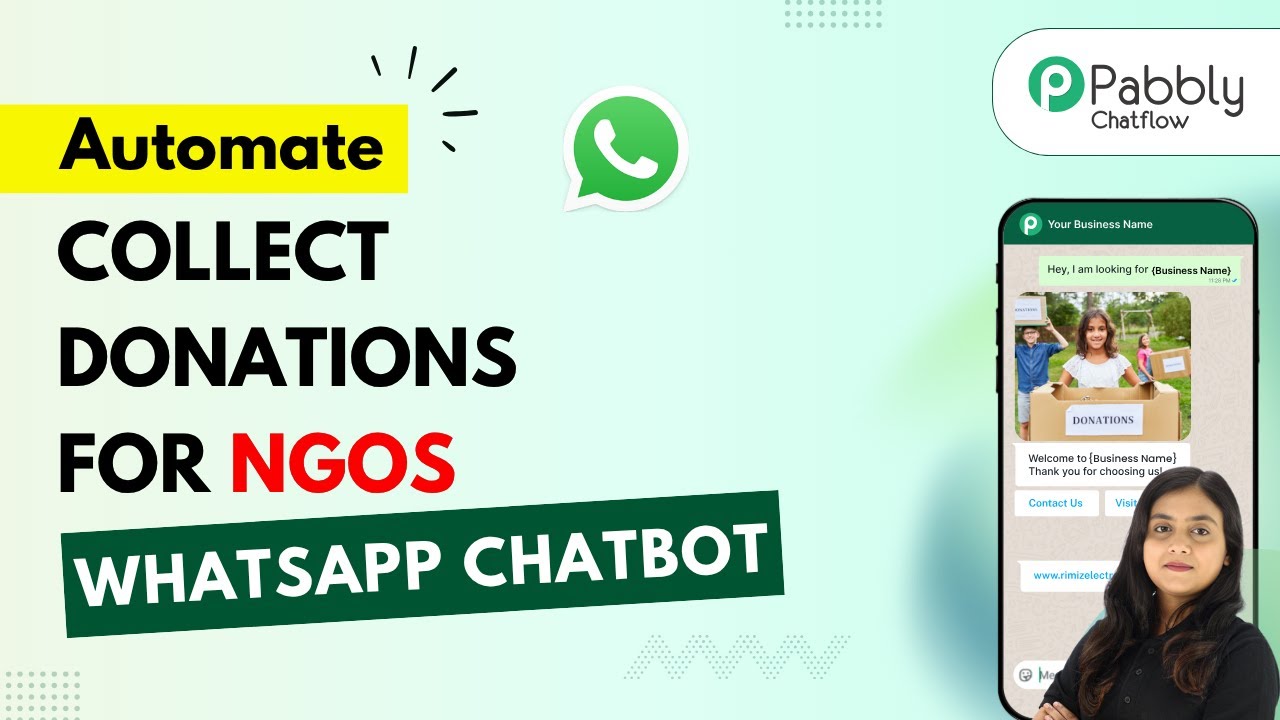
How to Use WhatsApp Chatbot to Collect Donations for NGOs with Pabbly Chatflow

Learn how to create a WhatsApp chatbot for NGOs to collect donations using Pabbly Chatflow and Pabbly Chatflow. Step-by-step tutorial included. Explore how leading businesses automate customer interactions with carefully designed chat sequences that feel natural and helpful.

Watch Step By Step Video Tutorial Below


1. Create Your WhatsApp Chatbot Using Pabbly Chatflow

To create a WhatsApp chatbot that collects donations for your NGO, you will use Pabbly Chatflow. Begin by visiting the Pabbly Chatflow website and signing in or signing up for a free account. Once logged in, you can access the flow builder to start creating your chatbot.

In the flow builder, click on the ‘Create Flow’ button and name your flow. Choose a trigger event to start the conversation, such as keyword matching. This allows your bot to respond automatically when it receives specific messages from donors.


2. Set Up Integration for Your WhatsApp Chatbot with Pabbly Chatflow

After creating your flow in Pabbly Chatflow, you will need to set up the conversation flow for your chatbot. This includes defining how the bot will respond to donor inquiries. For instance, when a donor sends a message like ‘I want to donate,’ the bot should reply with a thank-you message and donation options.

  • Configure the bot to send an image and a thank-you message.
  • Add buttons for donation amounts such as 500, 1000, and other.
  • Use contact custom fields to save donor responses.

Once the bot is configured, you can test it by sending a message to see how it responds. This ensures that the integration works smoothly and donors receive the correct information.


3. Connect Your WhatsApp Chatbot to Google Sheets Using Pabbly Connect

Next, you will connect your WhatsApp chatbot to Google Sheets using Pabbly Connect. This integration allows you to automatically store donor details in a spreadsheet. To do this, create a new workflow in Pabbly Connect and set the trigger application to Pabbly Chatflow.

For the action step, select Google Sheets and choose the option to add a new row. Map the fields from your chatbot, such as donor’s full name, phone number, and donation amount to the corresponding columns in your Google Sheets. This way, every time a donation is made, the details will be logged automatically.


4. Test Your Automation with Pabbly Chatflow and Pabbly Connect

Once you have set up your automation, it’s crucial to test it. Send a test message to your WhatsApp chatbot and follow the donation process to ensure that all steps work as intended. Check your Google Sheets to confirm that the donor details appear correctly. using Pabbly Connect

If the test is successful, your WhatsApp chatbot is now fully operational, allowing you to collect donations seamlessly. You can continue to refine your chatbot and add more features as needed.


5. Conclusion: Collect Donations Efficiently Using Pabbly Chatflow

In conclusion, using Pabbly Chatflow and Pabbly Connect to create a WhatsApp chatbot for collecting donations is a straightforward process. By following the steps outlined above, you can automate donor interactions and efficiently manage donations for your NGO.

Ensure you check out Pabbly Connect to create business automation workflows and reduce manual tasks. Pabbly Connect currently offer integration with 2,000+ applications.

This integration not only saves time but also enhances the donor experience by providing instant responses and easy payment options. Start using Pabbly Chatflow today to streamline your donation collection process.

How to Send Personalized Thank You Messages After Payment via Razorpay Using Pabbly Connect

Learn how to integrate Razorpay with Pabbly Connect to send personalized thank you messages automatically after payment. Step-by-step tutorial included. Discover hidden automation capabilities within your existing tools. This guide shows you how to connect your essential applications and permanently eliminate redundant manual processes.

Watch Step By Step Video Tutorial Below


1. Accessing Pabbly Connect for Integration

To send personalized thank you messages after payment via Razorpay, you need to access Pabbly Connect. Start by opening your web browser and searching for Pabbly Connect at Pabbly.com/connect. Once on the landing page, you will see options to sign in or sign up for free. If you are a new user, click on ‘Sign Up for Free’ to start your trial.

For existing users, simply click on ‘Sign In’. After signing in, you will be directed to the Pabbly apps dashboard. Here, you will select Pabbly Connect to create your integration workflow. Click on the ‘Access Now’ button to proceed to your Pabbly Connect account dashboard.


2. Creating a New Workflow in Pabbly Connect

In your Pabbly Connect dashboard, click on the ‘Create Workflow’ button. You will be presented with two options: the new workflow builder and the classic one. Choose the new workflow builder for a more modern experience. After selecting, enter a name for your workflow.

  • Enter a name for your workflow.
  • Select the folder where you want to save your workflow.
  • Click on the ‘Create’ button to finalize.

After clicking ‘Create’, you will see the workflow window, which is crucial for setting up your automation using Pabbly Connect. This window consists of triggers and actions that define how your workflow operates.


3. Setting Up the Trigger for Razorpay Payments

To automate your thank you messages, you need to set up a trigger that activates when a payment is received via Razorpay. Click on ‘Add Trigger’ and select Razorpay as your trigger application. For the trigger event, choose ‘Payment Captured’ and click on ‘Connect’. using Pabbly Connect

After connecting, you will receive a webhook URL. Copy this URL and head to your Razorpay account. In Razorpay, navigate to the ‘Developers’ section on the left sidebar and select ‘Webhooks’. Click on ‘Add New Webhook’ and paste the copied URL. Set the active event to ‘Payment Captured’ and create the webhook.


4. Filtering Payments for Specific Courses

To ensure that thank you messages are sent only for specific products, you can add a filter condition in your workflow. Click on ‘Add New Action Step’ and select ‘Filter’ as your action application. For the event, choose ‘Filter Values’ and connect it.

  • Set the label to the course name.
  • Choose the filter type as ‘Equals to’.
  • Enter the specific course name value.

After setting up the filter, click on ‘Save and Send Test Request’. This ensures that your workflow only proceeds when the specified course is purchased, making your thank you messages more targeted and personalized via Pabbly Connect.


5. Sending Personalized Thank You Messages via Twilio

Now it’s time to send the thank you messages using Twilio. Add a new action step and select Twilio as your action application. For the event, choose ‘Send SMS Message’ and connect your Twilio account. You will need your Twilio Account SID, Authorization Token, and Twilio Phone Number to connect.

Once connected, enter the SMS body you want to send. To personalize the message, use the mapping feature of Pabbly Connect to insert the customer’s name dynamically. This way, every customer receives a unique thank you message after their payment is processed.


Conclusion

By following these steps using Pabbly Connect, you can easily automate the process of sending personalized thank you messages after payments via Razorpay. This integration enhances customer experience and ensures timely communication. Start using Pabbly Connect today to streamline your business operations.

Ensure you check out Pabbly Connect to create business automation workflows and reduce manual tasks. Pabbly Connect currently offer integration with 2,000+ applications.

How to Send Automated SMS After Event Registration from Google Sheets Using Pabbly Connect

Learn how to automate SMS notifications after event registration using Google Sheets and Pabbly Connect in this detailed tutorial. Follow this definitive guide to creating powerful automated workflows with straightforward, efficiency-focused solutions that save valuable time.

Watch Step By Step Video Tutorial Below


1. Accessing Pabbly Connect for Automation

To begin automating SMS notifications after event registrations using Google Sheets, you first need to access Pabbly Connect. Start by visiting the Pabbly website and signing in to your account. If you are a new user, you can sign up for a free account to explore the features.

Once logged in, navigate to the Pabbly Connect dashboard. This platform is essential for creating automated workflows that connect Google Sheets with SMS sending applications. You will be able to set up triggers and actions that facilitate the automation process.


2. Creating Your Workflow in Pabbly Connect

Now that you have accessed Pabbly Connect, the next step is to create a new workflow. Click on the ‘Create Workflow’ button located in the top right corner of the dashboard. This will initiate the process of setting up your automation.

  • Provide a name for your workflow, such as ‘Send Automated SMS After Event Registration from Google Sheets’.
  • Select a folder to save your workflow, or create a new folder if necessary.
  • Choose the trigger application, which in this case will be Google Sheets.

After selecting Google Sheets as your trigger application, you will need to define the event that will trigger the SMS notification. This typically involves selecting ‘New or Updated Spreadsheet Row’ as the event type.


3. Connecting Google Sheets to Pabbly Connect

To link your Google Sheets to Pabbly Connect, you must configure the connection settings. This involves copying the webhook URL provided by Pabbly Connect and adding it to your Google Sheets.

Open your Google Sheets, navigate to the Extensions menu, and select the Pabbly Connect Webhooks add-on. From there, you can initiate the setup process by pasting the webhook URL into the designated field. Make sure to set the trigger column, which will be the final data column in your sheet.

  • Ensure that your Google Sheets is ready with the necessary fields such as Name, Email, City, and Phone Number.
  • Refresh your Google Sheets after installing the Pabbly Connect add-on to see the new options.
  • Test the connection by adding a new row in your Google Sheets.

Once you have successfully connected Google Sheets to Pabbly Connect, you can proceed to the next step of sending automated SMS messages.


4. Sending SMS Notifications through Pabbly Connect

With your Google Sheets connected, the next step is to set up the action to send SMS notifications. For this, choose your SMS sending application, such as Twilio, as the action app in Pabbly Connect.

Configure the action settings by selecting the event as ‘Send SMS’. You will need to provide the sender number and recipient number, which will be mapped from the data received from Google Sheets. Additionally, you can customize the SMS body to include dynamic fields from the registration data.

Enter the SMS body, including placeholders for dynamic data such as the recipient’s name and event details. Map the recipient’s phone number from Google Sheets to ensure the SMS goes to the correct number. Save the action settings to finalize the SMS sending setup.

After configuring the SMS settings, you can test the workflow to ensure everything is functioning correctly. This will allow you to verify that the SMS notifications are sent automatically when new registrations are added to Google Sheets.


5. Testing Your Automation Setup

To ensure that your automation is working as intended, you need to perform a test. Go back to your Google Sheets and add a new registration entry with all required details. This will trigger the workflow you set up in Pabbly Connect.

Once you have added the new entry, check your SMS application to see if the notification has been sent. You should receive an SMS that confirms the registration with the event details. This step is crucial to ensure that your automation is functioning properly.

After testing, you can make any necessary adjustments to the SMS content or the mapping of data fields. This allows you to customize the notifications further based on your requirements. With Pabbly Connect, you can easily manage and modify your workflows as needed.


Conclusion

In this tutorial, we explored how to send automated SMS notifications after event registrations using Google Sheets and Pabbly Connect. By following the steps outlined, you can streamline your event registration process and ensure timely communication with your attendees. Automating these notifications not only saves time but also enhances the overall experience for your participants.

Ensure you check out Pabbly Connect to create business automation workflows and reduce manual tasks. Pabbly Connect currently offer integration with 2,000+ applications.

How to Trigger Google Chat Message for Razorpay Refunds Using Pabbly Connect

Learn how to trigger Google Chat messages for Razorpay refunds using Pabbly Connect in this detailed step-by-step tutorial. Automate your notifications effortlessly! Discover hidden automation capabilities within your existing tools. This guide shows you how to connect your essential applications and permanently eliminate redundant manual processes.

Watch Step By Step Video Tutorial Below


1. Introduction to Pabbly Connect for Razorpay Refunds

In this section, we will explore how to use Pabbly Connect to automate Google Chat notifications for Razorpay refunds. This integration is essential for keeping your team informed about refund activities in real time.

By leveraging Pabbly Connect, you can effortlessly connect Razorpay and Google Chat without any coding skills. This automation will ensure that every refund processed through Razorpay triggers an immediate notification on Google Chat, enhancing communication within your team.


2. Accessing Pabbly Connect for Workflow Creation

To begin, access Pabbly Connect by navigating to the Pabbly website. You can do this by entering ‘Pabbly.com/connect’ in your browser. Once there, you will have options to either sign in or sign up for free.

  • If you are a new user, click on ‘Sign Up for Free’ to create an account.
  • Existing users should select the ‘Sign In’ button to access their dashboard.

After signing in, click on the ‘Access Now’ button for Pabbly Connect. This will take you to the dashboard where you can start creating your workflow.


3. Creating a Workflow in Pabbly Connect

Once you’re on the Pabbly Connect dashboard, initiate the workflow creation by clicking on the ‘Create Workflow’ button. You will be prompted to choose between the new and classic workflow builders. Select the new workflow builder for a modern interface.

Next, give your workflow a name, such as ‘Trigger Google Chat Message for Razorpay Refunds’. Choose the appropriate folder to save your workflow. If needed, you can create a new folder for better organization.

After naming your workflow, click on the ‘Create’ button to open the workflow window. This window is crucial as it allows you to set up the trigger and action for your automation. The trigger will be Razorpay, and the action will be Google Chat.


4. Setting Up the Trigger for Razorpay Refunds

To set up the trigger, click on the ‘Add Trigger’ button in Pabbly Connect. Search for Razorpay and select it as the trigger application. For the trigger event, choose ‘Refund Processed’ to ensure that the workflow activates whenever a refund is initiated.

Once selected, click on ‘Connect’. You will be provided with a webhook URL. Copy this URL as it will be used to connect Razorpay to Pabbly Connect.

  • Log into your Razorpay account and navigate to the ‘Developers’ section.
  • Select ‘Webhooks’ and click on ‘Add New Webhook’.
  • Paste the copied webhook URL and set the event to ‘Refund Processed’.
  • Click on ‘Create Webhook’ to save your settings.

With this, you have successfully set up the trigger for Razorpay refunds in Pabbly Connect.


5. Testing the Automation and Notifying Google Chat

To test the automation, issue a refund from your Razorpay account. Navigate to the transaction section, select a transaction, and click on ‘Issue Refund’. Confirm the refund to trigger the webhook.

Once the refund is processed, return to Pabbly Connect to check if the webhook response has been captured. You should see the customer details, refund ID, and payment ID in the captured data.

Now, set up the action to notify Google Chat. Add a new action step and select Google Chat. Choose ‘Create Message’ as the event and connect it to your Google Chat webhook URL. Map the necessary fields such as customer name, amount, payment ID, and refund ID into the message.


Conclusion

In conclusion, using Pabbly Connect allows you to automate Google Chat notifications for Razorpay refunds efficiently. By following the steps outlined in this tutorial, you can streamline your refund processes and enhance team communication. Start using Pabbly Connect today to experience seamless integrations!

Ensure you check out Pabbly Connect to create business automation workflows and reduce manual tasks. Pabbly Connect currently offer integration with 2,000+ applications.

How to Auto-Send Webinar Joining Link on WhatsApp After Form Fill Using Pabbly Connect

Learn how to auto-send a webinar joining link via WhatsApp after a form fill using Pabbly Connect. Step-by-step guide to automate your process. Learn to create powerful connections between your critical applications without requiring specialized programming knowledge or extensive technical background.

Watch Step By Step Video Tutorial Below


1. Access Pabbly Connect for Integration

To auto-send a webinar joining link on WhatsApp after a form fill, you need to access Pabbly Connect. Start by searching for ‘Pabbly Connect’ in your browser, which will direct you to the homepage of Pabbly.

Once there, you have two options: sign in if you are an existing user or click on ‘Sign Up Free’ to create a new account. New users can explore the platform with 100 free tasks each month to get familiar with the features.


2. Create a New Workflow in Pabbly Connect

After signing in to Pabbly Connect, navigate to the dashboard and click on the ‘Create Workflow’ button located at the top right corner. This is where you will build your automation process.

  • Select a name for your workflow, such as ‘Send Webinar Joining Link on WhatsApp After Form Fill’.
  • Choose the folder where you want to save this workflow.
  • Click on the ‘Select’ button to proceed with the newly created workflow.

Now you have set up a new workflow in Pabbly Connect. This will be the foundation for connecting your Google Form with WhatsApp.


3. Setting Up Trigger for Google Forms

In this step, you will set up the trigger for your workflow. Select ‘Google Forms’ as your trigger application and choose the event as ‘New Response Received’. This means that every time a new form is submitted, it will trigger the automation. using Pabbly Connect

After selecting the trigger, you will receive a Webhook URL. Copy this URL as you will need to paste it into your Google Form. Go to your Google Form, click on the settings, and look for the option to link to a Google Sheet. Create a new sheet to capture responses, ensuring that the data is organized for the next steps.


4. Connecting WhatsApp to Pabbly Connect

Next, you will integrate WhatsApp using the WhatsApp Cloud API. In Pabbly Connect, select WhatsApp as your action application, and choose the event as ‘Send Template Message’. Here, you will need to provide your WhatsApp Business Account ID and other details.

  • Generate an access token from your WhatsApp Cloud API account.
  • Map the phone number field from your Google Form response to the WhatsApp message.
  • Select the message template that you created for the webinar link.

By completing this step, you have successfully connected WhatsApp to Pabbly Connect, allowing automated messages to be sent to registrants.


5. Testing the Integration

Finally, it is crucial to test your integration. Submit a test response through your Google Form to ensure that the entire automation works flawlessly. Check your WhatsApp to see if the joining link message is received.

If everything is set up correctly, you will receive an automated message with the webinar joining link. This confirms that Pabbly Connect has successfully facilitated the integration between Google Forms and WhatsApp.


Conclusion

In conclusion, using Pabbly Connect, you can easily automate the process of sending a webinar joining link via WhatsApp after a form fill. This integration enhances communication efficiency and improves user experience. Follow these steps to streamline your webinar registrations.

Ensure you check out Pabbly Connect to create business automation workflows and reduce manual tasks. Pabbly Connect currently offer integration with 2,000+ applications.

How to Track Customer Satisfaction from Typeform to Zoho CRM Using Pabbly Connect

Learn how to seamlessly track customer satisfaction by integrating Typeform with Zoho CRM using Pabbly Connect. Step-by-step guide included. Develop expertise in application integration and learn how to design streamlined automation workflows using proven, simplified approaches.

Watch Step By Step Video Tutorial Below


1. Accessing Pabbly Connect for Integration

To track customer satisfaction from Typeform to Zoho CRM, you must first access Pabbly Connect. This powerful automation tool allows you to connect various applications seamlessly without any coding.

Begin by opening a new browser tab and navigating to Pabbly.com/connect. Here, you can either sign up for a new account or log in if you are an existing user. Once logged in, you will be directed to the Pabbly Connect dashboard, where you can create new workflows.


2. Creating a Workflow in Pabbly Connect

After accessing Pabbly Connect, the next step is to create a new workflow. Click on the ‘Create Workflow’ button and name it ‘Track Customer Satisfaction from Typeform to Zoho CRM’. Select your desired folder for better organization.

  • Click on the ‘Create’ button.
  • Define a trigger for your workflow.
  • Choose Typeform as the application to start the automation.

Once you have created the workflow, you will need to set a trigger event. This event will initiate the workflow each time a customer submits their feedback form in Typeform.


3. Setting Up the Trigger with Typeform

In this step, you will configure the trigger in Pabbly Connect. Click on ‘Add Trigger’ and select Typeform as your application. Choose the event ‘New Entry’ to capture responses from your customer satisfaction form.

Click on the ‘Connect’ button. You will have the option to add a new connection or select an existing one. If adding a new connection, click on ‘Connect with Typeform’ and authorize the connection. Once connected, refresh the fields to ensure you can capture the latest data.


4. Setting Up the Action with Zoho CRM

After successfully setting up the trigger, the next step involves selecting Zoho CRM as the action application in Pabbly Connect. Click on the ‘Plus’ icon to add an action and select Zoho CRM.

  • Choose the event ‘Create Contact’ to add new customer data.
  • Connect your Zoho CRM account by entering your domain.
  • Map the data fields from Typeform to Zoho CRM, such as first name, last name, and email.

Mapping the fields correctly is crucial as it ensures that the data flows smoothly from Typeform to Zoho CRM. After mapping the necessary fields, click on ‘Save and Send Test Request’ to verify that the integration is functioning correctly.


5. Finalizing the Integration and Testing

Once you have tested the integration successfully, click on the ‘Save’ button to finalize your workflow in Pabbly Connect. This will ensure that all future submissions from your Typeform will automatically create new contacts in Zoho CRM.

To test the entire workflow, fill out the Typeform customer satisfaction form again. After submission, check your Zoho CRM to confirm that the new contact has been created with all relevant details captured accurately. This automation eliminates manual data entry and keeps your customer feedback organized.


Conclusion

By following these steps, you can effectively track customer satisfaction by integrating Typeform with Zoho CRM using Pabbly Connect. This integration streamlines your workflow, ensuring that customer feedback is captured and organized efficiently.

Ensure you check out Pabbly Connect to create business automation workflows and reduce manual tasks. Pabbly Connect currently offer integration with 2,000+ applications.

How to Send Course Welcome Video via WhatsApp After Payment Using Pabbly Connect

Learn how to automate sending a course welcome video via WhatsApp after payment using Pabbly Connect with Razer Pay integration. Follow our detailed tutorial for step-by-step guidance.

Watch Step By Step Video Tutorial Below


1. Accessing Pabbly Connect for Integration

To start sending a course welcome video via WhatsApp after payment, you first need to access Pabbly Connect. This platform will facilitate the integration between Razer Pay and WhatsApp.

Visit the Pabbly Connect website and sign in or sign up for a free account. Once logged in, navigate to the dashboard to create a new workflow. This is where you will set up the automation for sending the welcome video.


2. Creating a Workflow in Pabbly Connect

After accessing Pabbly Connect, click on the ‘Create Workflow’ button to set up your automation. Name your workflow something descriptive, like ‘Send Course Welcome Video via WhatsApp After Payment.’ This will help you identify the workflow later.

Next, choose the classic method for workflow creation. In this workflow, you will establish a trigger and an action. The trigger will be the payment captured from Razer Pay, while the action will be sending a message via WhatsApp.

  • Click on the ‘Create’ button to finalize your workflow.
  • Select Razer Pay as the trigger application.
  • Choose ‘Payment Captured’ as the trigger event.

Once you have set up the trigger, Pabbly Connect will provide you with a unique webhook URL. This URL will be used to connect your Razer Pay account with Pabbly Connect.


3. Configuring Razer Pay with Pabbly Connect

To connect Razer Pay to Pabbly Connect, log into your Razer Pay account and navigate to the ‘Accounts and Settings’ section. Here, you will find an option to add a new webhook.

Paste the webhook URL provided by Pabbly Connect into the webhook URL field. For the action event, select ‘Payment Captured.’ Click on the ‘Create Webhook’ button to establish the connection. This will ensure that every successful payment triggers the automation.

  • Go to the ‘Webhooks’ section in Razer Pay.
  • Click on ‘Add New Webhook’ and paste the URL.
  • Select ‘Payment Captured’ as your action event.

Once the webhook is saved, return to Pabbly Connect to test the connection by making a sample payment.


4. Setting Up WhatsApp Cloud API in Pabbly Connect

Now that Razer Pay is connected, the next step is to set up the WhatsApp Cloud API in Pabbly Connect. For this, choose WhatsApp Cloud API as your action application.

In the action event, select ‘Send Template Message New.’ You will need to enter your WhatsApp business account details, including the token and phone number ID. This information can be found in your WhatsApp Cloud API setup.

Enter your WhatsApp token, phone number ID, and business account ID. Select the template you created for the welcome message. Add the video link from your WordPress account for the message.

After entering all necessary details, click on the ‘Save and Send Test Request’ button to check if the integration works correctly. If successful, you will receive the welcome message along with the video on WhatsApp.


5. Conclusion: Automating Your Course Welcome Messages

In conclusion, using Pabbly Connect to automate sending a course welcome video via WhatsApp after payment is an efficient way to enhance customer experience. By integrating Razer Pay with WhatsApp Cloud API, you can streamline your communication process.

Ensure you check out Pabbly Connect to create business automation workflows and reduce manual tasks. Pabbly Connect currently offer integration with 2,000+ applications.

Check out Pabbly Connect – Automate your business workflows effortlessly! Sign Up Free – Start your journey with ease! 10,000+ Video Tutorials – Learn step by step! Join Pabbly Facebook Group – Connect with 21,000+ like minded people!

Follow the steps outlined in this tutorial to set up your automation seamlessly. With Pabbly Connect, you can focus more on your business while ensuring your clients receive timely welcome messages after their payments.


How to Send WhatsApp Booking Confirmation from Typeform Entry Using Pabbly Connect

Learn to send WhatsApp booking confirmations from Typeform entries using Pabbly Connect. Follow our detailed tutorial for seamless automation. This comprehensive guide reveals exactly how to connect your applications and automate repetitive tasks — accessible for professionals of all technical backgrounds.

Watch Step By Step Video Tutorial Below


1. Setting Up Pabbly Connect for WhatsApp Booking Confirmation

To send WhatsApp booking confirmations from Typeform entries, we will use Pabbly Connect. Start by visiting the Pabbly Connect website and signing in or signing up for a free account. This automation tool allows you to connect various applications without any coding knowledge.

Once logged in, you will see the dashboard. Click on the ‘Create Workflow’ button to begin setting up your automation. You will be prompted to choose between the new and classic workflow builders. Select the new one for a modern interface, then name your workflow as ‘Send WhatsApp Booking Confirmations from Typeform Entry’.


2. Triggering the Workflow with Typeform Entry

The next step is to set the trigger for our workflow. Click on ‘Add Trigger’ and select Pabbly Connect as the application. Choose ‘Typeform’ as the trigger application, then select ‘New Entry’ as the trigger event.

  • Connect your Typeform account by clicking on ‘Connect with Typeform’.
  • Grant necessary permissions for Pabbly Connect to access your Typeform data.
  • Select the specific Typeform you want to use for this automation.

After setting up the trigger, test the connection by submitting a sample entry in your Typeform. This will allow Pabbly Connect to capture the response and ensure everything is working correctly.


3. Connecting to WhatsApp Cloud API for Sending Messages

Now that we have our trigger set up, it’s time to connect to the WhatsApp Cloud API. Click on ‘Add Action’ and select ‘WhatsApp Cloud API’ as the action application. For the action event, choose ‘Send Template Message’. This is where Pabbly Connect plays a crucial role in sending automated messages.

To establish the connection, you will need to enter your WhatsApp Cloud API details, including the access token, phone number ID, and WhatsApp business account ID. You can find these details by following the instructions provided in the Pabbly Connect documentation.

  • Copy the access token from your WhatsApp Cloud API settings.
  • Paste the phone number ID and WhatsApp business account ID as required.
  • Save the connection to proceed.

Once the connection is saved, you can proceed to configure the message template that will be sent to users after they submit their booking.


4. Configuring the Message Template in Pabbly Connect

In this step, we will set up the message template that will be sent to users via WhatsApp. In the WhatsApp Cloud API settings, you will need to select the template you created earlier. Ensure that your template includes placeholders for dynamic data, such as the user’s name and appointment date. using Pabbly Connect

For the message body, map the variables from the Typeform entry to the template. This allows the message to personalize the confirmation sent to each user. Here’s how to do it:

Select the appropriate template from your WhatsApp Cloud API account. Map the user’s name and appointment date to the respective variables in the template. Save the configuration to finalize the setup.

After saving, test the action to ensure that the WhatsApp message is sent correctly. This will confirm that your workflow is fully operational.


5. Conclusion: Automate Your Booking Confirmations with Pabbly Connect

By following this tutorial, you have successfully set up an automation that sends WhatsApp booking confirmations whenever a new entry is made in Typeform. Pabbly Connect serves as the central platform that facilitates this integration seamlessly, ensuring your customers receive instant notifications.

Ensure you check out Pabbly Connect to create business automation workflows and reduce manual tasks. Pabbly Connect currently offer integration with 2,000+ applications.

Check out Pabbly Connect – Automate your business workflows effortlessly! Sign Up Free – Start your journey with ease! 10,000+ Video Tutorials – Learn step by step! Join Pabbly Facebook Group – Connect with 21,000+ like minded people!

Automation like this not only enhances customer experience but also saves time and effort in managing bookings. Now you can focus more on your business while Pabbly Connect handles the communication effortlessly.

Try this automation for your own business and enjoy the benefits of real-time notifications!