How to Build an AI Assistant for Restaurants Using Pabbly Chatflow

Learn how to build an AI assistant for restaurants using Pabbly Chatflow to integrate YouTube and Assistant seamlessly. Follow our step-by-step guide! Build conversational workflows that guide visitors toward conversion with dynamic, branching dialogs that respond intelligently to user input.

Watch Step By Step Video Tutorial Below


1. Introduction to Pabbly Chatflow for AI Assistants

Pabbly Chatflow is an essential platform for building an AI assistant for restaurants. This tool enables seamless integration between YouTube and Assistant, allowing for efficient communication and operations. using Pabbly Connect

To get started, access Pabbly Chatflow and create a new workflow. This process will help you connect various applications effectively, ensuring your AI assistant functions smoothly.


2. Setting Up Pabbly Chatflow for Integration

To set up Pabbly Chatflow, log into your account and navigate to the dashboard. Here, you can create a new workflow specifically for your AI assistant project. using Pabbly Connect

  • Click on ‘Create Workflow’ to start.
  • Name your workflow, for example, ‘Restaurant AI Assistant.’
  • Select ‘YouTube’ as the trigger app.

After setting up the trigger, you will need to configure the actions that the AI assistant will take based on the inputs received from YouTube.


3. Integrating YouTube with Pabbly Chatflow

Integrating YouTube into your Pabbly Chatflow workflow is straightforward. First, select the specific YouTube trigger event that will initiate the assistant’s response. using Pabbly Connect

Once you have chosen the trigger, you will be prompted to connect your YouTube account. Follow these steps:

  • Authorize Pabbly Chatflow to access your YouTube account.
  • Select the specific channel or video that will interact with the AI assistant.
  • Test the connection to ensure everything is set up correctly.

After these steps, your YouTube account will be successfully integrated with Pabbly Chatflow, allowing the AI assistant to respond to events from your YouTube channel.


4. Connecting Assistant with Pabbly Chatflow

The next step is to connect the Assistant to your Pabbly Chatflow workflow. This integration allows the AI assistant to process inputs and provide responses based on YouTube triggers. using Pabbly Connect

To do this, follow the steps below:

Select ‘Assistant’ as the action app. Choose the action event, such as ‘Send Message.’ Map the necessary fields from the YouTube trigger to the Assistant action.

This connection allows your AI assistant to respond to user inquiries based on the content available on your YouTube channel, enhancing user engagement.


5. Finalizing and Testing Your AI Assistant

Once you have set up the integrations, it’s crucial to finalize your workflow in Pabbly Chatflow. Ensure that all steps are correctly configured and that the connections between YouTube and Assistant are seamless. using Pabbly Connect

Finally, test your AI assistant by simulating various scenarios:

Check if the assistant responds accurately to YouTube triggers. Ensure that messages are sent correctly to users. Make adjustments as needed based on test results.

After thorough testing, your AI assistant will be ready to assist customers at your restaurant, providing them with timely information and enhancing their experience.


Conclusion

Building an AI assistant for restaurants using Pabbly Chatflow allows for effective integration between YouTube and Assistant. By following these steps, you can create a responsive and engaging AI assistant that enhances customer interaction.

Ensure you check out Pabbly Connect to create business automation workflows and reduce manual tasks. Pabbly Connect currently offer integration with 2,000+ applications.

How to Automatically Add Zoom Meeting Registrants to Mailchimp Using Pabbly Connect

Learn how to integrate Zoom and Mailchimp automatically using Pabbly Connect. Follow our step-by-step tutorial for seamless automation. Learn to create powerful connections between your critical applications without requiring specialized programming knowledge or extensive technical background.

Watch Step By Step Video Tutorial Below


1. Access Pabbly Connect for Zoom and Mailchimp Integration

To begin the integration process between Zoom and Mailchimp, you need to access Pabbly Connect. Start by opening your browser and navigating to the Pabbly Connect landing page by typing Pabbly.com/connect. This platform allows you to create seamless automation without any programming knowledge.

Once on the Pabbly Connect page, click on the ‘Sign In’ button if you are an existing user. New users can opt for the ‘Sign Up for Free’ option, which gives you 100 free tasks to explore the features. After signing in, you will be directed to your Pabbly Connect dashboard where you can create workflows.


2. Creating a Workflow in Pabbly Connect

With Pabbly Connect open, the next step is to create a new workflow. Click on the ‘Create Workflow’ button. You will be prompted to choose between the new workflow builder and the classic one. For a modern experience, select the new workflow builder.

  • Click on ‘Create’ after naming your workflow, for example, ‘Add Zoom Meeting Registrants to Mailchimp Automatically’.
  • Choose a folder to save your workflow or create a new one as needed.

After clicking on ‘Create’, you will enter the workflow window. This is where you will set up the trigger and action. The trigger will start the process, which in this case is a new registration on Zoom, and the action will be to add the registrant to Mailchimp.


3. Setting Up the Trigger with Zoom

In the workflow window, click on the ‘Add Trigger’ button. Search for ‘Zoom’ and select it as your trigger application. For the trigger event, choose ‘New Meeting Registration’ and then click on ‘Connect’. You will need to create a new connection between Zoom and Pabbly Connect.

  • Follow the on-screen instructions to authorize Zoom with Pabbly Connect.
  • Copy the Webhook URL provided by Pabbly Connect and paste it into your Zoom account under the Event Subscription settings.

Once the connection is established and the Webhook URL is saved in your Zoom settings, you will be ready to capture registration responses. This setup allows Pabbly Connect to listen for new registrations automatically.


4. Adding Action Step to Connect Mailchimp

Now that the trigger is set, you need to add an action step to your workflow. Click on ‘Add Action Step’ and search for ‘Mailchimp’. Select it as the action application and choose the event ‘Add New Member with Custom Fields’.

You will need to connect your Mailchimp account to Pabbly Connect. If you haven’t connected it yet, click on ‘Add New Connection’. You will be prompted to enter your Mailchimp API key and Data Center. You can find the API key in your Mailchimp account under Profile > Extras > API Keys.

Copy the Data Center from your Mailchimp URL (the part after https:// and before .admin). Paste the API key and Data Center into Pabbly Connect and click ‘Save’.

This action will allow Pabbly Connect to automatically add new registrants from Zoom to your Mailchimp audience list.


5. Testing the Automation Workflow

To ensure that your integration is working correctly, you need to test the workflow. Go back to your Zoom account and register for a meeting using the registration link. Fill in the required details and click on ‘Register’.

After registering, return to Pabbly Connect and check if the test response has been captured. You should see the registrant’s details reflected in the workflow. If successful, you can now send a test request to Mailchimp to add this user as a subscriber.

Ensure that all mapped fields (like email, first name, last name) are filled correctly. Click on ‘Save and Send Test Request’ to finalize the process.

Once confirmed, you will see the new subscriber in your Mailchimp account. This confirms that Pabbly Connect is successfully automating the process of adding Zoom meeting registrants to Mailchimp.


Conclusion

By following this tutorial, you have learned how to use Pabbly Connect to automatically add Zoom meeting registrants to your Mailchimp account. This integration streamlines your workflow and enhances your email marketing efforts.

Ensure you check out Pabbly Connect to create business automation workflows and reduce manual tasks. Pabbly Connect currently offer integration with 2,000+ applications.

Auto-Send Webinar Invites via SendGrid for Google Lead Ads Leads Using Pabbly Connect

Learn how to auto-send webinar invites via SendGrid for Google Lead Ads Leads using Pabbly Connect in this detailed step-by-step tutorial. Discover hidden automation capabilities within your existing tools. This guide shows you how to connect your essential applications and permanently eliminate redundant manual processes.

Watch Step By Step Video Tutorial Below


1. Accessing Pabbly Connect for Automation

To begin automating the process of sending webinar invites via SendGrid for Google Lead Ads Leads, you first need to access Pabbly Connect. Open your web browser and navigate to the Pabbly Connect website at www.Pabbly.com/connect. Here, you will find options to sign in or sign up for a new account.

If you are an existing user, simply sign in. If you are new to Pabbly Connect, you can create a free account that allows you to utilize 100 tasks each month. Once logged in, you will be directed to the Pabbly Connect dashboard, where you can start creating your automation workflow.


2. Creating a New Workflow in Pabbly Connect

In the Pabbly Connect dashboard, the next step is to create a new workflow for sending webinar invites. Click on the ‘Create Workflow’ button, and you will be prompted to select between the new beta method and the classic method. It is recommended to choose the new beta method for more flexibility.

  • Choose the new beta method for creating your workflow.
  • Name your workflow as ‘Auto Send Webinar Invites via SendGrid for Google Lead Ads Leads’.
  • Select a folder to organize your workflow, or create a new one if necessary.

After naming your workflow and selecting the appropriate folder, click the ‘Create’ button. This will set up the initial framework for your automation using Pabbly Connect.


3. Setting Up the Trigger in Pabbly Connect

Now that your workflow is created, you need to set up the trigger step in Pabbly Connect. The trigger application will be Google Ads since you want to capture new leads generated through your Google Ads campaign. Select ‘Google Ads’ as your trigger application and choose the event ‘New Lead Form Entry’.

Once you select the trigger event, click the ‘Connect’ button. Pabbly Connect will provide you with a webhook URL. This URL is essential for linking Google Ads to Pabbly Connect. Copy this URL and navigate to your Google Ads account to set up the connection.


4. Configuring Google Ads to Work with Pabbly Connect

In your Google Ads account, locate the campaign associated with your lead form. Within the lead form settings, find the lead delivery option and paste the webhook URL you copied from Pabbly Connect. Ensure to remove any data before the last slash to correctly set the key.

  • Open the lead form settings in your Google Ads campaign.
  • Paste the webhook URL in the lead delivery section.
  • Send a test response to verify the connection.

After setting up the webhook, send a test lead to ensure that Pabbly Connect captures the lead information correctly. Check back in your Pabbly Connect workflow to see if the test data appears, confirming that the integration is successful.


5. Sending Webinar Invites via SendGrid

The final step is to set up the action in Pabbly Connect to send the webinar invites through SendGrid. Click on the ‘+’ button to add an action application and select ‘SendGrid’. Choose the action event ‘Send Email’ and click ‘Connect’ to establish a connection with SendGrid.

To connect SendGrid, you will need to provide your API key. Log into your SendGrid account, navigate to the API keys section, and create a new API key with full access. Copy this key and paste it into the token field in Pabbly Connect to complete the connection.

Next, map the fields for the email such as recipient email, subject, and content. Use the lead’s email address captured in the previous step for the recipient field. Customize the email content to include the webinar details and send the invite.


Conclusion

This tutorial has guided you through the process of setting up an automation using Pabbly Connect to send webinar invites via SendGrid for leads generated from Google Ads campaigns. By following these steps, you can streamline your workflow and ensure that every lead receives timely webinar invitations, enhancing your outreach efforts.

Ensure you check out Pabbly Connect to create business automation workflows and reduce manual tasks. Pabbly Connect currently offer integration with 2,000+ applications.

Integrate WooCommerce and WebinarJam Using Pabbly Connect: A Step-by-Step Guide

Learn how to integrate WooCommerce with WebinarJam using Pabbly Connect. This detailed guide covers every step of the process for seamless webinar registrations. Explore systematic approaches to creating efficient automation solutions that convert technical concepts into practical, implementable instructions.

Watch Step By Step Video Tutorial Below


1. Setting Up Pabbly Connect for WooCommerce and WebinarJam Integration

To add webinar registrants from WooCommerce purchases to WebinarJam, you need to set up Pabbly Connect. This platform allows for seamless integration between various applications without the need for coding skills. First, visit the Pabbly Connect website and sign in or create a free account.

After logging in, you will be directed to the Pabbly Connect dashboard. Here, you can create a new workflow by clicking on the ‘Create Workflow’ button. Name your workflow appropriately, such as ‘Add Webinar Registrants from WooCommerce Purchase to WebinarJam,’ and click on the create button to proceed.


2. Configuring the WooCommerce Trigger in Pabbly Connect

In this step, you will set up the trigger for your workflow using Pabbly Connect. Select WooCommerce as your trigger application. This step is crucial as it will monitor new orders placed on your WooCommerce store.

  • Choose ‘New Order Created’ as the trigger event.
  • Click on the ‘Connect’ button to establish a connection.
  • Copy the webhook URL provided by Pabbly Connect.

Next, navigate to your WooCommerce account settings. Under the ‘Advanced’ tab, find the ‘Webhooks’ section. Here, click on the ‘Add Webhook’ button, and enter the necessary details. Name it ‘New Order Placed,’ set the status to active, and paste the copied webhook URL. Save the changes to finalize the trigger setup.


3. Testing the Trigger Response in Pabbly Connect

Now that you have configured the trigger in Pabbly Connect, it’s time to test if it captures the order details correctly. To do this, place a new order in your WooCommerce store as a customer.

After successfully placing an order, return to your Pabbly Connect dashboard. You should see a response indicating that the new order has been captured. Verify that the order details, including the customer’s name and email, are accurately reflected in the response captured by Pabbly Connect.

If the response is successfully captured, it confirms that WooCommerce is properly connected to Pabbly Connect, allowing you to proceed with the next steps in your automation workflow.


4. Adding a Filter Condition for Specific Webinar Registrations

In this section, you will add a filter condition to ensure that only specific webinar purchases trigger the registration process in WebinarJam. Using Pabbly Connect, add a filter action after your trigger.

  • Select ‘Filter by Pabbly’ as the action application.
  • Set the condition to check if the product name matches the webinar title.
  • Click on ‘Send Test Request’ to validate the filter.

Once the filter is successfully added, your workflow will only proceed if the purchased product matches the specified webinar. This ensures that only relevant orders are processed for registration in WebinarJam, streamlining your automation process using Pabbly Connect.


5. Registering the Customer in WebinarJam

Now that the trigger and filter are set up, the final step is to register the customer in WebinarJam using Pabbly Connect. Select WebinarJam as your action application and choose ‘Register Person to Webinar’ as the action event.

To establish a connection, you will need your WebinarJam API key. Log into your WebinarJam account, navigate to the advanced settings, and copy the API key. Paste this key into Pabbly Connect to create the connection.

Finally, map the fields required for registration, such as first name, last name, email, and phone number. Once all details are mapped correctly, click on ‘Save and Send Test Request.’ If successful, the customer will be registered in your WebinarJam account, completing the integration process.


Conclusion

In this tutorial, we demonstrated how to integrate WooCommerce with WebinarJam using Pabbly Connect. By automating the registration process, you can save time and ensure a seamless experience for your customers. Follow these steps to set up your own automation and enhance your webinar management.

Ensure you check out Pabbly Connect to create business automation workflows and reduce manual tasks. Pabbly Connect currently offer integration with 2,000+ applications.

Automate Job Applications and Candidate Screening via WhatsApp with Pabbly Chatflow

Learn how to automate job applications and candidate screening via WhatsApp using Pabbly Chatflow. Follow our detailed step-by-step tutorial for seamless integration. Create intelligent chat experiences that delight users while collecting valuable information and moving prospects through your sales process.

Watch Step By Step Video Tutorial Below


1. Accessing Pabbly Chatflow for Job Application Automation

To start automating job applications and candidate screening via WhatsApp, you need to access Pabbly Chatflow. Begin by opening a new tab and navigating to Pabbly.com/chartflow. This platform is designed to streamline WhatsApp messaging, making it easier to manage job applications.

Once on the Pabbly Chatflow homepage, you will see options for signing in or signing up. If you are a new user, click on the ‘Sign Up’ button to create your account and receive 100 free credits. Existing users can simply log in. After logging in, navigate to the Pabbly Chatflow dashboard, where you can manage your WhatsApp numbers and chatbot flows.


2. Creating a WhatsApp Chatbot with Pabbly Chatflow

In this section, you will create a WhatsApp chatbot that automates your job application process. From the dashboard, click on the ‘Flow’ feature to access the flow builder. This no-code drag-and-drop interface allows you to create a custom chatbot without any programming knowledge. using Pabbly Connect

  • Click on the ‘Add Flow’ button to start a new chatbot flow.
  • Select the ‘Keyword/Regex’ trigger event to respond to specific user inputs.
  • Enter keywords like ‘job application’, ‘apply for job’, and ‘HR services’ to trigger responses.

After setting up the keywords, drag a list button to your flow and configure it to prompt users to select a job they want to apply for. This interaction makes the application process user-friendly and efficient.


3. Collecting Applicant Information via Pabbly Chatflow

Once users select a job, your Pabbly Chatflow bot will need to gather essential information from them. First, create a message asking for the applicant’s full name. This is done by dragging an ‘Ask a Question’ action into the flow and setting the question to ‘What is your full name?’.

Next, connect this action to the previous job selection step. After collecting the name, the bot should ask the user to upload their resume. Again, use the ‘Ask Media’ action to request the resume upload. Finally, collect the applicant’s contact number with another ‘Ask a Question’ action.


4. Finalizing Chatbot Responses with Pabbly Chatflow

After gathering all necessary information, you need to set up a final response from your Pabbly Chatflow bot. This response should thank the applicant and confirm receipt of their application. Drag a ‘Text plus Button’ action into the flow and customize the message to include the applicant’s name dynamically using the dollar symbol.

Ensure that all connections between actions are properly made, so the flow operates smoothly. Once completed, click the ‘Save’ button to update your flow. This finalizes the WhatsApp chatbot setup, enabling it to respond to job applicants automatically.


5. Benefits of Using Pabbly Chatflow for HR Automation

Utilizing Pabbly Chatflow for automating job applications offers numerous benefits. It allows HR departments to manage applications efficiently, reducing the time spent on manual responses. The ability to gather data automatically ensures that no application is overlooked.

Moreover, the flexibility of Pabbly Chatflow enables the creation of tailored chatbots for various business needs. By automating these processes, HR teams can focus on more strategic tasks while ensuring candidates receive prompt communication.

Conclusion

This guide summarizes the key points and helps you understand the essential features and benefits of using this tool.

Ensure you check out Pabbly Connect to create business automation workflows and reduce manual tasks. Pabbly Connect currently offer integration with 2,000+ applications.


In conclusion, automating job applications and candidate screening via WhatsApp using Pabbly Chatflow simplifies the recruitment process for HR teams. By following the steps outlined, you can create an efficient chatbot that enhances communication with job applicants.

How to Send Zoom Meeting Invite Link via Gmail Automatically Using Pabbly Connect

Learn how to automate sending Zoom meeting invites via Gmail using Pabbly Connect. Follow this step-by-step tutorial for seamless integration. Follow this definitive guide to creating powerful automated workflows with straightforward, efficiency-focused solutions that save valuable time.

Watch Step By Step Video Tutorial Below


1. Introduction to Pabbly Connect for Automating Zoom and Gmail

Pabbly Connect is an excellent automation tool that allows you to integrate various applications seamlessly. In this tutorial, we will use Pabbly Connect to send Zoom meeting invite links via Gmail automatically. This automation saves time and ensures that your clients receive timely invitations without manual intervention.

To start, you need to set up your Pabbly Connect account. Once logged in, you can access the dashboard where you will create a new workflow for this automation. Pabbly Connect simplifies the integration process, making it accessible even for those without coding skills.


2. Creating a New Workflow in Pabbly Connect

To create a new workflow, navigate to the Pabbly Connect dashboard and click on the ‘Create Workflow’ button. Here, you can name your workflow, such as ‘Send Zoom Meeting Invite Link via Gmail Automatically.’ This name will help you identify the workflow easily in the future.

  • Select the new beta method for creating your workflow.
  • Choose Zoom as the trigger application.
  • Set the trigger event to ‘New Registration’ in Zoom.

Once you have set up the trigger, Pabbly Connect will capture the registration details from Zoom whenever a new client registers for your meeting. This automation eliminates the need for manual emails, making the process efficient.


3. Configuring Zoom Integration with Pabbly Connect

To configure the Zoom integration, you will need to set up a webhook in your Zoom account. Go to the Zoom App Marketplace and create a new app. Name it appropriately, like ‘Email Sender App,’ and set up the redirect URL provided by Pabbly Connect. using Pabbly Connect

After creating the app, you will receive a secret token. Copy this token and paste it into Pabbly Connect to establish the connection. This step is crucial as it allows Pabbly Connect to communicate with your Zoom account and capture registration details.

  • Navigate to the ‘Advanced’ section in Zoom.
  • Select ‘Develop’ and then ‘Build App’ to create your integration.
  • Set the event subscription to capture new meeting registrations.

With the Zoom integration configured, you can now test the connection to ensure that Pabbly Connect can successfully capture new registrations.


4. Setting Up Gmail for Sending Invites

After configuring Zoom, the next step is to set up Gmail as the action application in Pabbly Connect. Select Gmail and choose the action event as ‘Send Email.’ This will enable Pabbly Connect to send emails automatically whenever a new registration occurs. using Pabbly Connect

To connect your Gmail account, click on the ‘Connect’ button and log in to your Gmail account. Grant the necessary permissions for Pabbly Connect to send emails on your behalf. Once connected, you can map the fields from the Zoom registration to the email content.

Map the recipient email address from the Zoom registration data. Set the email subject and body content, including the Zoom meeting link. Test the email sending functionality to ensure it works correctly.

By completing this setup, you ensure that every new client registration results in an automatic email invitation sent via Gmail, enhancing your communication efficiency.


5. Testing the Automation

Once everything is set up, it’s time to test the automation. Create a new registration on your Zoom meeting to initiate the workflow. After completing the registration, check your Gmail account for the invite email.

If configured correctly, you should receive an email containing the Zoom meeting link and details immediately after registration. This confirms that Pabbly Connect is functioning as intended, automating the entire process.

In case you don’t receive the email, revisit the configurations in both Zoom and Gmail to ensure all steps were followed accurately. This troubleshooting will help you identify any missed steps in the automation setup.


Conclusion

In this tutorial, we demonstrated how to automate sending Zoom meeting invites via Gmail using Pabbly Connect. By following the steps outlined, you can streamline your communication process and save valuable time. This integration not only simplifies your workflow but also enhances your client engagement.

Ensure you check out Pabbly Connect to create business automation workflows and reduce manual tasks. Pabbly Connect currently offer integration with 2,000+ applications.

How to Automatically Add Facebook Leads to Salesforce CRM Using Pabbly Connect

Learn how to seamlessly integrate Facebook leads into Salesforce CRM using Pabbly Connect. Step-by-step tutorial for automating lead management. Discover how to seamlessly connect your essential tools through accessible instructions that make powerful automation available to professionals at every skill level.

Watch Step By Step Video Tutorial Below


1. Accessing Pabbly Connect for Facebook and Salesforce Integration

To automatically add Facebook leads to Salesforce CRM, you first need to access Pabbly Connect. Open your browser and go to the Pabbly Connect landing page by entering ‘Pabbly.com/connect’. This platform allows you to create automated workflows without any programming knowledge.

Once on the Pabbly Connect page, you can either sign in if you are an existing user or sign up for free to explore the application. New users get 100 tasks free every month, which is perfect for testing the integration between Facebook and Salesforce. After signing in, navigate to the dashboard to start creating your workflow.


2. Creating a New Workflow in Pabbly Connect

After accessing your dashboard on Pabbly Connect, click on the ‘Create Workflow’ button. You will be prompted to choose between the new workflow builder and the classic one. Select the new workflow builder for a faster and more flexible interface.

  • Click on ‘Create Workflow’
  • Choose the new workflow builder
  • Enter a name for your workflow
  • Select a folder to save your workflow

After naming your workflow, click the ‘Create’ button. This will take you to the workflow window where you can set up the trigger and action for your automation.


3. Setting Up the Trigger for Facebook Lead Ads

In the workflow window, the first step is to select your trigger application. For this integration, choose ‘Facebook Lead Ads’ as your trigger application. Then, select the trigger event as ‘New Lead Instant’ and click on ‘Connect’.

To connect Facebook Lead Ads with Pabbly Connect, click on ‘Add New Connection’. You will need to authenticate your Facebook account. Once connected, select the Facebook page you want to work with and the specific lead generation form that you will be using for this automation.


4. Testing the Trigger with a Test Submission

To ensure that your trigger is working correctly, you need to perform a test submission. First, click on ‘Save and Send Test Request’ in Pabbly Connect. This action will prompt you to create a test lead in your Facebook Lead Ads.

Open a new tab and go to the Meta for Developers site. Navigate to ‘Lead Ads Debug Tool’, select your page and form, then fill in the form fields with test data. After submitting the form, return to Pabbly Connect to check if the lead details have been captured successfully.

  • Open Meta for Developers
  • Select your Facebook page and form
  • Fill in the required fields
  • Submit the form

Once the test lead is submitted, return to your workflow in Pabbly Connect to confirm that the lead details have been captured successfully.


5. Adding Lead Details to Salesforce CRM

Now that your trigger is set up and tested, the next step is to add the lead details to Salesforce. Click on ‘Add New Action Step’ in your workflow and search for ‘Salesforce’. Select it, and set the action event to ‘Create Lead’.

To connect Salesforce with Pabbly Connect, click on ‘Add New Connection’. Enter your Salesforce credentials and grant the necessary permissions. Since I have already set up this connection, I will select ‘Use Existing Connection’. Now, map the lead details from the previous step to the corresponding fields in Salesforce.

After mapping the required fields, click on ‘Save and Send Test Request’. If successful, you will see a confirmation message indicating that the lead has been added to Salesforce. Refresh your Salesforce account to check if the new lead appears with all the correct details.


Conclusion

In this tutorial, we demonstrated how to automatically add Facebook leads to Salesforce CRM using Pabbly Connect. By following the steps outlined, you can streamline your lead management process and ensure that all new leads are captured efficiently. Try this automation for your business and enhance your workflow today!

Ensure you check out Pabbly Connect to create business automation workflows and reduce manual tasks. Pabbly Connect currently offer integration with 2,000+ applications.

Automate Customer Support for SaaS Products with Pabbly Chatflow on WhatsApp

Learn how to automate customer support for SaaS products using Pabbly Chatflow and an AI assistant on WhatsApp, following our detailed step-by-step tutorial. Create intelligent chat experiences that delight users while collecting valuable information and moving prospects through your sales process.

Watch Step By Step Video Tutorial Below


1. Accessing Pabbly Chatflow for Customer Support Automation

To automate customer support for SaaS products via WhatsApp, start by accessing Pabbly Chatflow. Open a new tab in your browser and navigate to Pabbly.com/chatflow. This platform is designed to help businesses automate their WhatsApp messaging effectively.

Once on the Pabbly Chatflow homepage, you will see options to sign up or sign in. New users can create an account to explore the features, while existing users can log in. After signing in, access the Pabbly Chatflow dashboard where all WhatsApp numbers can be managed.


2. Creating an AI Assistant in Pabbly Chatflow

After logging into Pabbly Chatflow, you will need to create an AI assistant for your SaaS customer support. Click on the ‘AI Assistant’ option from the left sidebar. Here, you can add a new AI assistant by clicking the ‘+ Add AI Assistant’ button.

  • Enter a name for your AI assistant, such as ‘AI Assistant for SaaS Customer Support’.
  • Click the ‘Add AI Assistant’ button to save your assistant.
  • Select the instruction type as ‘AI Agent’.

Once the AI assistant is created, you can set the temperature for responses and select the AI model from OpenAI. This ensures that your assistant can provide accurate and helpful responses to user inquiries.


3. Configuring Your AI Assistant’s Settings

With your AI assistant created in Pabbly Chatflow, the next step is configuring its settings. You will need to provide an API key from OpenAI to allow your assistant to generate responses. Click on the ‘Connect’ button after pasting the API key.

Additionally, you can customize various settings such as header messages, footer messages, and fallback messages. Enabling the fallback message ensures that users receive a response even if the AI assistant cannot generate a suitable reply. Make sure to upload a knowledge source file containing FAQs and product details for better accuracy.

  • Upload your knowledge source file in plain text format.
  • Fill in the initial messages and other relevant settings for your assistant.
  • Save your AI assistant settings to finalize the configuration.

Once saved, your AI assistant will be ready to handle customer inquiries through WhatsApp.


4. Enabling Your AI Assistant for WhatsApp

After configuring your AI assistant in Pabbly Chatflow, you need to enable it for WhatsApp communication. Go to the inbox section of the dashboard and select your newly created AI assistant. Click on the save button to activate it.

When enabled, your AI assistant will automatically respond to user messages sent to your WhatsApp business account. This allows you to provide 24/7 customer support without manual intervention. Test the assistant by sending a message to see how it responds.


5. Testing Your AI Assistant Responses

To ensure that your AI assistant is working correctly, send a test message such as ‘I need help’ to your WhatsApp number linked with Pabbly Chatflow. The assistant should respond promptly with a message indicating that it is ready to assist.

Continue asking various questions to evaluate the AI assistant’s performance. For example, inquire about features, billing, or subscription details. The assistant should provide accurate answers based on the knowledge source you uploaded earlier.

Ask about the services offered by your SaaS product. Inquire about contacting live support agents. Check for information on free trials and sign-up processes.

This testing phase is crucial to ensure that your AI assistant provides valuable support to your users effectively.


Conclusion

In this tutorial, we demonstrated how to automate customer support for SaaS products using Pabbly Chatflow and an AI assistant on WhatsApp. By following the steps outlined, you can create an efficient support system that responds to user inquiries instantly.

Ensure you check out Pabbly Connect to create business automation workflows and reduce manual tasks. Pabbly Connect currently offer integration with 2,000+ applications.

Notify Your Team on Google Chat for New JustDial Leads Using Pabbly Connect

Learn how to automate notifications for new JustDial leads to your team on Google Chat using Pabbly Connect. Follow our detailed step-by-step tutorial. This comprehensive guide reveals exactly how to connect your applications and automate repetitive tasks — accessible for professionals of all technical backgrounds.

Watch Step By Step Video Tutorial Below


1. Accessing Pabbly Connect for Google Chat Integration

To notify your team on Google Chat for new JustDial leads, you first need to access Pabbly Connect. Start by searching for Pabbly.com in your browser, which will take you to the Pabbly Connect homepage.

Once there, you can either sign in if you are an existing user or click on the ‘Sign Up Free’ option to create a new account. New users receive 100 free tasks each month, allowing them to explore the platform’s capabilities.


2. Creating a Workflow in Pabbly Connect

After signing in, navigate to the dashboard of Pabbly Connect. Here, you will create a new workflow by clicking on the ‘Create Workflow’ button located at the top right corner of the page.

In the workflow creation dialog, name your workflow something descriptive, such as ‘Notify Team on Google Chat for New JustDial Leads’. You can select a folder to organize your workflows; for this case, choose or create a folder named ‘Automations’.

  • Click on the ‘Create’ button to finalize the workflow setup.
  • You will be prompted to set up a trigger event.

This step is crucial as it determines what action will initiate the workflow. In this case, the trigger will be a new lead from JustDial.


3. Setting the Trigger for New JustDial Leads

To set the trigger, click on the ‘Add Trigger’ button in your workflow. Search for JustDial and select it as your trigger application. Then, choose the event ‘New Leads’ to proceed.

After selecting the event, connect your JustDial account to Pabbly Connect by following the on-screen instructions. This typically involves copying a webhook URL provided by Pabbly and pasting it into your JustDial account settings to ensure that leads are sent to Pabbly Connect.

  • Receive a test response to confirm the connection.
  • Once confirmed, you will see the lead details in Pabbly Connect.

This step ensures that every new lead generated through JustDial will trigger the next actions in your workflow.


4. Adding Action to Notify on Google Chat

With the trigger set, it’s time to add an action. Click on the ‘Add Action’ button and select Google Chat as your action application. Choose the event ‘Create Message’ to send a notification to your team.

Connect your Google Chat account to Pabbly Connect by providing the necessary permissions. You will need to enter the webhook URL for your Google Chat room where the notifications will be sent.

Input the message you want to send, including details like lead name, email, and phone number. Map the data from the JustDial lead to your message.

This mapping ensures that every time a new lead is received, the correct information is sent to your team on Google Chat.


5. Testing and Finalizing Your Workflow

After setting up the action, it’s essential to test your workflow to ensure everything is functioning correctly. Click on the ‘Save & Send Test Request’ button to send a test message to your Google Chat.

If the test is successful, you will receive a notification in your Google Chat room. This confirms that your workflow is correctly set up to notify your team about new JustDial leads via Pabbly Connect.

Once confirmed, you can finalize your workflow by clicking on the ‘Save’ button. Your automation is now complete, and every new lead from JustDial will automatically notify your team on Google Chat.


Conclusion

In this tutorial, we demonstrated how to use Pabbly Connect to automate notifications for new JustDial leads to your team on Google Chat. This integration streamlines your communication and ensures that your team is always informed about new opportunities.

Ensure you check out Pabbly Connect to create business automation workflows and reduce manual tasks. Pabbly Connect currently offer integration with 2,000+ applications.

By following these steps, you can efficiently set up workflows that enhance productivity and keep your team updated with real-time lead information.

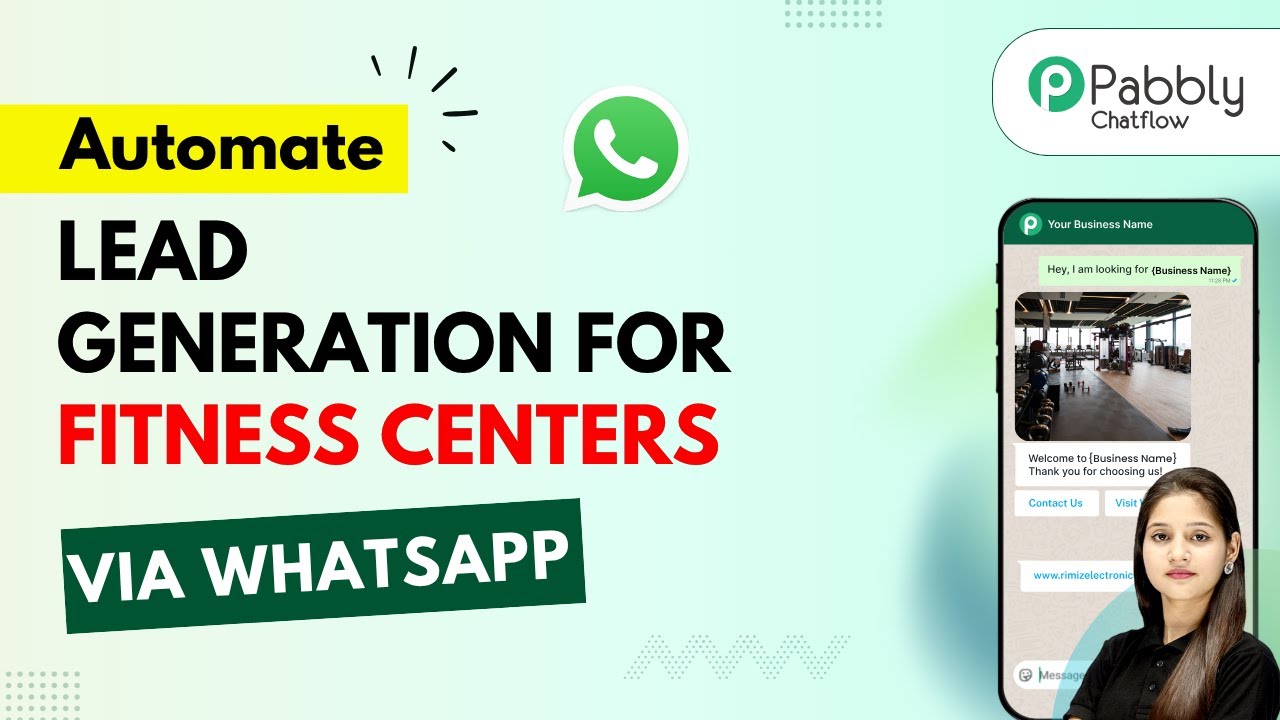
How to Automate Lead Generation for Fitness Centers via WhatsApp with Pabbly Chatflow

Learn how to automate lead generation for fitness centers via WhatsApp using Pabbly Chatflow. Step-by-step guide to creating an efficient WhatsApp chatbot. Learn step-by-step how to create, test, and optimize chatbots that enhance customer experience while reducing support workload.

Watch Step By Step Video Tutorial Below


1. Introduction to Pabbly Chatflow for Fitness Centers

Pabbly Chatflow is an essential tool for automating lead generation for fitness centers via WhatsApp. This platform allows you to create a WhatsApp chatbot that can respond to user inquiries instantly, enhancing customer engagement. By utilizing Pabbly Chatflow, fitness centers can streamline their communication and provide timely responses to potential clients. using Pabbly Connect

In this section, we will explore how Pabbly Chatflow enables fitness centers to manage their leads effectively. The chatbot will automatically respond to user messages, making it easier to handle multiple inquiries simultaneously. This automation not only saves time but also ensures that no lead goes unattended.


2. Setting Up Your Pabbly Chatflow Account

To get started with Pabbly Chatflow, you first need to create an account. Visit the Pabbly Chatflow website and click on the ‘Sign Up’ button if you’re a new user. Existing users can simply sign in to their accounts. Once logged in, you will be directed to the dashboard where you can manage your WhatsApp numbers. using Pabbly Connect

  • Click on ‘Add WhatsApp Number’ to integrate your WhatsApp account.
  • Choose between WhatsApp Connect or Manual Token Connect options.
  • Follow the prompts to complete the integration process.

After adding your WhatsApp number, you can begin utilizing Pabbly Chatflow to create your chatbot. This setup is crucial as it lays the foundation for automating lead generation through WhatsApp.


3. Creating Your WhatsApp Chatbot with Pabbly Chatflow

Once your account is set up, you can start creating your WhatsApp chatbot. Navigate to the ‘Flow’ section in Pabbly Chatflow and click on the ‘Add Flow’ button. This is where you will design the conversation flow that your chatbot will follow. Begin by naming your flow according to its purpose, such as ‘Automate Lead Generation for Fitness Centers via WhatsApp.’ using Pabbly Connect

Next, you will set the trigger event for your chatbot. Select the option for ‘Keyword/Reaction’ to ensure your bot responds when users send specific keywords. You can add keywords like ‘fitness classes,’ ‘join gym,’ and ‘fitness membership’ to trigger responses. This step is vital as it determines how your bot will engage with users.

  • Use the list message feature to provide options for membership plans.
  • Connect the starting point of your flow to the message options.
  • Ensure all nodes are connected properly for seamless interaction.

By organizing your chatbot flow this way, you ensure that users receive immediate and relevant information, making their experience more efficient and engaging.


4. Collecting User Information Through Pabbly Chatflow

After setting up the initial responses, the next step is to collect user information. Once a user selects a membership plan, your bot should ask for their full name and contact number. This is done by using the ‘Ask a Question’ button within Pabbly Chatflow. Customize the message to prompt users for their details effectively. using Pabbly Connect

When users provide their full name and contact number, you can use tags to categorize these leads. For instance, you can create a tag named ‘Fitness Classes’ to identify users who have shown interest in your programs. This tagging system helps in managing your leads efficiently and allows for targeted follow-up.

To conclude this section, ensure that each question node is connected properly to maintain the flow of information. This systematic approach allows your WhatsApp chatbot to gather essential details from potential clients automatically, enhancing lead generation efforts.


5. Finalizing Your WhatsApp Chatbot with Pabbly Chatflow

After collecting user information, the final step is to send a confirmation message. Use the text plus button to create a message that acknowledges the user’s selection and provides further instructions, such as payment links. For example, you can say, ‘Congratulations, you are now a premium member! Please make the payment via the link provided.’ This ensures users feel valued and informed. using Pabbly Connect

Once you have designed the entire flow, it’s crucial to save your work to ensure the chatbot is live and operational. Click the ‘Save’ button to update your flow. This finalizes the setup of your WhatsApp chatbot, which will now operate 24/7 to respond to user inquiries.

By implementing this automated lead generation process through Pabbly Chatflow, fitness centers can significantly enhance their customer engagement and streamline their operations. The chatbot will handle inquiries efficiently, allowing staff to focus on other important tasks.


Conclusion

In conclusion, automating lead generation for fitness centers via WhatsApp using Pabbly Chatflow is a game-changer. This tutorial provided a step-by-step guide on how to set up a WhatsApp chatbot that responds to user inquiries, collects information, and enhances customer engagement. By leveraging Pabbly Chatflow, fitness centers can improve their lead management and offer instant responses to potential clients.

Ensure you check out Pabbly Connect to create business automation workflows and reduce manual tasks. Pabbly Connect currently offer integration with 2,000+ applications.