
How to Send Product Catalog Automatically via WhatsApp for Google Forms Leads Using Pabbly Connect

Learn how to automate sending product catalogs via WhatsApp for Google Forms leads using Pabbly Connect. Step-by-step tutorial with detailed instructions. Discover how to seamlessly connect your essential tools through accessible instructions that make powerful automation available to professionals at every skill level.

Watch Step By Step Video Tutorial Below


1. Introduction to Pabbly Connect for Automation

Pabbly Connect is a powerful automation tool that allows users to integrate various applications seamlessly. In this tutorial, we will explore how to send product catalogs automatically via WhatsApp when a new lead fills out a Google Form. By using Pabbly Connect, you can eliminate manual tasks and streamline your workflow.

To begin, access Pabbly Connect by visiting its website. Once there, you can either sign up for a new account or log in if you already have one. After logging in, you can create a new workflow that will connect Google Forms and WhatsApp, enabling automated responses to your leads.


2. Creating a Google Form to Capture Leads

To start the automation process, you need to create a Google Form that will collect lead information. This form should include fields for the lead’s full name, phone number, and email address. By integrating this form with Pabbly Connect, you can ensure that every submission triggers an automatic response.

  • Create a new Google Form with necessary fields.
  • Include fields for full name, phone number, and email address.
  • Once completed, save the form and note its link for testing.

After setting up the Google Form, you can proceed to connect it with Pabbly Connect. This connection will allow you to capture the responses automatically and send them to WhatsApp.


3. Connecting Google Forms to Pabbly Connect

With your Google Form ready, the next step is to connect it to Pabbly Connect. This involves setting up a trigger that will activate whenever a new form submission occurs. In Pabbly Connect, select Google Forms as your trigger application and choose the event ‘New Response Received’.

After selecting the trigger, you will receive a unique webhook URL from Pabbly Connect. This URL needs to be integrated into your Google Form. To do this, go to your form responses section and link it to a Google Sheet. This will allow the data to be collected in a structured manner.

  • Select Google Forms as the trigger application in Pabbly Connect.
  • Choose ‘New Response Received’ as the trigger event.
  • Copy the provided webhook URL and link it to your Google Form.

Once you have linked the Google Form to Pabbly Connect, any new submissions will automatically trigger the workflow you are creating.


4. Setting Up WhatsApp Integration Using Pabbly Connect

Now that your Google Form is connected to Pabbly Connect, the next step is to set up WhatsApp integration. You will add an action step to your workflow that sends a message via WhatsApp whenever a new lead is captured. For this, select WhatsApp Cloud API as your action application and choose the ‘Send Template Message’ event.

During this setup, you will need to provide your WhatsApp Cloud API credentials, including your token and phone number ID. These credentials are essential to authenticate your WhatsApp messages sent through Pabbly Connect. Make sure to follow the instructions carefully to ensure a successful connection.

Select WhatsApp Cloud API as the action application. Choose ‘Send Template Message’ as the action event. Enter your WhatsApp API credentials for authentication.

Once the WhatsApp integration is complete, you can customize the message template that will be sent to the leads, ensuring a personalized experience for each new contact.


5. Testing the Integration and Finalizing the Workflow

With both Google Forms and WhatsApp integrated through Pabbly Connect, it’s time to test the entire workflow. Submit a test entry through your Google Form to verify that the automation works as intended. Upon submission, you should receive a WhatsApp message containing the product catalog.

Check your WhatsApp to confirm that the message has been received successfully. This step is crucial to ensure that all connections are properly configured and that the automation is functioning seamlessly. If you encounter any issues, revisit the previous steps to troubleshoot your setup within Pabbly Connect.

Once everything is confirmed to be working, you can finalize your workflow and start capturing leads automatically. This integration saves time and enhances customer engagement by promptly delivering product catalogs to interested leads.


Conclusion

In this tutorial, we explored how to use Pabbly Connect to automate the process of sending product catalogs via WhatsApp for Google Forms leads. By following the detailed steps, you can streamline your lead management and enhance customer interaction effortlessly. Start using Pabbly Connect today to transform your workflow!

Ensure you check out Pabbly Connect to create business automation workflows and reduce manual tasks. Pabbly Connect currently offer integration with 2,000+ applications.

How to Add Leads from Facebook Lead Ads to Google Sheets Using Pabbly Connect

Learn how to seamlessly integrate Facebook Lead Ads with Google Sheets using Pabbly Connect for efficient lead management. Explore efficient methods for automating routine tasks with clear, concise instructions suited for both newcomers and experienced professionals.

Watch Step By Step Video Tutorial Below


1. Accessing Pabbly Connect for Integration

To start integrating Facebook Lead Ads with Google Sheets, you first need to access Pabbly Connect. Open your web browser and navigate to the landing page by typing Pabbly.com/connect. This platform allows you to automate tasks without any programming knowledge.

Once on the Pabbly Connect page, you have two options: ‘Sign Up for Free’ if you’re a new user, or ‘Sign In’ if you already have an account. Click on the option that suits your case. After logging in, you will find yourself on the Pabbly Connect dashboard where you can create your automation workflows.


2. Creating a Workflow in Pabbly Connect

After accessing your account, the next step is to create a workflow in Pabbly Connect. Click on the ‘Create Workflow’ button. You will be prompted to choose between the new workflow builder and the classic one. The new workflow builder is recommended for its modern interface and flexibility.

  • Select the new workflow builder.
  • Name your workflow, e.g., ‘Add Leads from Facebook Lead Ads to Google Sheets for Quick Access’.
  • Choose a folder to save your workflow, such as ‘Automations’.

After setting up these details, click on the ‘Create’ button. This will open the workflow window where you can define triggers and actions for your automation.


3. Setting Up the Trigger with Facebook Lead Ads

The next step involves setting up a trigger in Pabbly Connect. Click on the ‘Add Trigger’ button and select ‘Facebook Lead Ads’ as your trigger application. For the trigger event, choose ‘New Lead Instant’ to capture new leads immediately.

To connect Facebook Lead Ads with Pabbly Connect, click on ‘Connect’. If you haven’t created a connection yet, select ‘Add a New Connection’. You will be prompted to log in to your Facebook account to authorize the connection. Ensure you are logged in to facilitate this process.


4. Mapping Lead Details to Google Sheets

After successfully capturing the lead details from Facebook, the next step is to add these details to Google Sheets using Pabbly Connect. Click on ‘Add New Action Step’ and select ‘Google Sheets’ as your action application. Choose the event ‘Add New Row’ to insert the lead details into your spreadsheet.

  • Click on ‘Connect’ and add a new connection to your Google account.
  • Select the spreadsheet where you want to store the lead details.
  • Map the fields from the Facebook Lead Ads response to the corresponding columns in Google Sheets.

Once the mapping is complete, click on ‘Save and Send Test Request’ to verify that the integration works correctly. You should see the lead details appear in your Google Sheets.


5. Testing the Integration in Real-Time

To ensure everything is functioning correctly, it’s essential to test your workflow in real-time. Go back to the Facebook Lead Ads testing tool and submit a new lead. Make sure to delete any previous test leads to avoid confusion.

Once you submit the new lead, check your Google Sheets to confirm that the details have been automatically added. This showcases the efficiency of using Pabbly Connect for automating lead management.


Conclusion

In this tutorial, we explored how to effectively add leads from Facebook Lead Ads to Google Sheets using Pabbly Connect. This automation not only saves time but also ensures that you have quick access to your leads for better management and follow-up.

Ensure you check out Pabbly Connect to create business automation workflows and reduce manual tasks. Pabbly Connect currently offer integration with 2,000+ applications.

Automate WhatsApp Appointment Reminders with Pabbly Connect and Google Calendar

Learn how to automate WhatsApp appointment reminders for Google Calendar events using Pabbly Connect. Follow our step-by-step guide for seamless integration. Discover hidden automation capabilities within your existing tools. This guide shows you how to connect your essential applications and permanently eliminate redundant manual processes.

Watch Step By Step Video Tutorial Below


1. Accessing Pabbly Connect for Automation

To automate WhatsApp appointment reminders for Google Calendar events, start by accessing Pabbly Connect. This platform allows seamless integration between various applications without any coding skills required.

Visit Pabbly’s website and sign in to your account. If you are a new user, you can sign up for free to get started. Once signed in, navigate to the Pabbly Connect dashboard where you will manage all your automation workflows.


2. Creating a New Workflow in Pabbly Connect

In this step, you will create a new workflow in Pabbly Connect to send WhatsApp reminders. Click on the ‘Create Workflow’ button and select the new workflow builder. Name your workflow as ‘Send Appointment Reminders for Google Calendar Events Automatically’.

Next, you need to set up the trigger application. For this, you will select Google Calendar as the trigger application and choose the event as ‘New Event’. This means that whenever a new appointment is booked in Google Calendar, it will trigger the workflow.

  • Select Google Calendar as the trigger application.
  • Choose ‘New Event’ as the trigger event.
  • Connect your Google account to Pabbly Connect.

Once connected, select the calendar you want to monitor for new events. This setup ensures that every time an appointment is created, it will be captured by Pabbly Connect.


3. Sending WhatsApp Reminders Using Pabbly Connect

After setting up your trigger, the next step is to configure the action application, which will be WhatsApp Cloud API. In the action event, select ‘Send Template Message’. This allows you to send a pre-defined message to the users who booked the appointment. using Pabbly Connect

To connect to WhatsApp Cloud API, you will need to provide your API token, phone number ID, and WhatsApp business account ID. You can find these details from your WhatsApp Cloud API settings. After entering these details, click on ‘Connect’ to establish the integration.

  • Enter your WhatsApp API token.
  • Provide your phone number ID.
  • Input your WhatsApp business account ID.

Once you have successfully connected WhatsApp Cloud API, you can map the details from the Google Calendar event to the WhatsApp message template. This ensures that the reminders are personalized with the correct appointment details.


4. Formatting Data for WhatsApp Reminders

In this section, you will format the data received from Google Calendar to make it suitable for WhatsApp messages. Use the ‘Text Formatter’ by Pabbly Connect to extract the phone number and other relevant details from the appointment data.

Set up a new action step using the Text Formatter to extract the phone number from the description of the event. You will also need to format the appointment date and time to ensure they are presented correctly in the WhatsApp message.

Use Text Formatter to extract the phone number. Format the date and time for better readability. Map the formatted data to the WhatsApp message template.

This step is crucial as it ensures that each reminder contains accurate and relevant information about the appointment, making it more effective for communication.


5. Finalizing the Workflow for Appointment Reminders

Finally, you will finalize the workflow to ensure that reminders are sent at the correct time. You can add a delay step in Pabbly Connect to schedule the WhatsApp message to be sent one day before the appointment.

Set up the delay action to wait until the specific date and time you want the reminder to be sent. This allows your customers to receive timely notifications about their appointments, enhancing their experience.

Add a delay action in Pabbly Connect. Set the delay to one day before the appointment. Test the workflow to ensure reminders are sent correctly.

After finalizing all steps and testing the workflow, you will have a fully automated system that sends WhatsApp appointment reminders for Google Calendar events, all managed through Pabbly Connect.


Conclusion

By using Pabbly Connect, you can effortlessly automate WhatsApp appointment reminders for your Google Calendar events. This integration not only saves time but also enhances communication with your clients. Follow the steps outlined in this tutorial to set up your automated reminders today!

Ensure you check out Pabbly Connect to create business automation workflows and reduce manual tasks. Pabbly Connect currently offer integration with 2,000+ applications.

How to Capture Your Leads in Google Sheets Using Pabbly Connect

Learn how to seamlessly capture your leads in Google Sheets with Pabbly Connect. This step-by-step guide walks you through the entire process of integration. Discover hidden automation capabilities within your existing tools. This guide shows you how to connect your essential applications and permanently eliminate redundant manual processes.

Watch Step By Step Video Tutorial Below


1. Accessing Pabbly Connect for Integration

To capture your leads in Google Sheets, you first need to access Pabbly Connect. Open your browser and navigate to Pabbly.com/n. This will take you to the homepage of Pabbly Connect, where you can sign up or log in.

If you are a new user, click on the ‘Sign Up Free’ button to create an account. Existing users can simply sign in. Once logged in, you will see various applications available in Pabbly, including Pabbly Connect, which is essential for integrating Google Sheets.


2. Creating a Workflow in Pabbly Connect

After signing in, you will need to create a workflow in Pabbly Connect. Click on the ‘Create Workflow’ button located at the top right corner of the dashboard. This will prompt you to name your workflow.

  • Name your workflow as ‘Capture Your Leads in Google Sheets’.
  • Select the folder where you want to save this workflow.
  • Choose an appropriate folder, such as ‘Google Sheets’.

Once you have named your workflow and selected the folder, click on the ‘Create’ button. This will take you to the workflow builder where you can set up your trigger and actions.


3. Setting Up the Trigger in Pabbly Connect

In this step, you will set up the trigger for your workflow using Pabbly Connect. Click on the ‘Trigger’ button and select your trigger application, which in this case is Typeform. You will then need to choose the event as ‘New Entry’.

Next, you will need to connect your Typeform account with Pabbly Connect. Click on ‘Connect’, which will prompt you to log into your Typeform account if you aren’t already logged in. Once connected, select the form you want to use for capturing leads.


4. Adding Action Step to Google Sheets

Now that you have set up the trigger, it’s time to add an action step in Pabbly Connect to send the captured leads to Google Sheets. Click on the ‘Action’ button and select Google Sheets as your action application. Choose the event ‘Add a New Row’.

  • Connect your Google Sheets account to Pabbly Connect.
  • Select the spreadsheet and the specific sheet where you want the data to be sent.
  • Map the fields from the Typeform submission to the corresponding columns in Google Sheets.

Once you have mapped the fields such as first name, last name, email address, and phone number, click on ‘Save and Send Test Request’. This will send a test entry to your Google Sheets, allowing you to verify that everything is working correctly.


5. Verifying Data in Google Sheets

After successfully setting up the action step in Pabbly Connect, it’s important to verify that your leads are being captured correctly in Google Sheets. Open your Google Sheets document and check the specified sheet for the new entries.

You should see the details of the test submission reflected in the sheet. This confirms that your integration is functioning as intended. With this setup, every new submission from your Typeform will automatically populate into your Google Sheets.


Conclusion

In this tutorial, we explored how to capture leads in Google Sheets using Pabbly Connect. By following the steps outlined, you can automate the process of transferring lead data seamlessly into your spreadsheets, enhancing your data management efficiency.

Ensure you check out Pabbly Connect to create business automation workflows and reduce manual tasks. Pabbly Connect currently offer integration with 2,000+ applications.

How to Add Leads from Instagram Lead Ads to Pipedrive CRM Automatically Using Pabbly Connect

Learn how to automate adding leads from Instagram Lead Ads to Pipedrive CRM using Pabbly Connect. Follow our step-by-step tutorial for seamless integration. Build sophisticated automated workflows in less time than you think. This guide translates complex integrations into straightforward steps for immediate implementation.

Watch Step By Step Video Tutorial Below


1. Accessing Pabbly Connect for Automation

To start automating the process of adding leads from Instagram Lead Ads to Pipedrive CRM, you first need to access Pabbly Connect. Open your browser and navigate to pabby.com/connect. This will take you to the Pabbly Connect homepage where you can begin setting up your integration.

Once on the homepage, you will see options to sign in or sign up for free. If you’re a new user, select the sign-up option to get started with 300 free tasks every month. Existing users can simply sign in to access their dashboard.


2. Creating a Workflow in Pabbly Connect

After signing in, you will be directed to the dashboard of Pabbly Connect. To create a workflow, click on the ‘Create Workflow’ button located at the top right corner. You will be prompted to choose between the new beta version or the classic version. For this tutorial, select the beta version for a more modern experience.

  • Click on ‘Create Workflow’.
  • Name your workflow as ‘Add Leads from Instagram Lead Ads to Pipedrive CRM Automatically’.
  • Select an appropriate folder for your workflow.

After naming your workflow and selecting a folder, click the create button. This will set up the foundation for your automation process.


3. Setting Up the Trigger for Instagram Lead Ads

In this section, you will set up the trigger that initiates the workflow in Pabbly Connect. Click on the ‘Add Trigger’ button and select ‘Instagram Lead Ads’ as your trigger application. From the app event dropdown, choose ‘New Lead Instant’.

Next, click on ‘Connect’ to establish a new connection with your Instagram Lead Ads account. If prompted, select your Facebook account that is linked to your Instagram account. This connection is essential for capturing leads from your ads.

  • Select your Facebook page and the specific lead generation form.
  • Click on ‘Save and Send Test Request’ to test the connection.

This will allow Pabbly Connect to listen for new leads generated through your Instagram ads.


4. Adding Action Steps to Create a Person and Deal in Pipedrive

Now that your trigger is set up, the next step is to add action steps in Pabbly Connect. First, select ‘Pipedrive’ as your action application and choose ‘Create Person’ as the action event. You will need to connect your Pipedrive account using your API token, which can be found in your Pipedrive account settings.

After successfully connecting, map the fields from your lead data to the corresponding fields in Pipedrive. For example, map the first name and last name from the lead to the name field in Pipedrive. After mapping, click on ‘Save and Send Test Request’ to create a new person in your Pipedrive account.

Map the lead’s phone number and email address to the respective fields. Select visibility options for the new person.

Once the person is created successfully, you will proceed to create a deal for the same lead in Pipedrive by adding another action step.


5. Finalizing the Integration with Pabbly Connect

In the final step, add another action for Pipedrive to create a deal. Select ‘Create Deal’ as the action event and use the existing connection you set up earlier. You can then specify the title of the deal and map the person ID from the previous step.

Once all necessary fields are filled out, click on ‘Save and Send Test Request’. This will create a new deal in your Pipedrive account associated with the lead captured from Instagram Lead Ads. You can verify the new deal in your Pipedrive dashboard.

With this, you have successfully automated the process of adding leads from Instagram Lead Ads to Pipedrive CRM using Pabbly Connect.


Conclusion

In this tutorial, we explored how to add leads from Instagram Lead Ads to Pipedrive CRM automatically using Pabbly Connect. By following these steps, you can streamline your lead management process and ensure that every new lead is promptly captured and organized in your CRM system.

Ensure you check out Pabbly Connect to create business automation workflows and reduce manual tasks. Pabbly Connect currently offer integration with 2,000+ applications.

Automate Employee Onboarding with Pabbly Chatflow and Pabbly Connect

Learn how to automate employee onboarding using Pabbly Chatflow and Pabbly Chatflow for seamless integration with Google Sheets and WhatsApp. This detailed guide shows you how to build powerful chat automation that engages visitors and converts prospects—without any coding required.

Watch Step By Step Video Tutorial Below


1. Access Pabbly Chatflow to Create Your WhatsApp Chatbot

To automate employee onboarding, the first step is to access Pabbly Chatflow. Simply go to the URL Pabbly.com/chatflow to reach the landing page. Here, you will see options to either sign in or sign up for free if you are a new user.

Once signed in, you will be directed to the dashboard of Pabbly Chatflow. This is where you can add your WhatsApp number by clicking on the ‘Add WhatsApp Number’ button. You can connect using WhatsApp Connect or Manual Token Connect, depending on your preference.


2. Create a WhatsApp Chatbot using Pabbly Chatflow

After accessing Pabbly Chatflow, you need to create a flow for your WhatsApp chatbot. Click on the ‘Flows’ option in the sidebar and then select the ‘Add Flow’ button. Name your flow, for example, ‘Automate Employee Onboarding’.

  • Choose a trigger event, such as ‘Keyword Rejects Match’.
  • Enter keywords that will initiate the chatbot, like ‘new employee’.
  • Set up the welcome message and buttons for user interaction.

With these settings, your chatbot will respond automatically when users send a message, creating an efficient onboarding experience.


3. Collect Employee Information via Pabbly Chatflow

Once the chatbot is set up, you can begin collecting essential employee information. When a user selects the ‘Submit Documents’ button, the chatbot will ask for the full name, email address, phone number, department, joining date, and ID proof.

To implement this, you will use the ‘Ask Question’ action in Pabbly Chatflow. This allows the chatbot to ask specific questions, and you can map these responses to custom fields for easy tracking.

  • Ask for the full name and map it to the ‘Full Name’ custom field.
  • Collect the email and map it accordingly.
  • Continue collecting all required information through sequential questions.

This structured approach ensures that all necessary data is gathered effectively.


4. Integrate Google Sheets with Pabbly Connect

After collecting the employee information through Pabbly Chatflow, the next step is to integrate this data with Google Sheets using Pabbly Connect. This integration allows for automatic saving of collected information.

To set this up, you will create a workflow in Pabbly Connect. Click on ‘Create Workflow’ and choose the Google Sheets app. Set the action event to ‘Add New Row’ to ensure that new employee data is added to your spreadsheet.

Connect your Google account to allow access. Map the fields from Pabbly Chatflow to the corresponding columns in Google Sheets. Test the connection to ensure data flows correctly.

This integration allows for seamless data management and employee onboarding.


5. Finalize Your Chatbot Flow in Pabbly Chatflow

With the integration set, you can now finalize your chatbot flow in Pabbly Chatflow. This includes adding a status fallback message to confirm successful submissions and providing company information.

To enhance user experience, you can also include media options, such as a PDF document with company information. Drag and drop the media option into your flow and upload the document.

Once everything is set up, click the save button to finalize your flow. Now, your chatbot is ready to assist new employees with onboarding and ensure their information is captured accurately in Google Sheets.


Conclusion

By using Pabbly Chatflow and Pabbly Connect, you can automate employee onboarding effectively. This integration streamlines communication and data collection, ensuring a smooth onboarding process for new employees.

Ensure you check out Pabbly Connect to create business automation workflows and reduce manual tasks. Pabbly Connect currently offer integration with 2,000+ applications.

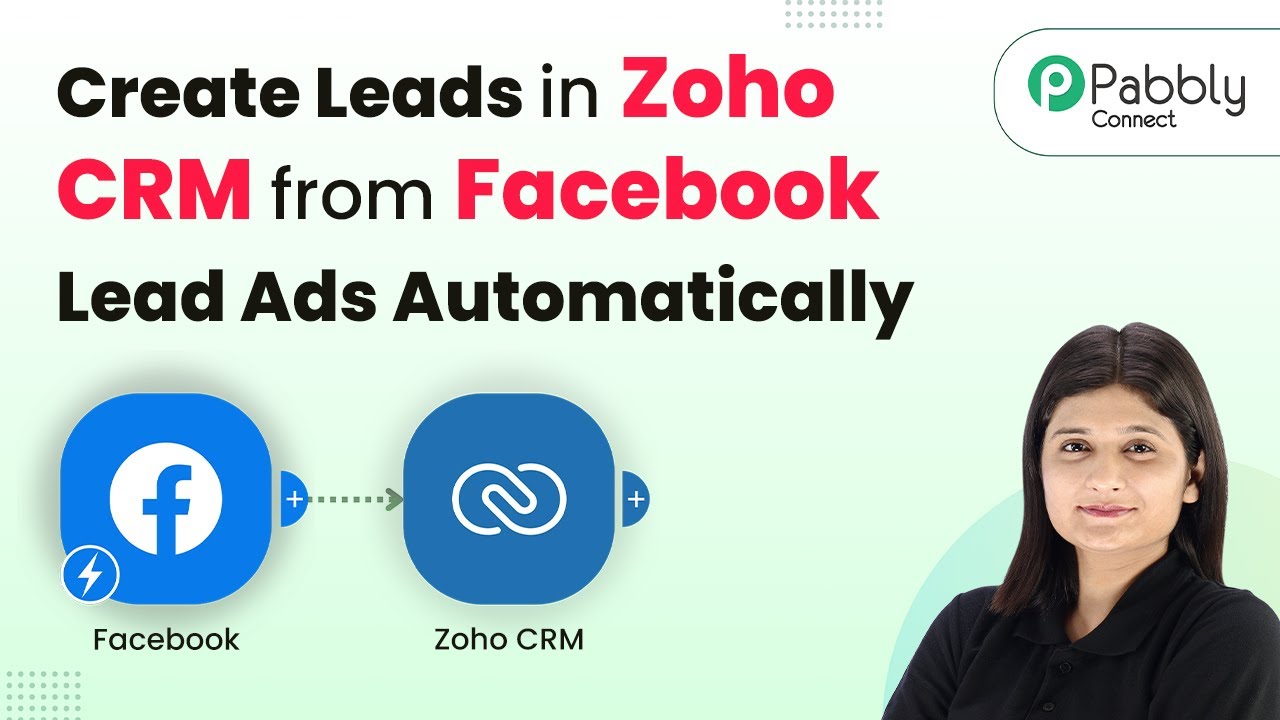
How to Create Leads in Zoho CRM from Facebook Lead Ads Automatically Using Pabbly Connect

Learn how to create leads in Zoho CRM from Facebook Lead Ads automatically using Pabbly Connect with this step-by-step tutorial. Transform complex automation concepts into accessible, actionable steps that eliminate unnecessary manual work while maximizing existing application capabilities.

Watch Step By Step Video Tutorial Below


1. Accessing Pabbly Connect for Integration

To create leads in Zoho CRM from Facebook Lead Ads automatically, the first step is accessing Pabbly Connect. This platform allows you to automate workflows without coding. You can visit Pabbly’s website and sign in or sign up for a free account.

Once logged in, navigate to the Pabbly Connect dashboard. Here, you can create a new workflow by clicking on ‘Create Workflow’. This is where you will set up the integration between Facebook Lead Ads and Zoho CRM.


2. Creating a Workflow in Pabbly Connect

After accessing your Pabbly Connect dashboard, you can create a new workflow named ‘Create Lead in Zoho CRM from Facebook Lead Ads Automatically’. This workflow will automate the process of transferring leads. using Pabbly Connect

  • Click on ‘Create Workflow’
  • Select the ‘Classic’ workflow builder
  • Name your workflow accordingly

With the workflow created, you will see two boxes labeled ‘Trigger’ and ‘Action’. The trigger will be Facebook Lead Ads, and the action will be Zoho CRM. This setup enables Pabbly Connect to listen for new leads from Facebook and send them to Zoho CRM.


3. Configuring Facebook Lead Ads in Pabbly Connect

To set up the trigger, select Facebook Lead Ads as your application and choose ‘New Lead Instant’ as the trigger event. Click on ‘Connect’ to establish the connection with your Facebook account. using Pabbly Connect

Once connected, you will need to provide the page name and the lead form name. For example, if your page is named ‘Digital Dynamics’, select that from the dropdown. This allows Pabbly Connect to pull lead data from your Facebook Lead Ads.

  • Enter your Facebook page name
  • Select the appropriate lead form
  • Click ‘Save and Send Test Request’

With these steps, Pabbly Connect will be set to listen for new leads generated through your Facebook Lead Ads.


4. Adding Leads to Zoho CRM via Pabbly Connect

Now that you have configured the Facebook Lead Ads trigger, the next step is to set up the action in Zoho CRM. Select Zoho CRM as your action application and choose ‘Insert/Update Record with Subform Data’ as the action event. using Pabbly Connect

Connect to your Zoho CRM account by providing the necessary credentials. Make sure to enter your domain correctly, for instance, ‘zoho.in’. Once connected, you can start mapping fields from Facebook Lead Ads to Zoho CRM.

Select the module as ‘Leads’ Map the fields such as first name, last name, email, and phone number Click ‘Save and Send Test Request’

This process ensures that every new lead captured from Facebook Lead Ads is automatically added to your Zoho CRM as a new lead.


5. Testing the Integration Workflow

To finalize the setup, you need to test the integration. Fill out your lead form on Facebook Lead Ads with dummy details to generate a lead. This will trigger the workflow you created in Pabbly Connect. using Pabbly Connect

After submitting the form, check your Zoho CRM account to confirm that the lead has been created successfully. You should see the new lead with all the details populated correctly.

In summary, Pabbly Connect has facilitated the entire process, allowing you to automate lead generation from Facebook Lead Ads to Zoho CRM seamlessly. This integration not only saves time but also improves efficiency in managing leads.


Conclusion

Using Pabbly Connect, you can automate the creation of leads in Zoho CRM from Facebook Lead Ads. This integration streamlines the lead management process, ensuring that no lead is missed while saving valuable time.

Ensure you check out Pabbly Connect to create business automation workflows and reduce manual tasks. Pabbly Connect currently offer integration with 2,000+ applications.

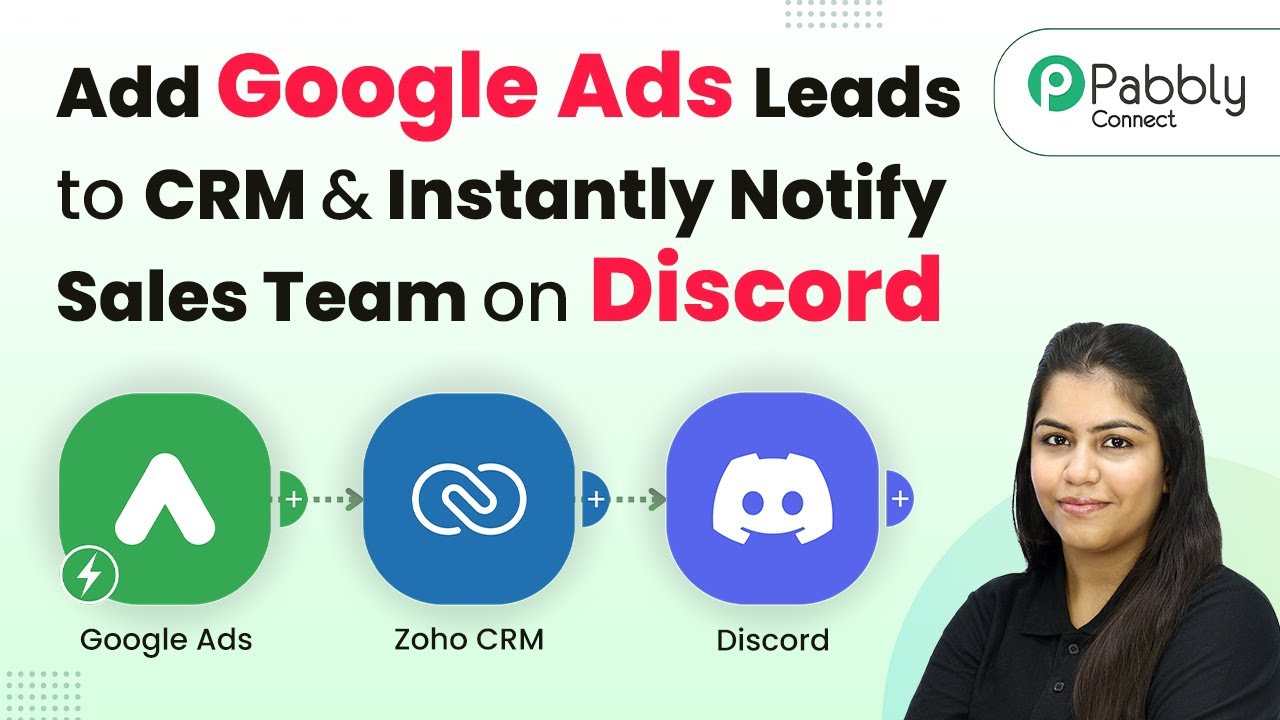
How to Add Google Ads Leads to CRM and Notify Sales Team on Discord Using Pabbly Connect

Learn how to integrate Google Ads leads into Zoho CRM and notify your sales team on Discord using Pabbly Connect in this detailed tutorial. Revolutionize your productivity approach with just a few strategic clicks. Uncover professional methods for connecting applications and creating workflows that reclaim hours of your week.

Watch Step By Step Video Tutorial Below


1. Accessing Pabbly Connect for Integration

To start integrating Google Ads leads into Zoho CRM and notifying your sales team on Discord, you first need to access Pabbly Connect. Open your browser and type in pabby.com/connect to reach the Pabbly Connect landing page.

Once on the landing page, you will see options to either sign in or sign up. If you are a new user, click on ‘Sign up for free’ to receive free credits. For existing users, click on ‘Sign in’ to access your account. After signing in, navigate to the dashboard and select the ‘Create Workflow’ button to begin your integration process.


2. Creating a New Workflow in Pabbly Connect

When creating a new workflow in Pabbly Connect, you will need to provide a name for your workflow. Enter a descriptive name such as ‘Add Google Ads Leads to CRM and Instantly Notify Sales Team on Discord’ and select a folder for organization. Click the ‘Create’ button to proceed.

  • Enter a descriptive name for your workflow.
  • Select an appropriate folder.
  • Click ‘Create’ to set up your workflow.

After clicking ‘Create’, you will be directed to the workflow window. This window is crucial as it allows you to set up triggers and actions. A trigger is the event that starts the workflow, while actions are the tasks that follow. Click on the ‘Add Trigger’ button to set up your trigger application, which will be Google Ads in this case.


3. Setting Up Google Ads Trigger in Pabbly Connect

To set up the Google Ads trigger in Pabbly Connect, search for Google Ads and select it as your trigger application. For the trigger event, choose ‘New Lead Form Entry’ and click on ‘Connect’. This will generate a webhook URL.

Copy the generated webhook URL and navigate to your Google Ads account. In the lead form settings, paste this URL into the webhook integration section. This will allow Google Ads to communicate with Pabbly Connect whenever a new lead is generated. Click ‘Send Test Data’ to ensure the connection is established correctly.


4. Setting Up Zoho CRM Action in Pabbly Connect

Once the Google Ads trigger is set, the next step is to create a contact in Zoho CRM using Pabbly Connect. Click on ‘Add New Action Step’ and select Zoho CRM as your action application. Choose ‘Create Contact’ as the action event and click on ‘Connect’. If you haven’t previously connected to Zoho CRM, you will need to add a new connection.

  • Select ‘Create Contact’ as the action event.
  • Input your Zoho CRM domain.
  • Grant necessary permissions to Pabbly Connect.

After establishing the connection, you will need to map the lead details from Google Ads to the corresponding fields in Zoho CRM. This dynamic mapping ensures that every new lead’s information is accurately captured in your CRM system.


5. Setting Up Discord Notification in Pabbly Connect

Finally, to notify your sales team on Discord, add another action step in Pabbly Connect and select Discord as your action application. Choose ‘Send Channel Message Markdown’ as the action event and click on ‘Connect’. You will need to create a webhook URL in your Discord server settings to allow Pabbly Connect to send messages.

Once you have created the webhook in Discord, paste the URL into Pabbly Connect. Customize the message template to include lead details such as first name, last name, email, and phone number. After setting up the message, click ‘Save and Send Test Request’ to verify that the message is sent to your Discord channel successfully.


Conclusion

In this tutorial, we explored how to integrate Google Ads leads into Zoho CRM and notify your sales team on Discord using Pabbly Connect. By following these precise steps, you can automate your lead management process efficiently and keep your team informed in real-time.

Ensure you check out Pabbly Connect to create business automation workflows and reduce manual tasks. Pabbly Connect currently offer integration with 2,000+ applications.

Utilizing Pabbly Connect for such integrations not only streamlines your workflow but also enhances communication within your team, ensuring no lead goes unnoticed. Start using Pabbly Connect today to optimize your business processes!

Automate Event Registration with Pabbly Chatflow and Pabbly Connect

Learn how to automate event registration using Pabbly Chatflow and Pabbly Chatflow to streamline your event management process. Learn step-by-step how to create, test, and optimize chatbots that enhance customer experience while reducing support workload.

Watch Step By Step Video Tutorial Below


1. Accessing Pabbly Chatflow for Event Registration

To begin automating event registration, access Pabbly Chatflow by typing its URL into a new tab. Once there, you can either sign in or sign up if you are a new user. This platform allows you to create a WhatsApp chatbot, which will facilitate the event registration process.

After signing in, you will be taken to the dashboard of Pabbly Chatflow. Here, you will see options to add your WhatsApp number. Once your number is connected, you can start building your chatbot.


2. Creating a WhatsApp Chatbot in Pabbly Chatflow

In this section, we will create a WhatsApp chatbot using Pabbly Chatflow. Click on the ‘Add Flow’ button to begin. Name your flow as ‘Automate Event Registration’. The next step is to set a trigger that will initiate the chatbot.

  • Select the trigger event as ‘Keyword Reject Match’.
  • Set the keyword to ‘event registration’.

Next, you will create a list message that includes upcoming events. This will be sent to users who trigger the chatbot. Make sure to add items like ‘Workshop A’ and their respective dates to this list. This setup allows users to choose an event they wish to register for.


3. Collecting User Information through Pabbly Chatflow

After a user selects an event, the chatbot will prompt them to provide their details. Use the ‘Ask Question’ action to collect the user’s full name, email, and contact number. Ensure you connect each question appropriately to gather all necessary information. using Pabbly Connect

  • Ask for full name and select the corresponding contact custom field.
  • Ask for email and select the email field.
  • Ask for contact number and map it to the contact field.

Once all information is collected, the chatbot will confirm the registration and inform the user that they will receive an email with the event details. This confirmation message should be personalized based on the selected event.


4. Integrating Pabbly Connect to Save Data

To save the collected user information into Google Sheets, you will need to integrate Pabbly Connect. Add an API request action in your Pabbly Chatflow flow after the user has provided their details.

In the API request action, paste the webhook URL generated by Pabbly Connect. Set the method to POST, and map the fields for full name, email, contact number, and event. This mapping ensures that the data is sent correctly to your Google Sheet.


5. Finalizing Your Chatbot Setup

After setting up the API request, you will need to add a final status fallback message in your Pabbly Chatflow. This message will confirm to the user that their registration was successful. Make sure to personalize this message using the event the user registered for.

Once everything is set up, click the save button to finalize your chatbot. You can test the chatbot by sending a message through WhatsApp and ensuring that the data is saved correctly in your Google Sheets. This testing phase is crucial to confirm that your automation is working as intended.


Conclusion

In this tutorial, we demonstrated how to automate event registration using Pabbly Chatflow and Pabbly Connect. By following these steps, you can create a WhatsApp chatbot that streamlines the registration process and saves user data efficiently. Start automating your event registrations today!

Ensure you check out Pabbly Connect to create business automation workflows and reduce manual tasks. Pabbly Connect currently offer integration with 2,000+ applications.

How to Send Automated WhatsApp Messages for New Orders from WooCommerce Using Pabbly Connect

Learn how to automate WhatsApp messages for new WooCommerce orders using Pabbly Connect. Step-by-step guide for seamless integration. Explore systematic approaches to creating efficient automation solutions that convert technical concepts into practical, implementable instructions.

Watch Step By Step Video Tutorial Below


1. Introduction to Pabbly Connect for WooCommerce Integration

Pabbly Connect is the ideal platform for automating WhatsApp messages for new orders from WooCommerce. By using Pabbly Connect, you can seamlessly integrate these two applications without any coding skills. This tutorial will guide you through the process of setting up this automation. using Pabbly Connect

To get started, you need to access Pabbly Connect and create a new workflow. This will allow you to connect WooCommerce with WhatsApp effectively. Follow the steps below to set up your automation:

  • Create a Pabbly Connect account if you don’t have one.
  • Log in to your Pabbly Connect dashboard.
  • Create a new workflow for WooCommerce and WhatsApp integration.

By following these steps, you will be ready to automate WhatsApp messages whenever a new order is placed in your WooCommerce store.


2. Setting Up the WooCommerce Trigger in Pabbly Connect

In this section, you will set up the WooCommerce trigger in Pabbly Connect. This is crucial as it will allow Pabbly Connect to capture new orders placed in your WooCommerce store. The first step is to select WooCommerce as your trigger application. using Pabbly Connect

To do this, click on the ‘Create Workflow’ button in Pabbly Connect and name your workflow. After naming, you will select WooCommerce as the trigger application and choose the event as ‘New Order Created.’ Once selected, you will receive a webhook URL that you need to connect to your WooCommerce settings.

  • Go to WooCommerce settings and navigate to the ‘Advanced’ tab.
  • Select ‘Webhooks’ and click on ‘Add Webhook.’
  • Paste the webhook URL from Pabbly Connect into the URL field and set the status to ‘Active.’

After saving the webhook, Pabbly Connect will be able to capture new order details whenever an order is placed in WooCommerce.


3. Placing an Order in WooCommerce to Test the Integration

Now that you have set up the WooCommerce trigger in Pabbly Connect, it is time to test the integration. To do this, you need to place a new order in your WooCommerce store. This will generate a response that Pabbly Connect will capture. using Pabbly Connect

Go to your WooCommerce store, select a product, and fill in the required billing details. Make sure to enter a valid mobile number and email address. Once you have filled in the details, place the order. After placing the order, return to Pabbly Connect and check if the webhook response has been captured.

Select a product and add it to your cart. Fill in the billing details with a valid mobile number. Place the order and check Pabbly Connect for the captured response.

Once you see the response in Pabbly Connect, it confirms that the integration is successful, and you can proceed to set up WhatsApp messaging.


4. Configuring WhatsApp Action in Pabbly Connect

With the WooCommerce trigger successfully set up, the next step is to configure the WhatsApp action in Pabbly Connect. This will allow you to send automated messages to customers when they place an order. Select WhatsApp Cloud API as your action application. using Pabbly Connect

After selecting WhatsApp Cloud API, you will need to connect your WhatsApp account by entering the required details such as token, phone number ID, and WhatsApp business account ID. These details can be found in your WhatsApp Cloud API setup.

Select WhatsApp Cloud API as the action application. Enter the necessary credentials to connect your WhatsApp account. Map the customer’s phone number and other details from the WooCommerce order response.

Once the action is configured, you can test the WhatsApp message to ensure it is sent correctly to the customer.


5. Testing the WhatsApp Message Automation

The final step is to test the WhatsApp message automation. After configuring the WhatsApp action in Pabbly Connect, you can send a test message to verify that the integration works as expected. Make sure to use a valid mobile number to receive the message. using Pabbly Connect

Click on the ‘Send Test Request’ button in Pabbly Connect. If everything is set up correctly, you should receive a WhatsApp message confirming the order details. This message will include the customer’s name, order ID, total amount, and delivery address.

To summarize, the testing phase is crucial to ensure everything works smoothly. Make sure to check your WhatsApp for the received message. If you encounter any issues, revisit the configuration steps in Pabbly Connect.


Conclusion

Using Pabbly Connect, you can easily automate WhatsApp messages for new orders from WooCommerce. This integration not only saves time but also enhances customer communication. Follow the steps outlined in this tutorial to set up your automation and improve your business efficiency.

Ensure you check out Pabbly Connect to create business automation workflows and reduce manual tasks. Pabbly Connect currently offer integration with 2,000+ applications.