Sync WhatsApp Cloud API Leads to Airtable with Pabbly Connect

Learn how to sync WhatsApp Cloud API leads to Airtable using Pabbly Connect with this step-by-step tutorial. Automate lead management efficiently! Learn to create powerful connections between your critical applications without requiring specialized programming knowledge or extensive technical background.

Watch Step By Step Video Tutorial Below


1. Accessing Pabbly Connect to Start Your Integration

To sync WhatsApp Cloud API leads to Airtable, the first step is to access Pabbly Connect. Open a new tab and enter Pabbly.com/connect. This will direct you to the Pabbly Connect landing page where you can sign up or log in.

If you are a new user, click on the ‘Sign Up Free’ button to create your account. Existing users should click on the ‘Sign In’ button. Pabbly Connect provides new users with 100 free credits each month to explore its automation capabilities.


2. Creating a Workflow in Pabbly Connect

Once logged into Pabbly Connect, you’ll find yourself on the dashboard. To create a new workflow, click on the ‘Create Workflow’ button. You will be prompted to choose between two workflow builders: the new version and the classic version. Select the new version for a more modern experience.

  • Click on ‘Create Workflow’.
  • Choose the new version of the workflow builder.
  • Name your workflow as ‘Sync WhatsApp Cloud API Leads to Airtable’.

After naming your workflow, you will be directed to the trigger setup window. Here, you will select WhatsApp Cloud API as your trigger application, specifically the ‘Message Notification’ event.


3. Connecting WhatsApp Cloud API to Pabbly Connect

To connect WhatsApp Cloud API with Pabbly Connect, click on the ‘Connect’ button. This will generate a webhook URL that you need to copy. Then, follow the instructions provided in the WhatsApp Cloud API section of Pabbly Connect.

  • Go to developers.facebook.com and create an application.
  • Select your application and navigate to the WhatsApp configuration.
  • Paste the webhook URL into the callback URL box and enter the verify token.

After setting up the callback URL, subscribe to the messages by clicking the appropriate button. Send a test message to ensure that Pabbly Connect captures the response successfully.


4. Setting Up Airtable Integration in Pabbly Connect

After successfully connecting WhatsApp Cloud API, it’s time to set up Airtable in Pabbly Connect. Click on the plus button to add an action step and search for Airtable. Select ‘Create Record’ as your action event.

Click on the ‘Connect’ button to establish a connection with Airtable. If this is your first time connecting, choose the ‘Add New Connection’ option. Log into your Airtable account when prompted, allowing Pabbly Connect to access your bases.

Select the base where you want to store your leads. Map the fields such as Profile Name, Phone Number, and Message from the WhatsApp trigger. Click on ‘Save and Send Test Request’ to create a new record in Airtable.

After refreshing your Airtable base, you will see the newly created record reflecting the WhatsApp lead details.


5. Conclusion: Automate Your Lead Management with Pabbly Connect

By following these steps, you can successfully sync WhatsApp Cloud API leads to Airtable using Pabbly Connect. This integration automates lead management, ensuring that every new message received on WhatsApp is captured as a record in Airtable.

Ensure you check out Pabbly Connect to create business automation workflows and reduce manual tasks. Pabbly Connect currently offer integration with 2,000+ applications.

With Pabbly Connect, you can streamline your workflow and enhance your business operations. Explore more automation possibilities with Pabbly Connect to save time and increase efficiency!
How to Send Personalized Thank-You Emails Automatically for Instagram Lead Ads Leads Using Pabbly Connect

Learn how to send personalized thank-you emails automatically for Instagram lead ads leads using Pabbly Connect. Step-by-step tutorial included! Master proven automation processes with practical implementation examples and strategic recommendations you can apply immediately in your workflow.

Watch Step By Step Video Tutorial Below


1. Accessing Pabbly Connect for Automation

To start sending personalized thank-you emails automatically for Instagram lead ads leads, first, access Pabbly Connect. This platform allows you to automate tasks without any coding skills. Simply visit Pabbly.com in your web browser.

Once on the website, you can log in to your existing Pabbly Connect account or sign up for a new account to get started. Signing up provides 100 free tasks every month, which can be utilized for various automation processes.


2. Creating a New Workflow in Pabbly Connect

After logging into Pabbly Connect, navigate to the dashboard and click on the ‘Create Workflow’ button. You will be prompted to select a workflow builder. Choose the new beta workflow builder for a modern experience.

  • Click on ‘Create Workflow’
  • Name your workflow, e.g., ‘Send Personalized Thank You Emails Automatically for Instagram Leads’
  • Select a folder for organization, such as ‘Instagram Automations’

After creating your workflow, you will need to set up a trigger application. In this case, select Instagram Lead Ads as your trigger, which will activate the workflow whenever a new lead is generated.


3. Setting Up the Trigger with Instagram Lead Ads

In your workflow, the trigger application is essential for starting the automation process. Choose Instagram Lead Ads and set the trigger event to ‘New Lead Instant’. This ensures that the workflow is activated each time a new lead is captured.

To connect your Instagram account, click on ‘Connect’ and select your Facebook account that is linked to Instagram. This will allow Pabbly Connect to access your Instagram Lead Ads data.

  • Select the Facebook page associated with your Instagram account.
  • Choose the lead form you want to use for capturing leads.
  • Click ‘Save’ to finalize the trigger setup.

Once this setup is complete, run a test submission to ensure that Pabbly Connect successfully captures the lead data from Instagram.


4. Sending Thank-You Emails Using SendGrid

After confirming that the trigger is working, the next step is to set up the action application. For this, choose SendGrid as your action application to send thank-you emails automatically.

Click on ‘Add Action Step’ and select SendGrid. When prompted, choose the action event as ‘Send Email’ and connect your SendGrid account by entering the API key.

Enter the ‘Send To’ email address using the mapping feature to dynamically pull the email from the lead data. Set the email subject to ‘Thank You for Reaching Out to Us.’ Compose the email body to include a personalized message for the lead.

By mapping the lead’s first name and email address into the email content, Pabbly Connect ensures that every email is personalized and tailored to the individual lead.


5. Testing the Integration and Confirmation

Once all details are entered, click on ‘Save and Send Test Request’ to verify that the email is sent successfully. Check your email inbox to confirm receipt of the thank-you email.

If the test is successful, you will see a confirmation message in Pabbly Connect. This indicates that the integration between Instagram Lead Ads and SendGrid is functioning as intended.

To finalize, ensure that your workflow is active so that every new lead from Instagram will automatically receive a thank-you email. This automation saves time and enhances engagement with potential customers.


Conclusion

In summary, using Pabbly Connect to automate the process of sending personalized thank-you emails for Instagram lead ads leads is efficient and effective. By following the steps outlined, you can streamline your communication and improve lead engagement effortlessly.

Ensure you check out Pabbly Connect to create business automation workflows and reduce manual tasks. Pabbly Connect currently offer integration with 2,000+ applications.

Send Automatic Personalized Emails from Google Forms Submission Using Pabbly Connect

Learn how to send automatic personalized emails from Google Forms submissions using Pabbly Connect. Follow this detailed step-by-step tutorial for seamless integration. Explore systematic approaches to creating efficient automation solutions that convert technical concepts into practical, implementable instructions.

Watch Step By Step Video Tutorial Below


1. Accessing Pabbly Connect for Integration

To send automatic personalized emails from Google Forms submissions, you need to access Pabbly Connect. Start by visiting the Pabbly Connect website and signing up for an account if you haven’t already. Pabbly Connect is a powerful automation tool that enables seamless integration between various applications like Google Forms and Gmail.

Once you’re logged in, navigate to the dashboard where you can create a new workflow. This workflow will allow you to connect Google Forms with your email service to automate the email sending process. Here’s how:

  • Go to the Pabbly Connect dashboard.
  • Click on the ‘Create Workflow’ button.
  • Name your workflow appropriately.

This setup is essential for automating the email process based on new Google Forms submissions.


2. Setting Up Google Forms for Submissions

After accessing Pabbly Connect, the next step is to set up your Google Form. This form will collect user data that will trigger the email sending process. You can create a form with fields such as first name, last name, email, phone number, and business name.

To connect your Google Form to Pabbly Connect, follow these steps:

  • Open your Google Form and click on the ‘Responses’ tab.
  • Select the option to link responses to a Google Sheet.
  • Create a new spreadsheet for the responses.

This integration is crucial as it allows Pabbly Connect to capture the responses from Google Forms and use them in the email automation process.


3. Configuring Pabbly Connect for Google Forms Responses

Now that your Google Form is set up, you need to configure Pabbly Connect to capture the responses. Go back to your Pabbly Connect dashboard and select the Google Forms app as your trigger application.

Choose the event as ‘New Response Received’ to ensure that every time a form is submitted, Pabbly Connect will capture that response. Follow these steps:

Select Google Forms as the trigger app. Choose ‘New Response Received’ as the trigger event. Connect your Google account to allow Pabbly Connect access.

Once this is set up, you can test the trigger to ensure that Pabbly Connect is properly capturing the data from your Google Form submissions.


4. Sending Emails Using Pabbly Connect and SendGrid

With the responses being captured, the next step is to set up the action in Pabbly Connect to send personalized emails using SendGrid. Select SendGrid as your action application and configure the email settings. using Pabbly Connect

Here’s how to set up the email action:

Choose SendGrid as your action app. Select ‘Send Email’ as the action event. Connect your SendGrid account using the API key.

Once connected, you can customize the email content, including mapping the recipient’s email address from the Google Form response, setting the subject, and writing the body of the email. This is where you create a personalized experience for each lead.


5. Testing and Activating the Workflow in Pabbly Connect

After setting up the email action, it’s crucial to test the entire workflow to ensure everything is functioning correctly. In Pabbly Connect, you can use the test feature to simulate a Google Form submission and check if the email is sent successfully. using Pabbly Connect

To test and activate your workflow, follow these steps:

Submit a test response in your Google Form. Check your email to see if the automated message was received. Activate the workflow in Pabbly Connect once the test is successful.

This final step confirms that your automation is working seamlessly and that leads will receive personalized emails automatically after submitting the form.


Conclusion

In this tutorial, we explored how to send automatic personalized emails from Google Forms submissions using Pabbly Connect. By following the steps outlined, you can effectively integrate Google Forms with your email service, ensuring timely communication with your leads.

Ensure you check out Pabbly Connect to create business automation workflows and reduce manual tasks. Pabbly Connect currently offer integration with 2,000+ applications.

Using Pabbly Connect, you can streamline your workflow and enhance your business’s efficiency. Automate your email responses today and improve your lead engagement!

Automating Property Maintenance Requests via WhatsApp with Pabbly Chatflow

Learn how to automate property maintenance requests via WhatsApp using Pabbly Chatflow. Follow our step-by-step guide for seamless integration. Implement professional chat automation that answers common questions, qualifies leads, and books appointments without human intervention.

Watch Step By Step Video Tutorial Below


1. Introduction to Automating Property Maintenance Requests with Pabbly Chatflow

In this section, we will discuss how to automate property maintenance requests via WhatsApp using Pabbly Chatflow. Managing these requests manually can be tedious and time-consuming, but with the help of Pabbly Chatflow, this process can be streamlined effectively.

The automation process involves creating a WhatsApp chatbot that responds to users instantly. This tutorial will guide you through the creation of this chatbot using Pabbly Chatflow, ensuring that your property maintenance service operates smoothly and efficiently.


2. Accessing Pabbly Chatflow to Create Your WhatsApp Chatbot

To get started, navigate to the Pabbly Chatflow website by entering ‘Pabbly.com/chatflow’ in your browser. Here, you’ll find the option to either sign up for a free account or log in if you’re an existing user.

  • Click on ‘Sign Up Free’ for new users to get started with 100 free credits.
  • If you are already a user, click on ‘Sign In’ to access your account.

Once logged in, you will be directed to the Pabbly Chatflow dashboard. Here, you can manage your WhatsApp numbers and view your credit usage. This dashboard is the central hub for creating and managing your WhatsApp automation.


3. Setting Up Your WhatsApp Chatbot in Pabbly Chatflow

After accessing the Pabbly Chatflow dashboard, click on the ‘Flows’ option to start creating your WhatsApp chatbot. You will need to add a new flow by clicking on the ‘+ Add Flow’ button.

When prompted, name your flow ‘Automate Property Maintenance Requests via WhatsApp’. This name will help you identify the flow later. Next, you will select the trigger event for your chatbot. Choose the ‘Keyword’ option, which allows the bot to respond when specific keywords are sent by users.

  • Enter keywords like ‘maintenance request’ and ‘fix issue’ to initiate the chatbot responses.
  • Connect the trigger to a welcome message that greets users and presents them with options.

This setup ensures that when a user sends any of the specified keywords, the bot will automatically respond with a welcome message, guiding them through the maintenance request process.


4. Customizing Responses and Collecting User Information

The next step involves customizing the bot’s responses based on user selections. When a user clicks on the ‘Report an Issue’ button, the bot should ask what type of issue they are facing. Use the list button feature in Pabbly Chatflow to present options such as plumbing, electrical, and HVAC.

After the user selects an issue type, the bot will prompt them for their full name, unit number, and a brief description of the issue. This is achieved by using the ‘Ask a Question’ feature in Pabbly Chatflow to collect the necessary information.

First, ask for the user’s full name using a custom field. Next, request the unit number and a brief description of the issue. Finally, ask for the preferred date and time for maintenance.

By collecting this information, Pabbly Chatflow allows you to provide a personalized service that enhances user experience.


5. Finalizing and Activating Your WhatsApp Chatbot

Once all the necessary responses are set up, it’s time to finalize your flow. Ensure that you save your flow and activate it by toggling the active button in Pabbly Chatflow. This step is crucial as it makes your chatbot operational.

After activation, you can share your flow with others by clicking on the share option. This allows other users to benefit from your automated property maintenance request system.

Remember, the power of Pabbly Chatflow lies in its ability to create customized responses without needing coding skills, making it accessible for everyone.


Conclusion

In this tutorial, we explored how to automate property maintenance requests via WhatsApp using Pabbly Chatflow. By following the step-by-step process, you can create an efficient and responsive chatbot that enhances customer service and streamlines maintenance requests.

Ensure you check out Pabbly Connect to create business automation workflows and reduce manual tasks. Pabbly Connect currently offer integration with 2,000+ applications.

Automate Sending Personalized WhatsApp Welcome Messages Using Pabbly Connect

Learn how to send personalized WhatsApp welcome messages automatically for Facebook lead ads using Pabbly Connect. Step-by-step tutorial included. Build sophisticated automated workflows in less time than you think. This guide translates complex integrations into straightforward steps for immediate implementation.

Watch Step By Step Video Tutorial Below


1. Accessing Pabbly Connect for Automation

To automate sending personalized WhatsApp welcome messages, you first need to access Pabbly Connect. Visit the Pabbly website and sign in to your account. If you are a new user, you can sign up for free to get started.

Once signed in, navigate to the Pabbly Connect dashboard where you can create a new workflow. This is where the integration between Facebook Lead Ads and WhatsApp Cloud API will be set up.


2. Creating a New Workflow in Pabbly Connect

In the Pabbly Connect dashboard, click on the ‘Create Workflow’ button. Here, you will name your workflow, such as ‘Send Personalized WhatsApp Welcome Messages Automatically for Facebook Leads’. This naming helps you identify the workflow easily later. using Pabbly Connect

  • Select the folder where you want to save this workflow.
  • Choose between the new workflow builder or the classic one.

After naming and selecting the folder, click on ‘Create’. You will then see a prompt to set up the trigger application for your workflow.


3. Setting Up Facebook Lead Ads as the Trigger

To trigger the workflow, you need to select Facebook Lead Ads as your trigger application. In the trigger event, choose ‘New Lead Instant’. This means that every time a new lead is generated from your Facebook ads, it will initiate the workflow. using Pabbly Connect

Next, connect your Facebook account to Pabbly Connect. This is done by clicking on ‘Connect’ and following the prompts to authorize the connection. Once connected, select the Facebook page and the lead form that you will be using.

  • Enter the page name from your Facebook account.
  • Select the lead form you want to capture leads from.

After saving these settings, you can test the trigger to ensure it captures leads correctly.


4. Sending WhatsApp Messages Using WhatsApp Cloud API

Once the trigger is set, the next step is to add an action step where you will send a WhatsApp message using the WhatsApp Cloud API. Select ‘WhatsApp Cloud API’ as your action application and choose ‘Send Template Message’ as the action event. using Pabbly Connect

Connect to WhatsApp Cloud API by entering the required details such as your access token, phone number ID, and WhatsApp business account ID. This connection is vital for sending messages through WhatsApp.

Map the recipient’s phone number from the Facebook lead response. Select the message template you created for the welcome message.

After configuring these settings, save and test the action step to verify that the WhatsApp message is sent successfully.


5. Finalizing Your Automation Workflow

After testing both the trigger and action steps, your workflow is almost ready. Ensure that all mappings are correctly set so that the personalized messages are sent to the right leads.

Once satisfied, you can activate the workflow. Now, every time a new lead is captured from your Facebook Lead Ads, a personalized WhatsApp welcome message will be sent automatically, enhancing your engagement with potential customers.

By using Pabbly Connect, you have successfully automated the process of sending WhatsApp messages, ensuring timely communication with your leads.


Conclusion

In conclusion, using Pabbly Connect to automate sending personalized WhatsApp welcome messages for Facebook Lead Ads leads is a straightforward process. This integration not only saves time but also improves customer engagement significantly.

Ensure you check out Pabbly Connect to create business automation workflows and reduce manual tasks. Pabbly Connect currently offer integration with 2,000+ applications.

Automate Customer Feedback Review with Pabbly Connect and AI

Learn how to automate customer feedback review using Pabbly Connect, Slack, and AI. Follow this step-by-step tutorial for seamless integration. Master proven automation processes with practical implementation examples and strategic recommendations you can apply immediately in your workflow.

Watch Step By Step Video Tutorial Below


1. Accessing Pabbly Connect for Automation

To automate customer feedback reviews, first access Pabbly Connect by visiting www.Pabbly.com/connect. Here, you will find options to either sign up for a free account or sign in if you are an existing user.

After signing in, navigate to the Pabbly Connect dashboard. You can create workflows that integrate various applications, which is essential for our automation process. Follow these steps to get started:

  • Visit www.Pabbly.com/connect
  • Click on ‘Sign Up Free’ or ‘Sign In’
  • Access Pabbly Connect from the apps window

By following these steps, you can easily set up your account and get ready to create an automation workflow using Pabbly Connect.


2. Creating a Workflow in Pabbly Connect

Once you’re in the Pabbly Connect dashboard, you need to create a new workflow. Click on the ‘Create Workflow’ button located at the top right corner. Choose the beta version for a modern, faster experience.

When prompted, name your workflow ‘Save Time Automate Customer Feedback Review with AI’. Select a folder to organize your workflow. You can create multiple folders as needed. After naming your workflow, click on the ‘Create’ button to proceed.

  • Click on ‘Create Workflow’
  • Name your workflow appropriately
  • Select or create a folder for organization

Now that your workflow is created, you can set up triggers and actions to automate the feedback review process using Pabbly Connect.


3. Setting Up the Trigger in Pabbly Connect

To start the automation, you need to set up a trigger. Click on the ‘Add Trigger’ button and select JotForm as your application since you will receive customer feedback through it. Choose the event as ‘New Response’.

After selecting the trigger, Pabbly Connect will provide you with a webhook URL. Copy this URL and head to your JotForm account. In your JotForm settings, navigate to Integrations and select Webhooks. Paste the copied URL into the webhook field and complete the integration.

Select JotForm as the trigger application Choose ‘New Response’ as the event Copy the webhook URL and integrate it into JotForm

By completing these steps, you have successfully set up the trigger that will initiate the automation process whenever new customer feedback is received.


4. Generating Feedback Review with AI

With the trigger configured, the next step involves generating a review using AI. Click on ‘Add Action’ and select OpenAI as your application. Choose the event ‘Start GPT’ to enable the AI to generate a review based on the feedback received.

To connect to OpenAI, you will need an API key. Follow the prompts to create a new secret key in your OpenAI account. Once you have the key, paste it into Pabbly Connect. Next, you can set the AI model to use and provide a prompt for generating the review, mapping the necessary fields from the trigger step.

Select OpenAI as the action application Enter your API key to authenticate Map the fields from the feedback to generate a review

After completing these steps, you will have configured the AI to generate a review based on the customer feedback, which will be sent to your Slack channel.


5. Sending the Generated Review to Slack

Finally, to share the generated review with your team, add another action step and select Slack as your application. Choose the event ‘Send Channel Message’ to post the review directly to your team’s Slack channel.

Authenticate your Slack account within Pabbly Connect by selecting the user or bot token type. Once connected, specify the channel ID where the message should be sent and map the content generated by OpenAI as the message. Click on ‘Save and Send’ to complete the integration.

Select Slack as the action application Authenticate using user or bot token Map the generated review to the message field

By completing this step, you have successfully automated the process of sending customer feedback reviews to your team’s Slack channel using Pabbly Connect.


Conclusion

This tutorial demonstrated how to automate customer feedback reviews using Pabbly Connect, Slack, and AI. By following these steps, you can streamline your feedback process, enhance team communication, and save time effectively.

Ensure you check out Pabbly Connect to create business automation workflows and reduce manual tasks. Pabbly Connect currently offer integration with 2,000+ applications.

How to Auto-Create LinkedIn Posts with AI & Google Sheets Using Pabbly Connect

Learn how to auto-create LinkedIn posts using AI and Google Sheets with Pabbly Connect. Follow this step-by-step tutorial for seamless integration. Transform complex automation concepts into accessible, actionable steps that eliminate unnecessary manual work while maximizing existing application capabilities.

Watch Step By Step Video Tutorial Below


1. Accessing Pabbly Connect for LinkedIn Automation

To auto-create LinkedIn posts using AI and Google Sheets, the first step is to access Pabbly Connect. Start by navigating to Pabbly.com/connect in your browser. Here, you will find options to sign in or sign up for free.

If you are a new user, click on the ‘Sign Up Free’ button to create an account and receive 100 free tasks every month. Existing users can simply sign in. Once logged in, you will see all available applications, and you can access Pabbly Connect by clicking on the ‘Access Now’ button to reach the dashboard.


2. Creating a Workflow in Pabbly Connect

After accessing Pabbly Connect, the next step is to create a workflow. Click on the ‘Create Workflow’ button located at the top right corner of the dashboard. You will be prompted to select the workflow builder; opt for the ‘New Beta’ version for a modern experience.

  • Click on the ‘Select’ button to proceed.
  • Name your workflow, e.g., ‘Auto-Create LinkedIn Post with AI and Google Sheets’.
  • Choose a folder to save your workflow, such as ‘Automations’.

Once you have named your workflow and selected the appropriate folder, click on the ‘Create’ button to establish the workflow.


3. Setting Up the Trigger with Google Sheets

The next step in your automation process is to set up a trigger in Pabbly Connect. Click on the ‘Add Trigger’ button and select ‘Google Sheets’ as your trigger application. Choose the event as ‘New or Updated Spreadsheet Row’.

After connecting, you will receive a webhook URL. Copy this URL as it will link your Google Sheets to Pabbly Connect. Now, go to your Google Sheets, and ensure you have the Pabbly Connect Webhooks add-on installed.

  • Click on ‘Extensions’ > ‘Add-ons’ > ‘Get Add-ons’.
  • Search for ‘Pabbly Connect Webhooks’ and install it.
  • After installation, refresh your Google Sheets.

Once refreshed, navigate to ‘Extensions’ > ‘Pabbly Connect Webhooks’ > ‘Initial Setup’ to paste the webhook URL and set your trigger column.


4. Connecting OpenAI for Content Generation

After successfully setting up your trigger, the next step is to connect OpenAI through Pabbly Connect. Add an action step by selecting OpenAI as your application and choosing ‘Chat GPT’ as the event.

To establish a connection, you will need to provide your OpenAI API key. Click on the hyperlink to access your OpenAI API keys page, generate a new secret key, and copy it back to Pabbly Connect.

Select your model, e.g., GPT-3 or GPT-4. Map the relevant data fields from your Google Sheets trigger to the OpenAI prompt. Click on ‘Save and Send Request’ to generate content.

Once you receive a successful response, you will have the content generated by OpenAI ready for posting on LinkedIn.


5. Posting Generated Content to LinkedIn

The final step in this automation process is to post the generated content to LinkedIn using Pabbly Connect. Add another action step and select LinkedIn as your application, choosing ‘Share Simple Text’ as the event.

To connect your LinkedIn account, enter your credentials and authorize Pabbly Connect to post on your behalf. Map the content generated by OpenAI to the LinkedIn post content field.

Select the visibility of your post (e.g., Pabbly). Click on ‘Save and Send Request’ to finalize the post. Check your LinkedIn account to confirm the post has been created.

With these steps, you will have successfully automated the process of creating LinkedIn posts using AI and Google Sheets with the help of Pabbly Connect.


Conclusion

In this tutorial, we explored how to auto-create LinkedIn posts using AI and Google Sheets through Pabbly Connect. By following these steps, you can streamline your content creation process and enhance your LinkedIn presence effectively.

Ensure you check out Pabbly Connect to create business automation workflows and reduce manual tasks. Pabbly Connect currently offer integration with 2,000+ applications.

Build a Social Media AI Agent that Creates Unique Content with Pabbly Connect

Learn how to build a Social Media AI Agent that generates unique content using Pabbly Connect to integrate various applications seamlessly. Follow this definitive guide to creating powerful automated workflows with straightforward, efficiency-focused solutions that save valuable time.

Watch Step By Step Video Tutorial Below


1. Accessing Pabbly Connect for Your Social Media AI Agent

To build your Social Media AI Agent, you first need to access Pabbly Connect. If you’re an existing user, log in directly to the workflow builder. New users can sign up for free by following the landing page URL provided in the description. This allows you to explore Pabbly Connect with a hundred free tasks every month.

Once logged in, navigate to the workflow builder, which is the central hub for creating your automation. Here, you will set the trigger and action that will define how your AI agent interacts with various applications like Google Sheets, Facebook, and Instagram.


2. Setting Up Google Sheets Integration with Pabbly Connect

The first step in your automation process is to integrate Google Sheets using Pabbly Connect. Click on the add trigger button and search for Google Sheets. Select the event as ‘New or Updated Spreadsheet Row’ to initiate the workflow whenever a new entry is added to your sheet.

  • Search for Google Sheets in the trigger application.
  • Select ‘New or Updated Spreadsheet Row’ as the event.
  • Click on connect to generate a webhook URL.

Copy the webhook URL provided by Pabbly Connect and open your Google Sheets. You will need to install the Pabbly Connect Webhooks add-on from the Extensions menu. After installation, refresh your spreadsheet to access the add-on.


3. Configuring the Webhook in Google Sheets

After installing the Webhooks add-on, navigate to the initial setup in the add-on. Here, you will paste the webhook URL you copied earlier from Pabbly Connect. Specify the trigger column, which is essential for sending data to your webhook.

  • Paste the webhook URL in the designated field.
  • Set your trigger column (e.g., column F).
  • Click on submit to save your configuration.

Once you submit, you will see a confirmation message indicating that the setup is successful. Ensure that the ‘Send on Event’ option is enabled in the add-on settings to allow data to be sent to Pabbly Connect when new rows are added.


4. Generating Unique Content Using OpenAI

With your Google Sheets integration set up, the next step is to generate unique content using OpenAI through Pabbly Connect. Add a new action step, search for OpenAI, and select the appropriate event, such as ‘Chat GPT’. Connect your OpenAI account by entering your API key.

Map the input details from your Google Sheets to the OpenAI prompt to generate captions, hashtags, and CTAs. Mapping allows the data to be dynamic, ensuring that the AI generates relevant content based on the latest entries.

Select OpenAI as the action application. Use the ‘Chat GPT’ event to generate content. Map the required fields from the previous step.

After setting up the prompt, click on ‘Save and Send Test Request’ to generate the content. The AI will return the generated caption, hashtags, and CTA in JSON format, ready to be used in your social media posts.


5. Updating Google Sheets with Generated Content

Finally, you need to update your Google Sheets with the generated content using Pabbly Connect. Add another action step, select Google Sheets, and choose the event ‘Update Row’. Connect your Google account and select the spreadsheet where you want to update the content.

Map the generated content fields (caption, hashtags, and CTA) to the corresponding columns in your Google Sheets. This ensures that every time new content is generated, it is automatically updated in your sheet for review or posting.

Select ‘Update Row’ as the event in Google Sheets. Map the fields for the caption, hashtags, and CTA. Click on ‘Save and Send Test Request’ to finalize the update.

Once the update is successful, you will see the generated content reflected in your Google Sheets, completing the automation process. Now, whenever you add new details in your sheet, the AI agent will automatically generate and update the necessary content.


Conclusion

In conclusion, using Pabbly Connect to build a Social Media AI Agent can significantly streamline your content creation process. By integrating Google Sheets with OpenAI and automating the generation of captions, hashtags, and CTAs, you can enhance your social media strategy effectively. With this setup, your team can easily manage and approve content for posting, saving time and effort.

Ensure you check out Pabbly Connect to create business automation workflows and reduce manual tasks. Pabbly Connect currently offer integration with 2,000+ applications.

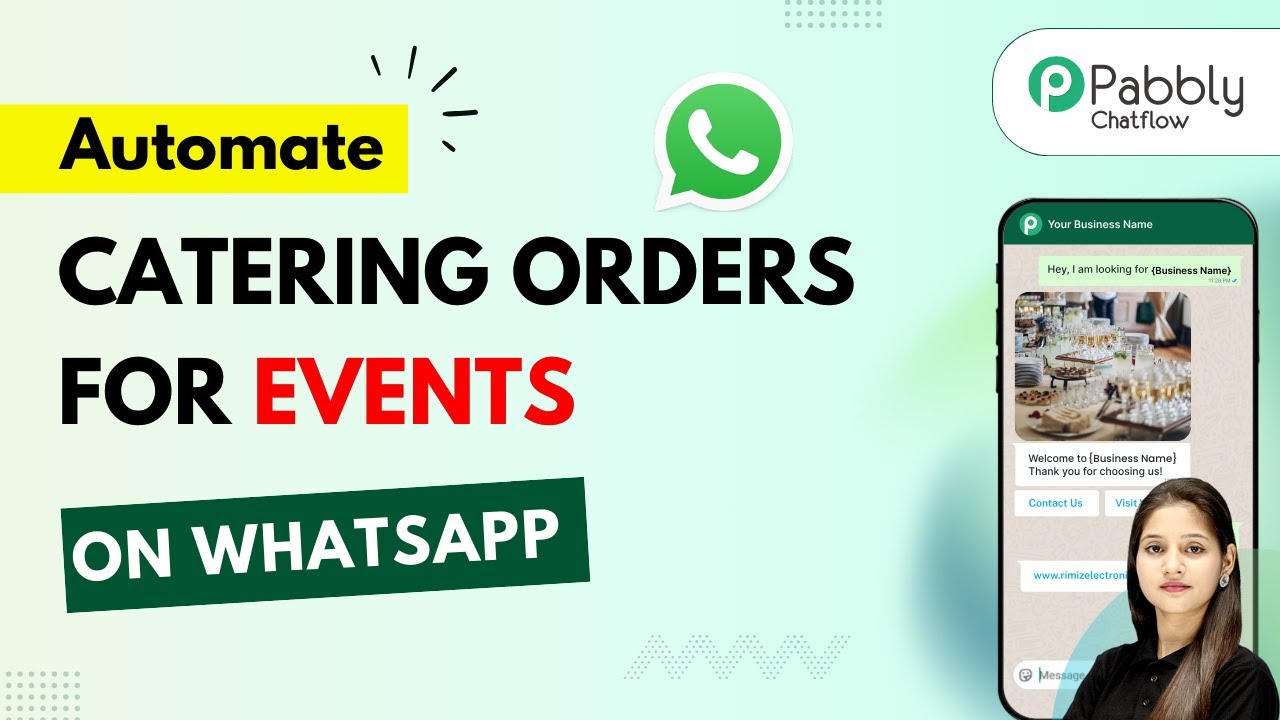
Automate Catering Orders for Events via WhatsApp Using Pabbly Chatflow

Learn how to automate catering orders for events via WhatsApp using Pabbly Chatflow. Step-by-step guide for creating an efficient WhatsApp chatbot. Create intelligent chat experiences that delight users while collecting valuable information and moving prospects through your sales process.

Watch Step By Step Video Tutorial Below


1. Setting Up Pabbly Chatflow for WhatsApp Integration

To automate catering orders via WhatsApp, the first step is to set up Pabbly Chatflow. Begin by navigating to the official Pabbly Chatflow page by entering ‘Pabbly.com/chatflow’ in your browser. This platform allows you to create WhatsApp chatbots that can respond automatically to user messages.

Once on the Pabbly Chatflow page, you will see options to sign in or sign up. If you are a new user, click on the ‘Sign Up Free’ button to create an account and receive 100 free credits. Existing users should select the ‘Sign In’ option. After logging in, access the Pabbly Chatflow dashboard to manage your WhatsApp numbers and set up your chatbot.


2. Creating the WhatsApp Chatbot in Pabbly Chatflow

After accessing the dashboard of Pabbly Chatflow, you can start creating your WhatsApp chatbot. Click on the ‘Flows’ option and then the ‘+ Add Flow’ button to begin. Name your flow ‘Automate Catering Orders for Events via WhatsApp’ to keep it organized and clear.

  • Select a trigger event for your chatbot, such as keywords or user start conversation.
  • Add keywords like ‘catering order’ and ‘order food’ to trigger the bot.
  • Connect your initial message to the trigger to start the conversation.

By setting these parameters, your bot will automatically respond when users send specific keywords to your WhatsApp business account, initiating the catering order process seamlessly.


3. Designing the Order Flow in Pabbly Chatflow

In this section, you will design the flow of the order process using Pabbly Chatflow. After the trigger, the bot should respond with a welcome message and options to ‘Place Order’ or ‘View Menu.’ Use the drag-and-drop feature to create buttons for these options.

When a user clicks on ‘Place Order,’ the bot should ask what type of menu they would like. Create a list that includes options like vegetarian, non-vegetarian, and vegan. This allows users to easily select their preferences while interacting with the bot.

  • Add a list button for menu types, ensuring it is visually clear.
  • Connect the response options to the next step in the flow.
  • Ensure that each menu type leads to the appropriate dish selection.

This structured approach will create an intuitive experience for users ordering catering services through WhatsApp.


4. Capturing User Details for Orders

Once the user selects their dish, the next step is to capture their name and contact number using Pabbly Chatflow. The bot should prompt the user to share their full name and contact number to proceed with the order.

For this, use the ‘Ask Question’ feature to create text fields for the user’s name and phone number. After receiving this information, the bot should summarize the order details and ask if they would like to confirm the order.

Create a summary message that includes the user’s selected dish, name, and contact number. Provide options to confirm the order or change the dish. Connect the confirmation option to a final confirmation message.

This process ensures that all necessary information is collected efficiently, enabling smooth order management.


5. Finalizing the Order Confirmation

In the final step, you will finalize the order confirmation using Pabbly Chatflow. When a user confirms their order, the bot should send a message confirming the order and informing them about the payment process.

If the user opts to change their dish, the bot should redirect them back to the menu selection options. This flexibility ensures a user-friendly experience while automating the catering order process through WhatsApp.

Send a confirmation message including order details and next steps. Ensure all connections between steps are properly linked in the flow.

By completing these steps, your WhatsApp chatbot will be fully functional, automating catering orders efficiently without manual intervention.


Conclusion

Automating catering orders for events via WhatsApp using Pabbly Chatflow simplifies the ordering process for both businesses and customers. By following the detailed steps outlined in this tutorial, you can create an effective WhatsApp chatbot that responds to customer inquiries and manages orders seamlessly.

Ensure you check out Pabbly Connect to create business automation workflows and reduce manual tasks. Pabbly Connect currently offer integration with 2,000+ applications.

How to Send Bulk SMS from Google Sheets Using Pabbly Connect

Learn how to send bulk SMS from Google Sheets using Pabbly Connect. This step-by-step tutorial covers the integration process in detail. Master proven automation processes with practical implementation examples and strategic recommendations you can apply immediately in your workflow.

Watch Step By Step Video Tutorial Below


1. Setting Up Pabbly Connect for SMS Integration

To send bulk SMS from Google Sheets, you first need to set up Pabbly Connect. Start by visiting the Pabbly Connect dashboard at www.Pabbly.com/connect. Log in to your existing account or sign up for a free account to access 100 free tasks each month.

Once you are in the dashboard, click on the ‘Create Workflow’ button. You can choose the new beta method for a modern workflow or the classic method for a familiar interface. For this tutorial, we will use the new beta method. Name your workflow ‘Send Bulk SMS from Google Sheets’ and select a folder for organization.


2. Connecting Google Sheets to Pabbly Connect

Next, you need to connect Google Sheets with Pabbly Connect. Set the trigger application as Google Sheets and choose the event as ‘New or Updated Spreadsheet Row’. Click the connect button to generate a webhook URL.

  • Copy the webhook URL provided by Pabbly Connect.
  • Open your Google Sheets and navigate to Extensions > Add-ons > Get Add-ons.
  • Search for ‘Pabbly Connect Webhooks’ and install it.

After installation, refresh your Google Sheets. Go to Extensions > Pabbly Connect Webhooks and select ‘Initial Setup’. Paste the webhook URL in the designated field and set the trigger column to the last column where data is entered (e.g., Column F). Click submit to save the settings.


3. Testing the Integration with a New Entry

Now that you have set up the connection, it’s time to test it. Enter a new customer’s details in your Google Sheets. For instance, input the name as ‘Test User’, email as ‘[email protected]’, and a dummy phone number. Also, include the product purchased, date, and amount. using Pabbly Connect

After entering the details, check back in your Pabbly Connect workflow. You should see that the trigger has captured the response, confirming that the integration is working correctly. This means that as soon as you add data in Google Sheets, it will automatically send an SMS to the customer.


4. Sending SMS Using Twilio through Pabbly Connect

To send SMS, add an action step in your workflow and select Twilio as the action application. Choose the event as ‘Send SMS Message’ and click connect. Here, you will need to enter your Twilio Account SID and Auth Token, which you can find on your Twilio dashboard. using Pabbly Connect

  • Enter the body of the SMS you wish to send, such as ‘Hello {Name}, Welcome to Natural Glow Skincare!’.
  • Map the customer’s name from the previous step to personalize the message.
  • Specify the sender’s number from your Twilio account and map the recipient’s number from the Google Sheets data.

Once you have filled in all the required fields, click on ‘Save and Send Test Request’ to send a test SMS. If everything is set up correctly, you will receive the SMS on the specified phone number.


5. Sending Bulk SMS to All Contacts in Google Sheets

To send bulk SMS to all customers listed in your Google Sheets, use the ‘Send All Data’ feature in Pabbly Connect. Go back to Extensions > Pabbly Connect Webhooks and select ‘Send All Data’. This will trigger SMS to all customers whose data exists in the spreadsheet.

After clicking on ‘Send All Data’, all customers will receive the SMS based on the details stored in the Google Sheets. This feature allows you to efficiently communicate with multiple customers without manually entering their details each time.

With this setup, the process will run automatically every time new data is added to Google Sheets, ensuring that your communication remains seamless and efficient.


Conclusion

Using Pabbly Connect, you can easily send bulk SMS from Google Sheets without any coding skills. This tutorial provides a seamless integration method, allowing you to automate customer communication effectively.

Ensure you check out Pabbly Connect to create business automation workflows and reduce manual tasks. Pabbly Connect currently offer integration with 2,000+ applications.