
Deliver Professional Course Certificates on WhatsApp Automatically!

Learn how to automate the delivery of professional course certificates on WhatsApp using Pabbly Connect. Follow this detailed tutorial for seamless integration. Explore systematic approaches to creating efficient automation solutions that convert technical concepts into practical, implementable instructions.

Watch Step By Step Video Tutorial Below


1. Setting Up Pabbly Connect for Automation

To deliver professional course certificates on WhatsApp automatically, the first step is to set up Pabbly Connect. Begin by navigating to the Pabbly Connect dashboard by visiting pabby.com/connect. Here, you can either sign in or create a new account if you are a first-time user.

Once you are logged in, locate the ‘Create Workflow’ button on the right side of the dashboard. You will be prompted to select between two workflow builders. Choose the modern version for a better experience. Name your workflow as ‘Deliver Professional Course Certificates on WhatsApp Automatically’ and create it to proceed.


2. Integrating Typeform with Pabbly Connect

The next step is to integrate Typeform with Pabbly Connect. This integration will allow you to trigger the workflow whenever a new form submission occurs. Select Typeform as your trigger application and choose the ‘New Entry’ event.

  • Search and select Typeform from the application list.
  • Click on the Connect button and choose ‘Add New Connection’ to link your Typeform account.
  • Grant permissions by clicking the Accept button.

After establishing the connection, select the specific Typeform you created for course registrations. Test the connection by filling out the form to ensure that the workflow is triggered correctly.


3. Creating Certificates in Google Slides

Once the Typeform integration is successful, the next step involves creating certificates using Google Slides through Pabbly Connect. Choose Google Slides as your action application and select the ‘Create Presentation from Template’ event.

To connect Google Slides, click the Connect button and select ‘Add New Connection.’ Sign in with your Google account and allow the necessary permissions. After connecting, select your pre-designed certificate template.

  • Map the student’s name and course details to the template.
  • Specify the location in Google Drive where the certificate will be saved.

Click ‘Save and Send Test Request’ to create the certificate. Check your Google Drive to confirm that the certificate has been generated successfully.


4. Sending Certificates via WhatsApp

The final step in this automation process involves sending the generated certificates to students via WhatsApp using Pabbly Connect. Select WhatsApp Cloud API as your next action application and choose the ‘Send Text Message’ event.

Connect to the WhatsApp Cloud API by clicking the Connect button and selecting ‘Add New Connection.’ Fill in the required fields: access token, phone number ID, and WhatsApp business account ID. After connecting, enter the recipient’s phone number and the message that includes the downloadable link to the certificate.

Map the student’s phone number from the Typeform response. Include a message that congratulates the student and provides the link to download their certificate.

Save the settings and click ‘Save and Send Test Request’ to send the message. Check the student’s WhatsApp to ensure they received the certificate link successfully.


5. Conclusion

By following this detailed tutorial, you can efficiently automate the delivery of professional course certificates on WhatsApp using Pabbly Connect. This integration streamlines the process, ensuring that students receive their certificates promptly after completing their courses.

Ensure you check out Pabbly Connect to create business automation workflows and reduce manual tasks. Pabbly Connect currently offer integration with 2,000+ applications.

Check out Pabbly Connect – Automate your business workflows effortlessly! Sign Up Free – Start your journey with ease! 10,000+ Video Tutorials – Learn step by step! Join Pabbly Facebook Group – Connect with 21,000+ like minded people!

With the power of Pabbly Connect, you can enhance your business automation and improve the overall experience for your students. Start implementing this workflow today to save time and boost efficiency!
Explode Conversions: Send Instagram Leads to Excel Automatically!

Learn how to automate the process of sending Instagram leads to Excel using Pabbly Connect in this detailed tutorial. Streamline your lead management today! Revolutionize your productivity approach with just a few strategic clicks. Uncover professional methods for connecting applications and creating workflows that reclaim hours of your week.

Watch Step By Step Video Tutorial Below


1. Accessing Pabbly Connect for Instagram Leads to Excel Integration

To start automating the process of sending Instagram leads to Excel, the first step is to access Pabbly Connect. This powerful integration platform allows you to connect various applications without any coding skills. Begin by visiting the Pabbly website and logging into your account.

After signing in, navigate to the Pabbly Connect dashboard. From here, you can create new workflows to manage your integrations. By utilizing Pabbly Connect, you can seamlessly connect Instagram Lead Ads with Microsoft Excel, ensuring that every new lead is automatically added to your Excel sheet.


2. Creating a Workflow in Pabbly Connect

Once you are in the Pabbly Connect dashboard, it’s time to create a new workflow. Click on the ‘Create Workflow’ button and select the classic workflow builder. Name your workflow something descriptive, like ‘Explode Conversions: Send Instagram Leads to Excel Automatically’. This will help you easily identify the workflow later.

  • Select the trigger application as Instagram Lead Ads.
  • Choose the trigger event as ‘New Lead Instant’.
  • Connect your Instagram account to Pabbly Connect.

After setting these parameters, you will have established the initial step of your automation process. With Pabbly Connect, the workflow is designed to trigger every time a new lead is generated from your Instagram ads, allowing for efficient lead management.


3. Connecting Instagram Lead Ads to Pabbly Connect

To connect Instagram Lead Ads, you need to authenticate your Instagram account with Pabbly Connect. Select the Facebook account linked to your Instagram. Once authorized, you will be able to choose the specific Instagram page and lead form you want to use for this workflow.

Make sure to select the correct page, such as ‘Digital Dynamics’, and the lead form you’ve created. This step is crucial because it allows Pabbly Connect to capture the lead information accurately. You will then proceed to save and send a test request to ensure everything is functioning correctly.


4. Adding Leads to Excel Using Pabbly Connect

After successfully connecting Instagram Lead Ads, the next step is to add the captured leads to your Microsoft Excel workbook. In the action application section of Pabbly Connect, select Microsoft Excel and choose the action event ‘Add Row to Worksheet’. This will allow you to map the lead data directly into your Excel sheet.

  • Select the workbook where you want to store the leads.
  • Map the fields from the Instagram lead response to the corresponding columns in Excel.

Once you have mapped the necessary fields, click on ‘Save and Send Test Request’. This will allow you to verify that the data is being sent correctly to your Excel workbook. With Pabbly Connect, this integration ensures that every new lead from Instagram is automatically recorded in your Excel sheet without any manual effort.


5. Testing the Integration to Ensure Functionality

To ensure your integration is working correctly, you can perform a test by submitting a new lead through your Instagram Lead Ads. After submitting the lead, check your Excel workbook to see if the details have been added automatically. This test is essential to confirm that Pabbly Connect is effectively capturing the lead information and transferring it to Excel.

After refreshing your Excel workbook, you should see the new lead details populated in the designated columns. This successful integration demonstrates how Pabbly Connect can automate your lead management process, saving you time and effort.


Conclusion

In this tutorial, we explored how to use Pabbly Connect to automate the process of sending Instagram leads to Excel. By following the outlined steps, you can streamline your lead management and enhance your digital marketing efforts. Automating this process not only saves time but also ensures that no leads are missed, allowing for better conversion tracking.

Ensure you check out Pabbly Connect to create business automation workflows and reduce manual tasks. Pabbly Connect currently offer integration with 2,000+ applications.

From Hello to Sale – Build a Complete WhatsApp Chatbot for Your Business

Learn how to create a complete WhatsApp chatbot for your business using Pabbly Chatflow. Follow our detailed tutorial for step-by-step guidance. Learn how to create intelligent chat workflows that provide instant customer support while qualifying leads 24/7 without human intervention.

Watch Step By Step Video Tutorial Below


1. Introduction to Pabbly Chatflow for WhatsApp Chatbot

Pabbly Chatflow is an all-in-one WhatsApp automation tool that allows businesses to automate their messaging processes effectively. In this tutorial, we will create a complete WhatsApp chatbot using Pabbly Chatflow, which will manage multiple message requests seamlessly.

By utilizing Pabbly Chatflow, businesses can enhance customer interactions and automate responses, reducing the workload on human agents. This chatbot will respond to user inquiries, book appointments, and provide essential services efficiently.


2. Setting Up Pabbly Chatflow

To get started with Pabbly Chatflow, visit the official website at Pabbly.com/chatflow. If you are a new user, click on the ‘Sign Up Free’ option to create an account and receive 100 free credits each month. Existing users can simply sign in.

Once you are logged in, navigate to the Pabbly Chatflow dashboard. Here, you can add and manage your WhatsApp numbers. To add a new number, click on the ‘+ Add WhatsApp Number’ button and choose between WhatsApp connect and manual token connect options.


3. Creating the WhatsApp Chatbot Flow

In this section, we will create the flow for our WhatsApp chatbot using Pabbly Chatflow. Start by clicking on the ‘Flows’ option and then click the ‘+ Add Flow’ button. Name your flow, for example, ‘Build a Complete WhatsApp Chatbot for Your Business.’ This is essential for organizing your chatbot’s functions.

  • Select trigger events based on keywords.
  • Add messages and actions as per your business needs.
  • Connect the trigger to the message to ensure proper flow.

For example, if a user sends ‘hi,’ the bot will respond with a welcome message and provide options like ‘Chatbot Services’ and ‘Talk to Expert.’ This ensures your customers receive immediate responses, enhancing their experience.


4. Configuring Custom Fields in Pabbly Chatflow

To personalize the chatbot experience, we will set up custom fields in Pabbly Chatflow. This allows the bot to capture user information dynamically. Click on the ‘Settings’ option and then on ‘Contact Custom Fields’ to create fields such as ‘Full Name,’ ‘Contact Number,’ and ‘Business Name.’ This is crucial for tailoring responses based on user input.

  • Create a custom field for each user-specific parameter.
  • Utilize these fields in your chatbot messages for personalized responses.
  • Ensure to save your changes after configuring each field.

After setting up the custom fields, connect them to the relevant questions in your flow. For instance, after a user selects a service type, the bot will ask for their full name and contact number, making the interaction smooth and efficient.


5. Finalizing the WhatsApp Chatbot

Once you have configured the flow and custom fields, it’s time to finalize your WhatsApp chatbot. Review the entire flow in Pabbly Chatflow to ensure that all connections are correct. The bot should ask users for their details and provide a customized response based on their input.

After ensuring everything is in order, click the ‘Save’ button to make your chatbot live. Your WhatsApp chatbot will now be able to respond to inquiries 24/7, providing users with immediate assistance and booking capabilities.


Conclusion

In this tutorial, we successfully built a complete WhatsApp chatbot using Pabbly Chatflow. By following these steps, businesses can automate their customer interactions, enhance user experience, and streamline appointment bookings effectively. Start leveraging Pabbly Chatflow today to transform your business communication!

Ensure you check out Pabbly Connect to create business automation workflows and reduce manual tasks. Pabbly Connect currently offer integration with 2,000+ applications.

How to Add Google Ads Leads to Excel Automatically

Learn how to automatically add Google Ads leads to Microsoft Excel using Pabbly Connect. This step-by-step guide covers everything you need to know. Discover how to seamlessly connect your essential tools through accessible instructions that make powerful automation available to professionals at every skill level.

Watch Step By Step Video Tutorial Below


1. Accessing Pabbly Connect for Google Ads Integration

To begin adding Google Ads leads to Excel automatically, you need to access Pabbly Connect. If you are an existing user, simply log in to your Pabbly Connect account and open the workflow builder. New users should visit Pabbly.com/connect to sign up for a free account, which provides hundreds of tasks each month to explore the platform.

Once logged in, navigate to the workflow builder. This interface is crucial as it allows you to set up the automation by defining triggers and actions. A trigger initiates the workflow, while actions define what happens next. Understanding this setup is key to successfully integrating Google Ads with Excel through Pabbly Connect.


2. Setting Up Google Ads Trigger in Pabbly Connect

In this step, you will configure the trigger in Pabbly Connect to capture new leads from Google Ads. Start by selecting the trigger application as Google Ads. Then, choose the event as ‘New Lead Form Entry’. This action will generate a webhook URL.

  • Search for Google Ads in the application list.
  • Select ‘New Lead Form Entry’ as the event.
  • Copy the generated webhook URL for the next steps.

Next, go to your Google Ads campaign and open the lead form settings. Scroll down to find the lead delivery option where you will paste the webhook URL. After pasting, click on ‘Send Test Data’ to ensure the connection is successful. Once the test data is sent, return to Pabbly Connect to confirm that the webhook response has been successfully captured.


3. Configuring Microsoft Excel Action in Pabbly Connect

After successfully setting up the trigger, the next step is to configure the action in Pabbly Connect to add leads to Microsoft Excel. Select Microsoft Excel as the action application and choose ‘Add Rows to Worksheet’ as the event. Click on ‘Connect’ to establish a connection with your Excel account.

If you have previously connected Microsoft Excel to Pabbly Connect, you can select the existing connection. Otherwise, opt for ‘Add a New Connection’. Ensure that your Microsoft account is logged in for a seamless connection. You will need to grant permissions for Pabbly Connect to access your Excel data.


4. Mapping Lead Details to Excel Columns

With the connection established, you can now map the lead details to the corresponding columns in your Excel worksheet. Select the specific workbook and worksheet where you want the leads to be added. Instead of manually entering the details, use the mapping feature in Pabbly Connect to dynamically insert data from the previous steps.

  • Select the workbook from your Microsoft Excel account.
  • Choose the worksheet where the data will be added.
  • Map fields such as first name, last name, email, and phone number.

Once you have mapped all the necessary details, click on ‘Save and Send Test Request’. This action will add the lead details to your specified Excel worksheet. You should receive a positive response indicating that the data has been successfully added.


5. Finalizing Your Automation with Pabbly Connect

After successfully testing the integration, you can finalize your automation in Pabbly Connect. This setup ensures that every new lead from Google Ads is automatically added to your Excel worksheet without any manual intervention. You can now close the workflow and let it run in the background.

This automation allows you to efficiently manage your leads and streamline your data collection process. Whenever a new lead comes in, Pabbly Connect will handle the data transfer automatically, ensuring your Excel sheet is always up to date.

Conclusion

This guide summarizes the key points and helps you understand the essential features and benefits of using this tool.

Ensure you check out Pabbly Connect to create business automation workflows and reduce manual tasks. Pabbly Connect currently offer integration with 2,000+ applications.


In conclusion, using Pabbly Connect to integrate Google Ads with Microsoft Excel provides a seamless solution for managing leads efficiently. By following the steps outlined in this tutorial, you can set up a fully automated workflow that saves time and enhances productivity.

How to Share Facebook Posts to Telegram Automatically

Learn how to automatically share your Facebook posts to Telegram using Pabbly Connect with this step-by-step tutorial. Discover the integration process now! This comprehensive guide reveals exactly how to connect your applications and automate repetitive tasks — accessible for professionals of all technical backgrounds.

Watch Step By Step Video Tutorial Below


1. Accessing Pabbly Connect for Integration

To start sharing Facebook posts to Telegram automatically, you need to access Pabbly Connect. Begin by visiting Pabbly.com/connect in your browser. Once there, you will see options for signing in or signing up for a free account.

For new users, click on ‘Sign up free’ to get 100 free tasks every month. If you are an existing user, simply sign in. After logging in, navigate to the Pabbly apps window and click on ‘Access Now’ to enter the Pabbly Connect dashboard.


2. Creating a New Workflow in Pabbly Connect

Once you are in the Pabbly Connect dashboard, the next step is to create a new workflow. Click on the ‘Create Workflow’ button. You will be prompted to select between the new beta version or the classic version. For this tutorial, we will use the beta version.

  • Click on the ‘Select’ button for the beta version.
  • Name your workflow as ‘Share Facebook Post to Telegram Automatically’.
  • Choose a folder for your workflow, such as ‘Automations’.

After naming your workflow and selecting the appropriate folder, click on the ‘Create’ button to finalize your workflow setup. This is where you will set up the automation process between Facebook and Telegram.


3. Setting Up the Trigger for Facebook Posts

In this section, you will set up the trigger in Pabbly Connect. Select ‘Facebook Pages’ as your trigger application and choose ‘New Post’ as the app event. Then, click on ‘Connect’ to establish a new connection.

If your Facebook account is already connected, you can select the existing connection. Otherwise, click on ‘Connect with Facebook Pages’ and choose your Facebook account. After successfully connecting, select your Facebook page where you will be posting updates.


4. Testing the Trigger with a New Facebook Post

Now that you have set up the trigger, it’s time to test it. Create a new post on your selected Facebook page with a caption and an image. After posting, return to Pabbly Connect and click on ‘Save and Send Test Request’. This will wait for a webhook response from your Facebook post.

Once the test is successful, you will see all the details of the post, including the post ID and message. This confirms that the trigger is working correctly and ready to send updates to Telegram.


5. Adding an Action Step to Send Messages to Telegram

The final step is to add an action to send the post details to Telegram. Select ‘Telegram Bot’ as the action application and choose ‘Send Text Message’ as the event. Click on ‘Connect’ to establish a new connection.

To create a Telegram bot, you will need to use the BotFather in Telegram. Search for BotFather, start the chat, and follow the instructions to create a new bot. Once created, copy the token provided by BotFather and paste it into Pabbly Connect.

  • Add the bot to your Telegram group.
  • Make the bot an admin in the group.
  • Copy the chat ID from the URL and paste it in Pabbly Connect.

Finally, map the necessary data for the message and click ‘Save and Send Test Request’. Check your Telegram group to see the message confirming the new Facebook post.


Conclusion

In this tutorial, we walked through the steps to automatically share Facebook posts to Telegram using Pabbly Connect. By following these steps, you can streamline your social media updates and keep your Telegram community informed instantly.

Ensure you check out Pabbly Connect to create business automation workflows and reduce manual tasks. Pabbly Connect currently offer integration with 2,000+ applications.

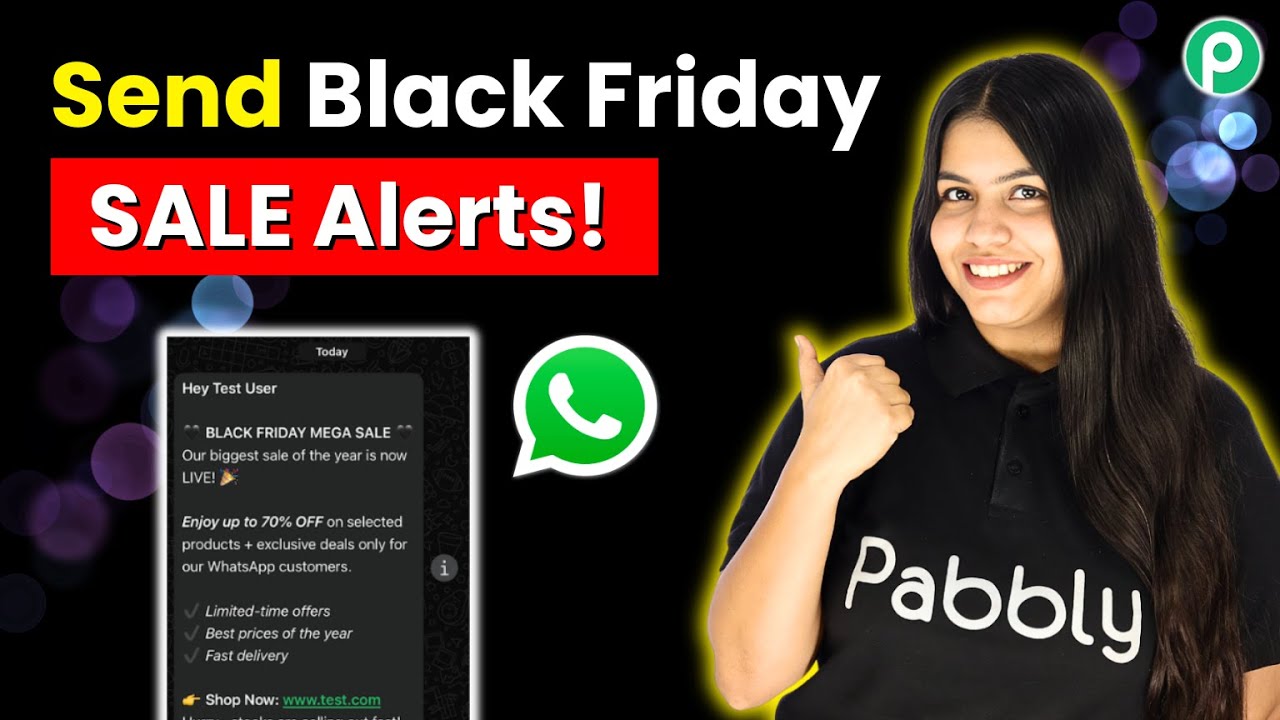
Send Black Friday Offers to All Customers on WhatsApp

Learn how to send Black Friday offers to all customers on WhatsApp using Pabbly Chatflow in this detailed tutorial. Follow the steps to automate your messaging effectively.

Watch Step By Step Video Tutorial Below


1. Accessing Pabbly Chatflow for Sending Black Friday Offers

To start sending Black Friday offers to your customers via WhatsApp, you need to access Pabbly Chatflow. Open a new tab in your browser and search for pabbl.com/chartflow. This will take you to the landing page of Pabbly Chatflow.

Once on the page, you will see two options: ‘Sign In’ and ‘Sign Up for Free.’ If you are an existing user, click on ‘Sign In.’ New users can click ‘Sign Up for Free’ to receive 100 credits monthly for exploring Pabbly Chatflow. After signing in, you will have access to all Pabbly apps, including Chatflow.


2. Adding Your WhatsApp Number in Pabbly Chatflow

After logging into Pabbly Chatflow, the dashboard will appear. The first step is to add your WhatsApp number. Look for the button labeled ‘Add WhatsApp Number’ on the dashboard.

  • Click on the ‘Add WhatsApp Number’ button.
  • Enter your WhatsApp number in the provided field.
  • Confirm the addition by following the prompts.

Once your WhatsApp number is added, you can proceed to create a contact list for your Black Friday offers. Ensure that your WhatsApp number is correctly configured to avoid any messaging issues.


3. Creating a Contact List for Black Friday Offers

To send Black Friday offers, you must create a contact list in Pabbly Chatflow. Navigate to the ‘Contacts’ section and ensure you have a list prepared for sending messages.

  • Click on the ‘Add Contact’ button.
  • Select ‘Add Bulk Contact’ to upload your contact details.
  • Download your Google Sheets contacts in CSV format.

After downloading the CSV file, upload it to Pabbly Chatflow. Make sure to categorize contacts with relevant tags, which will help you manage your messaging effectively for the Black Friday campaign.


4. Broadcasting Messages Using Pabbly Chatflow

With your contact list ready, you can now create a broadcast in Pabbly Chatflow to send your Black Friday offers. Navigate to the ‘Broadcast’ section and click on ‘Add Broadcast’ to start the process.

Choose the broadcast type as ‘Broadcast Campaign.’ Enter a name for your broadcast, such as ‘Black Friday Sale.’ Select the contact list you prepared earlier. Choose whether to use a pre-approved template message or a regular message.

Once you have selected your message type, customize your message with personalized fields to ensure each customer feels special when they receive your offers. This personalization is key to effective marketing.


5. Scheduling and Sending Your Broadcast

After customizing your broadcast message, you can either send it instantly or schedule it for later using Pabbly Chatflow. If you choose to schedule, ensure that you enter a future date and time in the correct format.

Select ‘Yes’ to schedule for later or ‘No’ to send instantly. Enter the date and time you want the broadcast to be sent. Click on the ‘Add Broadcast’ button to finalize your scheduling.

Once your broadcast is created, you can view the stats to see how many messages were sent, delivered, read, or failed. This data will help you evaluate the effectiveness of your Black Friday campaign.


Conclusion

In this tutorial, we explored how to send Black Friday offers to all customers on WhatsApp using Pabbly Chatflow. By following these steps, you can effectively automate your messaging and enhance customer engagement during the holiday season. Utilize Pabbly Chatflow to streamline your communication and maximize your outreach.

Ensure you check out Pabbly Connect to create business automation workflows and reduce manual tasks. Pabbly Connect currently offer integration with 2,000+ applications.

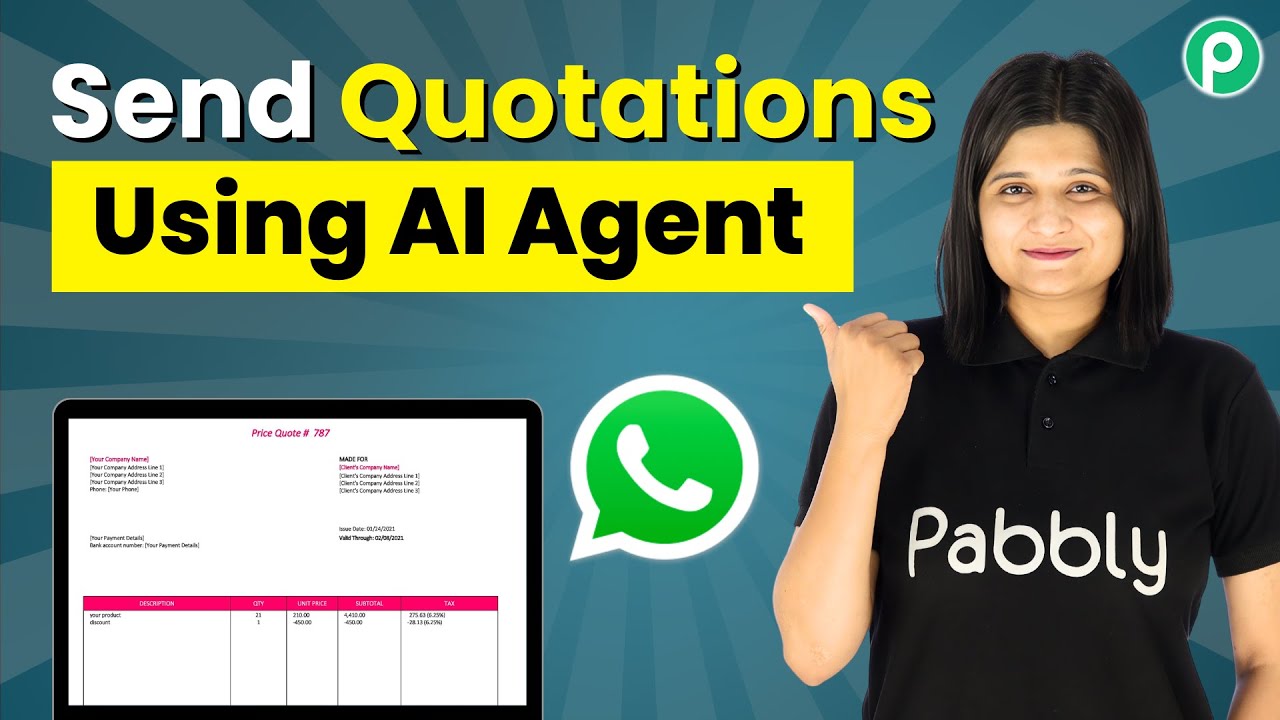
AI Service Quotation Agent — Instant Pricing on WhatsApp!

Learn how to automate your WhatsApp responses with an AI Service Quotation Agent using Pabbly Chatflow. Get instant pricing and enhance customer service! Implement professional chat automation that answers common questions, qualifies leads, and books appointments without human intervention.

Watch Step By Step Video Tutorial Below


1. Setting Up Pabbly Chatflow for Your AI Service Quotation Agent

To begin automating your WhatsApp responses, the first step is to access Pabbly Chatflow. Simply visit www.Pabbly.com/chatflow in your browser. Once there, sign in to your Pabbly Chatflow account. If you are a new user, you can sign up for free and receive 100 credits monthly.

After signing in, you will be directed to the Pabbly apps page. Click on the Pabbly Chatflow option to access the app dashboard. Here, you can see your credit balance and connect your WhatsApp number by clicking on the Add WhatsApp Number button. This connection is crucial for enabling the AI agent to respond to customer queries via WhatsApp.


2. Creating Your AI Service Quotation Agent in Pabbly Chatflow

Now, navigate to the AI Assistant section within Pabbly Chatflow. Click on Add AI Assistant to start creating your AI agent. Name your assistant as ‘AI Service Quotation Agent’ and select the instruction type as AI Agent. This selection will automatically populate the necessary instructions.

  • Set the AI temperature to 0.7 for balanced creativity.
  • Choose OpenAI as the AI to use, specifically the GPT-4 mini model.
  • Connect your API key to enable the AI functionalities.

After configuring these settings, toggle on the Stop Keyword feature, allowing users to stop responses from the AI by entering a specific keyword. This is essential for managing customer interactions effectively.


3. Uploading Knowledge Source and Configuring Assistant Interface

Next, you need to upload a knowledge source that your AI agent will use to answer queries. In Pabbly Chatflow, select Upload File as your knowledge source option. This file should contain all relevant information about your services, pricing, and policies.

Once uploaded, proceed to configure the assistant interface. Set the display heading message to something recognizable, such as ‘Pabbly Chatflow’. You can also add initial messages that the AI will use to greet customers. Ensure that the Powered by Pabbly option is enabled to maintain branding consistency.

  • Choose a theme for the assistant interface (light or dark).
  • Customize the assistant shape and colors as per your brand.
  • Add profile pictures for the assistant to enhance user experience.

Finally, toggle the AI agent to activate it and remember to save your configuration. This step is crucial to ensure that the AI agent is operational and ready to assist customers.


4. Enabling Your AI Agent for Specific Chats in Pabbly Chatflow

After creating your AI agent, the next step is to enable it for specific chats. In Pabbly Chatflow, go to the Inbox section and select the chat you wish to integrate the AI agent with. Click on Choose AI Assistant and select your created assistant.

For broader application, you can also set up the AI assistant to respond to all contacts or specific lists. To do this, navigate to the Settings and then to Inbox Settings. Here, enable the AI Auto Reply feature and assign the AI agent to the desired list.

Select whether to apply the AI agent to all contacts or specific customer lists. Save your settings to ensure the AI agent is operational.

Testing the AI agent is essential. Send a test message through WhatsApp to verify that the AI responds correctly, confirming that the integration with Pabbly Chatflow is successful.


5. Conclusion: Automate Your Customer Interactions with Pabbly Chatflow

In conclusion, using Pabbly Chatflow to create an AI Service Quotation Agent allows businesses to automate their customer interactions effectively. By following the steps outlined, you can set up an AI agent that provides instant pricing and answers queries through WhatsApp seamlessly.

Ensure you check out Pabbly Connect to create business automation workflows and reduce manual tasks. Pabbly Connect currently offer integration with 2,000+ applications.

This automation not only enhances customer service but also saves time and resources. With Pabbly Chatflow, you can ensure that your business is responsive and efficient in handling customer inquiries, leading to increased satisfaction and potential sales growth.

How to Add Shopify Customers to MailerLite as Subscriber

Learn how to seamlessly integrate Shopify and MailerLite as subscribers using Pabbly Connect with this step-by-step tutorial. Build sophisticated automated workflows in less time than you think. This guide translates complex integrations into straightforward steps for immediate implementation.

Watch Step By Step Video Tutorial Below


1. Access Pabbly Connect for Shopify and MailerLite Integration

To add Shopify customers to MailerLite as subscribers, you must first access Pabbly Connect. This powerful automation platform allows you to connect various applications without coding. Start by visiting the Pabbly Connect website and either sign in or create a new account.

Once you are logged in, navigate to the dashboard where you can create a new workflow. This is where the integration between Shopify and MailerLite will be set up. Ensure you have your Shopify and MailerLite accounts ready to proceed with the integration.


2. Create a New Workflow in Pabbly Connect

To create a new automation workflow in Pabbly Connect, click on the ‘Create Workflow’ button. Name your workflow something like ‘Add Shopify Customers to MailerLite as Subscriber’ for easy identification. After naming, select the new beta method for a modern workflow experience.

  • Click on the ‘Create’ button to finalize your workflow setup.
  • Select Shopify as the trigger application.
  • Choose the trigger event as ‘New Order’.

This setup will allow Pabbly Connect to capture new orders placed on your Shopify store, which will then trigger the addition of customers to MailerLite.


3. Connect Shopify to Pabbly Connect Using Webhooks

Now that you have set up your workflow, it’s time to connect Shopify to Pabbly Connect. After selecting the trigger event, a webhook URL will be generated. Copy this URL as it will be used to connect Shopify to Pabbly Connect.

In your Shopify account, go to the settings section and navigate to the Notifications and Webhooks section. Here, create a new webhook by pasting the copied URL and selecting ‘Order Creation’ as the event. Make sure the format is set to JSON and save the webhook.


4. Add Shopify Customers as Subscribers in MailerLite

After setting up the webhook, the next step is to add customers as subscribers in MailerLite using Pabbly Connect. In your workflow, add an action step by selecting MailerLite as the action application and choosing the event ‘Create or Update Subscriber’.

  • Connect your MailerLite account by providing the API token.
  • Map the subscriber’s email address and other details from the Shopify order response.
  • Set the subscriber’s status to active.

This integration allows you to automatically add any new Shopify customer as a subscriber in your MailerLite account, ensuring that you can follow up with them easily.


5. Test the Integration and Finalize

Finally, to ensure that the integration works correctly, place a test order in your Shopify store. After completing the order, check your MailerLite account to confirm that the new subscriber has been added successfully.

If everything is set up correctly, you will see the new subscriber’s details populated in MailerLite. This automation streamlines your email marketing efforts by eliminating manual data entry, all thanks to Pabbly Connect.

Conclusion

This guide summarizes the key points and helps you understand the essential features and benefits of using this tool.

Ensure you check out Pabbly Connect to create business automation workflows and reduce manual tasks. Pabbly Connect currently offer integration with 2,000+ applications.


In conclusion, using Pabbly Connect to integrate Shopify and MailerLite allows for efficient management of subscribers. By automating the process, you save time and ensure that all new customers are added to your email marketing list seamlessly.

How to Automate Property Inquiries with a WhatsApp Agent

Learn how to automate property inquiries using Pabbly Chatflow and WhatsApp Agent with this step-by-step tutorial. Integrate various applications seamlessly. Master conversational marketing with practical techniques for creating chatbots that engage visitors at exactly the right moment in their journey.

Watch Step By Step Video Tutorial Below


1. Accessing Pabbly Chatflow for WhatsApp Integration

To automate property inquiries effectively, you first need to access Pabbly Chatflow. Start by navigating to Pabbly.com/chatflow in your browser. Here, you will find options to sign in or sign up for free if you are a new user.

Once logged in, you will see a dashboard with various Pabbly applications. Click on the ‘Access Now’ button under Pabbly Chatflow to proceed. This platform is essential for setting up your WhatsApp agent.


2. Setting Up Your WhatsApp Agent in Pabbly Chatflow

After accessing Pabbly Chatflow, the next step is to set up your WhatsApp number. Click on the ‘Add WhatsApp Number’ button. You will be presented with two options: ‘WhatsApp Connect’ and ‘Manual Token Connect’. Choose ‘WhatsApp Connect’ for a seamless setup.

  • Select ‘WhatsApp Connect’ for adding your number.
  • Follow the prompts to link your WhatsApp account.

This integration is crucial as it enables the AI agent to respond to inquiries through WhatsApp, thereby enhancing customer interaction.


3. Creating an AI Agent Using Pabbly Chatflow

To create an AI agent, navigate to the AI Assistant feature within Pabbly Chatflow. Click on the ‘Add AI Assistant’ button. Here, you will need to name your assistant, after which you will be directed to the flow window.

In the flow window, select ‘Custom Prompt’ from the instruction type dropdown. This allows you to define how your AI agent will interact with users. You can also choose predefined examples like ‘AI Agent’ or ‘Customer Support Agent’.

  • Set the temperature for responses (0 for focused, 1 for creative).
  • Select ‘OpenAI’ as the AI to use and choose the model.

These settings are vital for customizing how your assistant will respond to property inquiries.


4. Configuring Your AI Assistant’s Settings

Once the AI agent is created, configure its settings in Pabbly Chatflow. You can set a header message and footer message, which will appear in the chats. Additionally, define stop keywords that will halt the AI’s responses if a user types them.

For example, if you set ‘human’ as a stop keyword, the AI will stop responding and indicate that a human will take over. This ensures a smooth transition for complex queries.

Specify the number of retry attempts for unanswered queries. Provide a fallback message for instances when the AI cannot respond.

These configurations enhance the effectiveness of your WhatsApp agent in handling property inquiries.


5. Activating and Assigning the AI Agent to WhatsApp Chats

To finalize your setup, activate your AI assistant in Pabbly Chatflow by enabling the assistant and clicking on ‘Save Assistant’. This step is crucial as it makes your AI agent operational.

After activation, you can assign the AI agent to your WhatsApp chats. Go to ‘Inbox Settings’ in the settings menu. Here, enable AI auto-replies, select your contact list, and choose the assistant to assign.

For bulk assignments, select the entire contact list. For individual assignments, select a specific chat and enable the assistant.

This ensures that your WhatsApp agent is ready to assist clients with their property inquiries, providing quick and accurate responses.


Conclusion

In conclusion, automating property inquiries using Pabbly Chatflow and a WhatsApp agent streamlines communication and enhances customer service. By following these detailed steps, you can create an efficient AI assistant tailored to your business needs.

Ensure you check out Pabbly Connect to create business automation workflows and reduce manual tasks. Pabbly Connect currently offer integration with 2,000+ applications.

How to Send Emails to Facebook Leads

Learn how to send automated welcome emails to your Facebook leads using Pabbly Connect. Follow this detailed tutorial for seamless integration. Master proven automation processes with practical implementation examples and strategic recommendations you can apply immediately in your workflow.

Watch Step By Step Video Tutorial Below


1. Accessing Pabbly Connect for Facebook Leads

To send automated emails to Facebook leads, you first need to access Pabbly Connect. If you are an existing user, simply log into your account. If you are new, go to Pabbly.com/connect and click on ‘Sign Up for Free’ to create your account. This will allow you to explore the platform with hundreds of free tasks every month.

Once logged in, navigate to the workflow builder. This is where you will create the automation that connects Facebook Lead Ads to your email service. The workflow builder is crucial as it allows you to set triggers and actions that define how your automation will function.


2. Setting Up the Trigger with Facebook Lead Ads

In this section, you will set up the trigger in Pabbly Connect to capture leads from Facebook. Click on the ‘Add Trigger’ button and search for ‘Facebook Lead Ads’. Select the event as ‘New Lead Instant’ and click on ‘Connect’. If you have a pre-existing connection, choose it; otherwise, create a new connection by logging into your Facebook account.

  • Click on ‘Add New Connection’.
  • Log into your Facebook account when prompted.
  • Select the Facebook page and lead form you want to use.

Once you have set up the connection, ensure you enable the ‘Simple Response’ option to capture the lead details in a straightforward format. Click on ‘Save and Send Test Request’ to proceed with the setup.


3. Capturing the Webhook Response

After sending the test request in Pabbly Connect, you will need to capture the webhook response. Open a new tab and go to the Meta for Developers website. Navigate to the ‘Lead Ads Testing Tool’ under the resources section.

  • Select the same Facebook page and form you used in Pabbly Connect.
  • Fill out the lead form with test data.
  • Submit the form to generate a lead.

Once the form is submitted, return to your Pabbly Connect workflow. You should see that Pabbly Connect has captured the lead details, including first name, last name, and email address. This data will be used for sending the automated email.


4. Setting Up the Email Action in Gmail

Next, you will set up the action step in Pabbly Connect to send an email through Gmail. Click on ‘Add New Action Step’ and search for ‘Gmail’. Select the event as ‘Send Email’ and click ‘Connect’. If you have an existing connection, select it, or create a new one by signing into your Google account.

After connecting Gmail, you will need to fill in several fields for the email settings:

Enter the sender’s name and email address. Map the recipient’s email address from the previous step. Fill in the subject and email content.

Make sure to select the email content type as HTML if you are using HTML formatting. Once all fields are completed, click on ‘Save and Send Test Request’ to send a test email.


5. Finalizing Your Automation Workflow

After successfully sending the test email, check your Gmail inbox to confirm that the email was received. This indicates that your automation is working correctly through Pabbly Connect. The email will contain the personalized message you set up using the lead details.

With this setup, every time a new lead submits their information through your Facebook Lead Ads, Pabbly Connect will automatically send them a welcome email. This process eliminates manual tasks and ensures timely communication with your leads.

Now that you have completed your automation workflow, you can monitor its performance in Pabbly Connect. If you need to make adjustments or add more features, you can easily return to the workflow builder and modify your settings.


Conclusion

In this tutorial, we have demonstrated how to use Pabbly Connect to send automated emails to your Facebook leads. By integrating Facebook Lead Ads with Gmail, you can streamline your communication process and enhance your lead engagement. Start using this powerful automation tool today to improve your business operations!

Ensure you check out Pabbly Connect to create business automation workflows and reduce manual tasks. Pabbly Connect currently offer integration with 2,000+ applications.