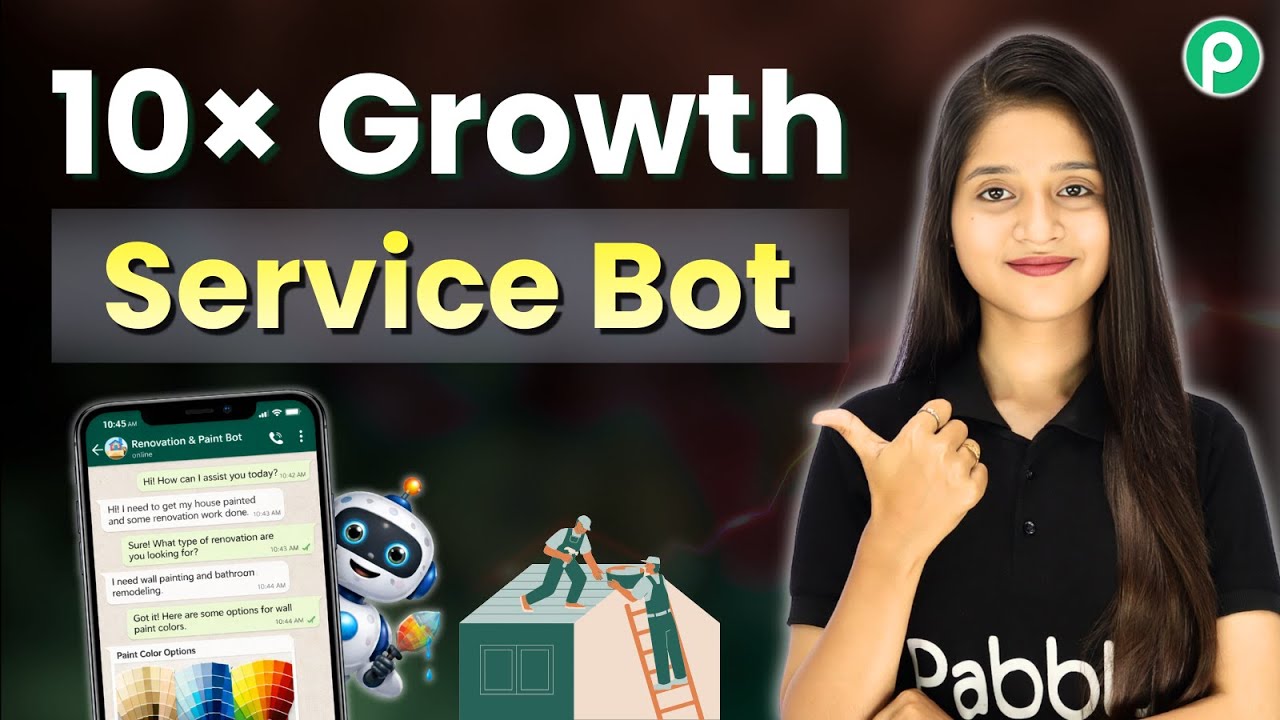
Automate Job Applications for Recruitment Agencies via WhatsApp with Pabbly Chatflow

Learn how to automate job applications for recruitment agencies using Pabbly Chatflow and WhatsApp. Step-by-step guide to create a WhatsApp chatbot for recruitment. Implement professional chat automation that answers common questions, qualifies leads, and books appointments without human intervention.

Watch Step By Step Video Tutorial Below


1. Accessing Pabbly Chatflow for Job Applications

To begin automating job applications, first access Pabbly Chatflow. This platform allows recruitment agencies to create a WhatsApp chatbot without any coding skills. Start by visiting the Pabbly Chatflow website and signing up or logging in to your account.

Once logged in, navigate to the dashboard where you can access different features. Here’s how to get started:

  • Visit the Pabbly Chatflow website.
  • Log in or create a free account to get started.
  • Access the dashboard to explore available features.

With Pabbly Chatflow, you can manage multiple WhatsApp numbers and streamline communication with candidates efficiently.


2. Creating a WhatsApp Chatbot in Pabbly Chatflow

After accessing Pabbly Chatflow, the next step is to create a new flow for your WhatsApp chatbot. Click on the ‘Add Flow’ button to initiate the process. Name your flow appropriately, such as ‘Automate Job Applications for Recruitment Agencies via WhatsApp’.

Once the flow is created, you need to set up triggers that will initiate the chatbot responses. Here’s how to do that:

  • Select the ‘Add Flow’ option from the dashboard.
  • Name your flow for easy identification.
  • Set up the trigger event, such as keyword match.

Setting up these triggers is crucial for the functionality of the Pabbly Chatflow bot, ensuring that it responds appropriately to candidate inquiries.


3. Setting Up Chatbot Responses in Pabbly Chatflow

Once the trigger is configured, you can define the initial responses of your chatbot. The first message should be a welcoming text that prompts users to select options regarding job applications. Use the ‘Text Plus Button’ content type to create interactive responses.

For effective communication, here’s how to set up responses:

Create a welcome message with options like ‘Apply for Job’ and ‘View Open Positions’. Utilize buttons to enhance user interaction with the chatbot. Connect responses to appropriate follow-up actions for each option selected.

This setup allows Pabbly Chatflow to effectively guide candidates through the application process, making it seamless and user-friendly.


4. Collecting Candidate Information via Pabbly Chatflow

After the candidate selects an option, the next step is to collect their information. Use the ‘Ask Question’ feature in Pabbly Chatflow to gather essential details like full name, phone number, and resume.

Follow these steps to collect candidate data:

Prompt for the candidate’s full name and store it in a custom field. Request the candidate’s phone number using the same method. Allow candidates to upload their resumes directly through the chat.

This information collection process is straightforward, ensuring that Pabbly Chatflow not only automates the responses but also captures critical data for recruitment agencies.


5. Finalizing and Testing Your Chatbot in Pabbly Chatflow

Once all responses and information collection processes are set, it’s time to finalize your chatbot. Save your flow in Pabbly Chatflow and conduct tests to ensure everything works as expected.

To test your chatbot:

Send test messages via WhatsApp to check the bot’s responses. Verify that candidate information is collected correctly. Ensure all buttons and options function as intended.

Testing is vital to confirm that Pabbly Chatflow is operating correctly, allowing recruitment agencies to effectively manage job applications through WhatsApp.


Conclusion

In conclusion, automating job applications for recruitment agencies via WhatsApp is made simple with Pabbly Chatflow. By following the steps outlined, agencies can enhance their recruitment process and improve candidate interactions.

Ensure you check out Pabbly Connect to create business automation workflows and reduce manual tasks. Pabbly Connect currently offer integration with 2,000+ applications.

Automatically Add LinkedIn Leads to Brevo Using Pabbly Connect

Learn how to use Pabbly Connect to automatically add LinkedIn leads to Brevo with this step-by-step tutorial. Explore systematic approaches to creating efficient automation solutions that convert technical concepts into practical, implementable instructions.

Watch Step By Step Video Tutorial Below


1. Accessing Pabbly Connect for Automation

To automatically add LinkedIn leads to Brevo, the first step is accessing Pabbly Connect. Open your browser and navigate to the Pabbly Connect landing page by entering ‘Pabbly.com/connect’. This platform will allow you to create the necessary automation without any coding.

Once on the landing page, you will see options to either sign in or sign up for free. If you are a new user, click on ‘sign up for free’ to receive hundreds of tasks free each month. Existing users should select ‘sign in’ to access their accounts and proceed to the Pabbly Connect dashboard.


2. Creating a New Workflow in Pabbly Connect

After signing in to Pabbly Connect, click on ‘create workflow’ to start setting up your automation. You will be prompted to choose between the new workflow builder or the classic version. Opt for the new workflow builder for a modern experience.

  • Enter a name for your workflow.
  • Select a folder to save your workflow.
  • Click on the ‘create’ button to proceed.

Once created, you will be directed to the workflow window where you can set up triggers and actions. This is where the core of your automation will take place using Pabbly Connect.


3. Setting Up LinkedIn Integration

To integrate LinkedIn, click on the ‘add trigger’ button within your workflow. Search for LinkedIn as your trigger application and select it. For the event, choose ‘lead notifications’ and then click ‘connect’.

Here, you will need to add a new connection to link your LinkedIn account with Pabbly Connect. Enter your LinkedIn credentials and click ‘sign in’. After successfully logging in, select the sponsored account you wish to automate and click ‘save and send test request’.


4. Performing Test Submission for LinkedIn Leads

To capture the webhook response, perform a test submission. Open your LinkedIn campaign and simulate a lead filling out the form. Enter the email address and phone number, then click ‘submit’. This action will send the information to Pabbly Connect.

After submission, return to your workflow. Pabbly Connect will capture the webhook response, displaying the details you entered. This confirms the integration is correctly set up and ready to create a new contact in Brevo.

  • Ensure your campaign is live for full lead details.
  • Monitor the response time for accuracy.

Now, you can proceed to create a new contact in Brevo using the captured lead details.


5. Adding Brevo Integration to Complete the Workflow

To finalize your automation, click on ‘add new action step’ and search for Brevo. Select it and choose ‘create or update a contact’ as the action event. Then, click ‘connect’ to establish a connection between Brevo and Pabbly Connect.

Input the domain and API key from your Brevo account. Copy the domain from your Brevo URL and generate a new API key from the SMTP and API page. Paste the domain and API key into Pabbly Connect and click ‘save’.

Next, map the lead details such as email address, first name, and last name from the previous step. This mapping ensures that every new lead is automatically added to Brevo without manual entry. Finally, click ‘save and send test request’ to confirm the new contact creation.


Conclusion

Using Pabbly Connect, you can effortlessly automate the process of adding LinkedIn leads to Brevo. This integration streamlines your workflow, ensuring that every new lead is automatically captured and added as a contact, enhancing your lead management process.

Ensure you check out Pabbly Connect to create business automation workflows and reduce manual tasks. Pabbly Connect currently offer integration with 2,000+ applications.

Automate Booking Confirmations with SendGrid for Contact Form Leads Using Pabbly Connect

Learn how to automate booking confirmations with SendGrid for Contact Form Leads using Pabbly Connect. Step-by-step tutorial for seamless integration. Eliminate manual repetitive tasks from your workflow. Discover proven automation methods with intuitive steps designed for efficiency-minded professionals.

Watch Step By Step Video Tutorial Below


1. Accessing Pabbly Connect for Automation

To automate booking confirmations, first, access Pabbly Connect by visiting its URL, Pabbly.com/connect. After entering the URL, you will land on the Pabbly Connect landing page, where you can either sign in or sign up for a free account.

If you are new, click on ‘Sign Up Free’ to create an account and receive 100 free tasks each month. For existing users, simply click ‘Sign In’ to access your account. Once logged in, you will see the Pabbly apps page where you can find Pabbly Connect to start your automation journey.


2. Creating a Workflow in Pabbly Connect

After logging into Pabbly Connect, click on the ‘Access Now’ button to reach the dashboard. Here, you can create a new workflow by clicking the ‘Create Workflow’ button. You will then choose between the beta or classic workflow builders. Select the beta builder for a modern approach.

  • Click on ‘Create Workflow’.
  • Provide a name for your workflow, such as ‘Automate Booking Confirmation Email’.
  • Select a folder to save your workflow.

After naming your workflow, click ‘Create’. You will see a pop-up confirming that your workflow was created successfully, and you will be directed to the workflow page to set up the trigger.


3. Setting Up the Trigger with Contact Form 7

In this section, you will set up the trigger for your workflow. Click on the ‘Add Trigger’ button and search for ‘Contact Form 7’. Select this application to initiate your workflow when a new form submission is received.

Choose the event ‘New Form Submission’ and click ‘Connect’. You will receive a webhook URL that you need to paste into your Contact Form 7 settings to establish a connection with Pabbly Connect.

To paste the webhook URL, navigate to your WordPress account, select ‘Contact Forms’, and then choose your booking form. In the webhook settings, paste the URL and enable the send to webhook option. Finally, save the changes to complete the trigger setup.


4. Testing the Integration with a Submission

With the trigger set up, it’s time to test the integration. Go back to your booking form, fill in the required fields, and submit it. Once submitted, return to Pabbly Connect to see if it is waiting for a webhook response.

  • Fill in the form fields such as name, email, phone number, and preferred booking date.
  • Submit the form to generate a response.

After submission, check Pabbly Connect for the received response, which should include the details you entered in the form. This confirms that the trigger is working correctly.


5. Configuring the Action App with SendGrid

Now that your trigger is set, it’s time to configure the action app. Click on ‘Add New Action Step’ and search for ‘SendGrid’. Select this application to send the booking confirmation email.

Choose the event ‘Send an Email’ and click ‘Connect’. You will need to enter your SendGrid API key to establish the connection. To get the API key, log into your SendGrid account, navigate to ‘Settings’, and then ‘API Keys’. Create a new API key with full access and copy it.

Paste the API key into Pabbly Connect. Map the fields such as recipient email, subject, and content for the email. Save and send a test request to verify the email sending functionality.

Once the test is successful, you will receive a confirmation email in your Gmail account. This indicates that the integration is complete and working as intended.


Conclusion

In this tutorial, we explored how to automate booking confirmations using Pabbly Connect with SendGrid for Contact Form Leads. By following these steps, you can streamline your booking process and enhance client communication effortlessly.

Ensure you check out Pabbly Connect to create business automation workflows and reduce manual tasks. Pabbly Connect currently offer integration with 2,000+ applications.

Utilizing Pabbly Connect allows for seamless integration between applications, reducing manual workload and improving efficiency in your business operations.

Auto-Capture Jotform Responses into Notion Database Using Pabbly Connect

Learn how to auto-capture Jotform responses into a Notion database using Pabbly Connect. Follow this step-by-step tutorial for seamless integration. This comprehensive guide reveals exactly how to connect your applications and automate repetitive tasks — accessible for professionals of all technical backgrounds.

Watch Step By Step Video Tutorial Below


1. Accessing Pabbly Connect for Integration

To auto-capture Jotform responses into a Notion database, you’ll first need to access Pabbly Connect. This platform serves as the central integration tool that connects Jotform with Notion seamlessly.

Start by navigating to Pabbly Connect’s homepage. If you’re a new user, click on ‘Sign Up Free’ to create an account. Existing users can simply ‘Sign In’ to access their dashboard.


2. Creating a New Workflow in Pabbly Connect

Once logged into Pabbly Connect, the next step is to create a new workflow. This workflow will automate the process of capturing Jotform responses and sending them to Notion.

To create a workflow, click on the ‘Create Workflow’ button. You will then be prompted to name your workflow. For this tutorial, name it ‘Auto Capture Jotform Responses into Notion Database’. After naming, select the folder where you want to save this workflow.

  • Click on ‘Create’
  • Choose the trigger application as Jotform
  • Select the trigger event as New Response

After selecting the trigger, click on ‘Connect’ to link your Jotform account with Pabbly Connect.


3. Setting Up Jotform for Integration

In this section, you will set up Jotform to send responses to Pabbly Connect. This is done by creating a webhook URL in Jotform that connects to your Pabbly workflow.

Copy the webhook URL provided by Pabbly Connect after setting up your trigger. Go to your Jotform account, open the form you want to integrate, and click on ‘Settings’. From there, navigate to the ‘Integrations’ tab and select ‘Webhooks’.

  • Paste the copied webhook URL into the Webhook URL field
  • Click on ‘Complete Integration’

This completes the integration setup on Jotform. Now, every time a new form submission occurs, it will trigger the workflow in Pabbly Connect.


4. Configuring Notion to Receive Data

Now that Jotform is set up, the next step is to configure Notion to receive the submitted data. This is crucial for ensuring that the data from Jotform is accurately captured in your Notion database using Pabbly Connect.

In Pabbly Connect, add an action step and select Notion as the action application. Choose the action event as ‘Create Database Item’. You will then need to connect your Notion account by providing the necessary credentials.

Select the database you want to send data to Map the fields from Jotform responses to the corresponding fields in Notion

This mapping process is essential as it ensures that the data from Jotform aligns correctly with your Notion database structure.


5. Testing the Integration

After setting up both Jotform and Notion, it’s time to test the integration to ensure everything is working correctly through Pabbly Connect. This step confirms that the data flows seamlessly from Jotform to Notion.

To test, submit a new response through your Jotform. Check your Notion database to see if the new entry appears as expected. If everything is set up correctly, you should see the new response captured in your Notion database almost instantly.

In case of any issues, revisit Pabbly Connect to troubleshoot the workflow settings or check the webhook configuration in Jotform.


Conclusion

In conclusion, using Pabbly Connect to auto-capture Jotform responses into a Notion database is a straightforward process. By following the steps outlined in this tutorial, you can streamline your data management and enhance productivity.

Ensure you check out Pabbly Connect to create business automation workflows and reduce manual tasks. Pabbly Connect currently offer integration with 2,000+ applications.

With this integration, every new response submitted through Jotform will automatically populate your Notion database, ensuring that you never miss important information again.

Automate Appointment Scheduling for Hair Salons on WhatsApp with Pabbly Chatflow

Learn how to automate appointment scheduling for hair salons on WhatsApp using Pabbly Chatflow. Step-by-step tutorial with detailed instructions. Discover how to design chat experiences that feel personal and responsive while handling customer inquiries automatically around the clock.

Watch Step By Step Video Tutorial Below


1. Setting Up Pabbly Chatflow for Appointment Scheduling

To automate appointment scheduling for hair salons on WhatsApp, the first step is to access Pabbly Chatflow. Visit the official Pabbly Chatflow page by searching for ‘Pabbly.com/chartflow’. This platform allows you to create automated WhatsApp chatbots effortlessly.

Once on the site, new users can click on the ‘Sign Up Free’ option to get started with 100 free credits. Existing users can simply sign in. After logging in, navigate to the Pabbly Chatflow box by clicking the ‘Access Now’ button. This is where you will manage your WhatsApp numbers and create your chatbot.


2. Creating the WhatsApp Chatbot in Pabbly Chatflow

After accessing Pabbly Chatflow, you will see the dashboard where you can manage your WhatsApp numbers. To create a new flow for your chatbot, click on the ‘+ Add Flow’ button. Name your flow something like ‘Automate Appointment Scheduling for Hair Salons on WhatsApp’. This is essential for identifying your specific chatbot.

  • Click on the ‘+ Add Flow’ button.
  • Provide a name for your flow.
  • Select your trigger event, such as ‘Keyword/Reaction’.

Once you have set up your flow, you will need to configure the trigger event. Choose the ‘Keyword/Reaction’ option to allow users to initiate the conversation by sending specific keywords like ‘Book Appointment’ or ‘Salon Booking’. This setup is crucial for the bot to respond appropriately to user inquiries.


3. Designing the Conversation Flow with Pabbly Chatflow

In this section, you will design how the chatbot interacts with users. Start by dragging a list button into your flow. This button will present users with options for different types of haircuts. Customize the message body to say, ‘Welcome to Glamour Salon. Ready to book your haircut? Please choose the type of haircut you would like.’ using Pabbly Connect

  • Add haircut types like Men’s Haircut, Women’s Haircut, and Kids Haircut.
  • Connect the list button to the initial message.
  • Ensure the bot captures the user’s selection dynamically.

After setting up the list, connect it to the next action, which prompts the user for their full name. This is done using the ‘Ask a Question’ button where you will set the question to ‘Can you please share your full name to confirm your booking?’ This structured flow ensures that users have a seamless experience while scheduling appointments.


4. Finalizing Appointment Details in Pabbly Chatflow

Once the user provides their full name, the next step is to ask for the appointment date and time. Use the ‘Ask a Question’ button again to prompt for these details. For the date, ask, ‘On which date would you like to book your haircut?’ and for the time, ask, ‘At what time would you like to schedule your haircut?’ This step collects all necessary information to finalize the appointment. using Pabbly Connect

Ensure that each question is linked correctly in the flow. For example, after the user provides their name, the bot should ask for the date, followed by the time. This logical progression helps maintain clarity and ensures users know what information is needed.


5. Sending the Confirmation Message with Pabbly Chatflow

After gathering all the appointment details, the final step is to send a confirmation message. Use the ‘Text’ button to create a message that includes dynamic content such as the user’s selected haircut type, full name, appointment date, and time. This message will read, ‘Appointment confirmed for [haircut type] for [full name] on [appointment date] at [appointment time].’ using Pabbly Connect

Make sure to connect this final message to the last step in your flow. This ensures that once the user has provided all necessary details, they receive a clear confirmation of their appointment. This automated process enhances user satisfaction and reduces manual work for salon staff.


Conclusion

By following these steps, you can successfully automate appointment scheduling for hair salons on WhatsApp using Pabbly Chatflow. This integration simplifies the process, allowing users to book appointments effortlessly while providing salon owners with a reliable automation tool.

Ensure you check out Pabbly Connect to create business automation workflows and reduce manual tasks. Pabbly Connect currently offer integration with 2,000+ applications.

Automatically Organize Google Lead Ads Leads in Airtable Using Pabbly Connect

Learn how to automatically organize Google Lead Ads leads in Airtable using Pabbly Connect with this detailed step-by-step tutorial. Master proven automation processes with practical implementation examples and strategic recommendations you can apply immediately in your workflow.

Watch Step By Step Video Tutorial Below


1. Accessing Pabbly Connect for Google Lead Ads and Airtable Integration

To automatically organize Google Lead Ads leads in Airtable, you first need to access Pabbly Connect. Start by searching for Pabbly.com in your browser. This will take you to the Pabbly Connect homepage where you can sign up or log in.

Once you are logged in, you will see various applications available on the Pabbly dashboard. To begin integrating Google Lead Ads with Airtable, click on the ‘Access Now’ button for Pabbly Connect. This will direct you to the workflow creation page where you can set up your automation.


2. Creating a Workflow in Pabbly Connect

After accessing Pabbly Connect, the next step is to create a workflow. Click on the ‘Create Workflow’ button located at the top right corner of the dashboard. You will be prompted to name your workflow. For this integration, name it ‘Automatically Organize Google Lead Ads Leads in Airtable by Responses’. using Pabbly Connect

  • Select the Beta version for a modern interface.
  • Choose an appropriate folder to save your workflow.

Once you have named your workflow and selected a folder, click on the ‘Create’ button. This will take you to the workflow editor where you can set up triggers and actions for your automation.


3. Setting Up Trigger for Google Lead Ads

In this step, you will set up the trigger for your workflow. Click on the ‘Add Trigger’ button. Select ‘Google Ads’ as your trigger application and then choose ‘New Lead Form Entry’ as your event. This is crucial as it tells Pabbly Connect to listen for new leads from Google Ads. using Pabbly Connect

Next, you will connect your Google Ads account with Pabbly Connect. Follow the prompts to authorize Pabbly Connect to access your Google Ads account. After successful connection, you will receive a webhook URL which you will need to use in your Google Lead Ads form.


4. Creating a Lead Form in Google Ads

Now, it’s time to create a lead form in Google Ads that will send data to Pabbly Connect. Log into your Google Ads account and navigate to the ‘Lead Forms’ section. Create a new lead form and add the necessary fields like first name, last name, email, and company name. using Pabbly Connect

  • Add a name for your lead form.
  • Include required fields for lead information.
  • Set up the webhook integration with the URL from Pabbly Connect.

Once your lead form is set up, make sure to test it by submitting a dummy lead. This will ensure that the data is being sent correctly to Pabbly Connect.


5. Adding Action to Create Record in Airtable

After successfully receiving a lead from Google Ads, the next step is to add an action that creates a new record in Airtable. In Pabbly Connect, click on ‘Add Action’ and select ‘Airtable’ as your action application. Choose ‘Create Record’ as the event. using Pabbly Connect

Connect your Airtable account by providing the necessary credentials and permissions. After connecting, select the base and table where the new leads will be stored. Map the fields from the Google Lead Ads response to the corresponding fields in Airtable. For example, map the first name, last name, email, and company name appropriately.

Finally, click on the ‘Save and Send Test Request’ button to confirm that the integration works correctly. If successful, you will see a new record created in your specified Airtable table.


Conclusion

In this tutorial, we have demonstrated how to automatically organize Google Lead Ads leads in Airtable using Pabbly Connect. By following these detailed steps, you can streamline your lead management process, ensuring that new leads are captured and organized efficiently in Airtable.

Ensure you check out Pabbly Connect to create business automation workflows and reduce manual tasks. Pabbly Connect currently offer integration with 2,000+ applications.

Using Pabbly Connect allows you to automate workflows seamlessly, enhancing productivity and saving valuable time. Start using Pabbly Connect today to optimize your lead management!

Automate Travel Quote Requests for Tour Operators with Pabbly Chatflow

Learn how to automate travel quote requests for tour operators using Pabbly Chatflow. Follow our step-by-step guide to create a WhatsApp chatbot. Discover practical methods for designing chat sequences that capture leads, answer questions, and guide users to the next step in your funnel.

Watch Step By Step Video Tutorial Below


1. Create a WhatsApp Chatbot Using Pabbly Chatflow

To automate travel quote requests for tour operators, you will first need to create a WhatsApp chatbot using Pabbly Chatflow. Start by visiting Pabbly Chatflow and logging into your account. If you are new, you can sign up for free and receive 100 free credits monthly to create chatbots.

Once logged in, navigate to the dashboard and click on the ‘Add WhatsApp Number’ button. You can choose between WhatsApp connect method or manual token connect method to link your WhatsApp number. This integration will allow your WhatsApp chatbot to operate seamlessly.


2. Design the Chatbot Flow in Pabbly Chatflow

After connecting your WhatsApp number, you can start designing the chatbot flow in Pabbly Chatflow. Click on the ‘Flows’ option and then select ‘Add Flow’ to create a new chatbot. Name your flow, for example, ‘Travel Quote Request Bot’.

In the flow builder, set a trigger event for your chatbot. Select ‘Keyword Match’ from the dropdown and enter keywords like ‘travel’ and ‘quote’. This will allow the chatbot to respond when users send these keywords. After setting the trigger, add a welcome message using the ‘Text’ button.

  • Welcome Message: ‘Hi, welcome to Good Day Travels! We provide instant travel package codes. Which destination are you planning for?’
  • Add buttons for destination selection.
  • Connect the circles to ensure the flow operates correctly.

This setup will ensure that your chatbot greets users and prompts them for their travel destination.


3. Collect User Input for Travel Details

Once the user selects a destination, the next step in Pabbly Chatflow is to collect additional travel details. Use the ‘Ask Question’ feature to inquire about travel dates and the number of travelers. For instance, ask, ‘What is your travel date?’ and store the answer in a custom field.

After collecting the travel date, ask the user how many travelers they have. This information is crucial for providing accurate quotes. You can create a contact custom field to store the number of travelers, ensuring you have all necessary information for the quote.

  • Create a custom field for travel dates.
  • Create another custom field for the number of travelers.
  • Ensure all responses are correctly stored for future use.

By effectively collecting user input, you can tailor the travel package quotes to meet their specific needs.


4. Provide Package Options to Users

After gathering the necessary travel details, it’s time to present package options to the user. In Pabbly Chatflow, you can create buttons for different package types, such as budget, standard, and luxury. When users click on these buttons, they should receive personalized messages detailing the respective packages.

For each package option, use the ‘Text’ button to send a message with the details. For example, for the budget package, you might say, ‘Here is your budget package for [destination].’ Include pricing and inclusions for clarity. Ensure to connect each button to its corresponding message to maintain flow continuity.

Create buttons for each package type. Send personalized messages based on the selected package. Connect buttons to their respective messages to ensure smooth user experience.

This approach allows users to easily navigate through their options and select the best package for their travel needs.


5. Finalize and Test Your Chatbot in Pabbly Chatflow

Once you have set up the entire flow in Pabbly Chatflow, it is essential to finalize and test your chatbot. Click on the ‘Save’ button to ensure all your changes are stored. After saving, head back to your WhatsApp account to test the functionality of your newly created chatbot.

Send the keyword ‘travel’ to your WhatsApp chatbot and observe the responses. The chatbot should reply with the welcome message, ask for the destination, and guide you through the travel details. This testing phase is crucial to ensure that all components are working seamlessly before going live.

By following these steps, you can create a fully functional WhatsApp chatbot that automates travel quote requests efficiently. With Pabbly Chatflow, you can enhance user experience and streamline your operations.


Conclusion

In conclusion, automating travel quote requests for tour operators using Pabbly Chatflow is a straightforward process. By creating a WhatsApp chatbot, you can enhance customer interactions and provide instant responses. This automation not only saves time but also improves service efficiency.

Ensure you check out Pabbly Connect to create business automation workflows and reduce manual tasks. Pabbly Connect currently offer integration with 2,000+ applications.

How to Capture and Store Leads from Google Forms in Airtable Using Pabbly Connect

Learn how to automate the process of capturing and storing leads from Google Forms to Airtable using Pabbly Connect. Step-by-step guide included. Implement the precise methodologies leading organizations use to automate repetitive tasks, illustrated with practical examples designed for immediate application.

Watch Step By Step Video Tutorial Below


1. Accessing Pabbly Connect for Google Forms and Airtable Integration

To start capturing and storing leads from Google Forms in Airtable, you need to access Pabbly Connect. This powerful integration platform allows you to automate your workflows without any coding. Begin by visiting the Pabbly Connect website, where you can sign up for a free account.

Once logged in, navigate to the Pabbly Connect dashboard. Here, you can create and manage your automation workflows. Click on the ‘Create Workflow’ button to get started. Select the new beta builder for a modern experience and name your workflow appropriately, such as ‘Store Leads from Google Forms in Airtable’.


2. Setting Up Google Forms Trigger in Pabbly Connect

In this section, we will set up the Google Forms trigger using Pabbly Connect. First, click on the ‘Add Trigger’ button and select Google Forms as your app. Then, choose the event ‘New Response Received’. This event will activate the workflow whenever a new lead is submitted through your Google Form.

  • Select Google Forms as the app.
  • Choose ‘New Response Received’ as the event.
  • Copy the webhook URL provided by Pabbly Connect.

Next, open your Google Form and navigate to the responses section. Link your Google Sheet to capture the responses. To connect your Google Form with Pabbly Connect, install the Pabbly Connect add-on from the extensions menu. Paste the webhook URL into the add-on’s setup and ensure you select the option to send data on event.


3. Filling the Google Form and Testing the Trigger

After setting up the trigger, it’s time to test it. Fill out your Google Form with the required fields: name, email address, phone number, and rating. Once you submit the form, Pabbly Connect will capture this data and display it in the trigger setup.

  • Enter the name, email, address, phone number, and rating in the form.
  • Submit the form to send the data to Pabbly Connect.
  • Check the trigger setup to verify that the data is captured.

Once the form is submitted, confirm that the data appears correctly in the Pabbly Connect trigger setup. This ensures that your Google Form is successfully integrated with Pabbly Connect.


4. Setting Up Airtable Action in Pabbly Connect

With the Google Forms trigger successfully set, we will now set up the action to store the captured leads in Airtable using Pabbly Connect. Click on ‘Add New Action Step’ and select Airtable as your app. Choose the event ‘Create Record’ to add a new entry to your Airtable base.

To connect to Airtable, you will need to create a new connection. Grant access to your Airtable account and select the base where you want to store the leads. Make sure to create a workspace in Airtable and set up fields for name, email address, phone number, and rating. Map these fields in Pabbly Connect to ensure the data flows correctly.


5. Mapping Fields and Sending a Test Request

In this final section, we’ll map the fields from Google Forms to Airtable using Pabbly Connect. After selecting the base in Airtable, you will need to map each field from the Google Form response to the corresponding field in Airtable. This step is crucial for automating the data transfer.

Map the name field from Google Forms to Airtable. Map the email address, phone number, and rating fields. Send a test request to ensure the data is saved in Airtable.

After mapping all the fields, click on ‘Save and Send Test Request’. If everything is set up correctly, you will see the data saved successfully in Airtable. This confirms that your leads from Google Forms are now automatically stored in Airtable through Pabbly Connect.


Conclusion

In this tutorial, we explored how to capture and store leads from Google Forms in Airtable using Pabbly Connect. By following these steps, you can automate your lead management process efficiently. This integration saves time and reduces manual effort, allowing you to focus on growing your business.

Ensure you check out Pabbly Connect to create business automation workflows and reduce manual tasks. Pabbly Connect currently offer integration with 2,000+ applications.

How to Log Typeform Leads Automatically in Airtable Using Pabbly Connect

Learn how to log Typeform leads automatically in Airtable for real-time tracking and follow-up using Pabbly Connect. Step-by-step guide included. Explore efficient methods for automating routine tasks with clear, concise instructions suited for both newcomers and experienced professionals.

Watch Step By Step Video Tutorial Below


1. Accessing Pabbly Connect for Integration

To log Typeform leads automatically in Airtable, start by accessing Pabbly Connect. Visit the Pabbly website by typing Pabbly.com in your browser. If you are a new user, you can sign up for free and receive 100 tasks monthly, or simply log in if you already have an account.

Once logged in, navigate to the Pabbly Connect dashboard. Here, you can view all your workflows. To create a new workflow, click on the ‘Create Workflow’ button. Choose the new beta workflow builder for a more modern experience. Name your workflow ‘Log Typeform Leads Automatically in Airtable’ for easy reference.


2. Setting Typeform as the Trigger Application

In this step, you will set Typeform as the trigger application in Pabbly Connect. Click on the trigger application box that appears after naming your workflow. Select Typeform from the list of applications. The trigger event should be set to ‘New Entry’ to capture new leads.

  • Choose ‘New Entry’ as the trigger event.
  • Click on ‘Connect’ to establish a connection with your Typeform account.
  • Grant permission to Pabbly Connect to access your Typeform data.

After connecting, select the specific Typeform you want to use. Ensure you have your Typeform ready with fields like first name, last name, phone number, and email. This setup allows Pabbly Connect to capture all necessary lead details automatically.


3. Testing the Typeform Submission

To ensure everything is set up correctly, you need to perform a test submission. Open your Typeform and fill in the fields with dummy data. After submitting, return to Pabbly Connect to check if the response has been captured successfully.

Check the workflow for a response from Typeform. You should see the details you entered in your test submission. This confirms that the connection between Typeform and Pabbly Connect is working correctly. If you see the data, you can proceed to the next step.


4. Setting Airtable as the Action Application

Next, you will set Airtable as the action application in your workflow. Click on ‘Add New Action Step’ in Pabbly Connect and select Airtable. Choose ‘Create Record’ as the action event. This will allow you to add the captured lead details into your Airtable database.

  • Click on ‘Connect’ to link your Airtable account.
  • Select the base you want to add records to; for example, ‘New Leads’.
  • Map the fields from Typeform to Airtable, such as first name, last name, email, and phone number.

Mapping ensures that every new lead submitted through Typeform is automatically added to your Airtable database. This dynamic setup allows for seamless lead tracking and follow-up, facilitated entirely by Pabbly Connect.


5. Finalizing Your Automation Workflow

After mapping the fields, click on ‘Save and Send Test Request’ in Pabbly Connect. This finalizes your automation setup. You should receive a positive response indicating that the lead details have been successfully added to Airtable.

To verify, refresh your Airtable database and check that the new lead appears. This confirms that your workflow is functioning as intended, automating the process of logging Typeform leads in real-time.


Conclusion

In this tutorial, we’ve successfully integrated Typeform with Airtable using Pabbly Connect. This automation allows you to log leads automatically for real-time tracking and follow-up, enhancing your business efficiency.

Ensure you check out Pabbly Connect to create business automation workflows and reduce manual tasks. Pabbly Connect currently offer integration with 2,000+ applications.

How to Create Deals in Pipedrive Automatically from Website Contact Form Leads Using Pabbly Connect

Learn how to automate the creation of deals in Pipedrive from website contact form leads using Pabbly Connect with this step-by-step tutorial. Learn to create powerful connections between your critical applications without requiring specialized programming knowledge or extensive technical background.

Watch Step By Step Video Tutorial Below


1. Accessing Pabbly Connect for Automation

To create deals in Pipedrive automatically, you need to access Pabbly Connect. Start by visiting the Pabbly website at pabby.com. Here, you can either sign in if you already have an account or sign up for free to get started.

Once signed in, navigate to the Pabbly Connect dashboard. This is where you will create your workflow to connect your website contact form leads with Pipedrive. Remember, Pabbly Connect is the key platform that facilitates this automation process.


2. Creating a Workflow in Pabbly Connect

In the Pabbly Connect dashboard, click on ‘Create Workflow’ to start setting up your automation. You will be prompted to name your workflow. Use a descriptive name like ‘Create Deals in Pipedrive Automatically from Website Contact Form Leads’. This will help you identify the workflow later.

  • Select your preferred workflow builder: New Beta or Classic.
  • Choose the folder to save your workflow.

After creating the workflow, you will need to select a trigger application. In this case, choose Contact Form 7 as your trigger application. This step is crucial as it initiates the automation whenever a new lead is submitted via your contact form. Pabbly Connect will handle the integration efficiently.


3. Setting Up the Trigger with Contact Form 7

Now that you have selected Contact Form 7 as your trigger application, you need to set the trigger event to ‘New Form Submission’. Click on Connect to establish a connection between Pabbly Connect and your Contact Form 7 plugin.

You will be provided with a webhook URL. Copy this URL and go to your WordPress dashboard where Contact Form 7 is installed. Edit the form you want to connect, and paste the webhook URL in the webhook settings. Don’t forget to save the changes!


4. Testing the Connection and Capturing Responses

With the webhook URL set, it’s time to test the connection. Submit a test lead through your contact form. This will allow Pabbly Connect to capture the response from the form submission. Check your workflow to see if the response has been successfully captured.

Once the test submission is successful, you will see the details populated in your Pabbly Connect workflow. This confirms that the connection between Contact Form 7 and Pabbly Connect is working as intended, ready to automate the creation of deals in Pipedrive.


5. Creating Deals in Pipedrive Automatically

Now, it’s time to create a deal in Pipedrive using the captured lead information. Add a new action step to your workflow and select Pipedrive as the action application. Choose ‘Create Person’ as the action event to start with.

Connect Pabbly Connect to your Pipedrive account by entering your API token. After connecting, use the mapping feature to automatically populate the fields with the details captured from the form submission. This ensures that every new lead creates a corresponding deal in Pipedrive without manual input.


Conclusion

In this tutorial, we demonstrated how to automate the creation of deals in Pipedrive from website contact form leads using Pabbly Connect. This integration saves time and ensures that every lead is efficiently handled, allowing you to focus on growing your business.

Ensure you check out Pabbly Connect to create business automation workflows and reduce manual tasks. Pabbly Connect currently offer integration with 2,000+ applications.