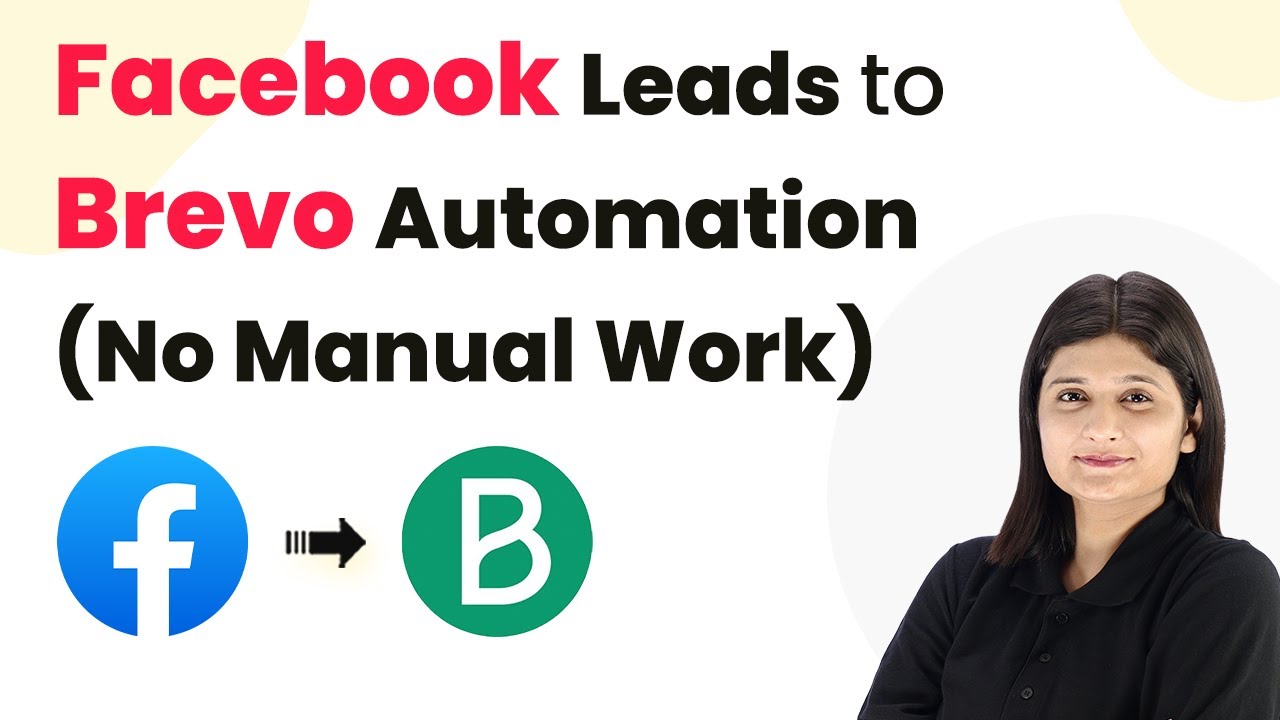

How to Add Leads to Brevo from Kit Using Pabbly Connect

Learn how to seamlessly add leads to Brevo from Kit using Pabbly Connect for effective cross-channel automation. Follow our step-by-step guide! Explore efficient methods for automating routine tasks with clear, concise instructions suited for both newcomers and experienced professionals.

Watch Step By Step Video Tutorial Below


1. Accessing Pabbly Connect for Integration

To start adding leads to Brevo from Kit, you first need to access Pabbly Connect. Open your web browser and enter the URL Pabbly.com/connect. This will take you to the Pabbly Connect landing page.

Once there, you will see options to either sign in or sign up for free. If you are a new user, click on the ‘Sign Up Free’ button to create an account. This allows you to utilize Pabbly Connect with 100 free tasks every month for practice. If you already have an account, simply log in.


2. Creating a Workflow in Pabbly Connect

After logging into Pabbly Connect, navigate to your dashboard where you can create a new workflow. Click on the ‘Create Workflow’ button to begin the process of integrating Kit and Brevo.

  • Select the workflow builder (Beta or Classic).
  • Name your workflow (e.g., ‘Create Contact in Brevo for New Kit Subscribers’).
  • Choose a folder for your workflow.

Once you have set the name and folder, click the ‘Create’ button. You will now see the option to add a trigger, which is essential for starting the workflow.


3. Setting Up the Trigger with Kit

The next step involves setting up the trigger in Pabbly Connect. Click on the ‘Add Trigger’ button and select Kit as your trigger application. This will initiate the workflow whenever a new subscriber is added.

For the event, choose ‘New Form Subscriber’. After that, click on the ‘Connect’ button to establish a connection with Kit. You will need your API key and API secret from Kit to complete this process.

  • Go to your Kit account and navigate to the profile settings.
  • Select ‘Developer’ to find your API key and secret.

Copy the API key and secret back to Pabbly Connect to finalize the connection. Once connected, select your form and click ‘Save and Send Test Request’ to check if the setup works correctly.


4. Adding an Action Step to Create Leads in Brevo

With the trigger successfully set up, the next step is to add an action in Pabbly Connect. Click on the ‘Add New Action Step’ button and select Brevo as your action application. Choose the event ‘Create or Update Contact’.

Click on ‘Connect’ to link Brevo with Pabbly Connect. You will need to enter your Brevo domain and API key. To obtain the API key, go to your Brevo account, navigate to the SMTP and API page, and generate a new API key.

Enter the API key generated in Brevo into Pabbly Connect. Map the fields from Kit to Brevo (e.g., email, first name, last name).

After mapping the necessary fields, click ‘Save and Send Test Request’ to ensure that the lead is created successfully in Brevo.


5. Testing the Integration

Now that the setup is complete, it’s time to test the integration. Fill out the subscriber form in Kit with sample data. Once submitted, check Pabbly Connect to see if the response from Kit is received correctly.

After confirming the data is received, check your Brevo account to verify that the new contact has been created. You should see the details of the new subscriber reflected in your Brevo contact list.

This testing phase ensures that the entire workflow is functioning as intended, allowing you to automate the process of adding leads to Brevo from Kit seamlessly.


Conclusion

In this tutorial, we demonstrated how to use Pabbly Connect to add leads to Brevo from Kit for effective cross-channel automation. By following the steps outlined, you can easily automate your lead generation process without any coding skills.

Ensure you check out Pabbly Connect to create business automation workflows and reduce manual tasks. Pabbly Connect currently offer integration with 2,000+ applications.

Utilizing Pabbly Connect simplifies the integration process, allowing businesses to focus on growth and efficiency. Start using Pabbly Connect today to enhance your automation capabilities!

How to Automatically Add Facebook Leads to Monday.com Using Pabbly Connect

Learn how to automate adding Facebook leads to Monday.com using Pabbly Connect in this detailed step-by-step tutorial. Learn to create powerful connections between your critical applications without requiring specialized programming knowledge or extensive technical background.

Watch Step By Step Video Tutorial Below


1. Accessing Pabbly Connect for Integration

To automatically add Facebook leads to Monday.com, first access Pabbly Connect. This platform is essential for connecting your Facebook lead ads with Monday.com seamlessly. Start by logging into your Pabbly Connect account.

Once logged in, navigate to the dashboard where you can create a new workflow. This is where the integration process begins, allowing you to automate the transfer of leads from Facebook to Monday.com.


2. Creating a Workflow in Pabbly Connect

Now, let’s create a workflow in Pabbly Connect. Click on the ‘Create Workflow’ button and choose the beta version for a modern experience. Name your workflow ‘Automatically Add Facebook Leads to Monday.com’ and select your desired folder.

  • Select the beta version for a faster and more flexible user experience.
  • Give your workflow a descriptive name for easy identification.
  • Choose the appropriate folder to keep your workflows organized.

After naming your workflow, click on ‘Create’ to finalize the setup. This step is crucial as it establishes the framework for your automation.


3. Setting Up the Trigger in Pabbly Connect

The next step in Pabbly Connect is to set up the trigger. Choose ‘Facebook Lead Ads’ as your trigger application and select ‘New Lead Instant’ as the event. This will allow Pabbly Connect to respond whenever a new lead is generated.

Click on ‘Connect’ to establish a new connection with your Facebook account. Make sure you are logged into Facebook in the same browser to simplify the authentication process.

  • Select your Facebook page where the lead ads are running.
  • Choose the lead generation form you want to connect.
  • Enable the simple response option for organized data.

Once these details are filled in, click on ‘Save and Send Request’ to test the connection. This step is crucial to ensure that Pabbly Connect captures the lead information correctly.


4. Testing Lead Generation from Facebook

After setting up your trigger, it’s time to test lead generation. Go back to your Facebook lead ads and use the leads testing tool by Meta to create a test lead. Fill in the necessary details and submit the form.

Once you submit the test lead, return to Pabbly Connect to check if the data has been captured successfully. This is a vital part of the process as it verifies that the integration works as intended.

Ensure you delete any previous test leads to avoid conflicts. Refresh the leads testing tool page to see the latest changes. Confirm that the lead data appears correctly in Pabbly Connect.

Once confirmed, you can proceed to the next step, which involves setting up the action in Monday.com.


5. Adding Action to Create Item in Monday.com

In this section, you will configure the action step in Pabbly Connect. Choose Monday.com as the action application and select ‘Create Item’ as the event. This sets up the action that will occur once a new lead is captured.

To connect to Monday.com, you will need to enter your API token. Navigate to your Monday.com account, click on your profile icon, select ‘Developers’, and then ‘API Token’. Copy this token and paste it back into Pabbly Connect.

Select the correct board ID and group name for the new item. Map the lead details from Facebook to the fields in Monday.com. Click ‘Save and Send Request’ to finalize the action.

After completing these steps, check your Monday.com account to confirm that a new item has been created with the lead details. This completes the integration process using Pabbly Connect.


Conclusion

In conclusion, using Pabbly Connect allows you to automatically add Facebook leads to your Monday.com account efficiently. By following the steps outlined, you can streamline your lead management process and enhance your workflow.

Ensure you check out Pabbly Connect to create business automation workflows and reduce manual tasks. Pabbly Connect currently offer integration with 2,000+ applications.

Automatically Add Google Ads Leads to Agile CRM Using Pabbly Connect

Learn how to automatically add Google Ads leads to Agile CRM using Pabbly Connect in this step-by-step tutorial. Streamline your lead management process today! Follow this definitive guide to creating powerful automated workflows with straightforward, efficiency-focused solutions that save valuable time.

Watch Step By Step Video Tutorial Below


1. Setting Up Pabbly Connect for Google Ads and Agile CRM

To automatically add Google Ads leads to Agile CRM, you first need to access Pabbly Connect. If you’re a new user, visit the Pabbly Connect landing page and sign up for free. This will allow you to explore the platform with up to 100 free tasks every month.

Once logged in, navigate to the workflow builder. This is where you will set up the integration between Google Ads and Agile CRM. The workflow consists of triggers and actions, where the trigger initiates the process and the action executes the desired outcome.


2. Creating a Trigger for Google Ads in Pabbly Connect

In Pabbly Connect, click on the ‘Add Trigger’ button. You will need to search for and select Google Ads as your trigger application. For the event, choose ‘New Lead Form Entry’ and click on ‘Connect’ to proceed.

  • Select Google Ads as the trigger application.
  • Choose the event ‘New Lead Form Entry’.
  • Click on ‘Connect’ to receive the webhook URL.

Copy the generated webhook URL and head over to your Google Ads account. Here, you will need to connect this lead form with Pabbly Connect by pasting the webhook URL into the lead delivery option and clicking on ‘Send Test Data’. This action will send a test lead to Pabbly Connect.


3. Capturing Lead Data from Google Ads

After sending the test data, return to your Pabbly Connect workflow. You should see that Pabbly has captured the response, which includes essential lead details such as company name, email address, phone number, last name, and first name.

This step confirms that the connection between Google Ads and Pabbly Connect is successful. You can now choose to use the test lead details for your automation or wait for real leads to be captured. If you opt for real leads, ensure your Google Ads campaign is live.


4. Setting Up the Action Step for Agile CRM

Next, click on ‘Add New Action Step’ and search for Agile CRM as the action application. Select ‘Create Contact’ as the action event and click on ‘Connect’. If you have previously connected Agile CRM with Pabbly Connect, select the existing connection. Otherwise, create a new connection.

  • Provide your login email, API key, and domain for Agile CRM.
  • Access your Agile CRM account to find these details.
  • Ensure to copy the domain correctly, excluding unnecessary parts.

After entering the required information, click on ‘Save’. This will establish the connection between Agile CRM and Pabbly Connect, allowing you to create contacts automatically.


5. Mapping Lead Details to Agile CRM

Once the connection is established, you need to map the lead details from Google Ads to Agile CRM. This mapping ensures that the data from the previous step is dynamically inserted into the contact fields in Agile CRM.

In the mapping section, you will see fields for first name, last name, email address, phone number, and company name. You can choose to fill in all or only the required fields. After mapping the details, click on ‘Save and Send Test Request’ to create the contact in Agile CRM.

Upon successful execution, you will receive a confirmation that the contact has been created. You can verify this by checking the contacts section in Agile CRM, where you will see the newly added contact with the correct details. This completes the integration process using Pabbly Connect, ensuring that all new leads from Google Ads are automatically added to Agile CRM.


Conclusion

By following these steps, you can efficiently automate the process of adding Google Ads leads to Agile CRM using Pabbly Connect. This integration streamlines your lead management, saving you time and ensuring accuracy in your CRM records.

Ensure you check out Pabbly Connect to create business automation workflows and reduce manual tasks. Pabbly Connect currently offer integration with 2,000+ applications.

Automate Grooming Package Bookings on WhatsApp Using Pabbly Chatflow

Learn how to automate grooming package bookings on WhatsApp with Pabbly Chatflow. Step-by-step guide to streamline your appointment process. Discover practical methods for designing chat sequences that capture leads, answer questions, and guide users to the next step in your funnel.

Watch Step By Step Video Tutorial Below


1. Accessing Pabbly Chatflow for Grooming Package Automations

To automate grooming package bookings on WhatsApp, first access Pabbly Chatflow by visiting Pabbly.com/chartflow. Pabbly Chatflow is an all-in-one WhatsApp automation tool that enables businesses to streamline their messaging processes.

Once on the Pabbly Chatflow page, you can either sign in if you are an existing user or click on the ‘Sign Up Free’ option to create a new account. New users will receive 100 free credits to explore the software, making it easy to start automating your grooming package bookings.


2. Setting Up Your WhatsApp Number in Pabbly Chatflow

After signing into Pabbly Chatflow, the next step is to set up your WhatsApp number. This is crucial for sending and receiving messages through the automated chatbot.

To add your WhatsApp number, click on the ‘Add WhatsApp Number’ button. You will be presented with two options: WhatsApp Connect and Manual Token Connect. Choose the method that best suits your needs. Follow the prompts to complete the setup.

  • Select ‘WhatsApp Connect’ or ‘Manual Token Connect’.
  • Follow the instructions to successfully link your WhatsApp number.

Once your WhatsApp number is added, you can manage all your WhatsApp communications through Pabbly Chatflow, allowing for efficient handling of grooming package bookings.


3. Creating Your Chatbot Flow in Pabbly Chatflow

With your WhatsApp number set up, it’s time to create the chatbot flow. In Pabbly Chatflow, click on the ‘Flows’ option to start building your automated response system for grooming package bookings.

Click on the ‘Add Flow’ button, and name your flow something descriptive, like ‘Automate Grooming Package Bookings on WhatsApp’. You will then choose a trigger event, which in this case will be a message received via WhatsApp.

  • Select the trigger event as ‘Message Received’.
  • Define keywords that will trigger the bot, such as ‘book appointment’.

This setup allows Pabbly Chatflow to automatically respond to user inquiries regarding grooming package bookings, making the process efficient and hassle-free.


4. Configuring User Interactions with Pabbly Chatflow

Next, you will configure how users interact with your chatbot. In Pabbly Chatflow, you can set up a list of grooming packages that users can choose from when they initiate a booking.

To do this, create a list message that welcomes users and prompts them to select a grooming package. Include options like haircut and styling, detail and cleanup, head massage, and hair color. This interaction will guide users through the booking process.

Welcome message: ‘Hi there, welcome to Glow Groom Studio! Please select your grooming package.’ List options: Haircut and Styling, Detail and Cleanup, Head Massage, Hair Color.

By using Pabbly Chatflow, you can ensure that users receive immediate responses, enhancing their experience and increasing booking efficiency.


5. Finalizing the Booking Process with Pabbly Chatflow

After users select a grooming package, Pabbly Chatflow will guide them through the rest of the booking process by asking for their preferred appointment date, full name, and contact number.

Once this information is collected, the bot will confirm the booking with a personalized message that includes all the details provided by the user. This final step ensures that users feel valued and informed about their appointment.

To conclude the flow, make sure to save your configuration in Pabbly Chatflow. This way, your automated system will be ready to handle grooming package bookings seamlessly.


Conclusion

Automating grooming package bookings on WhatsApp using Pabbly Chatflow simplifies the appointment scheduling process. By setting up a chatbot, you can provide immediate responses to customer inquiries, resulting in higher satisfaction and efficiency.

Ensure you check out Pabbly Connect to create business automation workflows and reduce manual tasks. Pabbly Connect currently offer integration with 2,000+ applications.

Turn Leads into Sales with Pabbly Chatflow and WhatsApp AI Assistant

Learn how to turn leads into sales using Pabbly Chatflow and WhatsApp AI Assistant in this detailed tutorial. Follow our step-by-step guide for seamless integration!

Watch Step By Step Video Tutorial Below


1. Accessing Pabbly Chatflow for WhatsApp AI Integration

To create an AI assistant for WhatsApp, first, you need to access Pabbly Chatflow. Open a new tab and navigate to pave.com/chatflow. Here, you will find options to sign in or sign up for a free account. Signing up gives you access to 100 free credits each month, which you can use to create WhatsApp chatbots.

For existing users, simply click on the ‘Sign In’ button. Once logged in, you will be directed to the Pabbly Chatflow dashboard, where you can start the integration process. This platform is essential for connecting your WhatsApp AI Assistant with your business needs.


2. Adding Your WhatsApp Number in Pabbly Chatflow

After accessing the dashboard of Pabbly Chatflow, the next step is to add your WhatsApp number. Click on the button located on the right side of the dashboard. You can choose between two methods: WhatsApp Connect or Manual Token Connect. This step is crucial for enabling your WhatsApp AI Assistant.

  • Select your preferred method for adding WhatsApp.
  • Follow the prompts to complete the connection process.

Once your WhatsApp number is added, you will have access to various features on the left side of the dashboard. This setup is essential for the AI assistant to function correctly and respond to inquiries from your leads.


3. Creating Your WhatsApp AI Assistant in Pabbly Chatflow

To create your AI assistant, click on the ‘Add AI Assistant’ button. You will be prompted to name your assistant; for example, ‘New AI Agent for Real Estate Agency.’ After naming, click on the ‘Add AI Assistant’ button to proceed. This is where you configure the AI settings. using Pabbly Connect

In the next step, you will work on four components: AI Instructions, Knowledge Source, Assistant Interface, and Styling. Start by selecting the AI instruction type from the dropdown menu and entering the necessary instructions for your assistant.

  • Set the AI temperature to manage creativity in responses.
  • Enter your OpenAI API key to connect the assistant.

After completing these tasks, save your settings to ensure your AI assistant is ready for interaction with leads.


4. Uploading Your Knowledge Base for the AI Assistant

Next, you need to upload a knowledge base that your AI assistant will use to respond to queries. This file should include FAQs and company background information. Ensure the file size is less than 90 MB and is in an accepted format like .txt or .pdf.

To upload, go to your Google Docs, download the knowledge base in the required format, and then drag and drop it into Pabbly Chatflow. This knowledge base is vital for your assistant to provide accurate and relevant responses to customer inquiries.


5. Activating Your WhatsApp AI Assistant

After setting up your AI assistant, you need to activate it for your WhatsApp chats. Open your inbox in Pabbly Chatflow, select the chat where you want to enable the AI assistant, and choose it from the dropdown menu. Click on the ‘Save’ button to finalize the activation. using Pabbly Connect

To enable the AI assistant for multiple chats, go to the settings, select ‘Inbox Settings,’ and enable AI auto replies. Choose your contact list and the AI agent, then save your changes. This allows your AI assistant to handle inquiries efficiently across all selected contacts.


Conclusion

In conclusion, using Pabbly Chatflow to create a WhatsApp AI Assistant is a powerful way to automate your lead responses. By following the steps outlined in this tutorial, you can enhance your customer engagement and streamline your business processes effectively.

Ensure you check out Pabbly Connect to create business automation workflows and reduce manual tasks. Pabbly Connect currently offer integration with 2,000+ applications.

Integrate Instagram Leads to Postmark Using Pabbly Connect

Learn how to automate sending emails from Instagram leads to Postmark using Pabbly Connect in this detailed tutorial. Navigate the automation landscape confidently with clear, structured guidance suitable for professionals regardless of prior technical experience.

Watch Step By Step Video Tutorial Below


1. Accessing Pabbly Connect for Integration

To automate sending emails from Instagram leads to Postmark, first, access Pabbly Connect. You can do this by visiting the Pabbly website and signing in to your account. If you are new, you can sign up for free and get started with 100 tasks monthly.

Once logged in, navigate to the dashboard where you can create new workflows. Click on ‘Access Pabbly Connect’ to proceed with the integration process. Pabbly Connect is essential for linking your Instagram leads to Postmark for automated email sending.


2. Creating a New Workflow in Pabbly Connect

After accessing Pabbly Connect, it’s time to create a new workflow. Click on the ‘Create Workflow’ button and select the new beta workflow builder for a faster experience. Name your workflow something descriptive like ‘Instant Instagram Leads to Postmark Send Emails Automatically in Seconds’.

  • Select your workflow folder for better organization.
  • Choose ‘Instagram Automations’ as the folder.
  • Confirm the creation of the workflow.

With your workflow created, you can now set up the trigger application. This will initiate the automation process whenever a new lead is generated from Instagram.


3. Setting Up Instagram as the Trigger Application

In the workflow setup, select Instagram Lead Ads as your trigger application. This means that every time a new lead is generated, it will trigger the workflow in Pabbly Connect. Choose the trigger event as ‘New Lead Instant’ and click on connect.

If you have an existing connection, opt for saving it. If not, click ‘Add New Connection’ to link your Instagram account. Once logged in, ensure your Instagram account is connected to Facebook, as this is crucial for the integration to work seamlessly.


4. Configuring Postmark as the Action Application

After setting up Instagram as the trigger, the next step is to configure Postmark as the action application. In Pabbly Connect, search for Postmark and select the action event as ‘Send Email’. Click on connect and if required, provide your Postmark API token to establish the connection.

Make sure to enter the correct details for sending the email. The ‘From Email Address’ should be the one associated with your Postmark account. For the ‘To Email Address’, utilize the mapping feature to insert the email address captured from the Instagram lead.

  • Enter a subject line for the email, such as ‘Thanks for Reaching Out’.
  • Craft a personalized message using the lead’s name.
  • Set the email to track opens and links as needed.

Once all details are filled in, click on ‘Save and Send Test Request’ to verify that the email is sent correctly. This confirms that the integration is functioning as intended.


5. Testing the Integration Workflow

To ensure everything is working smoothly, it’s crucial to test the integration set up through Pabbly Connect. Generate a lead using the Instagram Lead Ads testing tool, entering dummy details like name, email, and phone number. Submit the form to initiate the test.

After submission, check your email inbox to see if the automated email was received. If the email appears with the personalized content, your integration is successful. This workflow will now automatically send emails to new leads captured from Instagram.

Remember, this automation will save you time and ensure that every lead receives a prompt response, enhancing your customer engagement and overall efficiency.


Conclusion

In this tutorial, we explored how to integrate Instagram leads with Postmark using Pabbly Connect. By setting up triggers and actions, you can automate your email responses effectively, improving your lead engagement.

Ensure you check out Pabbly Connect to create business automation workflows and reduce manual tasks. Pabbly Connect currently offer integration with 2,000+ applications.

How to Use Pabbly Connect with AI Voice Agent for Automated Lead Calls

Learn how to automate lead follow-ups using Pabbly Connect and AI Voice Agent. Follow this step-by-step tutorial for seamless integration. Transform complex automation concepts into accessible, actionable steps that eliminate unnecessary manual work while maximizing existing application capabilities.

Watch Step By Step Video Tutorial Below


1. Accessing Pabbly Connect for Automation

To start automating lead follow-ups, first access Pabbly Connect. Open your preferred browser and go to Pabbly.com. Here, you will find options to sign in or sign up for free.

If you are a new user, click on the ‘Sign Up Free’ button to create an account and receive 100 free tasks every month. If you are an existing user, simply sign in to your account. After logging in, navigate to the Pabbly Connect dashboard to begin setting up your automation.


2. Creating a Workflow in Pabbly Connect

Once you’re in the Pabbly Connect dashboard, the next step is to create a new workflow. Click on the ‘Create Workflow’ button to start. You will be prompted to select the workflow builder version; choose the beta version for a more flexible experience. using Pabbly Connect

  • Click on ‘Create Workflow’ button.
  • Select the beta version for flexibility.
  • Name your workflow appropriately.

For this tutorial, name your workflow something like ‘Bolna AI’. After naming, choose a folder to save your workflow, then click on the ‘Create’ button. This will set up your new workflow.


3. Setting Up the Trigger in Pabbly Connect

To automate the process, you need to set up a trigger. In this case, the trigger will be a new or updated row in a Google Sheet where your lead details are stored. Click on the ‘Add Trigger’ button and select Google Sheets as your trigger application.

  • Choose Google Sheets as the trigger application.
  • Select ‘New or Updated Spreadsheet Row’ as the event.
  • Connect your Google Sheets account to Pabbly Connect.

After connecting, you will receive a webhook URL. Copy this URL, as it will be used to connect your Google Sheets to Pabbly Connect. Set up the Google Sheets add-on to send data to this webhook URL whenever a new lead is added.


4. Configuring the AI Voice Agent Call

After setting up the trigger, the next step is to configure the action that will take place after the trigger is activated. In this case, you will use the AI Voice Agent from Bolna AI to make a call to the lead after a specified delay. using Pabbly Connect

Select Bolna AI as the action application. Choose ‘Make Phone Call’ as the action event. Connect your Bolna AI account to Pabbly Connect.

Once connected, you will need to specify the recipient’s phone number, which you can map from the previous Google Sheets step. Additionally, set the delay for the call to occur after 10 minutes of receiving the lead details. This configuration allows Pabbly Connect to automate your follow-up process seamlessly.


5. Testing and Verifying the Integration

After configuring both the trigger and action steps, it’s essential to test the integration to ensure everything works as expected. Click on the ‘Send Test’ button to verify that the connection between your Google Sheet and Pabbly Connect is functioning correctly.

If the test is successful, you will receive a confirmation message, indicating that the data has been sent to Bolna AI. You can also check your Bolna AI account to see if the call has been scheduled correctly. This step is crucial to ensure that your automated lead follow-up system is operational and ready to engage with potential clients.


Conclusion

This tutorial outlines how to use Pabbly Connect to automate lead follow-ups using an AI Voice Agent. By integrating Google Sheets with Bolna AI through Pabbly Connect, you can streamline your communication process and enhance your business efficiency. Start automating your lead calls today for better engagement!

Ensure you check out Pabbly Connect to create business automation workflows and reduce manual tasks. Pabbly Connect currently offer integration with 2,000+ applications.

Automate Your Lead Journey with Pabbly Chatflow and Zoho CRM

Learn how to automate your lead journey using Pabbly Chatflow to seamlessly integrate WhatsApp and Zoho CRM. Step-by-step tutorial included. Create intelligent chat experiences that delight users while collecting valuable information and moving prospects through your sales process.

Watch Step By Step Video Tutorial Below


1. Accessing Pabbly Chatflow for Automation

To start automating your lead journey, the first step is to access Pabbly Chatflow. Open your browser and type in www.Pabbly.com/chatflow to reach the Pabbly Chatflow dashboard.

Once on the site, sign in to your account. If you are new, you can sign up for free and receive 100 credits monthly. After logging in, navigate to the Pabbly Chatflow dashboard where you can manage your WhatsApp integrations and automation flows.


2. Creating a Flow with Pabbly Chatflow

Creating a flow in Pabbly Chatflow is essential for automating your WhatsApp interactions. Click on the ‘Flows’ option on the left sidebar, then click on ‘Add Flow’ to initiate a new automation.

  • Select the trigger event as ‘Template Selected’.
  • Choose the template you wish to use for your WhatsApp messages.
  • Set up the response messages for each button in your template.

After configuring your flow, ensure to save it. This flow will handle incoming messages and trigger responses based on user interactions with the WhatsApp template.


3. Integrating Zoho CRM with Pabbly Chatflow

Once your flow is set up in Pabbly Chatflow, the next step is to integrate it with Zoho CRM. This allows you to automatically create leads based on user inputs from WhatsApp.

To do this, you’ll need to use the API request feature in Pabbly Chatflow. Drag and drop the API request block into your flow and configure it with the Zoho CRM webhook URL. This will enable the transfer of lead data from your WhatsApp interactions directly into Zoho CRM.

  • Select ‘Webhook by Pabbly’ as the trigger application.
  • Choose ‘Catch Webhook’ as the event type.
  • Map the fields from your WhatsApp flow to the corresponding fields in Zoho CRM.

Make sure to test the integration to confirm that leads are being created successfully in Zoho CRM upon receiving data from WhatsApp.


4. Testing the Automation in Pabbly Chatflow

After setting up the integration, it’s crucial to test the entire automation process in Pabbly Chatflow. Start by sending a test message through WhatsApp using the template you created.

Monitor the responses and ensure that the lead data is captured correctly. For example, if a user selects the option to schedule a visit, they should be prompted to enter their details, which will then be sent to Zoho CRM.

Send a WhatsApp message using the created template. Check if the responses are correctly triggering the follow-up questions. Verify that the lead is created in Zoho CRM with accurate details.

By thoroughly testing, you can adjust any settings in Pabbly Chatflow to ensure a smooth lead collection process.


5. Finalizing Your Lead Automation Journey

Once testing is complete, finalize your flow in Pabbly Chatflow. Make sure all elements are functioning as intended and that the flow is active.

Regularly monitor your leads in Zoho CRM to ensure that data is flowing correctly from WhatsApp through Pabbly Chatflow. This automation will save you time and streamline your lead management process.

Additionally, you can explore more features of Pabbly Chatflow to enhance your automation capabilities further, allowing for more complex interactions and data handling.


Conclusion

In this tutorial, we explored how to automate your lead journey using Pabbly Chatflow to integrate WhatsApp with Zoho CRM. By following these steps, you can efficiently collect leads and manage them seamlessly.

Ensure you check out Pabbly Connect to create business automation workflows and reduce manual tasks. Pabbly Connect currently offer integration with 2,000+ applications.

Automatically Answer Product Queries on WhatsApp with Pabbly Chatflow

Learn how to automatically answer product queries on WhatsApp using Pabbly Chatflow. Follow our step-by-step tutorial for seamless integration. Implement professional chat automation that answers common questions, qualifies leads, and books appointments without human intervention.

Watch Step By Step Video Tutorial Below


1. Accessing Pabbly Chatflow for WhatsApp Integration

To automatically answer product queries on WhatsApp, you first need to access Pabbly Chatflow. Start by visiting pabby.com/chatflow in your browser. This will take you to the Pabbly Chatflow homepage where you can either sign in or sign up for a free account.

If you’re new to Pabbly Chatflow, click on the ‘Sign Up Free’ button. Existing users can simply log in. Once logged in, navigate to the ‘Pabbly Apps’ window and click on ‘Access Now’ under Pabbly Chatflow to enter the dashboard.


2. Setting Up Your WhatsApp Number in Pabbly Chatflow

After accessing the Pabbly Chatflow dashboard, the next step is to connect your WhatsApp number. Click on the ‘Add WhatsApp Number’ button. You will see two options: WhatsApp Connect and Manual Token Connect. Choose WhatsApp Connect as it is the preferred method.

  • Select WhatsApp Connect to easily add your number.
  • Follow the prompts to link your WhatsApp account.

Once your number is connected, you can start creating your WhatsApp AI assistant using Pabbly Chatflow. This integration allows you to automate responses to product queries effectively.


3. Creating Your WhatsApp AI Assistant with Pabbly Chatflow

To create an AI assistant, navigate to the AI Assistant feature in Pabbly Chatflow. Click on the ‘Add Assistant’ button. You will be prompted to name your assistant. After naming it, click on the ‘Add Assistant’ button again, which will direct you to the assistant flow window.

In this window, select the instruction type from the drop-down menu. You can either choose a custom prompt or select predefined examples like ‘AI Agent’. For this tutorial, we will select the AI Agent option. This choice will automatically fill in basic instructions, which you can modify based on your requirements.

  • Set the temperature for responses to adjust creativity.
  • Choose the AI model, such as OpenAI GPT-4 Mini.

After configuring these settings, you will need to enter your OpenAI API key for authentication. This key can be obtained from your OpenAI account. Once your API key is entered, click the ‘Connect’ button to save your settings in the assistant.


4. Configuring Your WhatsApp Assistant Settings in Pabbly Chatflow

With your AI assistant set up, you can now configure various settings in Pabbly Chatflow. Start by adding a header message that will appear at the top of the chat. Toggle the button to enable this feature and enter your desired text, ensuring it does not exceed 60 characters.

Next, configure stop keywords that will allow users to halt the assistant’s responses. For instance, adding ‘human’ as a stop keyword will ensure that the assistant stops replying when this keyword is detected. You can also set retry attempts for fallback responses, and customize the fallback message shown when the assistant fails to respond correctly.

Add a knowledge source that includes FAQs and product details. Upload your knowledge source in PDF or plain text format.

Finally, you can set up the assistant’s display settings, including the brand name and initial messages. Make sure to save all changes to ensure your WhatsApp assistant is ready to engage with customers.


5. Assigning Your WhatsApp Assistant in Pabbly Chatflow

The last step in this process is assigning your WhatsApp assistant to handle customer queries. In Pabbly Chatflow, navigate to the settings and select ‘Inbox Settings’. Here, you can enable AI auto-replies and choose the contact list to which the assistant will be assigned.

Select the assistant you created and click on the ‘Save’ button to apply these changes. This bulk assignment ensures that your WhatsApp assistant is ready to respond to all inquiries from the selected contacts. You can also assign the assistant to individual chats by accessing the inbox section and selecting specific conversations.

With your WhatsApp assistant now assigned, it is fully equipped to handle product queries automatically. This integration not only streamlines communication but also enhances customer service efficiency through Pabbly Chatflow.


Conclusion

In this tutorial, we explored how to use Pabbly Chatflow to automatically answer product queries on WhatsApp. By following the steps outlined, you can create an effective AI assistant that enhances customer interaction and satisfaction.

Ensure you check out Pabbly Connect to create business automation workflows and reduce manual tasks. Pabbly Connect currently offer integration with 2,000+ applications.

Automate Your Facebook Posts with Pabbly Connect: A Step-by-Step Guide

Learn how to automatically post on Facebook daily using Pabbly Connect. This detailed tutorial covers every step for seamless integration. Follow this definitive guide to creating powerful automated workflows with straightforward, efficiency-focused solutions that save valuable time.

Watch Step By Step Video Tutorial Below


1. Accessing Pabbly Connect for Facebook Automation

To begin automating your Facebook posts, open a new tab and navigate to the Pabbly Connect website. This platform is essential for integrating various applications, including Facebook. using Pabbly Connect

Once you reach the Pabbly Connect landing page, you will see options to either sign in or sign up for free. If you are a new user, click on the ‘sign up for free’ button, which allows you to explore Pabbly Connect with hundreds of free tasks each month.


2. Creating Your Workflow in Pabbly Connect

After signing in, you will access the Pabbly Connect dashboard. Click on the ‘create workflow’ button to start setting up your automation. This is where you will define the trigger and action for your Facebook posts. using Pabbly Connect

  • Select the new workflow builder for a modern experience.
  • Enter a name for your workflow and choose a folder to save it.
  • Click on ‘create’ to open the workflow window.

This workflow window is crucial as it allows you to set a trigger, which will initiate the automation process. In this case, you will set a schedule to post on Facebook daily.


3. Setting Up the Trigger for Daily Posts

In the workflow window, click on the ‘add trigger’ button to define how often you want your Facebook posts to go live. Choose ‘scheduled by Pabbly’ as your trigger. using Pabbly Connect

For the event, select ‘schedule workflow’ and specify that you want the workflow to run every day at 12:00 PM. After selecting the time, click the ‘save’ button to confirm your settings.

  • Select the frequency as ‘every day’.
  • Set the time for your posts to go live.

With this trigger in place, your workflow is now scheduled to post on Facebook at your specified time daily.


4. Generating Post Content Using Open AI

Next, you will need to generate the content for your Facebook posts. Click on the ‘add new action step’ and search for Open AI. This integration allows you to create engaging captions and images for your posts. using Pabbly Connect

Select ‘chat GPT’ as the event to generate captions. If you haven’t connected Open AI to Pabbly Connect yet, you will need to create a new connection by entering your API key. Follow the prompts to obtain your API key from Open AI.

Enter a prompt describing your brand or the content you want to generate. Click on ‘save and send test request’ to generate the caption.

Once the caption is generated, you can proceed to create an image using the same Open AI integration, ensuring your posts are visually appealing.


5. Posting Automatically on Facebook

After generating both the caption and the image, it’s time to set up the final action step to post on Facebook. Click on ‘add new action step’ again and search for Facebook, selecting ‘Facebook Pages’ as the application. using Pabbly Connect

Choose ‘create page photo post’ as the event. If you have already connected your Facebook account, select the existing connection; otherwise, follow the prompts to connect your Facebook account to Pabbly Connect.

Select the Facebook page where you want to post. Map the photo URL and description fields to the generated content.

Click on ‘save and send test request’ to finalize the process. After a successful test, your posts will automatically go live daily on your Facebook page without any manual effort.


Conclusion

By leveraging Pabbly Connect, you can automate your Facebook posting process effortlessly. This step-by-step guide demonstrates how to integrate Open AI and Facebook for daily posts, saving you time and ensuring consistent engagement with your audience.

Ensure you check out Pabbly Connect to create business automation workflows and reduce manual tasks. Pabbly Connect currently offer integration with 2,000+ applications.