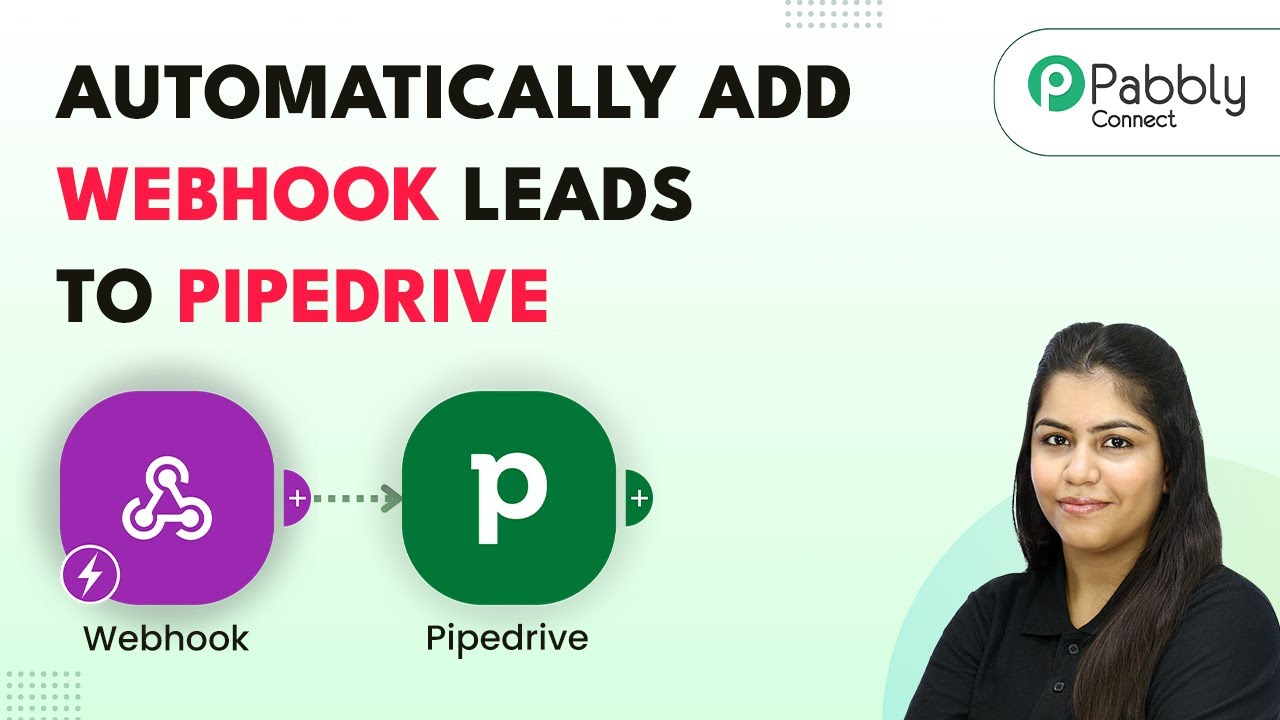
How to Automatically Add Webhook Leads to Pipedrive Using Pabbly Connect

Learn how to automatically add webhook leads to Pipedrive using Pabbly Connect. Follow this detailed tutorial for seamless integration. Implement the precise methodologies leading organizations use to automate repetitive tasks, illustrated with practical examples designed for immediate application.

Watch Step By Step Video Tutorial Below


1. Accessing Pabbly Connect for Integration

To automatically add webhook leads to Pipedrive, you first need to access Pabbly Connect. Start by navigating to the Pabbly Connect website by entering ‘Pabbly.com/connect’ in your browser.

Once on the landing page, if you’re a new user, click on ‘Sign Up for Free’ to create an account. Existing users should click on ‘Sign In’ to access their dashboard. After signing in, locate and click on ‘Access Now’ to enter your Pabbly Connect account.


2. Creating a New Workflow in Pabbly Connect

After accessing your Pabbly Connect account, click on the ‘Create Workflow’ button. You will be prompted to choose between the new and classic workflow builder. Select the classic one for this tutorial.

Next, name your workflow as ‘Automatically Add Webhook Leads to Pipedrive’ and select a folder where you want to save it. If you don’t have a folder, you can create a new one by clicking on ‘Create New Folder’. Then, click ‘Create’ to proceed to the workflow window.


3. Setting Up the Trigger in Pabbly Connect

In the workflow window, the first step is to set up the trigger. Choose ‘Webhook by Pabbly’ as the trigger application. Then, select the trigger event as ‘Catch Webhook’. This will provide you with a unique webhook URL.

Copy this webhook URL and paste it into the application from which you are capturing leads. For this example, we will use Pabbly Form Builder. Navigate to the integrations section in Pabbly Form Builder and create a webhook by pasting the copied URL.

  • Open Pabbly Form Builder and go to the integrations tab.
  • Select ‘Create Webhook’ and paste the copied URL.
  • Save the webhook configuration.

After saving, you can perform a test submission in your form to capture the lead details. This confirms that the webhook is working correctly with Pabbly Connect.


4. Setting Up the Action to Add Leads to Pipedrive

Once the webhook captures the lead data, the next step is to set up the action in Pabbly Connect. Choose ‘Pipedrive’ as the action application and select ‘Create Person’ as the action event.

To connect Pabbly Connect with Pipedrive, you’ll need your API token from Pipedrive. Navigate to your Pipedrive account, go to your profile, and find the API section to copy your API token. Paste this token into Pabbly Connect to establish the connection.

  • Open Pipedrive and go to your profile settings.
  • Copy the API token from the API section.
  • Paste the token into Pabbly Connect and save the connection.

Now, map the fields from the webhook data to the Pipedrive fields. This ensures that the lead details are transferred correctly. Once all necessary fields are mapped, click on ‘Save and Send Test Request’ to finalize the integration.


5. Testing the Integration with Pabbly Connect

After setting up the action, it’s time to test the entire workflow. Submit a new lead through your form, which should trigger the webhook and pass the information to Pipedrive via Pabbly Connect.

Check your Pipedrive account to see if the new lead has been added successfully. You should see the details of the lead you just submitted. This confirms that the integration is working seamlessly, allowing you to automatically add webhook leads to Pipedrive.

With this setup, every time a lead submits their information, it will be automatically added to your Pipedrive CRM, streamlining your workflow and enhancing your lead management process.


Conclusion

This tutorial demonstrated how to use Pabbly Connect to automatically add webhook leads to Pipedrive. By following these steps, you can streamline your lead management process and enhance your business operations.

Ensure you check out Pabbly Connect to create business automation workflows and reduce manual tasks. Pabbly Connect currently offer integration with 2,000+ applications.

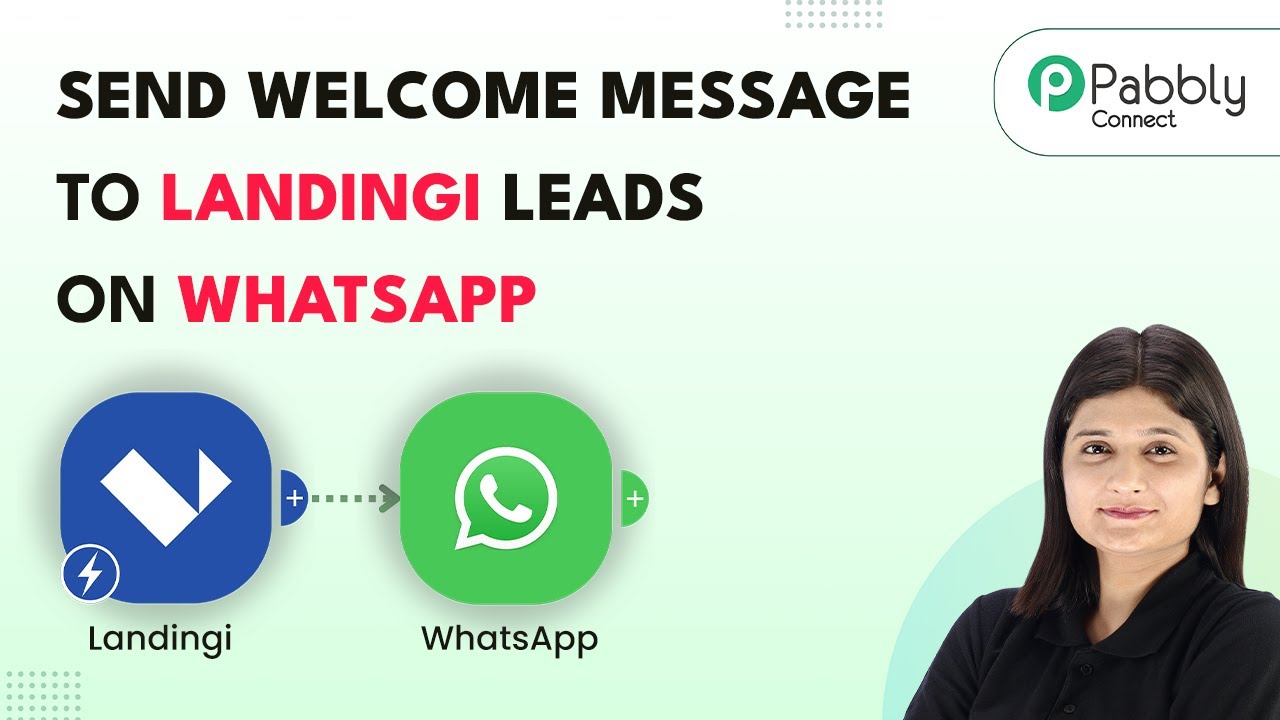
How to Send Welcome Messages to Landingi Leads on WhatsApp Using Pabbly Connect

Learn how to automate sending welcome messages to Landingi leads on WhatsApp using Pabbly Connect. Follow this step-by-step tutorial for seamless integration. Discover hidden automation capabilities within your existing tools. This guide shows you how to connect your essential applications and permanently eliminate redundant manual processes.

Watch Step By Step Video Tutorial Below


1. Setting Up Pabbly Connect for Automation

To send welcome messages to Landingi leads on WhatsApp, we first need to set up Pabbly Connect. Start by visiting the Pabbly website and signing into your account. If you are new, you can sign up for free to access 100 tasks monthly.

Once signed in, navigate to the Pabbly Connect dashboard. Here, you can create a new workflow by clicking on the ‘Create Workflow’ button. Choose the classic workflow builder for a familiar experience, and name your workflow appropriately, such as ‘Send Welcome Message to Landingi Leads on WhatsApp’.


2. Creating the Trigger with Landingi

In this step, we will create a trigger in Pabbly Connect that activates when a new lead is received from Landingi. Set Landingi as your trigger application and select the event as ‘New Lead’. This will initiate the automation process whenever a new lead is captured.

To connect Landingi with Pabbly Connect, you will need a webhook URL. This URL acts as a bridge between Landingi and Pabbly Connect. Copy the webhook URL provided in the workflow and paste it into the Landingi integration settings. Ensure the request method is set to POST and save the changes.

  • Access your Landingi page and click on the edit option.
  • Navigate to the settings and select integrations, then find the webhook option.
  • Paste the webhook URL and save your settings.

After saving, publish your Landingi form to make sure the changes are live. Now, whenever a new lead submits their details, it will trigger the workflow in Pabbly Connect.


3. Testing the Trigger in Pabbly Connect

After setting up the trigger, it’s time to test it in Pabbly Connect. Perform a test submission on your Landingi form to ensure that the data is captured correctly. This step is crucial to confirm that the connection between Landingi and Pabbly Connect is functioning properly.

Once the test submission is complete, return to your Pabbly Connect workflow. You should see the captured response from Landingi displayed in your workflow. This confirms that the integration is successful and ready to proceed to the next step.

  • Fill out the form with dummy details like name and email.
  • Click on the sign-up button to submit the form.
  • Check the Pabbly Connect workflow for the captured lead details.

Once you see the lead details in Pabbly Connect, you can confidently move on to the action step of sending a WhatsApp message.


4. Sending WhatsApp Messages Using Pabbly Connect

Now that we have verified the trigger, the next step is to set up the action in Pabbly Connect. Select WhatsApp Cloud API as your action application and choose the event ‘Send Template Message’. This action will send a welcome message to the lead via WhatsApp.

To establish this connection, you will need to enter several details such as the token, phone number ID, and WhatsApp business account ID. These can be obtained from the Meta for Developers dashboard. Once you have entered these credentials, click on save to connect WhatsApp Cloud API with Pabbly Connect.

Generate an access token from your Meta for Developers account. Copy the phone number ID and WhatsApp business account ID. Paste these details into Pabbly Connect to complete the connection.

After linking WhatsApp Cloud API, you can configure the message template that will be sent to new leads. Ensure that the template includes dynamic variables to personalize the message.


5. Finalizing the WhatsApp Message in Pabbly Connect

Finally, you need to finalize the WhatsApp message in Pabbly Connect. Select the message template you created earlier and ensure that it contains the necessary variables for personalization. This way, each lead will receive a customized welcome message when they submit their details.

Once the template is selected, map the lead’s name to the variable in the message. This is essential for ensuring that every new lead receives a message addressed to them. After mapping the variables, click on ‘Save and Send Test Request’ to send a test message to your WhatsApp number.

Select the template ID from the dropdown menu in Pabbly Connect. Map the variables to ensure dynamic content. Click on the send test request button to verify message delivery.

Once you receive the message on WhatsApp, your automation setup is complete. You have successfully integrated Landingi with WhatsApp using Pabbly Connect.


Conclusion

In this tutorial, we explored how to automate sending welcome messages to Landingi leads on WhatsApp using Pabbly Connect. By following the step-by-step process, you can streamline your lead engagement and improve communication efficiency.

Ensure you check out Pabbly Connect to create business automation workflows and reduce manual tasks. Pabbly Connect currently offer integration with 2,000+ applications.

Automatically Log LinkedIn Leads to Airtable with Pabbly Connect

Learn how to log social media leads from LinkedIn to Airtable automatically using Pabbly Connect. Follow this step-by-step tutorial for seamless integration. Transform complex automation concepts into accessible, actionable steps that eliminate unnecessary manual work while maximizing existing application capabilities.

Watch Step By Step Video Tutorial Below


1. Access Pabbly Connect for LinkedIn to Airtable Integration

To log social media leads from LinkedIn to Airtable automatically, you need to access Pabbly Connect. Start by navigating to the Pabbly Connect landing page by entering ‘Pabbly.com/connect’ in your browser.

Once on the landing page, you have the option to sign in or sign up for free. If you are a new user, click on ‘Sign up for free’ to receive hundreds of tasks each month. Existing users should select ‘Sign in’ to access their accounts and proceed to create a workflow.


2. Create a Workflow in Pabbly Connect

After signing in, you will see the Pabbly Connect dashboard. To create a new workflow, click on the ‘Create Workflow’ button. You will then be prompted to choose between the new or classic workflow builder. Select the new workflow builder for a more modern experience.

Next, name your workflow as ‘Log social media leads from LinkedIn to Airtable automatically’. Choose a folder for organization, such as ‘Automations’, and click ‘Create’. This action sets up the primary framework for integrating LinkedIn with Airtable through Pabbly Connect.


3. Set Up Trigger for LinkedIn Leads

To initiate the integration, you must set up a trigger in Pabbly Connect. For this, select LinkedIn as your trigger application. Then, choose ‘Lead Notifications’ as the trigger event and click ‘Connect’.

Now, add a new connection to link your LinkedIn account with Pabbly Connect. After successfully connecting, select your LinkedIn account and click ‘Save and Send Test Request’. This action will prompt you to perform a test submission to capture the webhook response.

  • Open your LinkedIn account and navigate to the ad campaign.
  • Click on the ‘Apply Now’ button in your ad.
  • Fill in the required details like email and phone number, and submit the form.

Upon submission, Pabbly Connect will capture the webhook response containing lead details such as first name, last name, email, and phone number.


4. Add Action Step to Create Record in Airtable

With the trigger set, the next step is to add an action in Pabbly Connect. Select Airtable as your action application and choose ‘Create Record’ as the event. Click on ‘Connect’ to establish a connection between Airtable and Pabbly Connect.

Grant the necessary permissions for Pabbly Connect to access your Airtable account. Select the base named ‘Social Media Leads’ and specify the table where you want to log the lead details.

  • Map the fields from the previous step, such as first name, last name, email, and phone number.
  • Ensure that the data is dynamically inserted by using the mapping feature.
  • Click ‘Save and Send Test Request’ to confirm the action.

Once the test request is successful, the lead details will automatically populate in your Airtable database, confirming that Pabbly Connect is functioning correctly.


5. Conclusion: Automate Your Lead Logging Process

In this tutorial, we explored how to log social media leads from LinkedIn to Airtable automatically using Pabbly Connect. By following the steps outlined above, you can streamline your lead management process without any coding knowledge.

Ensure you check out Pabbly Connect to create business automation workflows and reduce manual tasks. Pabbly Connect currently offer integration with 2,000+ applications.

Check out Pabbly Connect – Automate your business workflows effortlessly! Sign Up Free – Start your journey with ease! 10,000+ Video Tutorials – Learn step by step! Join Pabbly Facebook Group – Connect with 21,000+ like minded people!
Now you can efficiently manage your leads, ensuring that your sales team can follow up promptly. This automation not only saves time but also enhances productivity for your business.

Try out this powerful integration with Pabbly Connect and unlock the full potential of your lead generation efforts today!


Automate Follow-Ups for Sales Teams Using WhatsApp with Pabbly Chatflow

Learn how to automate follow-ups for sales teams using WhatsApp with Pabbly Chatflow and Pabbly Chatflow. Step-by-step tutorial included. Explore how leading businesses automate customer interactions with carefully designed chat sequences that feel natural and helpful.

Watch Step By Step Video Tutorial Below


1. Setting Up Pabbly Chatflow for WhatsApp Automation

To automate follow-ups for sales teams using WhatsApp, start by accessing Pabbly Chatflow. This powerful tool allows you to create WhatsApp chatbots without any coding skills. Navigate to the Pabbly Chatflow website and sign in or create an account to get started.

After logging in, you will see the dashboard where you can manage your WhatsApp conversations. Click on the ‘Add WhatsApp Number’ button to integrate your WhatsApp account. You have two options: WhatsApp Connect or Manual Token Connect. Choose the one that suits your needs.


2. Creating Your WhatsApp Chatbot with Pabbly Chatflow

Once you have set up your WhatsApp account in Pabbly Chatflow, you can start creating your chatbot. Go to the ‘Flow’ section and click on the ‘Add Flow’ button. Name your flow something descriptive, like ‘Automate Follow-Ups for Sales Teams Using WhatsApp’.

  • Click on the ‘Add Flow’ button.
  • Rename the flow appropriately.
  • Select a trigger event, such as ‘Keyword Reaction Match’.

After setting your trigger, you can design the welcome message that your leads will receive. This message can include options for them to choose from, such as pricing details or product info. Make sure to format the message correctly in the chatbot builder.


3. Collecting User Data Through Pabbly Chatflow

As leads interact with your chatbot, Pabbly Chatflow allows you to collect essential data. After the initial greeting, prompt users to provide their full name and phone number. Use the ‘Ask Question’ feature to gather this information effectively.

For example, when asking for the user’s full name, set the question as ‘May we know your full name so our team can address you personally?’. After collecting this data, you can save it into custom fields for future reference.

  • Use the ‘Ask Question’ feature for data collection.
  • Create custom fields in settings to store user data.
  • Map the collected data to the relevant fields in your workflow.

Once the data is collected, you can use it to personalize follow-ups and improve customer engagement.


4. Integrating Pabbly Connect with Google Chat

To notify your sales team about new inquiries, you need to integrate Pabbly Connect with Google Chat. Start by navigating to the Pabbly Connect dashboard and creating a new workflow. Select ‘Pabbly Chatflow’ as your trigger application and choose the event ‘New Message Received’.

After setting the trigger, you will be provided with a webhook URL. Copy this URL and return to your Pabbly Chatflow flow. Use the ‘API Request’ feature to send data to this webhook URL when a user interacts with your chatbot.

Create a new workflow in Pabbly Connect. Select ‘Pabbly Chatflow’ as the trigger application. Use the webhook URL in your Pabbly Chatflow flow.

This integration allows your sales team to receive real-time notifications about new inquiries, ensuring prompt follow-ups.


5. Testing and Launching Your WhatsApp Bot

After setting up your bot and integrating it with Google Chat using Pabbly Connect, it’s time to test the entire flow. Send a test inquiry through WhatsApp and ensure that the bot responds correctly and that the sales team receives the notification in Google Chat.

If everything works as expected, you can launch your WhatsApp bot for real users. Monitor its performance and make adjustments as necessary to improve user experience and data collection.

Conduct a test by sending a sample inquiry. Check Google Chat for notifications from the bot. Make adjustments based on testing feedback.

Once satisfied with the setup, your sales team will be equipped to handle inquiries efficiently via WhatsApp, enhancing customer engagement and follow-up processes.


Conclusion

In conclusion, automating follow-ups for sales teams using WhatsApp is made easy with Pabbly Chatflow and Pabbly Connect. By following the detailed steps outlined in this tutorial, businesses can enhance their customer interaction and streamline their sales processes effectively.

Ensure you check out Pabbly Connect to create business automation workflows and reduce manual tasks. Pabbly Connect currently offer integration with 2,000+ applications.

How to Notify Slack Channel When Housing.com Buyer Leads Arrive Using Pabbly Connect

Learn how to automatically notify your Slack channel when new buyer leads arrive from Housing.com using Pabbly Connect. Step-by-step tutorial included. Develop expertise in application integration and learn how to design streamlined automation workflows using proven, simplified approaches.

Watch Step By Step Video Tutorial Below


1. Accessing Pabbly Connect for Automation

To start automating notifications for your Slack channel when new buyer leads arrive from Housing.com, you need to access Pabbly Connect. Simply open your web browser and navigate to the Pabbly Connect landing page by entering ‘Pabbly.com/connect’.

Once on the Pabbly Connect page, you have the option to sign in if you’re an existing user or sign up for free if you’re new. Signing up provides you with 100 free tasks every month to explore the application. After logging in, you will be directed to your dashboard, where you will begin creating the workflow.


2. Creating a New Workflow in Pabbly Connect

After accessing your dashboard, you will need to create a new workflow. Click on the button labeled ‘Create Workflow’. You will be prompted to choose between the new workflow builder or the classic one. It’s recommended to select the new workflow builder for a more modern interface.

Next, name your workflow as ‘Notify Slack Channel When Housing.com Buyer Leads Arrive’. This name helps in identifying the workflow easily. You can also choose a folder to save your workflow, such as ‘Automations’. After setting the name and folder, click on ‘Create’ to proceed.

  • Click on ‘Create Workflow’
  • Select the new workflow builder
  • Name your workflow
  • Choose a folder for your workflow

Now, your workflow window will open, which is crucial for setting up the trigger and action for your automation. This is where the real work begins in integrating Housing.com with Slack using Pabbly Connect.


3. Setting Up the Trigger with Housing.com

The next step involves setting up the trigger for your workflow. Since you want to notify your Slack channel when a new lead arrives, you will select Housing.com as your trigger application. Search for Housing.com in the trigger application field and select it.

For the trigger event, choose ‘New Leads’. After selecting this, Pabbly Connect will generate a webhook URL. This URL needs to be configured in your Housing.com account to capture the lead details automatically. As Housing.com does not allow users to add webhook URLs directly, you will need to contact your account manager to add this URL for you.

  • Select Housing.com as the trigger application
  • Choose ‘New Leads’ as the trigger event
  • Copy the generated webhook URL
  • Contact your account manager to add the webhook URL

Once the webhook URL is set up in your Housing.com account, return to Pabbly Connect and click on ‘Capture Webhook Response’ to test if the setup is successful. You should see the lead details captured, confirming that the trigger is working properly.


4. Setting Up the Action in Slack

With the trigger successfully set, the next step is to configure the action that will notify your Slack channel. Click on ‘Add New Action Step’ and search for Slack. Select Slack as your action application.

For the action event, choose ‘Send Channel Message’. This will allow you to send a message to your designated Slack channel whenever a new lead is captured. You will need to connect your Slack account to Pabbly Connect by providing the token type, either user or bot token. Make sure to follow the instructions provided in the documentation for obtaining the correct token.

Select Slack as the action application Choose ‘Send Channel Message’ as the action event Connect your Slack account to Pabbly Connect

Once connected, you will be prompted to select the channel where you want to send the message. Choose your preferred channel, such as ‘Lead Alerts’, and customize the message to include the lead’s name, phone number, email, and location of interest by mapping these fields from the previous step. This mapping ensures that your messages are dynamic and update with each new lead.


5. Testing Your Integration

After setting up the action, it’s time to test your integration. Click on ‘Save and Send Test Request’ to send a test message to your selected Slack channel. If everything is configured correctly, you will receive a confirmation that the message was sent successfully.

Check your Slack channel to verify that the message appears as expected. This confirms that your workflow is functioning correctly, and your team will be notified automatically whenever a new lead arrives from Housing.com. With Pabbly Connect, this entire process is automated, saving you time and ensuring timely notifications for your team.

Now, you can sit back and relax, knowing that your team will always be informed of new leads without manual intervention. This automation enhances your team’s efficiency and helps in quick follow-ups with potential buyers.


Conclusion

In conclusion, using Pabbly Connect to notify your Slack channel when new buyer leads arrive from Housing.com is a straightforward process. By following the steps outlined in this tutorial, you can set up an efficient automation that keeps your team informed and ready to act on new leads promptly.

Ensure you check out Pabbly Connect to create business automation workflows and reduce manual tasks. Pabbly Connect currently offer integration with 2,000+ applications.

Try implementing this integration today to streamline your lead management process and enhance your team’s responsiveness. With Pabbly Connect, you can effortlessly connect various applications and automate your workflows effectively.

How to Add Elementor Form Leads to Kit Automation Using Pabbly Connect

Learn how to integrate Elementor form leads with Kit automation using Pabbly Connect in this detailed step-by-step tutorial. This comprehensive guide reveals exactly how to connect your applications and automate repetitive tasks — accessible for professionals of all technical backgrounds.

Watch Step By Step Video Tutorial Below


1. Access Pabbly Connect for Automation

To start integrating Elementor form leads with Kit automation, you first need to access Pabbly Connect. Simply open your browser and search for the Pabbly Connect landing page by entering ‘Pabbly.com/connect’. This will take you to the main interface where you can manage your automation workflows.

Once on the Pabbly Connect page, you have the option to sign in or sign up for free. If you are a new user, click on ‘Sign up for free’ to get started with 100 free tasks every month. Existing users can click on ‘Sign in’ to access their accounts. After signing in, you will see all the Pabbly applications, and you should click on ‘Access Now’ under Pabbly Connect to begin.


2. Create a New Workflow in Pabbly Connect

Now that you are in Pabbly Connect, the next step is to create a new workflow. Click on the button that says ‘Create Workflow’. You will be prompted to choose between the new workflow builder and the classic one. For a modern interface, select the new workflow builder.

  • Click on ‘Create Workflow’.
  • Select the ‘New’ workflow builder.
  • Name your workflow (e.g., ‘Add Elementor Form Leads to Kit Automation’).

Choose a folder to save your workflow, such as ‘Automation’. Once you have named your workflow and selected a folder, click on ‘Create’. This will take you to the workflow window where you can set up your triggers and actions.


3. Set Up the Trigger with Elementor

The next step in Pabbly Connect is to set up a trigger. Click on ‘Add Trigger’ and select ‘Elementor’ as your trigger application. For the trigger event, choose ‘New Form Submission’. After selecting the trigger event, click on ‘Connect’. This will generate a webhook URL.

Copy the generated webhook URL and navigate to your Elementor form settings. In the form settings, find the ‘Actions After Submit’ section and add a new action named ‘Webhook’. After adding the webhook action, paste the copied URL into the designated field and click ‘Publish’. This connects your Elementor form to Pabbly Connect, allowing it to send data whenever a new form submission occurs.


4. Add Action to Create Subscriber in Kit

Now that your trigger is set up, the next step is to add an action to create a subscriber in Kit. In Pabbly Connect, click on ‘Add New Action Step’ and select ‘Kit’ as the action application. For the action event, choose ‘Add Subscriber to a Form’ and click on ‘Connect’.

You will need to enter your Kit API key and API secret to establish the connection. To find these, go to your Kit dashboard, click on your profile picture, then navigate to ‘Settings’ and ‘Developer’. Copy the API key and secret and paste them into the respective fields in Pabbly Connect. After entering these credentials, click ‘Save’ to finalize the connection.


5. Map Fields and Test the Workflow

The final step in Pabbly Connect is to map the fields from your Elementor form to your Kit subscriber form. In the action setup, select the form you want to add subscribers to and map the necessary fields such as first name, last name, email, and mobile number. This mapping ensures that the data from the Elementor form is correctly transferred to Kit.

  • Select the form from Kit where subscribers will be added.
  • Map each field from Elementor to Kit (e.g., first name, last name, email).
  • Click ‘Save and Send Test Request’ to verify the integration.

After testing the workflow, you should see the new subscriber added to your Kit account. Whenever a new form submission occurs in Elementor, the subscriber will be automatically created in Kit through Pabbly Connect.


Conclusion

In this tutorial, we explored how to effectively integrate Elementor form leads with Kit automation using Pabbly Connect. By following these steps, you can automate the process of adding subscribers to your Kit account seamlessly. This integration not only saves time but also enhances your workflow efficiency.

Ensure you check out Pabbly Connect to create business automation workflows and reduce manual tasks. Pabbly Connect currently offer integration with 2,000+ applications.

Automate Home Cleaning Service Bookings via WhatsApp with Pabbly Chatflow

Learn how to automate home cleaning service bookings using Pabbly Chatflow and WhatsApp. Follow our step-by-step tutorial for seamless integration. Explore how leading businesses automate customer interactions with carefully designed chat sequences that feel natural and helpful.

Watch Step By Step Video Tutorial Below


1. Introduction to Pabbly Chatflow for Automating Service Bookings

Pabbly Chatflow is a powerful tool that allows you to automate service bookings via WhatsApp. This section will guide you through accessing Pabbly Chatflow and setting it up for your home cleaning services.

To start, visit Pabbly Chatflow by navigating to Pabbly.com/chatflow. Here, you can sign up or log in if you already have an account. Once logged in, you will be directed to the dashboard, where you can manage your WhatsApp automation and set up your AI assistant.


2. Creating Your AI Assistant in Pabbly Chatflow

Creating an AI assistant is essential for automating responses to customer queries. In Pabbly Chatflow, click on the ‘AI Assistant’ option to start building your assistant.

  • Click on the ‘+ Add AI Assistant’ button.
  • Name your assistant, for example, ‘AI Assistant for Home Cleaning Service Booking’.
  • Select the instruction type as ‘AI Agent’ to generate predefined instructions.

After completing these steps, set the temperature and select the AI model. For optimal performance, choose OpenAI and the GPT-4 mini model. Don’t forget to input your OpenAI API key to connect your assistant to the AI model.


3. Configuring AI Assistant Settings in Pabbly Chatflow

Once your AI assistant is created, it’s time to configure its settings in Pabbly Chatflow. This ensures your assistant can respond accurately to user queries.

In the settings menu, you can customize various options such as header messages, footer messages, and fallback messages. Ensure to enable the fallback message to assist users when the AI cannot provide a suitable response. Additionally, upload a knowledge source file that contains common questions and answers related to your cleaning services.


4. Setting Up Inbox Responses for Your AI Assistant

To ensure prompt replies, you need to set up inbox responses in Pabbly Chatflow. Click on the settings option and navigate to the inbox settings to enable automatic responses.

  • Enable the AI auto-reply setting.
  • Select ‘All Contacts’ for the contact list.
  • Choose the AI assistant you created for home cleaning bookings.

After saving these settings, your AI assistant will be ready to handle customer inquiries automatically. Test the setup by sending a message to see how it responds.


5. Demonstrating the AI Assistant’s Functionality

In this section, we will demonstrate how the AI assistant operates within Pabbly Chatflow. Testing is crucial to ensure everything is functioning as expected.

Send a message such as ‘I need help’ to your WhatsApp number. The AI assistant should automatically respond with a greeting and offer assistance. You can ask questions like ‘What cleaning services do you provide?’ and the assistant will provide detailed answers.

By utilizing Pabbly Chatflow, you can efficiently manage service bookings, respond to inquiries, and enhance customer satisfaction without manual intervention.


Conclusion

In conclusion, automating service bookings for home cleaning services via WhatsApp using Pabbly Chatflow streamlines operations and improves customer engagement. By following these steps, you can create an effective AI assistant that responds to user queries promptly and accurately.

Ensure you check out Pabbly Connect to create business automation workflows and reduce manual tasks. Pabbly Connect currently offer integration with 2,000+ applications.

Automate Gym Membership Enrollments via WhatsApp Chatbot with Pabbly Chatflow

Learn how to automate gym membership enrollments through WhatsApp Chatbot using Pabbly Chatflow and Pabbly Chatflow. Step-by-step guide included. Learn how to create intelligent chat workflows that provide instant customer support while qualifying leads 24/7 without human intervention.

Watch Step By Step Video Tutorial Below


1. Introduction to Pabbly Chatflow for Gym Membership Automation

To automate gym membership enrollments, Pabbly Chatflow serves as a key platform. This tool allows gym owners to efficiently manage inquiries and enrollments via WhatsApp Chatbot. By using Pabbly Chatflow, you can automate responses and streamline the enrollment process.

Automating these interactions reduces the time spent on manual replies. With Pabbly Chatflow, you can ensure that potential members receive immediate responses to their inquiries, enhancing user experience and engagement.


2. Setting Up Pabbly Chatflow for WhatsApp Integration

To begin, access Pabbly Chatflow by visiting the official website and signing up for an account. Once logged in, navigate to the dashboard where you can manage your WhatsApp numbers. Here are the steps to set up your WhatsApp integration:

  • Click on the ‘Add WhatsApp Number’ button in the top right corner.
  • Choose the WhatsApp Connect option to verify your account.
  • Follow the prompts to link your WhatsApp Business account.

Once your WhatsApp account is linked, you can start creating your chatbot. This integration is essential for automating gym membership enrollments through Pabbly Chatflow.


3. Designing the Gym Membership Enrollment Chatbot

In this section, you will design the chatbot that will handle gym membership inquiries. Start by clicking on the ‘Flow’ option in Pabbly Chatflow. This will take you to the flow builder page where you can create your chatbot.

Here’s how to create your enrollment flow:

  • Give your flow a meaningful name, such as ‘Gym Membership Enrollment’.
  • Set up a trigger event using keywords like ‘join gym’ or ‘membership’.
  • Create a welcome message that introduces the gym and invites users to start the enrollment process.

This structured approach helps in guiding potential members through the enrollment process effectively using Pabbly Chatflow.


4. Collecting User Information for Membership Enrollment

After designing the basic flow, the next step is to collect user information necessary for membership enrollment. You can set up questions to gather details like name, phone number, and membership plan preference.

To do this in Pabbly Chatflow, use the ‘Ask Question’ feature. Here’s how:

Drag and drop the ‘Ask Question’ element into your flow. Enter your question, such as ‘What is your name?’. Select the appropriate response format, such as text for names and phone numbers.

By collecting this information, Pabbly Chatflow can facilitate a seamless enrollment process, ensuring that all necessary details are captured efficiently.


5. Finalizing the Enrollment Process with Payment Details

Once all user information is collected, the last step is to guide users through the payment process. This can be done by providing a payment link within the chatbot flow.

In Pabbly Chatflow, you can add a message that instructs users to complete their payment. Here’s how to do it:

Use the ‘Text’ action to inform users about the payment process. Provide a payment link and instructions on how to complete the transaction. End the flow with a confirmation message once payment is completed.

This final step ensures that the user’s enrollment is complete and that they have a clear path to follow, all facilitated by Pabbly Chatflow.


Conclusion

In conclusion, automating gym membership enrollments via WhatsApp Chatbot with Pabbly Chatflow significantly enhances user experience and operational efficiency. By following the steps outlined in this tutorial, gym owners can streamline their membership processes effectively.

Ensure you check out Pabbly Connect to create business automation workflows and reduce manual tasks. Pabbly Connect currently offer integration with 2,000+ applications.

Automate Product Return Process for E-commerce Businesses Using Pabbly Chatflow and WhatsApp

Learn how to automate the product return process for your e-commerce business using Pabbly Chatflow and WhatsApp. Follow this step-by-step tutorial to enhance customer service.

Watch Step By Step Video Tutorial Below


1. Accessing Pabbly Chatflow for Automation

To automate the product return process for your e-commerce business, the first step is to access Pabbly Chatflow. This platform allows you to create WhatsApp chatbots that streamline customer interactions.

Visit the Pabbly website and navigate to the Pabbly Chatflow section. If you are a new user, sign up for an account. Existing users can simply log in. Once inside, you can start creating your WhatsApp chatbot.


2. Creating Your WhatsApp Chatbot with Pabbly Chatflow

After logging into Pabbly Chatflow, you will be directed to the dashboard. Here, you can see options to create new flows. Click on the ‘Add Flow’ button to begin building your chatbot.

  • Select a clear name for your flow, such as ‘Automate Product Return Process for E-commerce Businesses’.
  • Familiarize yourself with the trigger and action options available in Pabbly Chatflow.
  • Understand how to connect different components in your flow.

Once you have set up your flow, you can begin defining the triggers that will activate your chatbot when customers initiate a return request.


3. Setting Up Triggers in Pabbly Chatflow

The next crucial step in Pabbly Chatflow is to set up the triggers that will initiate your chatbot interactions. Click on the trigger block and select the keyword trigger option.

Add relevant keywords such as ‘return’, ‘refund’, and ‘product issue’ to ensure that your chatbot activates appropriately. This setup allows the bot to respond instantly when customers send messages containing these keywords.


4. Building the Chatflow Interaction

After setting the triggers, the next step is to build the interaction flow of your WhatsApp chatbot using Pabbly Chatflow. Drag and drop the necessary elements to create the conversation sequence.

  • Ask customers for their order ID to initiate the return process.
  • Provide options for return eligibility and reasons for the return.
  • Confirm the return request and provide further instructions.

Each interaction should be connected logically to ensure a seamless customer experience. This process is fully automated through Pabbly Chatflow.


5. Finalizing Your WhatsApp Chatbot with Pabbly Chatflow

Once you have built the entire flow, it is essential to review and finalize your chatbot in Pabbly Chatflow. Ensure all connections between elements are correct and the flow makes sense.

After confirming everything is in order, click the ‘Save’ button to publish your chatbot. Your WhatsApp chatbot is now ready to automate the product return process for your e-commerce business, providing quick and efficient customer support.


Conclusion

By following this tutorial, you can successfully automate the product return process for your e-commerce business using Pabbly Chatflow and WhatsApp. This integration enhances customer service and streamlines operations, making it a valuable tool for any online retailer.

Ensure you check out Pabbly Connect to create business automation workflows and reduce manual tasks. Pabbly Connect currently offer integration with 2,000+ applications.

How to Send Automated Appointment Reminders After Google Calendar Event Using Pabbly Connect

Learn how to automate appointment reminders after Google Calendar events using Pabbly Connect. This tutorial provides a step-by-step guide for seamless integration. Discover hidden automation capabilities within your existing tools. This guide shows you how to connect your essential applications and permanently eliminate redundant manual processes.

Watch Step By Step Video Tutorial Below


1. Accessing Pabbly Connect for Automated Reminders

To send automated appointment reminders after Google Calendar events, start by accessing Pabbly Connect. Open your browser and go to pabby.com/connect. This platform allows seamless integration between various applications, making automation tasks easier.

Once on the Pabbly Connect page, you will see options to sign up or sign in. If you are a new user, click on ‘Sign up for free’. If you already have an account, click on ‘Sign in’ to access your dashboard. Here, you can manage all automation workflows effectively.


2. Creating a New Workflow in Pabbly Connect

After signing in to Pabbly Connect, navigate to the dashboard. Click on the ‘Create Workflow’ button located in the top right corner. You will have the option to use either the new beta builder or the classic workflow builder. For this tutorial, select the classic workflow builder.

  • Click on ‘Create Workflow’.
  • Name your workflow, e.g., ‘Appointment Reminder After Google Calendar Event’.
  • Click on ‘Create’ to proceed.

Now, you will be redirected to the workflow page where you can set your trigger and action steps. The trigger is the starting point that activates the workflow. In this case, you will set Google Calendar as your trigger app.


3. Setting Up Google Calendar Trigger in Pabbly Connect

To set up the trigger in Pabbly Connect, select Google Calendar as your trigger app. Then, choose the trigger event as ‘New Event’. This means the workflow will activate whenever a new event is added to your Google Calendar.

You will now need to connect your Google Calendar account. You can either select an existing connection or add a new one. If adding a new connection, sign in with your Google account and grant the necessary permissions. Once connected, you can select the specific calendar you want to monitor for new events.


4. Formatting Date and Time for Reminders

After setting up the trigger, the next step in Pabbly Connect is to format the date and time for the appointment reminders. Use the Date and Time Formatter app from Pabbly to manipulate the date of the event. Select the action event as ‘Add and Subtract Time’.

  • Map the starting date from the Google Calendar trigger.
  • Set the expression to subtract one day from the event date.
  • Choose the format for the reminder message.

Once you have mapped the necessary details, save and send a test request to ensure everything is set up correctly. This step is crucial for ensuring that the reminders are sent at the right time.


5. Sending SMS Reminders Using Twilio

The final step in your automation workflow using Pabbly Connect is to send SMS reminders. For this, you will use Twilio, a communication platform that allows you to send automated messages. Add a new action step and select Twilio as the action app.

Choose the action event as ‘Send SMS’. You will need to connect your Twilio account by entering your Account SID and Auth Token. After connecting, you can customize the message body that will be sent to your customers. Map the recipient’s phone number, which can be done automatically based on the trigger data.

Once everything is set up, save and send a test request to confirm that the SMS reminders are being sent as expected. This completes the automation process, allowing you to send timely appointment reminders effortlessly.


Conclusion

This tutorial demonstrated how to use Pabbly Connect to automate appointment reminders after Google Calendar events. By following these steps, you can enhance your customer communication and streamline your appointment management process.

Ensure you check out Pabbly Connect to create business automation workflows and reduce manual tasks. Pabbly Connect currently offer integration with 2,000+ applications.