Connect WhatsApp and Google Sheets with Pabbly Connect: A Complete Guide

Learn how to connect WhatsApp and Google Sheets using Pabbly Connect for seamless data collection. Step-by-step tutorial included. Learn to create powerful connections between your critical applications without requiring specialized programming knowledge or extensive technical background.

Watch Step By Step Video Tutorial Below


1. Overview of Pabbly Connect for WhatsApp and Google Sheets Integration

Pabbly Connect is a powerful automation platform that allows you to integrate various applications seamlessly. In this tutorial, we will explore how to connect WhatsApp with Google Sheets using Pabbly Connect. This integration will enable you to automatically collect responses from WhatsApp messages into a structured format in Google Sheets.

By using Pabbly Connect, you can streamline your workflow and save time on manual data entry. This integration is especially useful for businesses that rely on WhatsApp for customer communication and want to keep track of inquiries efficiently. Let’s dive into the setup process.


2. Setting Up Your Pabbly Connect Account

To start using Pabbly Connect, you need to sign up or log in to your account. Visit the official Pabbly website and click on the ‘Sign In’ button if you are an existing user. If you are new, click on ‘Sign Up for Free’ to create an account.

  • Visit Pabbly.com in your browser.
  • Click on ‘Sign In’ or ‘Sign Up for Free’.
  • Access your Pabbly Connect dashboard.

Once logged in, you will be directed to your Pabbly Connect dashboard. From here, you can create new workflows and manage existing ones. Click on ‘Create Workflow’ to start setting up the integration between WhatsApp and Google Sheets.


3. Creating a Workflow to Connect WhatsApp and Google Sheets

In the workflow creation section of Pabbly Connect, you will need to select WhatsApp as your trigger application. This means that every time you receive a new message on WhatsApp, it will trigger the workflow to add data to Google Sheets.

To set this up, follow these steps:

  • Choose ‘WhatsApp Cloud API’ as the trigger application.
  • Select ‘Message Notification’ as the trigger event.
  • Connect your WhatsApp account using the provided webhook URL.

After setting up the trigger, you will need to subscribe to messages to ensure that any incoming messages are captured by Pabbly Connect. This step is crucial for the automation to work correctly.


4. Testing the Integration and Capturing Responses

Once the trigger is set up, it’s time to test the integration. Send a message from your WhatsApp account to see if it gets captured in Pabbly Connect. For example, you can send a message like, ‘Hello, could you please help me know about Pabbly Connect?’.

After sending the message, go back to your Pabbly Connect workflow and check if the response has been captured. You should see the message details, including the sender’s name and phone number, displayed in the workflow. If the data appears correctly, this means the integration is functioning as intended.


5. Adding Google Sheets as an Action Step

Now that you have confirmed that WhatsApp messages are being captured, the next step is to add Google Sheets as the action application. This will allow you to automatically add the collected WhatsApp responses into a Google Sheets spreadsheet.

To set this up:

Select ‘Google Sheets’ as the action application. Choose ‘Add New Row’ as the action event. Connect your Google Sheets account by granting necessary permissions.

After connecting Google Sheets, you will need to map the fields from the WhatsApp response to the respective columns in your Google Sheets. This ensures that each message is recorded accurately, maintaining a dynamic connection between WhatsApp and Google Sheets through Pabbly Connect.


Conclusion

In this tutorial, we explored how to connect WhatsApp and Google Sheets using Pabbly Connect. This integration allows you to automate the process of collecting responses from WhatsApp messages directly into a structured Google Sheets format. By following the steps outlined, you can streamline your workflow and enhance your data collection efforts.

Ensure you check out Pabbly Connect to create business automation workflows and reduce manual tasks. Pabbly Connect currently offer integration with 2,000+ applications.

How to Send Consulting Details Automatically via Email for Google Lead Ads Leads Using Pabbly Connect

Learn how to automate sending consulting details via email for Google Lead Ads leads using Pabbly Connect. Follow our step-by-step guide. Explore efficient methods for automating routine tasks with clear, concise instructions suited for both newcomers and experienced professionals.

Watch Step By Step Video Tutorial Below


1. Accessing Pabbly Connect for Automation

To set up the automation for sending consulting details via email using Pabbly Connect, you first need to access the platform. Start by visiting the Pabbly Connect website and log in to your account.

Once logged in, you will see the dashboard where you can create new workflows. Click on the ‘Create Workflow’ button to start the integration process. This is the essential first step in automating your Google Lead Ads with Pabbly Connect.


2. Creating a Workflow in Pabbly Connect

In this section, we will create a workflow that connects Google Ads with Gmail to send consulting details automatically. Begin by clicking on the ‘Create Workflow’ button and name your workflow, such as ‘Send Consulting Details Automatically via Email for Google Lead Ads Leads’.

  • Select a folder for your workflow, like ‘Automations’.
  • Choose the trigger application as Google Ads.
  • Set the trigger event as ‘New Lead Form Entry’.

After setting up the trigger, click on ‘Connect’ to establish a connection between Google Ads and Pabbly Connect. You will receive a webhook URL, which you will use in Google Ads to send lead data to Pabbly.


3. Setting Up Google Ads Trigger in Pabbly Connect

Now that you have the webhook URL from Pabbly Connect, go to your Google Ads account to set up the lead form. Create a test lead form and enter the necessary details, such as business name and required fields like first name, last name, and email address.

Within the lead form settings, find the lead delivery option and paste the webhook URL from Pabbly. This ensures that every new lead captured will be sent to Pabbly Connect for further processing.

  • Make sure to include the key for the webhook.
  • Test the lead form to confirm data is sent to Pabbly.

Once the setup is complete, you can trigger a test lead entry, and you will see the data reflected in your Pabbly Connect dashboard, confirming that the integration is working correctly.


4. Sending Email via Gmail Using Pabbly Connect

With the trigger set up, the next step is to send an email using Gmail through Pabbly Connect. Click on the ‘Add Action’ button and select Gmail as the action application. Set the action event to ‘Send Email’.

Connect your Gmail account by signing in and granting access to Pabbly Connect. Once connected, you can specify the sender name and email address. For the recipient’s email address, map the email field from the Google Ads lead form.

Enter the email subject, such as ‘Thanks for Your Interest’. Compose the email content, using HTML format for better presentation.

Finally, review all settings and click on ‘Save and Send Test Request’. This will send a test email to the lead’s email address, confirming that the automation is functioning as intended.


5. Testing and Verifying the Integration

After completing the setup, it’s crucial to test the entire workflow to ensure everything is working properly. Start by submitting a test lead through your Google Ads lead form and check if the lead details are captured in Pabbly Connect.

Next, verify that the email is sent to the specified recipient. Check your Gmail inbox for the test email and ensure that all details are correctly displayed. If everything is functioning as expected, your automation is successfully set up.

Confirm that the lead’s first name is included in the email content. Make any necessary adjustments to the email content if needed.

Once verified, you can confidently use this automation to send consulting details automatically via email for all future leads generated through Google Ads.


Conclusion

In this tutorial, we explored how to use Pabbly Connect to automate sending consulting details via email for Google Lead Ads leads. By following the steps outlined, you can streamline your lead management process effectively.

Ensure you check out Pabbly Connect to create business automation workflows and reduce manual tasks. Pabbly Connect currently offer integration with 2,000+ applications.

Utilizing Pabbly Connect ensures that your leads receive timely and relevant information, enhancing your engagement and response rates.

How to Create Deals in Zoho CRM Automatically for Website Form Leads Using Pabbly Connect

Learn how to automate deal creation in Zoho CRM for website form leads using Pabbly Connect with this detailed step-by-step tutorial. Implement the precise methodologies leading organizations use to automate repetitive tasks, illustrated with practical examples designed for immediate application.

Watch Step By Step Video Tutorial Below


1. Accessing Pabbly Connect for Integration

To create deals in Zoho CRM automatically for website form leads, the first step is to access Pabbly Connect. You can do this by visiting the Pabbly Connect website at pave.com/connect. Here, you can either sign up for a free account or sign in if you already have one.

Once logged in, you will be directed to the Pabbly Connect dashboard. This platform allows you to integrate various applications seamlessly. For this tutorial, we will focus on integrating Zoho CRM with landing forms using Pabbly Connect.


2. Creating a Workflow in Pabbly Connect

After accessing Pabbly Connect, the next step is to create a workflow. Click on the ‘Create Workflow’ button. You will be prompted to choose between the beta and classic workflow builders. For this integration, select the beta builder for a more modern experience.

  • Click on the ‘Create Workflow’ button.
  • Select the beta workflow builder.
  • Name your workflow (e.g., ‘Create Zoho CRM Deal for Website Form Leads’).

Once your workflow is created, you will need to set a trigger. This trigger will be the event that starts the automation process. In this case, it will be a new lead submission from your website form.


3. Setting Up the Trigger for New Leads

To set up the trigger in Pabbly Connect, select the app that will initiate the workflow. In this scenario, choose the landing form app and set the event to ‘New Lead’. After selecting the trigger app, click the ‘Connect’ button.

You will receive a webhook URL from Pabbly Connect. This URL must be pasted into your landing form settings to establish a connection. Go to your landing form account, edit the form, and navigate to the integration settings to add the webhook URL.


4. Setting Up the Action Step in Zoho CRM

After successfully setting the trigger, the next step involves configuring the action step in Zoho CRM. In Pabbly Connect, click on the ‘Add New Action Step’ button and select Zoho CRM as the action app. Choose the action event as ‘Create Deal’.

To connect to Zoho CRM, you will need to enter your domain (e.g., zoho.com) and authorize Pabbly Connect to access your Zoho account. Once connected, you will map the fields from the landing form to the corresponding fields in Zoho CRM, ensuring that the information is transferred accurately.

  • Select ‘Create Deal’ as the action event.
  • Map the lead details such as name and email from the landing form.
  • Set the closing date and any other required fields.

After mapping the fields, save the configuration and send a test request to ensure everything is set up correctly. If successful, a new deal will be created in Zoho CRM with the lead details from the landing form.


5. Finalizing the Automation Process

Once the action step is set, you can finalize your automation in Pabbly Connect. Test the entire workflow by submitting a new lead through your landing form. This will trigger the webhook and create a deal in Zoho CRM.

To verify, log into your Zoho CRM account and navigate to the deals section. Refresh the page to see if the new deal appears with the details you submitted. This confirms that your automation is working correctly and that Pabbly Connect has successfully integrated the two applications.

By following these steps, you can automate the process of creating deals in Zoho CRM for website form leads, enhancing your business efficiency.


Conclusion

In conclusion, using Pabbly Connect to automate deal creation in Zoho CRM for website form leads streamlines your workflow. This integration not only saves time but also ensures accurate data transfer, allowing you to focus on growing your business.

Ensure you check out Pabbly Connect to create business automation workflows and reduce manual tasks. Pabbly Connect currently offer integration with 2,000+ applications.

How to Send WhatsApp Messages with Special Offers to Instagram Leads Using Pabbly Connect

Learn how to automate sending WhatsApp messages with special offers to your Instagram leads using Pabbly Connect. Follow our step-by-step tutorial now! Follow this definitive guide to creating powerful automated workflows with straightforward, efficiency-focused solutions that save valuable time.

Watch Step By Step Video Tutorial Below


1. Accessing Pabbly Connect for Automation

To send WhatsApp messages with special offers to your Instagram leads, you first need to access Pabbly Connect. Begin by navigating to the Pabbly Connect homepage at Pabbly.com/connect. Here, you will find options to either sign in or sign up for a free account.

If you are a new user, click on the ‘Sign Up Free’ button to create an account and receive 100 free tasks per month. Existing users can simply sign in to their accounts. Once logged in, select Pabbly Connect from the dashboard to start creating your workflow.


2. Creating a New Workflow in Pabbly Connect

After accessing Pabbly Connect, you need to create a new workflow. Click on the ‘Create Workflow’ button located in the top right corner of the dashboard. Choose the beta version of the workflow builder for a more modern experience.

  • Name your workflow, for example, ‘Send Special Offer WhatsApp Messages Automatically for Instagram Leads’.
  • Select a folder to organize your workflow, such as ‘Automations’.
  • Ensure that you understand the principles of triggers and actions in automation.

Once you have set up the workflow name and folder, you are ready to set up the trigger that will initiate the WhatsApp message sending process.


3. Setting Up the Trigger in Pabbly Connect

The next step in the process is to set up your trigger. Click on the ‘Add Trigger’ button and select the application as Instagram Lead Ads. For the app event, choose ‘New Lead Instant’. This will allow Pabbly Connect to capture new leads from your Instagram ads.

To connect your Instagram account, click on ‘Connect’ and then ‘Add a New Connection’. Select your Facebook account linked to your Instagram. Once connected, choose your Facebook page and the specific lead gen form you want to use.

  • Select the Facebook page, e.g., ‘Natural Glow Skin Care’.
  • Choose the lead form you created for Instagram leads.

After selecting these options, click on ‘Save and Send Request’. This will prepare Pabbly Connect to receive data from your Instagram leads.


4. Sending WhatsApp Messages with Pabbly Connect

Now that your trigger is set, it’s time to configure the action that sends WhatsApp messages. Add an action step and select WhatsApp Cloud API as your action application. Choose ‘Send Template Message New’ as the app event. using Pabbly Connect

Click ‘Connect’ to establish a new connection with your WhatsApp Cloud API account. You will need to enter your access token, phone number ID, and WhatsApp business account ID. These details can be found in your Meta account where you set up the WhatsApp Cloud API.

Map the phone number from the Instagram lead to send the message to. Select the template ID for your message, which includes the special offer details.

After configuring these settings, click ‘Save and Send Request’ to send the automated WhatsApp message to your lead.


5. Testing the Integration Workflow

To ensure that everything is working correctly, you need to test the integration. Use the Lead Ads Testing Tool by Meta to create a test lead. Fill in the required details and submit the form.

Once you submit the test lead, check your WhatsApp to confirm that the automated message has been sent successfully. You should see a message similar to, ‘Hi [Lead’s Name], thank you for showing interest in Natural Glow Skin Care. As a warm welcome, we are giving you an exclusive 20% off on your first purchase.’ This confirms that Pabbly Connect has successfully automated the process.


Conclusion

In this tutorial, we detailed how to use Pabbly Connect to send WhatsApp messages with special offers to your Instagram leads. By following these steps, you can automate your lead engagement and drive more sales effectively.

Ensure you check out Pabbly Connect to create business automation workflows and reduce manual tasks. Pabbly Connect currently offer integration with 2,000+ applications.

Using Pabbly Connect not only simplifies the integration process but also enhances your marketing strategy by allowing you to reach out to potential customers instantly. Start automating your workflows today!

How to Automatically Store LinkedIn Leads in Your CRM Using Pabbly Connect

Learn how to effortlessly store LinkedIn leads in your CRM automatically using Pabbly Connect. Follow our step-by-step guide for seamless integration. Master proven automation processes with practical implementation examples and strategic recommendations you can apply immediately in your workflow.

Watch Step By Step Video Tutorial Below


1. Accessing Pabbly Connect for LinkedIn Integration

To automate the process of storing LinkedIn leads into your CRM, begin by accessing Pabbly Connect. Open your browser and navigate to pav.com/connect. Here, you’ll find options to sign in or sign up for free. If you’re new, signing up will grant you 100 free tasks each month.

Once you’ve signed in, select the Pabbly Connect application from the dashboard. This powerful tool allows you to create workflows that connect LinkedIn with your CRM, streamlining your lead management process.


2. Creating a Workflow to Store LinkedIn Leads

After accessing Pabbly Connect, click on the ‘Create Workflow’ button. You will be prompted to select a workflow builder; choose the new workflow builder for a modern interface. Name your workflow ‘Store LinkedIn Leads in Your CRM Automatically’ and select a folder for organization.

  • Click on ‘Create’ to open the workflow window.
  • In this window, you’ll set up a trigger and actions.

In the workflow window, click on the ‘Add Trigger’ button. Search for LinkedIn and set the trigger event to ‘Lead Notifications.’ This action will initiate the workflow whenever a new lead is captured from LinkedIn.


3. Linking LinkedIn to Pabbly Connect

To connect LinkedIn with Pabbly Connect, click on ‘Connect’ and choose to add a new connection. You will be prompted to sign in to your LinkedIn account. Enter your credentials and authorize the connection.

After signing in, select your sponsored account from the options provided. If no options are found, click on ‘Refresh Fields’ to update the list. Once your account is selected, click on ‘Save and Send Test Request’ to proceed.


4. Capturing LinkedIn Leads and Sending to CRM

With your LinkedIn connection established, it’s time to capture leads. Open your LinkedIn campaign and simulate a lead submission by filling in the required fields. Once submitted, Pabbly Connect will receive the lead information.

  • Ensure you enter valid lead details, such as email and phone number.
  • Check the workflow for the captured response after submission.

After a few seconds, the lead details will appear in your Pabbly Connect workflow, confirming that the trigger has successfully captured the lead information.


5. Sending Captured Leads to Your CRM

Now that you’ve captured the lead, the next step is to send this information to your CRM. Click on ‘Add New Action Step’ and search for HubSpot (or your chosen CRM). Set the action event to ‘Create a Contact’ and connect your CRM account to Pabbly Connect.

After connecting, map the lead data fields from LinkedIn to the corresponding fields in your CRM. This dynamic mapping allows for seamless data transfer. Once all required fields are mapped, click on ‘Save and Send Test Request’ to create a new contact in your CRM.

After successfully creating the contact, you can verify in your CRM that the lead details match what was submitted. With this automation, every new lead from LinkedIn will automatically be stored in your CRM, saving you time and effort.


Conclusion

Using Pabbly Connect to store LinkedIn leads in your CRM automatically streamlines your lead management process. By following the steps outlined, you can ensure that every lead is captured and stored efficiently, enhancing your business operations.

Ensure you check out Pabbly Connect to create business automation workflows and reduce manual tasks. Pabbly Connect currently offer integration with 2,000+ applications.

Automate Thank-You Emails for Website Form Leads with Pabbly Connect

Learn how to automate thank-you emails for website form leads using Pabbly Connect and SendGrid in this detailed tutorial. Explore efficient methods for automating routine tasks with clear, concise instructions suited for both newcomers and experienced professionals.

Watch Step By Step Video Tutorial Below


1. Accessing Pabbly Connect for Automation

To automate thank-you emails for website form leads, you need to access Pabbly Connect. Start by visiting the URL Pabbly.com/connect. This platform will enable you to connect your website form (like LandingG) with SendGrid to send emails automatically.

Once you arrive at the Pabbly Connect page, you’ll see options to sign in or sign up. If you’re new, click on ‘Sign Up Free’ to create an account. Existing users can simply click on the ‘Sign In’ option. Pabbly Connect offers 100 free tasks every month for new users to practice their automation skills.


2. Creating a Workflow in Pabbly Connect

After signing in, you’ll be directed to your dashboard. Here, you can create a new workflow by clicking the ‘Create Workflow’ button. This is where you will integrate LandingG and SendGrid using Pabbly Connect.

  • Click on the ‘Create Workflow’ button.
  • Select the ‘Beta’ workflow builder for a modern experience.
  • Name your workflow (e.g., ‘Send Thank You Email Using SendGrid for Website Form Leads’).

After naming your workflow, choose the folder where you want to save it and click the ‘Create’ button. You’ll see a notification confirming that your workflow has been created successfully. This is the first step in setting up your automation.


3. Setting Up the Trigger with LandingG

In this section, you will set up the trigger for your workflow. A trigger is the event that starts your automation process in Pabbly Connect. For this integration, the trigger will be a new lead submission from LandingG.

Click on the ‘Add Trigger’ button and search for LandingG. Select it as your trigger app. You’ll then need to choose the event type, which is ‘New Lead from Landing Page’. After selecting this, click the ‘Connect’ button to proceed.

  • Copy the webhook URL provided by Pabbly Connect.
  • Go to your LandingG account and edit the form settings.
  • Paste the webhook URL into the integration settings of your form.

After saving the changes, your form will now send data to Pabbly Connect whenever a new lead fills it out. This completes the trigger setup.


4. Configuring SendGrid to Send Emails

Now that you have set up the trigger, it’s time to configure SendGrid to send thank-you emails. Click on the ‘Add New Action Step’ button in Pabbly Connect and search for SendGrid. Select it as your action app.

Choose the action event ‘Send Email’ and click on the ‘Connect’ button. If you don’t have an existing connection, you will need to create a new one. Enter your SendGrid API key to establish this connection, which you can find in your SendGrid account settings.

Navigate to SendGrid settings and generate a new API key. Copy the API key and paste it into Pabbly Connect. Map the fields such as recipient email, subject, and content of the email.

Once you have mapped the fields correctly, click on the ‘Save and Send Request’ button to test the email functionality. If everything is set up correctly, you should receive a thank-you email in your Gmail account.


5. Testing the Integration and Receiving Emails

To ensure that your automation works, you need to test the integration. Go back to your LandingG form and fill it out with a test lead. After submitting the form, check your Gmail account to see if the thank-you email was received.

Upon successful submission, you should receive an email with the details you entered in the form. This confirms that Pabbly Connect has successfully integrated LandingG and SendGrid to automate the email sending process.

If you encounter any issues, double-check the webhook URL in LandingG and the API key in SendGrid. Make sure all mappings in Pabbly Connect are correct to ensure seamless automation.


Conclusion

In this tutorial, we demonstrated how to automate thank-you emails for website form leads using Pabbly Connect and SendGrid. By following the steps outlined, you can enhance your business automation and improve communication with your leads.

Ensure you check out Pabbly Connect to create business automation workflows and reduce manual tasks. Pabbly Connect currently offer integration with 2,000+ applications.

Start using Pabbly Connect today to streamline your workflows and reduce manual tasks effectively!

Creating Follow-Up Tasks in Asana for Website Form Leads with Pabbly Connect

Learn how to create follow-up tasks in Asana for website form leads using Pabbly Connect. Step-by-step guide for seamless integration. Build sophisticated automated workflows in less time than you think. This guide translates complex integrations into straightforward steps for immediate implementation.

Watch Step By Step Video Tutorial Below


1. Accessing Pabbly Connect for Integration

To create follow-up tasks in Asana for website form leads, you need to access Pabbly Connect. Start by navigating to the Pabbly Connect website by entering the URL Pabbly.com/connect in your browser.

Once on the Pabbly Connect page, you will see options to sign in or sign up. If you’re new, click on ‘Sign Up Free’ to create an account. Existing users can simply log in. After signing in, you will be directed to the Pabbly Connect dashboard, where you can create new workflows.


2. Creating a New Workflow in Pabbly Connect

In the Pabbly Connect dashboard, click on the ‘Create Workflow’ button. This will prompt you to select between the beta workflow builder and the classic builder. For this integration, choose the beta workflow builder for a modern experience. using Pabbly Connect

  • Click on ‘Select’ to proceed.
  • Name your workflow, for example, ‘Add Follow-Up Task in Asana for Web Form Leads.’
  • Select the appropriate folder for your workflow.

After naming your workflow and selecting the folder, click on the ‘Create’ button. You will see a confirmation that the workflow has been created successfully, and you will be taken to the workflow page where you can add triggers.


3. Setting Up the Trigger for Website Form Leads

In this section, you will set up the trigger for your workflow. The trigger will initiate the workflow whenever a new submission is received from your website form. Click on the ‘Add Trigger’ button to start. using Pabbly Connect

From the list of applications, select ‘Landing G’ as your trigger app. Next, choose the event ‘New Lead from Landing Page’. After selecting the event, click on the ‘Connect’ button. Pabbly Connect will provide you with a webhook URL that you need to paste into your landing page form settings.


4. Configuring Your Landing Page to Use the Webhook

To connect your landing page form to Pabbly Connect, navigate to your landing page settings. Look for the option to integrate webhooks. You will need to paste the webhook URL provided by Pabbly Connect into the appropriate field. using Pabbly Connect

  • Edit your landing page form settings.
  • Scroll to the integration section and select the webhook option.
  • Paste the webhook URL and set the request method to POST.

After saving the settings, publish your form. This will ensure that any submissions will trigger the workflow you set up in Pabbly Connect.


5. Creating a Task in Asana via Pabbly Connect

Now that your trigger is set, the next step is to create an action in Asana. In Pabbly Connect, click on ‘Add New Action Step’ and search for Asana in the application list. Select ‘Create Task’ as your action event.

Afterward, connect your Asana account by clicking on the ‘Connect’ button. You will need to allow Pabbly Connect to access your Asana account. Once connected, you will be prompted to fill in the task details such as workspace, project ID, task name, and notes. Use the data mapped from the previous step to fill in these fields dynamically.

Finally, click ‘Save and Send Test Request’ to create a task in Asana. Check your Asana account to confirm that the task has been created with the details from your form submission. This completes the integration process using Pabbly Connect.


Conclusion

In this tutorial, we explored how to create follow-up tasks in Asana for website form leads using Pabbly Connect. By setting up triggers and actions within Pabbly Connect, you can automate your workflow efficiently. Start using Pabbly Connect today to enhance your business operations!

Ensure you check out Pabbly Connect to create business automation workflows and reduce manual tasks. Pabbly Connect currently offer integration with 2,000+ applications.

Creating an Employee Training & Certification Bot with Pabbly Chatflow

Learn how to create an Employee Training & Certification Bot using Pabbly Chatflow and Pabbly Chatflow in this detailed tutorial. Follow the step-by-step process to automate training.

Watch Step By Step Video Tutorial Below


1. Accessing Pabbly Chatflow for Your Training Bot

To create an Employee Training & Certification Bot, first, you need to access Pabbly Chatflow. Start by navigating to the Pabbly Chatflow website and signing in. If you are a new user, click on the ‘Sign Up Free’ button to create your account. Once logged in, you will be directed to the dashboard where you can start building your chatbot.

In the dashboard, you will see various features available. For creating a WhatsApp chatbot, select the ‘Flows’ option from the left sidebar. This is where you will build the flow of your chatbot. Click on the ‘Add Flow’ button to initiate the setup of your Employee Training & Certification Bot.


2. Creating the WhatsApp Bot with Pabbly Chatflow

Now that you have accessed Pabbly Chatflow, it’s time to create your WhatsApp bot. Begin by giving your flow a meaningful name, such as ‘Employee Training Chatbot.’ Next, set up the trigger for your bot. Choose the ‘Keyword or Regex Match’ trigger event, which will activate the bot when specific keywords are sent by the user.

  • Select the trigger type as ‘Keyword or Regex Match’.
  • Enter keywords like ‘training’ and ’employee’ to activate the bot.
  • Save your flow to ensure all changes are recorded.

After setting up the trigger, you will create the welcome message. Use the text button to send a greeting and ask users to select their training type. You can add buttons for different training options such as ‘Software Training’, ‘Video Editing’, and ‘Content Writing’. This interaction will guide users through the training enrollment process seamlessly.


3. Collecting User Data via Pabbly Chatflow

Once users select their preferred training, the next step involves collecting their information. Use the ‘Ask Question’ action to prompt users for their name, email, employee ID, department, and preferred start date. Each response should be mapped to a contact custom field in Pabbly Chatflow.

  • Ask for the user’s name and map it to the ‘Name’ custom field.
  • Request the email address and map it accordingly.
  • Continue collecting the employee ID, department, and training start date.

This structured approach ensures that you gather all necessary information for training enrollment. After collecting the data, you can utilize an API request to send this information to Pabbly Connect for further processing.


4. Integrating Pabbly Connect to Store Data

After gathering user data, the next step is to integrate Pabbly Connect to store this information. In your Pabbly Chatflow setup, add an API request action. Here, select the POST method and paste the webhook URL you generated from Pabbly Connect.

In Pabbly Connect, create a new workflow that captures the data sent from Pabbly Chatflow. Set the trigger application as ‘Webhook by Pabbly’ and select the ‘Catch Webhook’ event. This will allow you to receive the data sent from your chatbot.

Once the webhook is set up, map the fields from the data collected in your chatbot to the corresponding fields in your Google Sheet or any other application you are using. This integration ensures that all user responses are stored systematically, making it easy to manage training records.


5. Finalizing Your Employee Training Bot

With the integration complete, it’s time to finalize your Employee Training & Certification Bot. In Pabbly Chatflow, add a media button to send the training material PDF to users after they enroll. Include a concluding message that informs users about follow-up emails and training deadlines.

Test your bot by sending a message to your WhatsApp account. Check if the bot responds correctly and if all captured data appears in your Google Sheet. This ensures that your automation is functioning as intended.

Once everything is verified, your Employee Training & Certification Bot is ready to assist employees in their training journey, streamlining the entire process through Pabbly Chatflow and Pabbly Connect.


Conclusion

In this tutorial, we demonstrated how to create an Employee Training & Certification Bot using Pabbly Chatflow and Pabbly Connect. By following these steps, you can automate the training process, collect user data efficiently, and ensure all information is stored securely. Embrace automation with Pabbly Chatflow for a seamless training experience.

Ensure you check out Pabbly Connect to create business automation workflows and reduce manual tasks. Pabbly Connect currently offer integration with 2,000+ applications.

How to Send Survey Results via Google Sheets to ActiveCampaign Using Pabbly Connect

Learn how to integrate Google Sheets with ActiveCampaign using Pabbly Connect for targeted follow-ups on survey results. Step-by-step tutorial included. Discover hidden automation capabilities within your existing tools. This guide shows you how to connect your essential applications and permanently eliminate redundant manual processes.

Watch Step By Step Video Tutorial Below


1. Accessing Pabbly Connect for Integration

To start sending survey results from Google Sheets to ActiveCampaign, you need to access Pabbly Connect. Begin by typing the URL Pabbly.com/connect in your browser’s address bar. This will take you to the Pabbly Connect landing page.

On the landing page, you will see two options: ‘Sign In’ and ‘Sign Up Free’. If you are new to Pabbly Connect, click on ‘Sign Up Free’ to create an account. Once signed up, you will receive 100 free tasks to use for automation. If you already have an account, simply click on ‘Sign In’ to access your dashboard.


2. Creating a Workflow in Pabbly Connect

Once you are logged into Pabbly Connect, navigate to the dashboard and click on the ‘Create Workflow’ button. You will be prompted to choose a workflow builder. Select the ‘Beta’ workflow builder for a modern and flexible experience.

  • Click on the ‘Select’ button after choosing the Beta builder.
  • Name your workflow, for example, ‘Send Survey Details from Google Sheets to ActiveCampaign’.
  • Select a folder for your workflow and click on the ‘Create’ button.

After creating the workflow, you will see a prompt indicating that the workflow was created successfully. Now, you can begin adding triggers and actions to automate the process.


3. Setting Up Google Sheets as a Trigger

Next, set up Google Sheets as the trigger application in Pabbly Connect. Click on the ‘Add Trigger’ button and search for Google Sheets. Select it as your trigger app.

For the event, choose ‘New or Updated Row’. Click on the ‘Connect’ button to build the connection. You will be provided with a webhook URL that you need to paste into Google Sheets to establish the link between the two applications.

  • Go to your Google Sheets, click on ‘Extensions’, and then select ‘Add-ons’.
  • Search for the Pabbly Connect Webhook and install it.
  • After installation, select the Pabbly Connect Webhook option and set up the initial configuration by pasting the webhook URL.

Finally, specify the trigger column (which is usually the last column containing data) and submit the setup. You can now send test data to ensure the connection is working properly.


4. Configuring ActiveCampaign as the Action Step

After successfully setting up Google Sheets, the next step is to configure ActiveCampaign as the action application in Pabbly Connect. Click on the ‘Add New Action Step’ button and search for ActiveCampaign. Select it as your action app.

For the action event, choose ‘Create a Contact’. Click on the ‘Connect’ button to establish the connection. You will need to input your ActiveCampaign API URL and key, which you can find in your ActiveCampaign account settings under the ‘Developers’ section.

Copy the API URL without the protocol and paste it into Pabbly Connect. Copy the API key from ActiveCampaign and paste it into Pabbly Connect. Click ‘Save’ to finalize the connection.

Now you can map the fields from Google Sheets to ActiveCampaign, ensuring that all relevant data is transferred correctly.


5. Testing the Integration for Success

The final step is to test the integration between Google Sheets and ActiveCampaign using Pabbly Connect. After mapping all necessary fields, click on the ‘Save and Send Test Request’ button to send a test contact to ActiveCampaign.

Check your ActiveCampaign account to verify that the contact was created successfully with the details from Google Sheets. You should see the new contact listed with the information you provided in the survey form.

This successful integration allows you to automate the process of sending survey results from Google Sheets directly to ActiveCampaign, enabling targeted follow-ups with ease.


Conclusion

In this tutorial, we explored how to use Pabbly Connect to send survey results from Google Sheets to ActiveCampaign for effective targeted follow-ups. By following these steps, you can streamline your workflow and enhance your business automation.

Ensure you check out Pabbly Connect to create business automation workflows and reduce manual tasks. Pabbly Connect currently offer integration with 2,000+ applications.

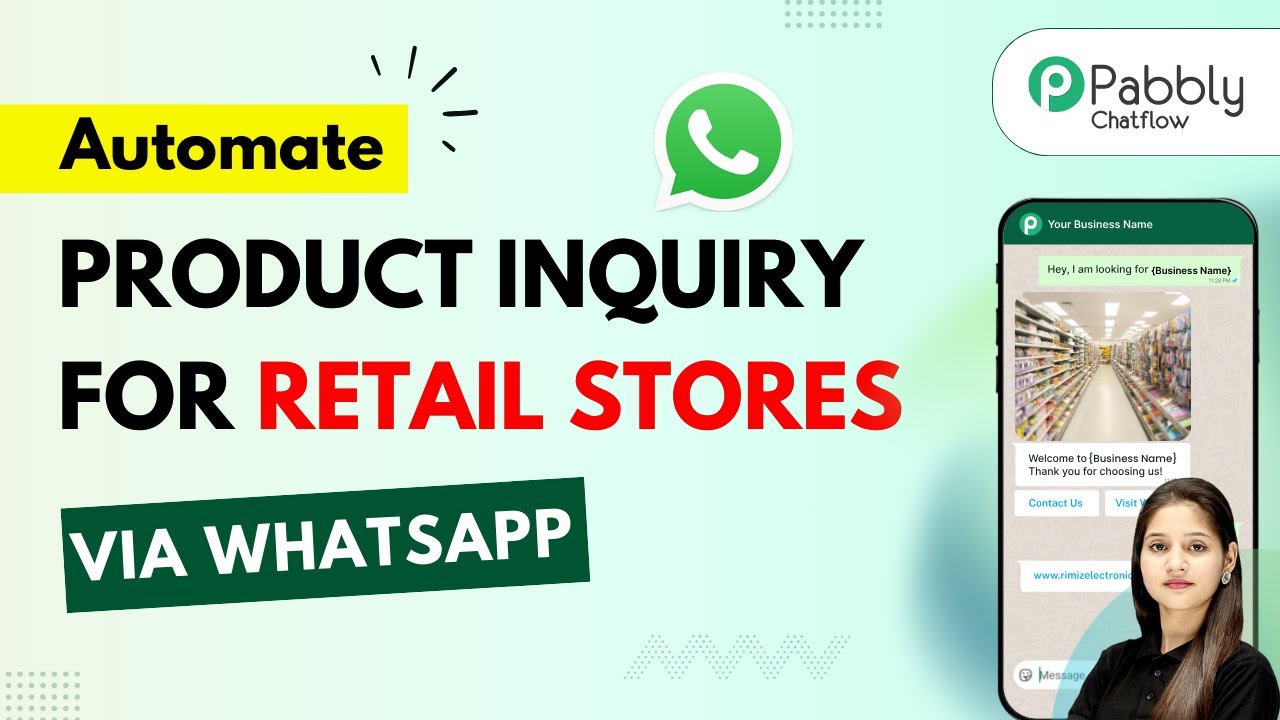
Automate Product Inquiry for Retail Stores via WhatsApp Using Pabbly Chatflow

Learn how to automate product inquiries for retail stores on WhatsApp using Pabbly Chatflow. Follow this detailed tutorial for step-by-step instructions. Master conversational marketing with practical techniques for creating chatbots that engage visitors at exactly the right moment in their journey.

Watch Step By Step Video Tutorial Below


1. Accessing Pabbly Chatflow for WhatsApp Automation

To automate product inquiries for retail stores via WhatsApp, start by accessing Pabbly Chatflow. Visit the official page by typing ‘Pabbly.com/chatflow’ in your browser. This platform is designed to help you create WhatsApp chatbots without any coding skills.

Once on the Pabbly Chatflow homepage, you can either sign up for a new account or log in if you are an existing user. New users can take advantage of 100 free credits to explore the features. Once logged in, you will be directed to the dashboard where you can manage your WhatsApp numbers and chat flows.


2. Creating Your WhatsApp Chatbot with Pabbly Chatflow

After logging into Pabbly Chatflow, the next step is to create your WhatsApp chatbot. Click on the ‘+ Add Flow’ button to start. You will need to name your flow; for example, you could name it ‘Automate Product Inquiry for Retail Stores via WhatsApp’.

  • Click on the ‘+ Add Flow’ button.
  • Enter the flow name.
  • Select your trigger event, such as ‘Keyword’.

Once your flow is created, you can start adding messages and actions. The first message can be a welcome message, such as ‘Welcome to Spark Retail Store! How can I assist you with product inquiries today?’ Connect this message to your flow by dragging a line from the starting point to this message.


3. Setting Up Inquiry Options in Pabbly Chatflow

After the welcome message, you need to provide options for users to choose from. For instance, you can add buttons for ‘Browse Products’ and ‘Pricing Details’. This will allow users to navigate your offerings easily. using Pabbly Connect

  • Add buttons for ‘Browse Products’ and ‘Pricing Details’.
  • Connect these buttons to their respective responses.

When a user selects ‘Browse Products’, your bot should respond with a list of product categories, such as electronics and clothing. This interaction is crucial for guiding users through their inquiries effectively.


4. Collecting User Information with Pabbly Chatflow

Once the user selects a product category, the next step is to collect their information. The bot should prompt the user to share their full name and contact number. This information is essential for processing orders.

To collect this information, use the ‘Ask a Question’ action in Pabbly Chatflow. For example, you can ask, ‘Please share your name so I can place the order for you.’ After collecting the name, follow up with another question for the contact number.

Ask for the user’s full name. Follow up with a request for their contact number.

This step ensures that you have all the necessary details to confirm orders and provide personalized service.


5. Finalizing Orders and Confirmation in Pabbly Chatflow

After collecting user information, the final step is to confirm the order. Use a message like ‘Thank you for sharing your details. Here’s a summary of your order.’ Include buttons for users to confirm or change their order.

When the user clicks ‘Yes, confirm order’, your bot can respond with a confirmation message. If they choose ‘No, change product’, redirect them back to the product categories. This flow ensures a seamless user experience.

Provide a summary of the user’s order. Include buttons for confirming or changing the order.

By implementing this workflow in Pabbly Chatflow, you can automate product inquiries effectively, providing instant responses to your customers.


Conclusion

In this tutorial, we explored how to automate product inquiries for retail stores using Pabbly Chatflow. By setting up a WhatsApp chatbot, you can streamline customer interactions, collect essential information, and enhance the shopping experience. Start using Pabbly Chatflow today to create your automated solutions!

Ensure you check out Pabbly Connect to create business automation workflows and reduce manual tasks. Pabbly Connect currently offer integration with 2,000+ applications.