Create WhatsApp Chatbot for Winter Sale in Minutes

Learn how to create a WhatsApp chatbot for your winter sale using Pabbly Chatflow. Step-by-step guide to automate customer interactions and promote your business effectively.

Watch Step By Step Video Tutorial Below


1. Accessing Pabbly Chatflow for Your Winter Sale

To create a WhatsApp chatbot for your winter sale, you first need to access Pabbly Chatflow. Open a new tab and navigate to www.Pabbly.com/chatflow. Here, you can either sign in if you already have an account or sign up for free to start using Pabbly Chatflow.

Once you are signed in, you will see the Pabbly Chatflow dashboard. This platform allows you to manage WhatsApp conversations efficiently. For new users, you can explore features with 100 free credits every month. After accessing the dashboard, you are ready to start creating your WhatsApp chatbot.


2. Creating Your WhatsApp Chatbot Template in Pabbly Chatflow

To create a promotional message for your winter sale, navigate to the Templates section in Pabbly Chatflow. Click on the ‘Add Template’ button to start creating your first template. Choose the marketing category for your winter sale message.

  • Select a template name in lowercase letters with underscores.
  • Choose the template language (e.g., English).
  • Set the template type, typically as text.

After filling in these details, add a header like ‘Welcome to Our Winter Sale’. Include a body message that conveys your promotional offer and a footer thanking customers. You can also add quick reply buttons for customer interactions.


3. Broadcasting Your Winter Sale Message via Pabbly Chatflow

Once your template is created, the next step is to broadcast this message to your contacts. Go to the Broadcast section of Pabbly Chatflow and click on ‘Add Broadcast’. Choose the type as ‘Broadcast Campaign’. This allows you to send messages to multiple contacts at once.

  • Enter a name for your broadcast.
  • Select the contact list you want to send the message to.
  • Choose the pre-approved template you created earlier.

You can either send the broadcast immediately or schedule it for a later date and time. This feature ensures your winter sale message reaches your audience at the perfect moment.


4. Building Your WhatsApp Chatbot with Pabbly Chatflow

To enhance customer interaction, you need to create a chatbot within Pabbly Chatflow. Navigate to the Flow section and click on ‘Add Flow’. Name your flow appropriately, such as ‘Winter Sale Message’. The trigger for this flow will be when a template button is selected.

For each button added in your template, you will set up corresponding responses. For instance, if a customer selects ‘Shop Winter Collection’, you will create a message that showcases your winter products. This integration allows seamless interaction through WhatsApp, enhancing customer engagement.


5. Testing Your WhatsApp Chatbot on Pabbly Chatflow

After setting up your chatbot, it’s crucial to test its functionality. Open your WhatsApp and send a message to your bot. Check if the responses are accurate and timely based on the buttons selected. This testing phase ensures that your Pabbly Chatflow setup is working perfectly.

Once tested successfully, you can confidently promote your winter sale using the WhatsApp chatbot. Customers will receive instant replies, enhancing their shopping experience and boosting your sales.


Conclusion

Creating a WhatsApp chatbot for your winter sale using Pabbly Chatflow is an effective way to automate customer interactions. By following the outlined steps, you can efficiently promote your business and engage with customers seamlessly.

Ensure you check out Pabbly Connect to create business automation workflows and reduce manual tasks. Pabbly Connect currently offer integration with 2,000+ applications.

Automate Typeform Leads to Airtable and Send Personalized Offers

Learn how to automate Typeform leads to Airtable and send personalized offers using Pabbly Connect in this step-by-step tutorial. Explore systematic approaches to creating efficient automation solutions that convert technical concepts into practical, implementable instructions.

Watch Step By Step Video Tutorial Below


1. Accessing Pabbly Connect for Automation

To start automating Typeform leads to Airtable, first, access Pabbly Connect by navigating to Pabbly.com/connect. This platform serves as the central hub for integrating various applications seamlessly.

Once on the Pabbly Connect page, you have options to sign in or sign up for a free account. New users can sign up to receive 100 free tasks monthly, while existing users can log in. After logging in, you will be directed to the Pabbly Connect dashboard, where you can manage your automation workflows.


2. Creating a New Workflow in Pabbly Connect

In this section, you will create a new workflow in Pabbly Connect. Begin by clicking on the ‘Create Workflow’ button. You’ll be prompted to choose between the new beta version or the classic version of the workflow builder. For this tutorial, select the new beta version.

  • Click on the ‘Create Workflow’ button.
  • Enter the workflow name as ‘Send Personalized Offers for Typeform Leads’.
  • Select the appropriate folder for your workflow.

After entering the workflow name and selecting the folder, click the ‘Create’ button. Your workflow is now set up and ready for the next step.


3. Setting Up the Trigger: Typeform

The next step is to set up the trigger application, which in this case is Typeform. In Pabbly Connect, search for Typeform in the app selection field and select it. Choose the event as ‘New Entry’ to trigger the workflow whenever a new form submission occurs.

After selecting the app event, click on the ‘Connect’ button. You will have the option to add a new connection or select an existing one. If you’re creating a new connection, follow the prompts to connect your Typeform account. Once connected, select the specific form you created earlier.


4. Action Setup: Sending Emails via Gmail

After setting up the trigger, the next action is to send personalized offers via Gmail. In Pabbly Connect, select Gmail as your action application. Choose ‘Send Email’ as the app event and click on the ‘Connect’ button.

  • Select existing connection or add a new one.
  • Map the recipient’s email address from the Typeform response.
  • Compose the email content, including personalized details.

After completing the email setup, click the ‘Save and Send Test Request’ button to ensure everything is working correctly. Check your Gmail to confirm that the email has been sent successfully.


5. Storing Leads in Airtable

The final step is to store the leads in Airtable. In Pabbly Connect, add Airtable as another action application. Choose ‘Create Record’ as the app event and connect your Airtable account.

Once connected, select the base you created for storing Typeform leads. Map the necessary fields such as name, email, phone number, and company name from the Typeform response to the corresponding Airtable fields. After mapping the fields, click ‘Save and Send Test Request’ to verify that the data is being recorded correctly in Airtable.

After confirming the successful addition of a new record in Airtable, your automation setup is complete. Ensure that the toggle for the workflow is enabled for it to function without interruption.


Conclusion

By following these steps, you can effectively automate the process of capturing Typeform leads and sending personalized offers using Pabbly Connect. This integration not only saves time but also ensures that your leads are managed efficiently across platforms.

Ensure you check out Pabbly Connect to create business automation workflows and reduce manual tasks. Pabbly Connect currently offer integration with 2,000+ applications.

Add Your Facebook Leads to ActiveCampaign

Learn how to automatically add your Facebook leads to ActiveCampaign using Pabbly Connect with this step-by-step guide. Transform complex automation concepts into accessible, actionable steps that eliminate unnecessary manual work while maximizing existing application capabilities.

Watch Step By Step Video Tutorial Below


1. Introduction to Pabbly Connect for Facebook Leads

Pabbly Connect is a powerful automation tool that allows you to integrate various applications seamlessly. In this tutorial, we will explore how to use Pabbly Connect to automatically add Facebook leads to ActiveCampaign. This integration saves time and simplifies the process of managing leads.

By using Pabbly Connect, you can ensure that every lead generated through Facebook lead ads is instantly added to your ActiveCampaign account as a contact. This eliminates the need for manual entry and reduces the chances of errors.


2. Setting Up Pabbly Connect for Integration

To begin, navigate to the Pabbly Connect dashboard by visiting www.Pabbly.com/connect. Here, you can either sign up for a new account or log into your existing account. Once logged in, click on the ‘Create Workflow’ button to start. using Pabbly Connect

When prompted, select the new beta method for a more modern workflow experience. Name your workflow something like ‘Add Your Facebook Leads to ActiveCampaign’ and select a folder for organization. Click on the ‘Create’ button to proceed with your automation setup.


3. Configuring the Trigger Step in Pabbly Connect

The first step in your automation is to set up the trigger. For this, select ‘Facebook Lead Ads’ as your trigger application. Choose the event ‘New Lead’ to capture new leads generated through your Facebook ads.

  • Select the Facebook page associated with your lead ads.
  • Choose the form you created for lead generation.
  • Click on the ‘Connect’ button to establish the connection.

Once connected, you will be asked to grant permission to Pabbly Connect. After confirming, you can proceed to test the connection by generating a test lead using the Meta Lead Ads Testing Tool. This step is crucial to ensure that your trigger is working correctly.


4. Adding ActiveCampaign as the Action Step

With the trigger successfully set up, the next step is to add an action. Select ‘ActiveCampaign’ as your action application and choose the event ‘Create Contact’. This action will add the captured leads into your ActiveCampaign account.

To connect Pabbly Connect with ActiveCampaign, you will need your ActiveCampaign URL and API key. Log into your ActiveCampaign account, navigate to the settings section, and copy the necessary details. Paste the URL in Pabbly Connect, removing the ‘https://’ part, and input the API key.


5. Mapping Lead Data to ActiveCampaign

Now, it’s time to map the lead data from Facebook to ActiveCampaign. In the mapping section, you will select the fields corresponding to the lead data captured in the previous step. For example, map the email, first name, last name, and phone number. using Pabbly Connect

  • Map the email field from the trigger response.
  • Map the first name and last name fields similarly.
  • Finally, map the phone number field.

After mapping all required fields, click on the ‘Save and Send Test Request’ button to verify if the contact is created successfully in ActiveCampaign. If successful, you will see the new contact appear in your ActiveCampaign contacts list.


Conclusion

In this tutorial, we demonstrated how to use Pabbly Connect to automate the process of adding Facebook leads to ActiveCampaign. By following these steps, you can streamline your lead management process and save valuable time. This integration ensures that every lead is captured and organized effectively in your CRM.

Ensure you check out Pabbly Connect to create business automation workflows and reduce manual tasks. Pabbly Connect currently offer integration with 2,000+ applications.

How to Create a WhatsApp AI Agent for Free

Learn how to create a WhatsApp AI agent for free using Pabbly Chatflow. This step-by-step tutorial covers integration with YouTube and WhatsApp AI. Explore how leading businesses automate customer interactions with carefully designed chat sequences that feel natural and helpful.

Watch Step By Step Video Tutorial Below


1. Accessing Pabbly Chatflow for WhatsApp AI Agent Creation

To create a WhatsApp AI agent, you first need to access Pabbly Chatflow. Simply visit Pabbly.com/chatflow on your browser. This platform is crucial for integrating various applications like YouTube and WhatsApp AI.

Upon landing on the Pabbly Chatflow homepage, you’ll see two options: ‘Sign In’ and ‘Sign Up Free.’ If you’re a new user, click on ‘Sign Up Free’ to create your account. Existing users can simply sign in to access their dashboard.


2. Integrating WhatsApp with Pabbly Chatflow

Once you’re signed into Pabbly Chatflow, the next step is to integrate your WhatsApp number. This is essential for your AI agent to communicate effectively. Click on the ‘Add WhatsApp Number’ button on your dashboard.

  • Select the ‘WhatsApp Connect’ option for seamless integration.
  • Follow the prompts to enter your WhatsApp number and complete the setup.

Integrating your WhatsApp number with Pabbly Chatflow allows you to start building your AI agent. Ensure you complete this step to proceed with the next configurations.


3. Creating Your WhatsApp AI Agent in Pabbly Chatflow

To create your AI agent, navigate to the AI Assistant section within Pabbly Chatflow. Click on the ‘Add Assistant’ button. Here, you will need to name your assistant appropriately.

After naming your assistant, you will be directed to the AI Assistant configuration window. Select the instruction type from the dropdown menu. For this tutorial, choose ‘AI Agent’ to set up a customer support AI.

  • Adjust the temperature setting to control the creativity of responses.
  • Select ‘Open AI’ and choose the ‘GPT-4 Mini’ model for optimal performance.

These configurations are vital for ensuring that your WhatsApp AI agent responds accurately to user queries, enhancing customer interaction.


4. Setting Up Knowledge Source for Your AI Agent

For your AI agent to provide relevant responses, you need to set up a knowledge source. In Pabbly Chatflow, upload a file that contains FAQs and other essential information about your business.

To upload your knowledge source, click on the upload option and select your prepared document in PDF or plain text format. This document should include details like your services, pricing, and common customer queries.

Ensure your knowledge base is comprehensive to facilitate accurate responses. Test the AI agent with sample queries to verify it utilizes the knowledge source effectively.

Having a well-structured knowledge source is crucial for the efficiency of your WhatsApp AI agent, allowing it to assist customers effectively.


5. Activating and Assigning Your WhatsApp AI Agent

After configuring your AI agent, the final step is to activate it. In Pabbly Chatflow, toggle the activation button on and click ‘Save AI Assistant’ to ensure your settings are stored.

To assign your assistant to WhatsApp chats, go to the inbox settings. Enable AI auto replies and select the contact list you wish to assign your assistant to. Click ‘Save’ to finalize the assignment.

You can also assign the AI agent to individual chats for personalized responses. Testing the agent with real queries will help refine its responses.

By following these steps, your WhatsApp AI agent is now fully operational, ready to assist your customers seamlessly through Pabbly Chatflow.


Conclusion

Creating a WhatsApp AI agent for free using Pabbly Chatflow is a straightforward process that enhances customer interaction. By following the steps outlined, you can set up an efficient AI assistant that caters to your business needs.

Ensure you check out Pabbly Connect to create business automation workflows and reduce manual tasks. Pabbly Connect currently offer integration with 2,000+ applications.

Generate Payment Links Automatically (3 Steps)

Learn how to generate payment links automatically using Pabbly Connect with Google Sheets, PayPal, and Stripe in just three steps. Follow our detailed tutorial! Implement the precise methodologies leading organizations use to automate repetitive tasks, illustrated with practical examples designed for immediate application.

Watch Step By Step Video Tutorial Below


1. Accessing Pabbly Connect for Payment Links

To generate payment links automatically, you need to access Pabbly Connect. Start by visiting the Pabbly Connect website. Here, you can sign up for a free account or log in if you are an existing user. Once logged in, you will be directed to the dashboard, where you can create a new workflow.

After logging into Pabbly Connect, click on the ‘Create Workflow’ button. Name your workflow as ‘Generate Payment Links Automatically’ and choose the appropriate folder for organization. This setup is crucial as it lays the foundation for your automation process.


2. Setting Up Google Sheets with Pabbly Connect

In this section, we will integrate Google Sheets with Pabbly Connect. This integration allows you to capture customer details and payment information. Begin by selecting Google Sheets as your trigger application. Set the event to ‘New or Updated Spreadsheet Row’ to capture new entries in real-time.

  • Select Google Sheets as the trigger application.
  • Choose the event as ‘New or Updated Spreadsheet Row’.
  • Copy the webhook URL provided by Pabbly Connect.

Next, log into your Google Sheets account and navigate to Extensions > Add-ons > Get add-ons. Search for ‘Pabbly Connect Webhooks’ and install it. After installation, refresh your spreadsheet and go back to Extensions to set up the webhook URL you copied earlier. This step is essential as it establishes the connection between Google Sheets and Pabbly Connect.


Now that Google Sheets is set up, it’s time to create payment links using Razorpay through Pabbly Connect. Add an action step and select Razorpay as the action application. Choose the event ‘Create Payment Link’ to initiate the payment link creation process.

To connect your Razorpay account, enter your API Key and Secret from the Razorpay dashboard. Once connected, you will need to map the data from your Google Sheets, including the amount, currency, description, and customer details. Remember to add two extra zeros to the amount for Razorpay.

  • Map the amount, ensuring to add two extra zeros.
  • Provide the currency and description for the payment link.
  • Set the expiry time for the payment link (e.g., 24 hours).

After filling in these details, click on ‘Save and Send Test Request’. If everything is set up correctly, Razorpay will generate a payment link, which you can then use for customer transactions. This step showcases how Pabbly Connect automates the payment process seamlessly.


4. Updating Google Sheets with Payment Links

Once the payment link is generated, you can update your Google Sheets with the new payment link using Pabbly Connect. Add another action step, select Google Sheets again, and set the event to ‘Update Row’. This allows you to keep track of the payment links generated.

Connect to your Google Sheets account and specify the spreadsheet and sheet where you want to update the payment link. Map the row index from the previous trigger step to ensure the correct row is updated with the new payment link. Finally, click on ‘Save and Send Test Request’ to confirm the update.

Your Google Sheets will now reflect the newly generated payment link, ensuring you have a systematic record of all transactions. This final step emphasizes the power of Pabbly Connect in streamlining your payment processes and maintaining accurate records.


5. Conclusion: Automating Payment Link Generation with Pabbly Connect

In this tutorial, we explored how to generate payment links automatically using Pabbly Connect in just three steps. By integrating Google Sheets and Razorpay, you can efficiently manage customer payments without manual effort. This automation not only saves time but also enhances accuracy in your payment processing.

Ensure you check out Pabbly Connect to create business automation workflows and reduce manual tasks. Pabbly Connect currently offer integration with 2,000+ applications.

With Pabbly Connect, you can create a seamless workflow that handles payment link generation and updates your records instantly. Start using this powerful tool today to simplify your payment processes and improve your business operations.

Gemini AI Social Media Generator — Create Facebook & LinkedIn Posts Automaticallya

Learn how to use Pabbly Connect to automate Facebook and LinkedIn posts with Google Gemini. Follow this detailed tutorial for seamless integration. Master proven automation processes with practical implementation examples and strategic recommendations you can apply immediately in your workflow.

Watch Step By Step Video Tutorial Below


1. Accessing Pabbly Connect for Integration

To begin automating social media posts, first, access Pabbly Connect by visiting Pabbly.com. This platform serves as the central hub for integrating Google Sheets, Google Gemini, Facebook, and LinkedIn.

After signing in to your Pabbly account, navigate to the Pabbly Connect dashboard. Here, you can create a new workflow that will automate the posting process. Click on ‘Create Workflow’ and name it appropriately, such as ‘Gemini AI Social Media Generator’.


2. Setting Up Google Sheets as the Trigger Application

In this section, we will set up Google Sheets as the trigger application in Pabbly Connect. This means that whenever a new title is added to Google Sheets, it will trigger the automation workflow.

Select Google Sheets from the trigger options and set the trigger event as ‘New or Updated Spreadsheet Row’. This action will initiate the workflow whenever a new entry is made in the specified Google Sheet.

  • Choose your Google Sheet that contains the titles.
  • Specify the column that will act as the trigger column (e.g., Column D).
  • Copy the provided webhook URL into your Google Sheets add-on settings.

After configuring these settings, your Google Sheets will now send data to Pabbly Connect whenever a new title is entered. This is a crucial step for ensuring that your automation workflow functions correctly.


3. Generating Content with Google Gemini

Once the trigger is set up, the next step involves generating content using Google Gemini through Pabbly Connect. This step will create the social media content based on the title provided in Google Sheets.

In your workflow, add a new action step and select Google Gemini. Choose the action event as ‘Generate Content’ and connect your Google Gemini account using the API key provided in the Google AI Studio.

  • Enter the prompt for content generation, specifying the tone and audience.
  • Map the title and other relevant fields from the Google Sheets response.
  • Test the action to ensure that content is generated successfully.

After completing these steps, you will receive generated content that can be posted on your social media accounts. This automation saves time and effort in creating posts.


4. Posting Content to Facebook and LinkedIn

Now that you have generated content, the next step is to post it to your Facebook and LinkedIn accounts using Pabbly Connect. Start by adding a new action step for Facebook Pages.

Select ‘Create Page Post’ as the action event and connect your Facebook account. Ensure you select the correct Facebook page where the content will be posted. You will map the content generated from Google Gemini into the post message field.

Choose the Facebook page to post on. Map the generated content into the message field. Test the action to confirm the post is created successfully.

Repeat this process for LinkedIn by adding another action step, selecting LinkedIn as the application, and mapping the same content to be posted. This ensures that your social media presence is consistently updated across platforms.


5. Conclusion: Automate Your Social Media with Pabbly Connect

In this tutorial, we demonstrated how to use Pabbly Connect to automate the creation and posting of social media content on Facebook and LinkedIn using Google Gemini. By setting up Google Sheets as the trigger, we ensured that new titles automatically generated relevant content.

Ensure you check out Pabbly Connect to create business automation workflows and reduce manual tasks. Pabbly Connect currently offer integration with 2,000+ applications.

Check out Pabbly Connect – Automate your business workflows effortlessly! Sign Up Free – Start your journey with ease! 10,000+ Video Tutorials – Learn step by step! Join Pabbly Facebook Group – Connect with 21,000+ like minded people!
Using Pabbly Connect, you can streamline your social media management, saving time and enhancing productivity. This integration allows you to focus on your core activities while ensuring your social media platforms remain active and engaging.

By following the steps outlined in this tutorial, you can easily replicate this process for your own social media automation needs.


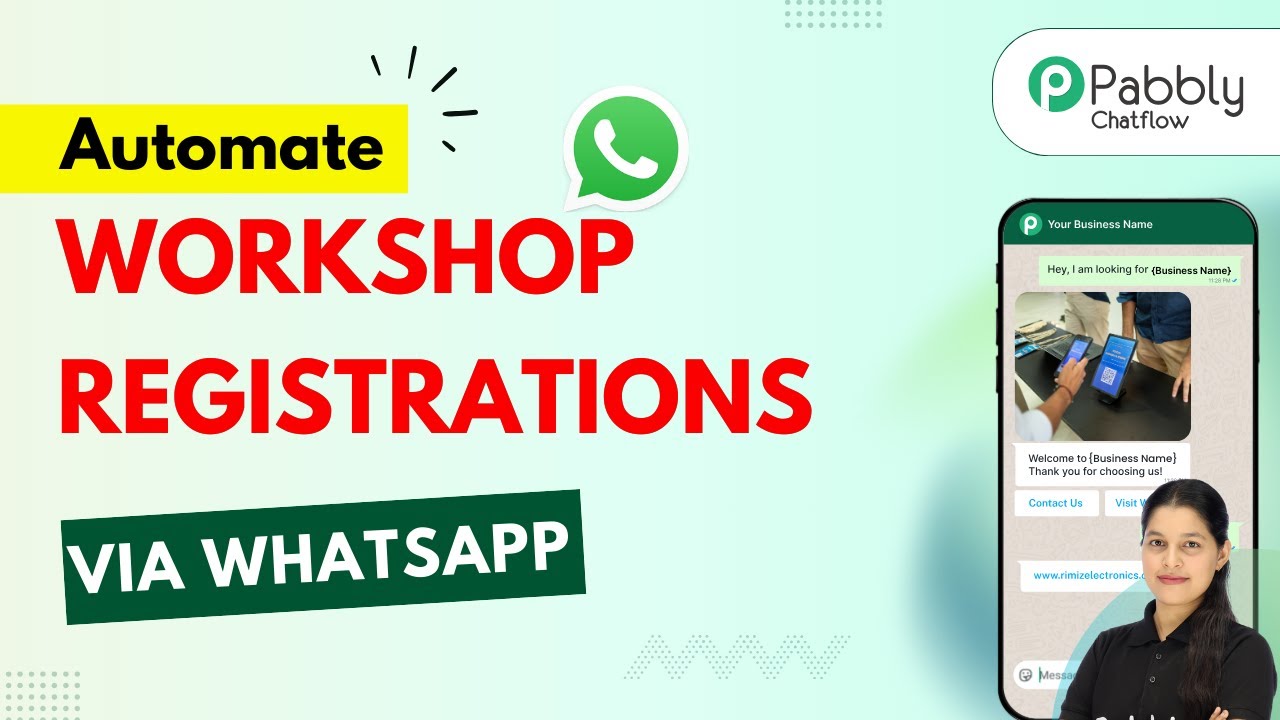
Create a WhatsApp Chatbot for Your Workshop Registrations

Learn how to create a WhatsApp chatbot for workshop registrations using Pabbly Chatflow. Step-by-step tutorial for seamless integration and automation. Build conversational workflows that guide visitors toward conversion with dynamic, branching dialogs that respond intelligently to user input.

Watch Step By Step Video Tutorial Below


1. Access Pabbly Chatflow to Create Your WhatsApp Chatbot

To create a WhatsApp chatbot for workshop registrations, first, access Pabbly Chatflow. Simply type ‘Pabbly.com/chatflow’ in your browser. This will take you to the landing page where you can either sign up for a free account or log in if you are an existing user.

Once logged in, you will see all the Pabbly applications. Click on the ‘Access Now’ button under Pabbly Chatflow to proceed to the dashboard. This dashboard is where you will manage your WhatsApp integration and chatbot flows.


2. Creating the WhatsApp Chatbot Flow in Pabbly Chatflow

In Pabbly Chatflow, you will create a flow for your WhatsApp chatbot. Start by clicking on the ‘Flows’ option in the sidebar. Here, select the ‘Add Flow’ button to create a new flow for your workshop registrations.

When prompted, give your flow a name, such as ‘WhatsApp Chatbot for Workshop Registrations’. For the trigger event, choose ‘Keyword Regex Match’ to set the keyword that will initiate the chatbot. Enter the keyword ‘workshop registration’ to trigger the flow whenever this phrase is received.

  • Name your flow appropriately.
  • Set the trigger to ‘Keyword Regex Match’.
  • Enter your specific keyword to start the chatbot.

After setting the keyword, you can now send a welcome message to users who trigger the flow, enhancing user engagement right from the start.


3. Designing User Interaction with Buttons in Pabbly Chatflow

Next, design the user interaction by adding buttons within Pabbly Chatflow. After the welcome message, drag and drop a ‘Text’ node to create your message. Here, you can introduce options such as ‘New Workshops’ and ‘Contact Team’ for users to choose from.

To add buttons, click on the ‘Add Button’ option within the text node. For the ‘New Workshops’ button, you will connect it to a list of upcoming workshops. This list will provide users with workshop details and registration options.

  • Create a welcome message to greet users.
  • Add buttons for user interaction.
  • Connect buttons to relevant actions like listing workshops.

This setup allows users to navigate easily through their options, enhancing their experience while using your WhatsApp chatbot.


4. Finalizing Registration Process in Pabbly Chatflow

After users select a workshop, you need to finalize the registration process in Pabbly Chatflow. Create a text node that provides the details for the selected workshop, including the date and fees. Here, add a ‘Register Now’ button that users can click to proceed with their registration.

Once the user clicks ‘Register Now’, prompt them for their full name and email address using the question node. Ensure you select the appropriate contact custom fields for full name and email to personalize their experience.

Provide workshop details in a text node. Use question nodes to gather user information. Personalize messages using contact custom fields.

This method not only streamlines the registration process but also ensures that users receive a tailored experience, making them feel valued.


5. Testing and Launching Your WhatsApp Chatbot with Pabbly Chatflow

After creating your flow, it’s crucial to test your WhatsApp chatbot within Pabbly Chatflow. Navigate to the ‘Inbox’ section to view messages from users. This will help you verify that the automated replies are functioning as intended, and that users receive the correct information.

Once testing is complete, save your flow to ensure all changes are kept. You can also share your flow with others by selecting the share option, allowing others to benefit from your automated solutions.

Test your chatbot in the Inbox section. Save your flow after testing. Share your flow with others for collaboration.

With everything set up and tested, your WhatsApp chatbot is ready to assist with workshop registrations, providing a seamless experience for your users.


Conclusion

Using Pabbly Chatflow, you can easily create a WhatsApp chatbot for workshop registrations. This integration allows for efficient communication and personalized user experiences, enabling you to manage your workshops effectively.

Ensure you check out Pabbly Connect to create business automation workflows and reduce manual tasks. Pabbly Connect currently offer integration with 2,000+ applications.

How to Create Kommo Contacts from WooCommerce Orders

Learn how to create Kommo contacts automatically from WooCommerce orders using Pabbly Connect in this detailed tutorial. Step-by-step instructions included. Discover how to seamlessly connect your essential tools through accessible instructions that make powerful automation available to professionals at every skill level.

Watch Step By Step Video Tutorial Below


1. Accessing Pabbly Connect for Integration

To create contacts in Kommo from WooCommerce orders, you will first need to access Pabbly Connect. This platform serves as the integration hub for connecting your WooCommerce store with Kommo.

Visit the Pabbly Connect website by browsing to www.Pabbly.com/connect. Here, you can either sign in if you are an existing user or sign up for free to start your journey. Once you log in, you will arrive at the Pabbly Connect dashboard where you can manage your integrations.


2. Creating a New Workflow in Pabbly Connect

After accessing Pabbly Connect, the next step is to create a new workflow. Click on the ‘Create Workflow’ button located at the top right corner of the dashboard. This action initiates the process of setting up the automation.

  • Choose a name for your workflow, such as ‘Create Kommo Contacts from WooCommerce Orders’.
  • Select the appropriate folder for your workflow.
  • Click on the ‘Create’ button to finalize your workflow setup.

Once the workflow is created, you will see two main sections: Trigger and Action. The Trigger captures the event from WooCommerce, while the Action defines what happens next in Kommo.


3. Setting Up the Trigger for WooCommerce Orders

In this step, you will configure the Trigger to capture new orders from your WooCommerce store using Pabbly Connect. Select ‘WooCommerce’ as the trigger application and choose the event as ‘New Order Created’.

After selecting the event, click on the ‘Connect’ button. This step generates a webhook URL that you will use to link WooCommerce with Pabbly Connect. Copy this URL and proceed to your WooCommerce account.


4. Configuring WooCommerce for Webhooks

Now, you need to set up the webhook in your WooCommerce account. Navigate to the WooCommerce settings, select the ‘Advanced’ tab, and then go to the ‘Webhooks’ section. Click on the ‘Add Webhook’ button to create a new webhook. using Pabbly Connect

  • Name your webhook, for example, ‘New Order Placed’.
  • Set the status to ‘Active’.
  • Choose the topic as ‘Order Creation’.
  • Paste the webhook URL that you copied from Pabbly Connect.
  • Select the latest API version and click on ‘Save’.

After saving, your webhook will be created, allowing Pabbly Connect to capture new order details automatically.


5. Adding the Contact to Kommo

With the webhook set up, it’s time to add the customer as a contact in Kommo using Pabbly Connect. Select ‘Kommo’ as the action application and choose the ‘Create Contact’ event.

Connect your Kommo account by entering your subdomain and allowing permissions. Then, map the data from the WooCommerce order to the corresponding fields in Kommo. For example, map the first name, last name, email address, and phone number to create a new contact.

Finally, click on the ‘Save and Send Test Request’ button to create the contact. Once successful, you can check your Kommo account to see the newly created contact reflecting the order details from WooCommerce.


Conclusion

In this tutorial, we demonstrated how to use Pabbly Connect to automatically create contacts in Kommo from WooCommerce orders. This integration streamlines customer data management and enhances your business workflow.

Ensure you check out Pabbly Connect to create business automation workflows and reduce manual tasks. Pabbly Connect currently offer integration with 2,000+ applications.

By following the steps outlined, you can effortlessly connect your WooCommerce store with Kommo, ensuring that every new order results in a new contact being created in your CRM.

How to Create a WhatsApp Chatbot for Your Dance Classes💃

Learn how to create a WhatsApp chatbot for your dance classes using Pabbly Chatflow. Step-by-step tutorial for automating student interactions. Learn step-by-step how to create, test, and optimize chatbots that enhance customer experience while reducing support workload.

Watch Step By Step Video Tutorial Below


1. Accessing Pabbly Chatflow for Your WhatsApp Chatbot

To create a WhatsApp chatbot for your dance classes, the first step is to access Pabbly Chatflow. You can do this by typing the URL Pabbly.com/chatflow into your browser. Once you arrive at the landing page, you will see options to sign in or sign up.

If you are a new user, click on the ‘Sign Up Free’ button to create an account. Existing users can simply sign in. After signing up, you will receive 100 free credits each month to practice using Pabbly Chatflow.


2. Creating Your Flow in Pabbly Chatflow

Once logged into Pabbly Chatflow, navigate to the dashboard where you can create your flow. Click on the ‘Add Flow’ button. You will be prompted to name your flow; for this tutorial, name it ‘WhatsApp Chatbot for Your Dance Classes’. This flow will automate conversations with your students.

  • Enter the flow name as ‘WhatsApp Chatbot for Your Dance Classes’.
  • Select the trigger event as ‘Keyword Regex Match’ to initiate the chatbot.
  • Add the keyword ‘dance’ to trigger the flow.

This setup ensures that whenever a user sends a message containing the word ‘dance’, the WhatsApp chatbot will be activated, allowing for seamless interaction with your students.


3. Designing the Chatbot Responses

After setting up the trigger, the next step is to design the chatbot responses within Pabbly Chatflow. You will need to send a welcome message to the users. Drag and drop a text button node and enter your welcome message, such as ‘Hey dancer, welcome to GroupUp Dance Academy! Tell me what you would like to explore today.’

Next, you need to add buttons for user interaction. Create two buttons: ‘Dance Styles’ and ‘Fees and Packages’. This allows users to easily navigate the options provided by the chatbot. When users click on these buttons, they will receive further information tailored to their interests.

  • Set up a button for ‘Dance Styles’ that provides a list of dance styles.
  • Create another button for ‘Fees and Packages’ to inform users about class costs.

By designing these responses, Pabbly Chatflow enables you to provide a personalized experience for your students, enhancing their engagement with your dance classes.


4. Testing Your WhatsApp Chatbot

With the chatbot flow created, it’s time to test how it works using Pabbly Chatflow. Navigate to the ‘Inbox’ section where you can view messages received from students. Send a test message to your WhatsApp number, such as ‘I want to join dance classes’. The chatbot should respond with the welcome message and buttons you set up.

When you click on the ‘Dance Styles’ button, you should receive a list of available dance styles. Additionally, selecting the ‘Fees and Packages’ button should provide you with pricing details. This testing phase is crucial to ensure that everything functions as intended before going live.


5. Finalizing and Sharing Your Chatbot

After successful testing, you can finalize your chatbot flow in Pabbly Chatflow. Make sure to save your progress by clicking the ‘Save’ button. You can now share your flow with others by selecting the three dots next to your flow name and choosing the ‘Share Flow’ option.

This allows other users to access your chatbot setup, helping them automate their own dance class communications. Sharing your flow is a great way to leverage the power of Pabbly Chatflow for broader use within the dance community.

Conclusion

This guide summarizes the key points and helps you understand the essential features and benefits of using this tool.

Ensure you check out Pabbly Connect to create business automation workflows and reduce manual tasks. Pabbly Connect currently offer integration with 2,000+ applications.


In conclusion, creating a WhatsApp chatbot for your dance classes using Pabbly Chatflow is a straightforward process that automates student interactions and enhances communication. By following the steps outlined in this tutorial, you can easily set up a chatbot that meets your needs and improves the overall experience for your students.

BigCommerce to Zoho CRM — Automate Your Entire Sales Pipeline!

Learn how to automate your sales pipeline by integrating BigCommerce with Zoho CRM using Pabbly Connect. Follow our detailed step-by-step tutorial for seamless automation. Revolutionize your productivity approach with just a few strategic clicks. Uncover professional methods for connecting applications and creating workflows that reclaim hours of your week.

Watch Step By Step Video Tutorial Below


1. Accessing Pabbly Connect for Integration

To begin automating your sales pipeline, first access Pabbly Connect by visiting pabby.com in your browser. This platform allows for seamless integration between BigCommerce and Zoho CRM, enabling you to automate workflows without any coding skills.

Once on the Pabbly website, click on the ‘Sign In’ button if you are an existing user, or select ‘Sign Up for Free’ to create a new account and receive 100 tasks free each month. After logging in, navigate to the Pabbly Connect dashboard to start creating your workflow.


2. Creating Your Workflow in Pabbly Connect

In the Pabbly Connect dashboard, click on ‘Create Workflow’ to begin setting up your automation. Choose the new beta workflow builder for a modern experience. Name your workflow ‘BigCommerce to Zoho CRM Automate Your Entire Sales Pipeline’ and select your desired folder for organization. using Pabbly Connect

  • Click on the ‘+’ icon to create a new folder if needed.
  • Select the ‘New Beta’ option for a faster workflow setup.
  • Complete the naming and folder selection process before clicking ‘Create.’

Your workflow is now created successfully. The next step is to set up your trigger application, which will initiate the workflow whenever a new order is received in BigCommerce.


3. Setting Up BigCommerce as the Trigger Application

In this step, select BigCommerce as your trigger application in Pabbly Connect. Choose the trigger event labeled ‘New Order Created’ to activate the workflow whenever a new order is placed in your BigCommerce store.

If you do not have an existing connection, click on ‘Add New Connection’ and enter your BigCommerce credentials including the store hash key, client ID, and access token. These credentials can be obtained by logging into your BigCommerce account and creating an API account in the advanced settings.

  • Navigate to ‘Advanced Settings’ in your BigCommerce account.
  • Create a new API account and select the appropriate scopes.
  • Copy the client ID, access token, and store hash key to connect with Pabbly Connect.

After saving the connection, test it by clicking on ‘Save and Send Test Request’ to ensure that the integration is functioning correctly.


4. Retrieving Order Details from BigCommerce

Once the trigger is set, the next step is to retrieve the order details from BigCommerce using Pabbly Connect. Add a new action step and select BigCommerce again, this time choosing ‘Get Order by ID’ as your action event.

For the order ID, utilize the mapping feature to dynamically pull the order ID from the previous response instead of entering it manually. This ensures that each new order is processed automatically with the correct details.

After mapping the order ID, click on ‘Save and Send Test Request’ to fetch the order details. You should now see the customer information and order specifics displayed in Pabbly Connect, ready for the next step in your automation.


5. Creating a Contact in Zoho CRM

The final step involves creating a contact in Zoho CRM based on the order details retrieved from BigCommerce. In Pabbly Connect, add another action step and search for Zoho CRM, then select ‘Insert Update Record with Sub Form Data’ as your action event.

To connect to Zoho CRM, enter your domain URL and grant the necessary permissions for Pabbly Connect to access your CRM data. You will then map the retrieved customer details such as first name, last name, and email address into the corresponding fields in Zoho CRM.

Map the first name, last name, and email address from the retrieved order details. Ensure that all required fields are filled in correctly to create the contact. Click on ‘Save and Send Test Request’ to finalize the contact creation.

After successfully creating the contact, refresh your Zoho CRM page to verify that the new contact has been added. This completes your automation between BigCommerce and Zoho CRM using Pabbly Connect.


Conclusion

By following this tutorial, you can effectively automate your sales pipeline by integrating BigCommerce with Zoho CRM using Pabbly Connect. This integration streamlines your workflow, saving you time and ensuring that customer data is accurately captured in your CRM.

Ensure you check out Pabbly Connect to create business automation workflows and reduce manual tasks. Pabbly Connect currently offer integration with 2,000+ applications.