How to Use WhatsApp as a Marketing Tool in 2026

Learn how to leverage Pabbly Chatflow to utilize WhatsApp as a powerful marketing tool in 2026. Follow our detailed tutorial shows you how to build powerful chat automation that engages visitors and converts prospects—without any coding required.

Watch Step By Step Video Tutorial Below


1. Accessing Pabbly Chatflow for WhatsApp Marketing

To utilize WhatsApp as a marketing tool in 2026, start by accessing Pabbly Chatflow. Open a new tab and navigate to pabby.com/chatflow to reach the dashboard.

If you don’t have an account, you can sign up for free and receive 100 free credits each month. This allows you to explore the features of Pabbly Chatflow before making a purchase. Once logged in, you will see the dashboard ready for your marketing needs.


2. Creating Templates in Pabbly Chatflow

In Pabbly Chatflow, a significant feature is the ability to create templates for promotional messages. To create a template, navigate to the template list section and click on the ‘Add Template’ button.

  • Select the category as Marketing.
  • Name your template (e.g., Test Template).
  • Choose the language and template type, such as Image.
  • Add the main body and footer if needed.

After filling in the necessary details, click on the submit button to create your template. Ensure that the template is Meta approved for successful usage.


3. Broadcasting Messages with Pabbly Chatflow

Once your template is ready, the next step is to broadcast messages. In Pabbly Chatflow, navigate to the broadcast section and click on the ‘Add Broadcast’ button.

Here are the steps to set up your broadcast:

  • Choose the broadcast type (e.g., Broadcast Campaign).
  • Name your broadcast (e.g., Marketing Message).
  • Select your contact list from the options available.
  • Choose the message type as pre-approved template.

After setting these parameters, you can upload any images associated with your message and click the ‘Done’ button to finalize your broadcast setup.


4. Testing and Scheduling Broadcasts in Pabbly Chatflow

Before sending your broadcast to all customers, it is crucial to test it. In Pabbly Chatflow, you can send a test message to your number to ensure everything works correctly.

Here’s how to test and schedule your broadcast:

Enter your name and phone number for the test. Click on ‘Send Test Message’ to receive the broadcast. If satisfied, choose to schedule the broadcast for a later time.

Set the date and time for your broadcast, and click ‘Add Broadcast’ to complete the scheduling process. Your message is now ready to be sent out to all customers at the specified time.


5. Conclusion: Leveraging Pabbly Chatflow for WhatsApp Marketing

In conclusion, using Pabbly Chatflow is an effective way to transform WhatsApp into a powerful marketing tool. By creating templates, broadcasting messages, and scheduling them, businesses can reach their customers efficiently.

Ensure you check out Pabbly Connect to create business automation workflows and reduce manual tasks. Pabbly Connect currently offer integration with 2,000+ applications.

Check out Pabbly Connect – Automate your business workflows effortlessly! Sign Up Free – Start your journey with ease! 10,000+ Video Tutorials – Learn step by step! Join Pabbly Facebook Group – Connect with 21,000+ like minded people!

By following the steps outlined in this tutorial, you can harness the full potential of Pabbly Chatflow for your marketing efforts on WhatsApp. Start today and see your customer engagement soar!
Turn WordPress Posts Into Multi-Platform Content Automatically!

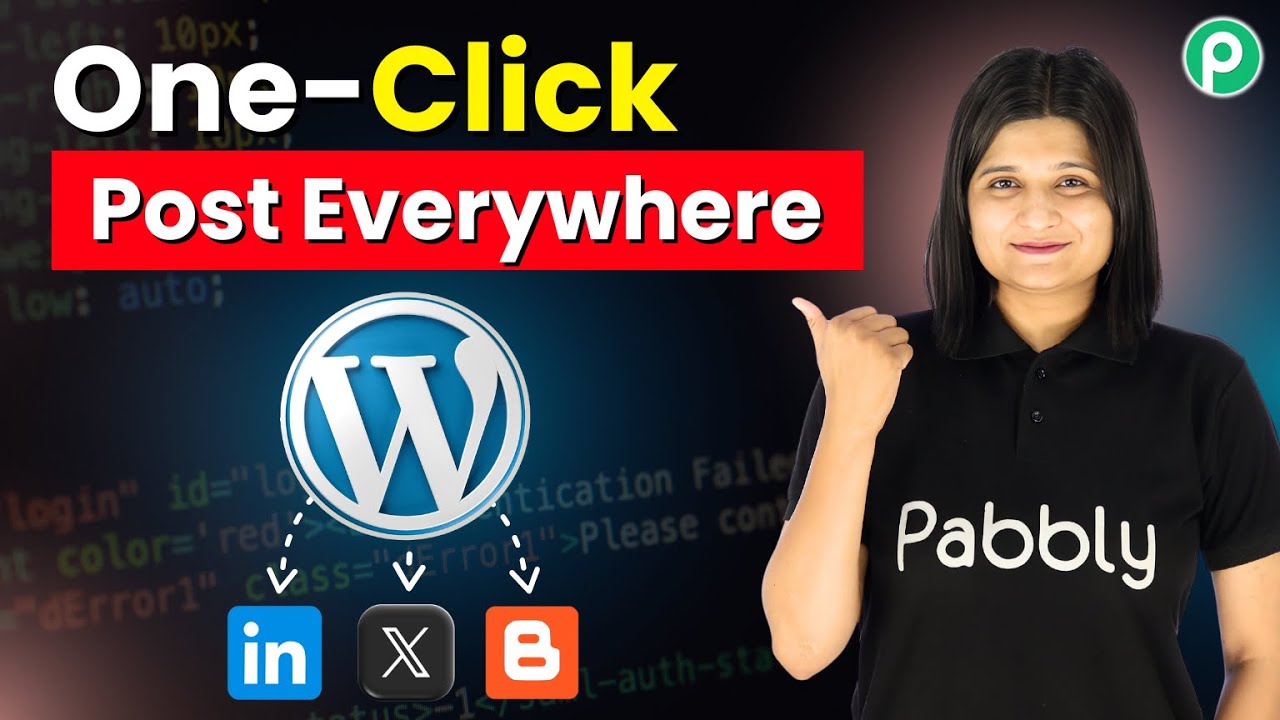
Learn how to use Pabbly Connect to automatically share your WordPress posts on LinkedIn, Twitter, and Google Blogger. Step-by-step tutorial included! Develop expertise in application integration and learn how to design streamlined automation workflows using proven, simplified approaches.

Watch Step By Step Video Tutorial Below


1. Accessing Pabbly Connect for Automation

To start automating your WordPress posts, first, access Pabbly Connect by visiting the Pabbly website. If you are a new user, you can sign up for free and get 100 tasks monthly to test the platform.

Once signed in, navigate to the apps page where you will see all Pabbly applications. Click on Pabbly Connect to access the dashboard, where you can create workflows to automate your tasks.


2. Creating a Workflow in Pabbly Connect

After accessing Pabbly Connect, start by creating a new workflow. Click on the ‘Create Workflow’ button and choose the new beta workflow builder for a modern experience. Name your workflow something like ‘Turn WordPress Posts Into Multi-Platform Content Automatically’ and select a folder for organization.

  • Click on the ‘Add Trigger’ button to set up your trigger application.
  • Select WordPress as your trigger application.
  • Choose ‘New Post Published’ as the trigger event.

This setup ensures that every time you publish a new post on WordPress, the workflow will be triggered, allowing for seamless automation.


3. Connecting WordPress with Pabbly Connect

To connect WordPress with Pabbly Connect, you will need to set up a webhook URL. This URL acts as a bridge between your WordPress site and Pabbly Connect. Install the WP Webhooks plugin in WordPress and activate it.

Navigate to the plugin settings, click on ‘Send Data’, and add the webhook URL provided by Pabbly Connect. Make sure to select the post created option and save the settings to establish a connection.


4. Integrating Social Media Platforms

Now that you have connected WordPress with Pabbly Connect, it’s time to integrate social media platforms. Start by adding action steps for LinkedIn, Twitter, and Google Blogger.

  • For LinkedIn, select ‘Create Simple Text’ as the action event and map the content from WordPress.
  • For Twitter, choose ‘Create Tweet’ and input your message along with the link to the blog post.
  • For Google Blogger, select ‘Create Post’, map the title and content from WordPress, and set the status to draft or published.

This integration allows for automatic sharing of your blog posts across multiple platforms, enhancing your online presence.


5. Testing the Workflow

After setting up the integrations, it’s crucial to test your workflow. Publish a new post on WordPress and check if it automatically appears on LinkedIn, Twitter, and Google Blogger.

Once you publish your post, Pabbly Connect will capture the webhook response, confirming that the automation is working correctly. You should see your content shared across all integrated platforms almost instantly.


Conclusion

Using Pabbly Connect, you can easily automate the process of sharing your WordPress posts across multiple platforms like LinkedIn, Twitter, and Google Blogger. This not only saves time but also boosts your online visibility effectively.

Ensure you check out Pabbly Connect to create business automation workflows and reduce manual tasks. Pabbly Connect currently offer integration with 2,000+ applications.

Stop Writing Event Posts Manually — Let Gemini Do It!

Learn how to automate event posts on social media using Pabbly Connect with Google Sheets, Facebook, Instagram, and LinkedIn. Step-by-step tutorial included. Develop expertise in application integration and learn how to design streamlined automation workflows using proven, simplified approaches.

Watch Step By Step Video Tutorial Below


1. Setting Up Pabbly Connect for Event Automation

To automate your event posts, start by accessing Pabbly Connect. This platform allows you to link various applications seamlessly, enhancing your workflow efficiency. First, visit the Pabbly Connect website and sign in or create a new account to get started.

Once logged in, navigate to the dashboard. Here, you can create a new workflow tailored to your event posting needs. Click on the ‘Create Workflow’ button and name it appropriately, for example, ‘Stop Writing Event Posts Manually’. This naming helps in organizing your automations effectively.


2. Integrating Google Sheets with Pabbly Connect

The first integration step involves connecting Google Sheets to Pabbly Connect. This is crucial as it serves as the data entry point for your event details. Select Google Sheets as your trigger application and choose the event type as ‘New Updated Spreadsheet Row’.

  • Click on the connect button to establish the connection.
  • Copy the provided webhook URL for use in Google Sheets.
  • Install the Pabbly Connect Webhooks add-on in Google Sheets.

After installing the add-on, refresh your Google Sheets and navigate to the extensions menu. Here, select ‘Pabbly Connect Webhooks’ and initiate the setup using the copied webhook URL. Set your trigger column, which will be the final data column where you input the event details.


3. Capturing Event Details in Google Sheets

With the integration set up, it’s time to input your event details into Google Sheets. Enter essential information such as event name, type, date, time, location, and a brief description. These details will be automatically captured by Pabbly Connect when you update the spreadsheet.

For example, you might enter:

  • Event Name: Music Fest
  • Event Type: Concert
  • Date: 5th March 2026
  • Location: Goa

After entering the details, ensure that you trigger the event by clicking the ‘Send on Event’ option in the Pabbly Connect Webhooks menu. This action will send the data to Pabbly Connect, confirming that your Google Sheets is successfully linked.


4. Generating Images and Captions with Google Gemini

Once the event details are captured, the next step is to generate promotional images and captions using Google Gemini through Pabbly Connect. Add an action step in your workflow and select Google Gemini as the application. Choose the event type as ‘Generate Edit Image Using Nano Banana’.

Connect your Google Gemini account by providing the API key. Then, create a prompt for the image generation, detailing what the image should include based on the event specifics. For example, you might write, ‘Create a high-quality promotional image for a concert event with vibrant colors and a festive atmosphere.’ This prompt guides the AI in generating the image.

Once the image is generated, you will receive a URL pointing to the image file. This URL can then be used in your social media posts. Additionally, you will need to generate a caption using Google Gemini, following a similar process to create engaging text that summarizes your event.


5. Posting to Social Media Platforms via Pabbly Connect

After generating your image and caption, it’s time to post them to your social media platforms using Pabbly Connect. Add action steps for each platform, such as Facebook, Instagram, and LinkedIn. For Facebook, select the action event as ‘Create Page Photo Post’ and map the photo URL and caption generated earlier.

Repeat this process for Instagram and LinkedIn, ensuring that you map the appropriate data for each platform. Once all steps are set up, Pabbly Connect will automate the posting process, allowing you to share your event details seamlessly across multiple platforms.

Finally, update your Google Sheets to reflect the status of the posts created. This ensures that your workflow remains organized and you can track which events have been successfully shared.


Conclusion

With Pabbly Connect, automating your event posts across various social media platforms becomes effortless. By integrating Google Sheets, Google Gemini, and your social media accounts, you can streamline your event management process and save valuable time.

Ensure you check out Pabbly Connect to create business automation workflows and reduce manual tasks. Pabbly Connect currently offer integration with 2,000+ applications.

Build a Professional Service Bot in Minutes

Learn how to build a professional service bot in minutes using Pabbly Chatflow. This detailed tutorial covers every step of the integration process with YouTube and more.

Watch Step By Step Video Tutorial Below


1. Accessing Pabbly Chatflow for Your Service Bot

To build a professional service bot, start by accessing Pabbly Chatflow. Open a new tab and navigate to the Pabbly Chatflow website. Here, you will find options to sign in or sign up for a free account, providing you with 100 free credits monthly.

If you are a new user, click on the ‘Sign Up Free’ option. For existing users, simply click ‘Sign In’ to access the Pabbly Chatflow flow builder. Once logged in, you can begin creating your automated WhatsApp chatbot.


2. Creating Your Bot Flow in Pabbly Chatflow

After signing into Pabbly Chatflow, click on the ‘+ Create Flow’ button to initiate the process of building your bot. Name your flow something descriptive like ‘Build a Professional Service Bot in Minutes’. This name will help you identify the flow later.

  • Select your trigger event.
  • Choose ‘Keywords’ as your trigger type.
  • Enter keywords like ‘hi’ and ‘hello’ that users might send to initiate the chat.

After entering your keywords, press enter to add them to the list. This setup ensures that whenever a user sends any of these keywords to your WhatsApp business account, your bot will automatically trigger and respond with a welcome message.


3. Configuring Welcome Messages in Pabbly Chatflow

Now that you have set up your keywords, it’s time to configure the welcome message in Pabbly Chatflow. Add a text message that greets users, such as ‘Hello! Welcome to Safe Shield Pest Control. How can we help you today?’.

To enhance user interaction, add quick reply buttons such as ‘Best Services’, ‘Book Service’, and ‘Contact Us’. These buttons will guide users to their desired actions. Link each button to the appropriate responses to ensure a smooth flow of conversation.


4. Setting Up the Service Selection Process

Once the welcome message is configured, you can set up how users will select services using Pabbly Chatflow. When users click on ‘Best Services’, the bot should reply with a detailed list of available services. Use a list button to present these options clearly.

  • Create a list of services such as ‘Bed Bug Treatment’, ‘Pest Control’, etc.
  • Link the list to the corresponding service selection button.

After users select a service, your bot should ask for additional details like their full name, the problem they are facing, and their preferred service date. Each of these queries should be set up using the ‘Ask Question’ feature in Pabbly Chatflow.


5. Finalizing Your Professional Service Bot

To finalize your bot in Pabbly Chatflow, ensure that all user inputs are captured correctly. After collecting the required information, the bot should send a confirmation message summarizing the user’s request, including their name, service type, and contact details.

Finish by saving your flow to ensure all changes are applied. Test the bot by sending test messages to see how it responds. This way, you can confirm that your professional service bot operates smoothly and meets user expectations.

Conclusion

This guide summarizes the key points and helps you understand the essential features and benefits of using this tool.

Ensure you check out Pabbly Connect to create business automation workflows and reduce manual tasks. Pabbly Connect currently offer integration with 2,000+ applications.


By following these steps, you can create an efficient and responsive service bot using Pabbly Chatflow. This bot will enhance customer interaction and streamline service inquiries, making your operations more efficient.

In conclusion, building a professional service bot in minutes is achievable with Pabbly Chatflow. By following the detailed steps outlined in this tutorial, you can automate customer interactions effectively.

Automatically Create GoHighLevel Contacts from Website Form Submissions

Learn how to automatically create GoHighLevel contacts from website form submissions using Pabbly Connect. Step-by-step guide to streamline your lead management. Build sophisticated automated workflows in less time than you think. This guide translates complex integrations into straightforward steps for immediate implementation.

Watch Step By Step Video Tutorial Below


1. Access Pabbly Connect for Integration

To automate the process of creating GoHighLevel contacts from website form submissions, start by accessing Pabbly Connect. Visit the Pabbly website by typing ‘Pabbly.com’ in your browser. Once there, sign in to your existing account or create a new one to get started with your automation workflow.

After signing in, you will see the Pabbly applications dashboard. Click on Pabbly Connect to access the automation tool. This platform will allow you to create workflows that connect your website form submissions directly to your GoHighLevel CRM.


2. Creating a New Workflow in Pabbly Connect

To set up your automation, click on the ‘Create Workflow’ button within Pabbly Connect. You will be prompted to select a workflow builder. Choose the new beta version for a more modern experience. Name your workflow something descriptive, such as ‘Automatically Create GoHighLevel Contacts from Website Form Submissions’.

  • Select the folder for your workflow, like ‘Forms Automation’.
  • Click on ‘Create’ to finalize the workflow setup.

Once the workflow is created, you will need to set a trigger application. In this case, select ‘Webhook by Pabbly’ as your trigger, which will activate the workflow upon receiving a new form submission. This connection is essential for automating the process effectively.


3. Setting Up the Trigger for Webhook

With the trigger application selected, choose the event as ‘Catch Webhook’ and click on ‘Connect’. You will receive a unique webhook URL from Pabbly Connect that you need to integrate into your website form code.

Open the code of your website form and replace any existing webhook URL with the one provided by Pabbly Connect. Save the changes to ensure the form can send submissions to the webhook. Test the connection by submitting a dummy form entry to check if the webhook captures the data correctly.


4. Configuring the Action Step to Create Contacts

After confirming that the webhook is receiving data, it’s time to set up the action step. Click on ‘Add New Action Step’ and search for ‘Lead Connector V2’ or ‘GoHighLevel’. Select the action event as ‘Create Contact’ and connect your GoHighLevel account to Pabbly Connect.

  • Authorize the connection with your GoHighLevel account.
  • Map the fields from the webhook response to the contact fields in GoHighLevel.

Utilizing the mapping feature ensures that the data from the form submissions is accurately transferred to GoHighLevel, creating new contacts seamlessly. After mapping the necessary fields, save and test the action step to confirm that the integration works as intended.


5. Testing the Integration Setup

With the workflow set up, it’s crucial to test the entire integration process. Submit another dummy entry through your website form and check if it appears in your GoHighLevel account. Refresh the contacts page in GoHighLevel to see if the new contact is created successfully.

This testing phase validates that your Pabbly Connect automation is functioning correctly. You should see the contact details populated as expected, confirming that the integration between your website form and GoHighLevel is complete.


Conclusion

By following these steps, you can effectively use Pabbly Connect to automate the creation of GoHighLevel contacts from website form submissions. This integration streamlines your lead management process, ensuring that no potential leads are missed.

Ensure you check out Pabbly Connect to create business automation workflows and reduce manual tasks. Pabbly Connect currently offer integration with 2,000+ applications.

How to Turn Leads into Paying Customers Automatically

Learn how to automate lead conversion into paying customers using Pabbly Connect with Google and WhatsApp integration. Step-by-step guide included! Transform complex automation concepts into accessible, actionable steps that eliminate unnecessary manual work while maximizing existing application capabilities.

Watch Step By Step Video Tutorial Below


1. Accessing Pabbly Connect for Automation

To turn leads into paying customers automatically, you first need to access Pabbly Connect. Visit Pabbly.com/n in your browser to reach the homepage. Here, you will find options to either sign in or sign up for free.

If you are a new user, click on ‘Sign Up Free’ to create your account and receive free tasks each month. Existing users can simply sign in to their accounts. This is the starting point for setting up your automation workflow.


2. Creating Your Automation Workflow in Pabbly Connect

Once signed in, you will need to create a new workflow using Pabbly Connect. Click on the ‘Create Workflow’ button, and a dialog box will appear. Here, you can name your workflow, for example, ‘Turn Leads into Paying Customers Automatically’.

  • Select the folder for your workflow, such as ‘Automations’.
  • Choose the Beta version for a modern interface.

After setting up your workflow details, click on the ‘Create’ button to proceed. This will take you to the workflow builder where you can define triggers and actions.


3. Setting Up the Trigger with Google Ads

In this step, you will set up a trigger in Pabbly Connect that activates when you receive a new lead through Google Ads. Select Google Ads as your trigger app and choose the event as ‘New Lead Form Entry’.

Click on ‘Connect’ to link your Google Ads account with Pabbly Connect. You will receive a webhook URL that you need to set up in your Google Ads lead form settings. Paste this URL into the webhook integration section of your lead form.


4. Sending Automated WhatsApp Messages

Now that your trigger is set, it’s time to send an automated WhatsApp message using Pabbly Connect. For this, you will use the Pabbly Chatflow integration. Select WhatsApp as your action app and choose the event as ‘Send Template Message’.

  • Connect your WhatsApp number to Pabbly Chatflow.
  • Map the recipient’s phone number from the trigger data.
  • Select the message template that includes dynamic variables for personalization.

By completing these steps, you will ensure that every new lead receives a personalized WhatsApp message with a discount code, enhancing your chances of conversion.


5. Testing Your Automation Workflow

After setting up the entire workflow in Pabbly Connect, it is crucial to test it. Send a test lead through your Google Ads form and check if the WhatsApp message is sent automatically as expected.

Monitor the responses in your Pabbly Connect dashboard to ensure everything is functioning correctly. If the message is received, your automation is successfully set up to turn leads into paying customers automatically.


Conclusion

In this tutorial, we explored how to automate the process of turning leads into paying customers using Pabbly Connect. By integrating Google Ads and WhatsApp, you can enhance your business efficiency and conversion rates. Implement these steps to streamline your lead management today!

Ensure you check out Pabbly Connect to create business automation workflows and reduce manual tasks. Pabbly Connect currently offer integration with 2,000+ applications.

How to Send Alerts to Your Team on New TikTok Leads

Learn how to instantly notify your team of new TikTok leads using Pabbly Connect. Follow this detailed tutorial for seamless integration with Slack and Discord.

Watch Step By Step Video Tutorial Below


1. Accessing Pabbly Connect for TikTok Leads

To start sending alerts for new TikTok leads, you need to access Pabbly Connect. If you’re an existing user, simply open your workflow builder. New users should visit pabbl.com/connect to sign up. Click on the ‘Sign up for free’ button in the top right corner to create your account.

Once you have signed up, you can explore Pabbly Connect with hundreds of tasks for free each month. This allows you to test the integration and notify your team about new leads without any cost. If you decide to continue using it, you can purchase a subscription plan with a discount coupon available for viewers of this tutorial.


2. Setting Up the Trigger in Pabbly Connect

To set up the trigger for new TikTok leads, you will need to click on the ‘Add Trigger’ button in Pabbly Connect. Search for ‘TikTok lead generation’ and select the event as ‘New Lead’. Then, click on the ‘Connect’ button to proceed.

  • If you have an existing connection, select it; otherwise, click on ‘Add a new connection’.
  • Log in to your TikTok account when prompted and allow the necessary permissions.
  • After connecting, select the advertiser ID and the form ID for your lead generation form.

Once the connection is established, click on ‘Save and Send Test Request’. Ensure the response format is set to advanced. This will allow you to capture the webhook response successfully.


3. Capturing the Webhook Response

After initiating the test request, Pabbly Connect will display a message indicating it is waiting for a webhook response. You can either wait for a real lead to come in or generate a test lead manually.

To generate a test lead, follow the instructions provided in the TikTok lead generation app documentation. Once you create a test lead, return to Pabbly Connect to capture the response. You should see the lead’s name, email, and phone number in the response data.


4. Sending Alerts to Your Team via Discord

Now that you have captured the lead information, you can set up an action to notify your team. Click on ‘Add Action Step’ and search for ‘Discord’. Choose the event ‘Send Channel Message’ and click on ‘Connect’.

  • Copy the webhook URL from your Discord server settings under integrations.
  • Paste the webhook URL into Pabbly Connect when prompted.
  • Craft your message, including the lead’s name, email, and phone number using the mapping feature.

Once you have set up the message, click on ‘Save and Send Test Request’. You should see a confirmation that the message was sent successfully to your Discord channel.


5. Conclusion

By following this tutorial, you can effortlessly set up alerts for new TikTok leads using Pabbly Connect. This integration allows your team to receive instant notifications via Discord whenever a new lead is generated. Start automating your lead notifications today!

Ensure you check out Pabbly Connect to create business automation workflows and reduce manual tasks. Pabbly Connect currently offer integration with 2,000+ applications.

Generate 1000s of Personalized Emails for Leads Using AI

Learn how to generate thousands of personalized emails for leads using AI with Pabbly Connect. Follow this step-by-step tutorial for seamless integration. Revolutionize your productivity approach with just a few strategic clicks. Uncover professional methods for connecting applications and creating workflows that reclaim hours of your week.

Watch Step By Step Video Tutorial Below


1. Accessing Pabbly Connect for Email Automation

To start generating personalized emails for leads using AI, first, you need to access Pabbly Connect. Open your browser and search for Pabbly.com Connect. Once on the homepage, you’ll find options to sign in or sign up for free.

If you are a new user, click on ‘Sign Up Free’ to get 100 free tasks every month. Existing users can simply sign in. After signing in, navigate to the dashboard of Pabbly Connect to begin setting up your workflow.


2. Creating a Workflow in Pabbly Connect

Once you are in the Pabbly Connect dashboard, the next step is to create a workflow. Click on the ‘Create Workflow’ button. You will be prompted to select between the Beta and Classic version of the workflow builder. For this tutorial, select the Beta version for a modern and flexible experience. using Pabbly Connect

  • Click on the ‘Create’ button to initiate a new workflow.
  • Name your workflow, for example, ‘Generate Thousands of Personalized Emails for Leads Using AI.’
  • Select a folder for organizing your workflows.

After naming your workflow, you will see that it has been created successfully. Now, you need to set up the trigger event that will initiate the email generation process.


3. Setting Up the Trigger in Pabbly Connect

In this section, you will configure the trigger for your workflow. Since you will be receiving new leads through Google Ads, select Google Ads as your trigger application. Choose the event as ‘New Lead Form Entry’.

After selecting the trigger, Pabbly Connect will provide a webhook URL. This URL will be used to connect your Google Ads account with Pabbly Connect. Copy the webhook URL and head over to your Google Ads account to set this up.

  • Navigate to your Google Ads account and select the lead form you want to connect.
  • In the lead form settings, find the option for webhook integration and paste the copied URL.
  • Test the connection by sending test data to ensure it works properly.

Once the test data is sent successfully, you will see a response in Pabbly Connect confirming that the trigger has been set up correctly.


4. Generating Personalized Emails Using AI

After setting up the trigger, the next step is to generate personalized emails for the leads. For this, you will use an AI tool like Gemini or OpenAI integrated through Pabbly Connect. Select the action application as your AI tool and choose the event as ‘Generate Content’.

In the action setup, you will need to map the data received from the trigger step. This includes mapping the first name, last name, and email of the lead to personalize the email content. Create a prompt that instructs the AI to generate a personalized email using the mapped data.

Select the AI model (e.g., Gemini 2.5) from the dropdown. Enter the prompt for generating the email content. Save the action step to proceed.

Once you save the action step, the AI will generate the email content based on the parameters you set, preparing it for sending via Gmail.


5. Sending Emails via Gmail with Pabbly Connect

The final step in this process is to send the generated email to the lead via Gmail. For this, select Gmail as your action application and choose ‘Send Email’ as the action event. using Pabbly Connect

In the action setup, map the recipient’s email address to the email field from the previous step. Fill in the subject line and ensure to include the generated content from the AI as the email body. Once everything is set up correctly, save the action step.

Select the desired Gmail account and allow access to Pabbly Connect. Map the sender name and email address. Enter the email subject and body using the AI-generated content.

After completing these steps, your automated workflow is ready to send personalized emails to your leads efficiently. You can now test the entire process to ensure that emails are sent as expected.


Conclusion

This tutorial demonstrated how to use Pabbly Connect to generate thousands of personalized emails for leads using AI. By following the steps outlined, you can automate your email marketing efforts effectively and enhance your lead engagement.

Ensure you check out Pabbly Connect to create business automation workflows and reduce manual tasks. Pabbly Connect currently offer integration with 2,000+ applications.

How to Post Daily News on Twitter Automatically

Learn how to automate daily news posting on Twitter using Pabbly Connect. Follow our step-by-step guide to set up your integration effectively. This comprehensive guide reveals exactly how to connect your applications and automate repetitive tasks — accessible for professionals of all technical backgrounds.

Watch Step By Step Video Tutorial Below


1. Accessing Pabbly Connect for Automation

To automate daily news posting on Twitter, you first need to access Pabbly Connect. If you are a new user, open your browser and visit pabbl.com/connect to access the landing page.

In the top right corner, click on the option to sign up for free. This allows you to explore Pabbly Connect with 100 free tasks every month, enabling you to post on Twitter up to 100 times without any cost.


2. Creating Your Workflow in Pabbly Connect

Once you are logged into Pabbly Connect, navigate to the workflow builder. Here, you can create an automation that fetches news and posts it on Twitter.

  • Click on the ‘Add Trigger’ button.
  • Search for ‘RSS by Pabbly’ and select it.
  • Choose ‘New Item in Feed’ as the event and click on ‘Connect’.

After selecting the trigger, you will need to provide the feed URL from your chosen news source, such as the Times of India or The Hindu. This URL will allow Pabbly Connect to fetch the latest news items automatically.


3. Setting Up the RSS Feed Trigger

To set up the RSS feed trigger, paste the feed URL you obtained from your news source into the provided field in Pabbly Connect. Make sure to select the appropriate category, such as business news.

Once you have entered the feed URL, select the default filter type and click on ‘Save and Send Test Request’. This action will confirm that Pabbly Connect can successfully retrieve data from the feed.


4. Connecting Twitter to Pabbly Connect

After successfully setting up the RSS trigger, you will need to add a new action step. Search for ‘Twitter’, now known as X, and select it for your action event. Choose ‘Create Tweet’ and click on ‘Connect’.

  • If you have an existing connection, select it; otherwise, create a new connection.
  • You will need your Twitter client ID and secret, which can be obtained from the Twitter Developer Portal.
  • Authorize the app to connect your Twitter account with Pabbly Connect.

Once connected, you can set the message for your tweet. Use mapping to insert dynamic data from the RSS feed, ensuring each tweet contains the latest news title, description, and link.


5. Finalizing Your Automation Setup

After mapping the necessary fields, click on ‘Save and Send Test Request’ to finalize your automation. You should receive a confirmation that your tweet has been successfully posted.

Check your Twitter account to verify that the new update has been posted with the title, description, and link to the news article. This automation will now run every hour, fetching business news and posting it to your Twitter account without manual intervention, thanks to Pabbly Connect.

Conclusion

This guide summarizes the key points and helps you understand the essential features and benefits of using this tool.

Ensure you check out Pabbly Connect to create business automation workflows and reduce manual tasks. Pabbly Connect currently offer integration with 2,000+ applications.


In conclusion, using Pabbly Connect allows you to automate daily news posting on Twitter effortlessly. By following the steps outlined in this tutorial, you can enhance your Twitter engagement while saving time.

Automatically Collect & Manage WhatsApp Leads Using Pabbly Chatflow

Learn how to use Pabbly Chatflow to automatically collect and manage WhatsApp leads with this step-by-step tutorial. Build conversational workflows that guide visitors toward conversion with dynamic, branching dialogs that respond intelligently to user input.

Watch Step By Step Video Tutorial Below


1. Accessing Pabbly Chatflow for WhatsApp Integration

To start collecting and managing WhatsApp leads, you need to access Pabbly Chatflow. Open a new tab and type the URL Pabbly.com/chatflow. This will take you to the Pabbly Chatflow homepage where you can either sign in or sign up for a free account.

If you are a new user, click on the ‘Sign Up Free’ button. Upon creating your account, you will receive 100 free credits every month to explore the capabilities of Pabbly Chatflow. If you already have an account, simply click ‘Sign In’ to access your dashboard.


2. Creating Your WhatsApp Chatbot in Pabbly Chatflow

Once logged into Pabbly Chatflow, navigate to the dashboard. Click on the ‘Access Now’ button under the Pabbly Chatflow app to start creating your chatbot. You will be directed to the flow builder page where you can create flows for your WhatsApp chatbot.

  • Click on the ‘Add Flow’ button to create a new flow.
  • Name your flow, for example, ‘Automatically Collect and Manage WhatsApp Leads’.
  • Set a trigger event that initiates your chatbot, such as a keyword match.

After setting up the trigger, you can now add the welcome message that your chatbot will send when a user initiates a conversation. This is done by dragging the text button node into the flow.


3. Building the Chatflow for Lead Collection

Now that your flow is set up, it’s time to build the actual chatflow that will collect lead details. In Pabbly Chatflow, you can add various buttons and messages to guide the user through the conversation.

For instance, create a button that allows users to choose the services offered. You can set up a list that includes options like social media marketing and SEO services. Each service can be linked to a custom field that stores additional information about the user’s choice.

  • Add a button for ‘Yes’ or ‘No’ for booking a consultation.
  • Ask for the user’s full name, business name, and email ID.

Ensure that each response from the user is saved in a structured manner, allowing you to easily collect and manage their information.


4. Integrating Google Sheets with Pabbly Connect

To automatically save the lead details collected by your chatbot, you need to integrate Google Sheets using Pabbly Connect. This integration allows you to transfer data seamlessly from Pabbly Chatflow to Google Sheets.

Start by creating a new workflow in Pabbly Connect. Select Pabbly Chatflow as the trigger app and choose the event ‘New Message Received’. Copy the webhook URL generated in Pabbly Connect and paste it into the API request node in Pabbly Chatflow.

Set the method to POST in the API request. Map the fields from the chatflow to the corresponding columns in Google Sheets.

This mapping ensures that all lead details are automatically stored in your Google Sheet whenever a user interacts with your WhatsApp chatbot.


5. Testing and Launching Your WhatsApp Chatbot

After setting up everything, it’s crucial to test your WhatsApp chatbot to ensure it works as expected. Start by sending a message to your WhatsApp number linked with Pabbly Chatflow and check if the chatbot responds correctly.

Verify that all the details collected during the conversation appear in your Google Sheet. Adjust any settings or messages in Pabbly Chatflow as needed to improve user experience. Once satisfied, your WhatsApp chatbot is ready for launch!

Finally, you can share your chatbot flow with others, allowing them to benefit from your setup. Use the share option in Pabbly Chatflow to generate a link for easy sharing.


Conclusion

Using Pabbly Chatflow to automatically collect and manage WhatsApp leads simplifies the process of lead generation for your business. By integrating with Google Sheets through Pabbly Connect, you can ensure that all lead information is collected efficiently and without manual effort. Start leveraging this powerful tool today!

Ensure you check out Pabbly Connect to create business automation workflows and reduce manual tasks. Pabbly Connect currently offer integration with 2,000+ applications.