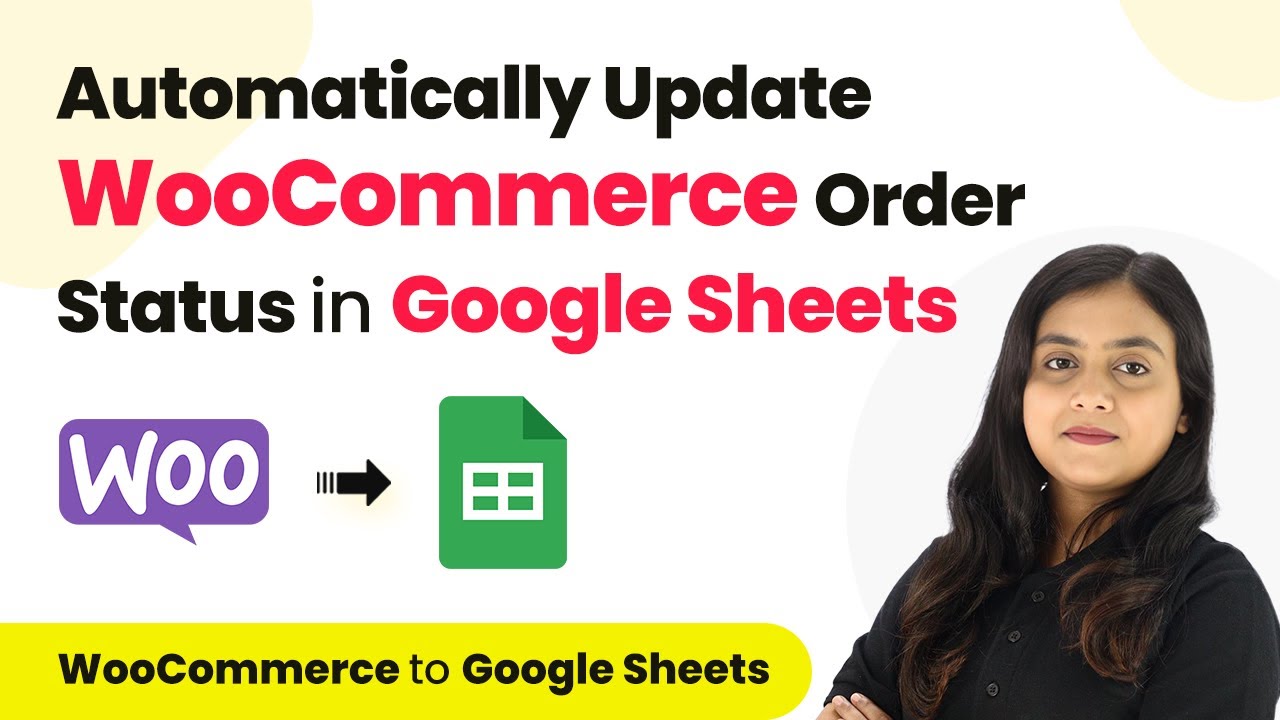
Automatically Update WooCommerce Order Status in Google Sheets Using Pabbly Connect

Learn how to automatically update WooCommerce order status in Google Sheets using Pabbly Connect. Follow this step-by-step tutorial for seamless integration. Eliminate manual repetitive tasks from your workflow. Discover proven automation methods with intuitive steps designed for efficiency-minded professionals.

Watch Step By Step Video Tutorial Below


1. Accessing Pabbly Connect for WooCommerce and Google Sheets Integration

To automatically update WooCommerce order status in Google Sheets, you first need to access Pabbly Connect. Start by visiting the Pabbly Connect website and signing in to your account. If you’re a new user, you can sign up for free and get 100 tasks every month.

Once logged in, you will see a dashboard with various applications. Click on the option to access Pabbly Connect. This platform will enable you to create an automation workflow between WooCommerce and Google Sheets, allowing seamless updates of order statuses.


2. Creating a Workflow in Pabbly Connect

After accessing Pabbly Connect, the next step is to create a workflow. Click on the ‘Create Workflow’ button located in the top right corner of the dashboard. A dialog box will prompt you to name your workflow. Enter a name like ‘Automatically Update WooCommerce Order Status in Google Sheets’.

  • Select a folder from the drop-down menu where you want to save this workflow.
  • Choose the folder named ‘WooCommerce Automations’.
  • Click ‘Create’ to finalize your workflow setup.

Upon creating the workflow, you will see two sections labeled ‘Trigger’ and ‘Action’. This structure is essential for setting up your automation process using Pabbly Connect.


3. Setting Up the Trigger with WooCommerce

The next step in using Pabbly Connect is to set up the trigger. Click on the arrow next to the trigger application and select ‘WooCommerce’ as your trigger app. Choose the trigger event as ‘Order Updated’. This means that whenever an order status is updated in WooCommerce, Pabbly Connect will capture this event.

After selecting the trigger, a unique webhook URL will be generated. You need to copy this URL to connect WooCommerce with Pabbly Connect. Open your WooCommerce account, navigate to the settings, and select ‘Advanced’. From there, go to the ‘Webhooks’ section and click on ‘Add Webhook’.

  • Name the webhook, for example, ‘Order Status Update’.
  • Set the status to ‘Active’.
  • Paste the copied webhook URL into the ‘Delivery URL’ field.

After saving the webhook, your WooCommerce account will be connected to Pabbly Connect, allowing it to capture order updates automatically.


4. Capturing Response from WooCommerce in Pabbly Connect

Now that the webhook is set up, it’s time to capture the response from WooCommerce in Pabbly Connect. Go back to your Pabbly Connect dashboard and click on ‘Recapture Webhook Response’. Ensure that you are ready to test this by updating an order status in your WooCommerce account.

In WooCommerce, navigate to the orders section and select an order to update. Change the order status to ‘Completed’ and save the changes. After updating, return to Pabbly Connect to see if the response has been captured successfully. You should see the updated order details reflected in the captured response.

Check the order ID and status in the captured response. Verify that the order status matches what you updated in WooCommerce.

If everything is set up correctly, you will see the updated order status in Pabbly Connect, confirming that the integration is working as intended.


5. Updating Google Sheets with Pabbly Connect

The final step is to update Google Sheets with the order status captured by Pabbly Connect. For this, you will add an action step. Select ‘Google Sheets’ as the action application and choose the action event as ‘Lookup Spreadsheet Rows V2’. This allows you to find the corresponding order in your Google Sheets using the order ID.

Connect your Google Sheets account to Pabbly Connect by clicking on ‘Sign in with Google’ and allowing access. Once connected, select the spreadsheet where your order details are stored. Map the order ID from the previous step into the lookup value field to find the correct row.

Ensure you select the correct spreadsheet and sheet name. Map the order ID to the lookup value to fetch the correct order. Set the end column to where the status is located.

After setting up the lookup, add another action to update the row in Google Sheets. Select ‘Update Row’ as the action event and map the data accordingly. Once done, click on ‘Save and Send Test Request’. Your Google Sheets should now reflect the updated order status automatically whenever changes are made in WooCommerce.


Conclusion

In this tutorial, we explored how to automatically update WooCommerce order status in Google Sheets using Pabbly Connect. By following the steps outlined, you can ensure your Google Sheets are always in sync with your WooCommerce orders, enhancing your workflow efficiency.

Ensure you check out Pabbly Connect to create business automation workflows and reduce manual tasks. Pabbly Connect currently offer integration with 2,000+ applications.

How to Set Up Webhook Inside InstantPage Using Pabbly Connect

Learn how to set up a webhook inside InstantPage using Pabbly Connect for seamless data integration with Google Sheets and other applications. Discover hidden automation capabilities within your existing tools. This guide shows you how to connect your essential applications and permanently eliminate redundant manual processes.

Watch Step By Step Video Tutorial Below


1. Setting Up Pabbly Connect for InstantPage Integration

To set up a webhook inside InstantPage, first, access Pabbly Connect. This platform allows you to create automated workflows between different applications seamlessly. Start by logging into your Pabbly Connect account to begin the integration process.

After logging in, you will see options for creating a new workflow. Here, you will choose InstantPage as your trigger application. The trigger event will be the action that starts the workflow, which is crucial for data transfer from InstantPage to other applications.


2. Configuring Webhook in InstantPage Using Pabbly Connect

Next, you need to configure the webhook in InstantPage. In Pabbly Connect, select InstantPage as your trigger application. Choose the trigger event as ‘Configure Webhooks’. This action will provide you with a unique webhook URL that you will use to connect InstantPage with Pabbly Connect.

  • Select ‘Configure Webhooks’ as your trigger event.
  • Copy the provided webhook URL.
  • Navigate to your InstantPage account settings.

In your InstantPage account, go to the settings section and find the option to add a new application. Paste the copied webhook URL into the designated field and select the event ‘New Order’ as the trigger for data capture. This setup allows Pabbly Connect to receive data whenever a new order is placed in InstantPage.


3. Testing the Webhook Integration with Pabbly Connect

After setting up the webhook, it’s time to test the integration. Return to Pabbly Connect and ensure it shows a status of waiting for a webhook response. This indicates that your connection is ready to capture data.

To test, place a new order in your InstantPage store. Fill in the required customer details such as name, email, and shipping address. Once the order is confirmed, Pabbly Connect will automatically capture the order details.

  • Place a new order in InstantPage.
  • Fill in customer details like name and address.
  • Confirm the order to trigger the webhook.

Once the order is placed, check back in Pabbly Connect. You should see all the order details captured, confirming that the integration works seamlessly. This step is crucial to ensure that your workflow is functioning correctly.


4. Using Captured Data in Pabbly Connect

With the order details captured, you can now utilize this data in various applications through Pabbly Connect. For instance, you can automatically send order confirmations via WhatsApp or store the order details in Google Sheets for record-keeping.

To set this up, add action steps in your Pabbly Connect workflow. Choose applications like Google Sheets or WhatsApp as your action applications. Configure the necessary fields to ensure the correct data is sent to each application based on the captured order information.


Conclusion

Setting up a webhook inside InstantPage using Pabbly Connect allows for efficient data transfer and automation. This integration enables you to manage your orders effectively and connect with other applications seamlessly, enhancing your business operations.

Ensure you check out Pabbly Connect to create business automation workflows and reduce manual tasks. Pabbly Connect currently offer integration with 2,000+ applications.

Integrate Google Sheets with Shopify Using Pabbly Connect: A Step-by-Step Guide

Learn how to seamlessly integrate Google Sheets with Shopify using Pabbly Connect for automated product updates without coding. Discover hidden automation capabilities within your existing tools. This guide shows you how to connect your essential applications and permanently eliminate redundant manual processes.

Watch Step By Step Video Tutorial Below


1. Accessing Pabbly Connect for Google Sheets and Shopify Integration

To start our integration process, we need to access Pabbly Connect. Open your browser and navigate to the Pabbly Connect homepage. Here, you will find options to sign in or sign up for free if you are a new user.

Existing users can click on the sign-in button. New users can create an account in just two minutes. After signing in, you will be directed to your dashboard, where you can manage your workflows and create new ones for integrating Google Sheets and Shopify.


2. Creating a Workflow in Pabbly Connect

Once logged into Pabbly Connect, click on the ‘Create Workflow’ button. You will see a dialog box prompting you to name your workflow. Name it something like ‘Update Shopify Products from Google Sheets’ and select a folder to save it in.

  • Click on ‘Create’ to initiate the workflow.
  • You will see two windows: one for the trigger and one for the action.

In this workflow, we will set Google Sheets as the trigger and Shopify as the action. This allows updates in Google Sheets to automatically reflect in your Shopify store.


3. Setting Up Google Sheets as the Trigger

To set Google Sheets as the trigger in Pabbly Connect, select it from the list of available applications. You will then need to select the trigger event, which in this case is ‘New or Updated Spreadsheet Row’. This event will trigger the workflow whenever there is an update in your Google Sheets.

After selecting the trigger event, a webhook URL will be provided to you. Copy this URL, as it will be used to connect Google Sheets to Pabbly Connect.

  • Open your Google Sheets and navigate to ‘Extensions’ > ‘Add-ons’ > ‘Get Add-ons’.
  • Search for ‘Pabbly Connect Webhooks’ and install it.
  • Once installed, refresh your Google Sheets to see the Pabbly Connect options.

Next, go to the initial setup of the add-on and paste the copied webhook URL. You will also need to specify a trigger column that will notify Pabbly Connect of updates, such as the inventory column.


4. Connecting Shopify in Pabbly Connect

Now, we will set Shopify as the action application in Pabbly Connect. Choose Shopify from the action application list and select the action event ‘Update Product’. To connect your Shopify account, click on ‘Connect’ and provide the necessary API credentials.

For this, you will need to create a private app in your Shopify account. Go to your Shopify settings, click on ‘Apps and Sales Channels’, then ‘Develop Apps’. Here, you can create a new app, name it, and configure API scopes.

Select all relevant product scopes to allow the app to manage product updates. Copy the API access token generated after saving the app.

Paste this token back into Pabbly Connect to establish the connection with Shopify.


5. Finalizing the Integration and Testing

After connecting both Google Sheets and Shopify in Pabbly Connect, it’s time to finalize the integration. You will need to map the product details from Google Sheets to Shopify, including product ID, title, price, and inventory quantity.

Once you have mapped all necessary fields, send a test request to ensure that the integration works seamlessly. After a successful test, you can make updates in Google Sheets and check if they reflect in your Shopify store automatically.

For example, if you update the inventory of a product in Google Sheets, the same update will appear in Shopify without any manual intervention. This automation streamlines your e-commerce operations significantly.


Conclusion

Integrating Google Sheets with Shopify using Pabbly Connect allows for automated product updates. This process eliminates manual efforts, ensuring your store always reflects accurate inventory levels.

Ensure you check out Pabbly Connect to create business automation workflows and reduce manual tasks. Pabbly Connect currently offer integration with 2,000+ applications.

Integrating YouTube Analytics with Google Sheets Using Pabbly Connect

Learn how to integrate YouTube analytics with Google Sheets using Pabbly Connect. Follow our detailed step-by-step tutorial for seamless automation. Implement the precise methodologies leading organizations use to automate repetitive tasks, illustrated with practical examples designed for immediate application.

Watch Step By Step Video Tutorial Below


1. Accessing Pabbly Connect for YouTube Analytics Integration

To start integrating YouTube analytics with Google Sheets, you need to access Pabbly Connect. Simply search for ‘Pabbly.com’ in your browser and navigate to the Pabbly Connect landing page.

Once on the landing page, you will see options to sign in or sign up. If you are a new user, click on ‘Sign up for free’ to create an account. Existing users should click on ‘Sign in’ to continue. After signing in, click on ‘Access Now’ to enter the Pabbly Connect dashboard.


2. Creating a Workflow in Pabbly Connect

In the Pabbly Connect dashboard, the next step is to create a workflow that will automate the process of tracking YouTube analytics. Click on the button labeled ‘Create Workflow’. You will be prompted to enter a name for your workflow. using Pabbly Connect

  • Name your workflow: ‘Track YouTube Analytics with Google Sheets’.
  • Select a folder to save the workflow.

After naming your workflow and selecting the folder, click on ‘Create’. This will take you to the workflow window where you can set up the trigger and action for your automation.


3. Setting the Trigger in Pabbly Connect

The trigger is the event that starts the workflow. For this integration, you will select ‘Schedule by Pabbly’ as the trigger application. This allows you to run the workflow at specific intervals. using Pabbly Connect

Choose how often you want the workflow to run. In this case, select ‘Every Day’ and set the time for 11:30 AM. Ensure that your account time zone is set to Asia Kolkata, as this is important for accurate scheduling.


4. Getting YouTube Channel Analytics Using Pabbly Connect

After setting the trigger, the next step is to select YouTube as the action application. This action will retrieve the channel analytics data. Search for ‘YouTube’ in the action application field and select it. using Pabbly Connect

For the action event, choose ‘Get Channel Stats’. You will need to connect your YouTube account to Pabbly Connect. If you have already connected your YouTube account, you can select the existing connection; otherwise, click on ‘Add a New Connection’.

  • Authorize Pabbly Connect to access your YouTube account.
  • Retrieve your YouTube Channel ID.

After retrieving your Channel ID, paste it into the workflow and click on ‘Save and Send Test Request’. You will receive a positive response with the channel analytics data, including views, subscribers, and video count.


5. Adding YouTube Analytics to Google Sheets via Pabbly Connect

Now that you have the channel analytics, the final step is to add this data to Google Sheets. Search for ‘Google Sheets’ in the action application field and select it. using Pabbly Connect

For the action event, choose ‘Add New Row’. If you have not connected your Google Sheets account yet, click on ‘Add a New Connection’ and sign in with your Google account. Select the spreadsheet named ‘YouTube Channel Analytics’ and the specific sheet where you want to add the data.

Map the details from YouTube analytics to the corresponding fields in Google Sheets. Ensure the date, views, subscribers, and video count are correctly mapped.

After mapping the data, click on ‘Save and Send Test Request’. Check your Google Sheets to confirm the data has been added successfully.


Conclusion

Using Pabbly Connect, you can automate the process of tracking YouTube analytics and updating Google Sheets seamlessly. This integration allows for real-time updates without manual entry, making it efficient and reliable.

Ensure you check out Pabbly Connect to create business automation workflows and reduce manual tasks. Pabbly Connect currently offer integration with 2,000+ applications.

Creating Dynamic Web Pages and Redirecting Users with Pabbly Connect

Learn how to create dynamic web pages and redirect users using form submission data with Pabbly Connect in this detailed tutorial. Follow this definitive guide to creating powerful automated workflows with straightforward, efficiency-focused solutions that save valuable time.

Watch Step By Step Video Tutorial Below


Accessing Pabbly Connect for Dynamic Web Pages

To create dynamic web pages and redirect users using form submission data, you need to access Pabbly Connect. Start by opening your web browser and navigating to the Pabbly Connect landing page at Pabbly.com/connect.

Once there, you will see options to sign in or sign up. If you’re new, click on ‘Sign Up Free’ to create your account. After signing up or signing in, you will reach the ‘All Apps’ page. Click on ‘Access Now’ below Pabbly Connect to enter the dashboard.


Creating an Automation Workflow in Pabbly Connect

In the Pabbly Connect dashboard, click on the ‘Create Workflow’ button to start setting up your automation. Name your workflow something descriptive, such as ‘Redirect User on Elementor Form Submission’. After naming it, select the folder where you want to save this workflow and click ‘Create’. using Pabbly Connect

Now you will see two windows: the trigger window and the action window. The trigger window is where you will set up the event that starts the automation. In this case, you will choose Elementor as the trigger app and select ‘New Form Submission’ as the trigger event.

  • Click on the trigger window to search for Elementor.
  • Select ‘New Form Submission’ from the dropdown.
  • Copy the webhook URL provided by Pabbly Connect.

After copying the webhook URL, you will need to integrate it into your Elementor form. This integration will allow Pabbly Connect to receive the form submission data automatically.


Integrating Elementor Form with Pabbly Connect

To integrate your Elementor form with Pabbly Connect, edit your form in Elementor. Click on the form, then navigate to the ‘Actions After Submit’ section in the left sidebar. Click on the plus button and select ‘Redirect’ from the dropdown menu.

In the redirect field, paste the webhook URL that you copied earlier. You will also need to append the form submission data to this URL. This is done by adding a question mark followed by the field IDs and their corresponding shortcodes.

  • Add a question mark after the webhook URL.
  • Include the ID and shortcode for each field in the format: `ID=shortcode`.
  • Separate each field with an ampersand (&).

Once you have entered all the necessary details, click on ‘Update’ to save your changes in Elementor. This setup will ensure that when a user submits the form, they will be redirected to the dynamic web page created through Pabbly Connect.


Creating a Dynamic Web Page with Pabbly Connect

After successfully setting up the Elementor form, the next step is to create a dynamic web page using Pabbly Connect. In the action window of your workflow, search for the ‘Dynamic Web Page’ module and select it.

Choose ‘Generate Web Page URL’ as the action event. In the HTML content field, you will need to input the HTML structure of the dynamic web page. You can use ChatGPT or any other HTML generator to create this structure.

Copy the HTML body generated and paste it into the HTML content field. Use mapping to insert form responses into the HTML body. Click on ‘Save and Send Test Request’ to generate the web page.

After generating the web page, you will receive a URL. This URL will be used to redirect users after form submission, displaying the details they entered in the form.


Redirecting Users to the Dynamic Page

The final step involves redirecting users to the dynamic web page created by Pabbly Connect. In the action step, add another action by searching for ‘Data Forwarder’ and selecting it.

In the Data Forwarder action, choose ‘Redirect To’ as the action event. You will need to map the URL from the Dynamic Web Page module to ensure users are redirected to the correct page.

Select the URL response from the Dynamic Web Page module. Set the redirect status as ‘301 Moved Permanently’. Click on ‘Save and Send Test Request’ to finalize the setup.

Once this is completed, your automation workflow will be fully functional. Users who submit the form will be redirected to a dynamic web page displaying their submitted information.


Conclusion

In this tutorial, we explored how to create dynamic web pages and redirect users using form submission data with Pabbly Connect. By following the steps outlined, you can efficiently set up an automation workflow that enhances user experience and streamlines data handling.

Ensure you check out Pabbly Connect to create business automation workflows and reduce manual tasks. Pabbly Connect currently offer integration with 2,000+ applications.

Integrating Channel with Automation Using Pabbly Connect: A Step-by-Step Guide

Learn how to integrate Channel with Automation Using Pabbly Connect. This guide covers YouTube, Google Sheets, and more for seamless automation. Transform complex automation concepts into accessible, actionable steps that eliminate unnecessary manual work while maximizing existing application capabilities. with Pabbly Connect.

Watch Step By Step Video Tutorial Below


1. Channel Automation Introduction

Channel automation is essential for managing your YouTube content efficiently. With Pabbly Connect, you can automate various tasks related to your YouTube channel.

This integration allows you to share videos across platforms like Facebook and Instagram automatically. By setting up these automations, you can save time and focus on content creation.


2. Sharing YouTube Videos on Facebook

Sharing your YouTube videos on Facebook can significantly increase your reach. Using Pabbly Connect, you can automate this process seamlessly.

To set this up:

  • Log in to Pabbly Connect and create a new workflow.
  • Connect your YouTube channel as the trigger application.
  • Set Facebook as the action application to post your video details.

Once this automation is set up, every time you upload a new video to your YouTube channel, the title, description, and link will automatically be shared on your Facebook page. This boosts visibility and engagement effortlessly.


3. Upload Instagram Videos to YouTube

Integrating Instagram and YouTube allows you to share content across platforms. With Pabbly Connect, you can automate posting your Instagram Reels to YouTube.

Here’s how to set it up:

  • Create a new workflow in Pabbly Connect.
  • Select Instagram as the trigger application when a new media is posted.
  • Choose YouTube as the action application to upload the video.

This automation ensures that every time you post a video on Instagram, it will automatically be uploaded to your YouTube channel, helping you reach a wider audience.


4. Update Video Details via Google Sheets

Using Google Sheets to manage your YouTube video details can streamline your workflow. With Pabbly Connect, you can automatically update titles, descriptions, and tags from Google Sheets.

To set this up:

Set up a new workflow in Pabbly Connect. Connect Google Sheets as the trigger application when a new row is added. Set YouTube as the action application to update video details.

When a new row is added to your Google Sheets with video details, the corresponding YouTube video will be updated automatically. This saves you time and ensures consistency in your video management.


5. Track YouTube Analytics with Google Sheets

Tracking your YouTube analytics is crucial for growth. With Pabbly Connect, you can automate the process of recording analytics in Google Sheets.

Here’s how to automate this:

Create a new workflow in Pabbly Connect. Set a schedule for daily updates at your preferred time. Connect YouTube to capture analytics data and send it to Google Sheets.

This automation will capture daily analytics such as views and subscribers, logging them in Google Sheets. It helps you keep track of your channel’s performance without manual effort.


Conclusion

Integrating Channel with Automation Using Pabbly Connect can significantly enhance your YouTube management. By utilizing Pabbly Connect, you can automate sharing, updating, and tracking, saving time and boosting engagement.

Thanks for following along with this tutorial! Remember to subscribe to the channel for more helpful content like this.

If you found this guide useful, please consider giving it a thumbs up and sharing it with others who might benefit from it.

How to Set Up Webhook Inside GrooveSell Using Pabbly Connect

Learn how to set up a webhook inside GrooveSell using Pabbly Connect. This step-by-step guide covers every detail for seamless integration. Discover hidden automation capabilities within your existing tools. This guide shows you how to connect your essential applications and permanently eliminate redundant manual processes.

Watch Step By Step Video Tutorial Below


1. Setting Up Webhook in GrooveSell with Pabbly Connect

To set up a webhook inside GrooveSell using Pabbly Connect, first, access your Pabbly Connect dashboard. This platform allows you to connect various applications seamlessly. Start by searching for the GrooveSell application within Pabbly Connect.

Once you select GrooveSell, choose the trigger event labeled ‘Product Purchased.’ This event will initiate the webhook every time a product is bought. After selecting this, Pabbly Connect will generate a webhook URL, which acts as the bridge between GrooveSell and other applications.


2. Adding the Webhook URL to GrooveSell

After obtaining the webhook URL from Pabbly Connect, navigate to your GrooveSell dashboard. Here, go to the left-hand menu and select ‘Product Funnels.’ Choose the product funnel you want to connect, then click on ‘Manage’ for that product.

  • Select the product you want to manage.
  • Click on ‘Edit Product’ to access the settings.
  • Navigate to the ‘Fulfillment’ section.

In the Fulfillment section, you will find an option to add a new webhook URL. Paste the copied URL from Pabbly Connect here and click on ‘Save’. This action establishes the connection between GrooveSell and Pabbly Connect.


3. Testing the Webhook Connection

Once the webhook URL is saved, the next step is to test the connection. In Pabbly Connect, you will see that it is waiting for a webhook response. To generate this response, you need to make a test purchase of the product you have connected.

Fill in the necessary details for the test purchase, such as:

  • First Name: John
  • Last Name: Doe
  • Email: [email protected]
  • Company: Doe Enterprises
  • Phone Number: 1234567890

After entering these details, complete the purchase. This action will trigger the webhook, sending the purchase details to Pabbly Connect.


4. Verifying the Purchase Details in Pabbly Connect

After completing the purchase, return to your Pabbly Connect dashboard. Here, you should see a positive response indicating that the webhook has successfully captured the purchase details. This includes information such as the product name, product ID, and buyer details.

Verify that the details captured include:

Product Name: Chair Payment Processor: Stripe Buyer Email: [email protected]

This successful capture confirms that the integration between GrooveSell and Pabbly Connect is operational and ready for future transactions.


5. Automating Data Transfer with Pabbly Connect

With the webhook successfully set up, you can now automate the transfer of purchase data from GrooveSell to any other application using Pabbly Connect. This feature allows you to streamline workflows and enhance efficiency in managing customer data.

To set up data transfer, navigate to the action window in Pabbly Connect. Here, you can select any application you wish to send the captured data to. This could include CRM systems, email marketing tools, or any other applications that support integrations.

By leveraging Pabbly Connect, you can create robust automations that respond to every new purchase in GrooveSell, ensuring that your data management processes are both efficient and effective.


Conclusion

In this tutorial, we covered how to set up a webhook inside GrooveSell using Pabbly Connect. By following these steps, you can seamlessly integrate GrooveSell with other applications, enhancing your workflow and data management.

Ensure you check out Pabbly Connect to create business automation workflows and reduce manual tasks. Pabbly Connect currently offer integration with 2,000+ applications.

How to Add OptinMonster Lead in Microsoft Excel Using Pabbly Connect

Learn how to seamlessly integrate OptinMonster leads into Microsoft Excel using Pabbly Connect with this detailed step-by-step tutorial. Master proven automation processes with practical implementation examples and strategic recommendations you can apply immediately in your workflow.

Watch Step By Step Video Tutorial Below


1. Accessing Pabbly Connect for Integration

To add OptinMonster leads into Microsoft Excel, you first need to access Pabbly Connect. Start by visiting the Pabbly Connect website, where you can either sign in if you are an existing user or sign up for free if you are new.

Once logged in, you will see various Pabbly applications. Click on the option labeled ‘Access Now’ under Pabbly Connect to enter the dashboard. Here, you can create workflows that automate the integration between OptinMonster and Microsoft Excel.


2. Creating Your Workflow in Pabbly Connect

To set up the integration, click on the ‘Create Workflow’ button. You will be prompted to name your workflow. Enter a name like ‘How to Add OptinMonster Lead in Microsoft Excel Sheets’ and select the folder for saving the workflow. using Pabbly Connect

  • Name your workflow appropriately.
  • Choose the correct folder for organization.

Once you have named your workflow, click on ‘Create’. This will take you to the workflow window where you will define the trigger and action for your integration.


3. Setting Up the Trigger: OptinMonster

In this step, you will set the trigger application to OptinMonster. Search for OptinMonster in the trigger application section and select it. For the trigger event, choose ‘New Lead’. This means that every time a new lead is captured in OptinMonster, it will trigger the workflow. using Pabbly Connect

After selecting the trigger event, Pabbly Connect will provide you with a webhook URL. Copy this URL, as it will be used to connect your OptinMonster account with Pabbly Connect.


4. Configuring OptinMonster with Pabbly Connect

Next, open your OptinMonster account and navigate to the form you want to integrate. In the form settings, find the ‘Integrations’ tab and click on ‘Add New Integration’. From the options, select ‘Webhook’ and then click on ‘Add New Webhook’.

  • Name the webhook (e.g., ‘New Lead’).
  • Paste the copied webhook URL from Pabbly Connect.

Click on ‘Connect to Webhook’ to finalize the integration. You should see a confirmation that the webhook has been successfully added, indicating that OptinMonster is now integrated with Pabbly Connect.


5. Setting Up the Action: Microsoft Excel

For the action step, select Microsoft Excel as the application. Search for Microsoft Excel and choose the action event as ‘Add Row to Worksheet’. Click on ‘Connect’ to establish a connection with your Excel account. using Pabbly Connect

If this is your first time connecting, you will need to authorize Pabbly Connect to access your Microsoft Excel account. Follow the prompts to grant permissions. Once connected, you will be asked to select the workbook and worksheet where you want the OptinMonster lead details to be added.

Map the fields from the OptinMonster lead details to the corresponding columns in your Excel sheet (e.g., full name, email, phone number). After mapping, click on ‘Save and Send Test Request’ to confirm that the data is being sent correctly to your Microsoft Excel sheet.


Conclusion

Integrating OptinMonster leads into Microsoft Excel using Pabbly Connect is a straightforward process. By following these steps, you can automate lead management efficiently, ensuring that all lead information is captured in Excel seamlessly. This integration helps streamline your workflow and enhances productivity.

Ensure you check out Pabbly Connect to create business automation workflows and reduce manual tasks. Pabbly Connect currently offer integration with 2,000+ applications.

Integrate Google Calendar with OneNote Using Pabbly Connect: A Step-by-Step Guide

Learn how to integrate Google Calendar with OneNote using Pabbly Connect to automate note creation for new events. Follow this detailed tutorial for seamless integration.

Watch Step By Step Video Tutorial Below


1. Accessing Pabbly Connect for Google Calendar and OneNote Integration

To start integrating Google Calendar with OneNote, access Pabbly Connect by visiting the official website. Once there, sign in to your existing account or create a new one for free, which allows you to use 100 tasks monthly. After logging in, you will see the Pabbly dashboard displaying various applications.

From the dashboard, select Pabbly Connect by clicking on the ‘Access Now’ button. This action will direct you to the Pabbly Connect interface, where you can create workflows that automate processes between different applications.


2. Creating a Workflow in Pabbly Connect

To automate note creation in OneNote from Google Calendar events, you first need to create a workflow in Pabbly Connect. Click on the ‘Create Workflow’ button located in the top right corner of the dashboard. A dialog box will appear asking for a workflow name; enter ‘Create OneNote Notes from Google Calendar Event’.

  • Choose a folder to save your workflow, such as ‘Google Calendar Automations’.
  • Click on ‘Create’ to finalize your workflow setup.

After the workflow is created, you will see two sections labeled ‘Trigger’ and ‘Action’. The trigger will initiate the workflow when a new event is created in Google Calendar, while the action will create a note in OneNote.


3. Setting Up the Trigger in Pabbly Connect

In this step, you will configure the trigger for your workflow in Pabbly Connect. Click on the arrow in the trigger section and select ‘Google Calendar’ as the trigger application. Then, choose ‘New Event’ as the trigger event. This setup ensures that the workflow responds whenever a new event is created in your Google Calendar.

Next, you will need to connect your Google Calendar account to Pabbly Connect. Click on ‘Connect’ and then on ‘Add New Connection’. Sign in with your Google account and grant the necessary permissions. Once connected, select the specific calendar you want to monitor for new events.


4. Creating Notes in OneNote Using Pabbly Connect

Now that the trigger is set up, the next step is to define the action that will occur in Pabbly Connect. Select ‘OneNote’ as the action application and choose ‘Create HTML Note’ as the action event. After clicking on ‘Connect’, authorize OneNote by clicking on ‘Accept’ when prompted.

  • Map the title of the note to the event title from Google Calendar.
  • Add the event description as the content of the note using HTML formatting.
  • Map the date and time of the event to the respective fields in OneNote.

Once all details are mapped, click on ‘Save and Send Test Request’ to check if the integration works correctly. If successful, you will receive a confirmation response indicating that the note has been created in your OneNote account.


5. Verifying the Integration Between Google Calendar and OneNote

The final step is to ensure that the integration between Google Calendar and OneNote via Pabbly Connect is functioning as expected. Open your OneNote account and refresh the page to see if the newly created note appears. The note should reflect the details of the event you created in Google Calendar, including the title, date, and description.

If the note appears correctly, this confirms that the automation is successful. You can now manage your events in Google Calendar and automatically create corresponding notes in OneNote, streamlining your workflow significantly.

Conclusion

This guide summarizes the key points and helps you understand the essential features and benefits of using this tool.

Ensure you check out Pabbly Connect to create business automation workflows and reduce manual tasks. Pabbly Connect currently offer integration with 2,000+ applications.


By following these steps, you have successfully integrated Google Calendar with OneNote using Pabbly Connect. This powerful automation saves time and enhances productivity by ensuring that important event details are captured in your notes automatically.

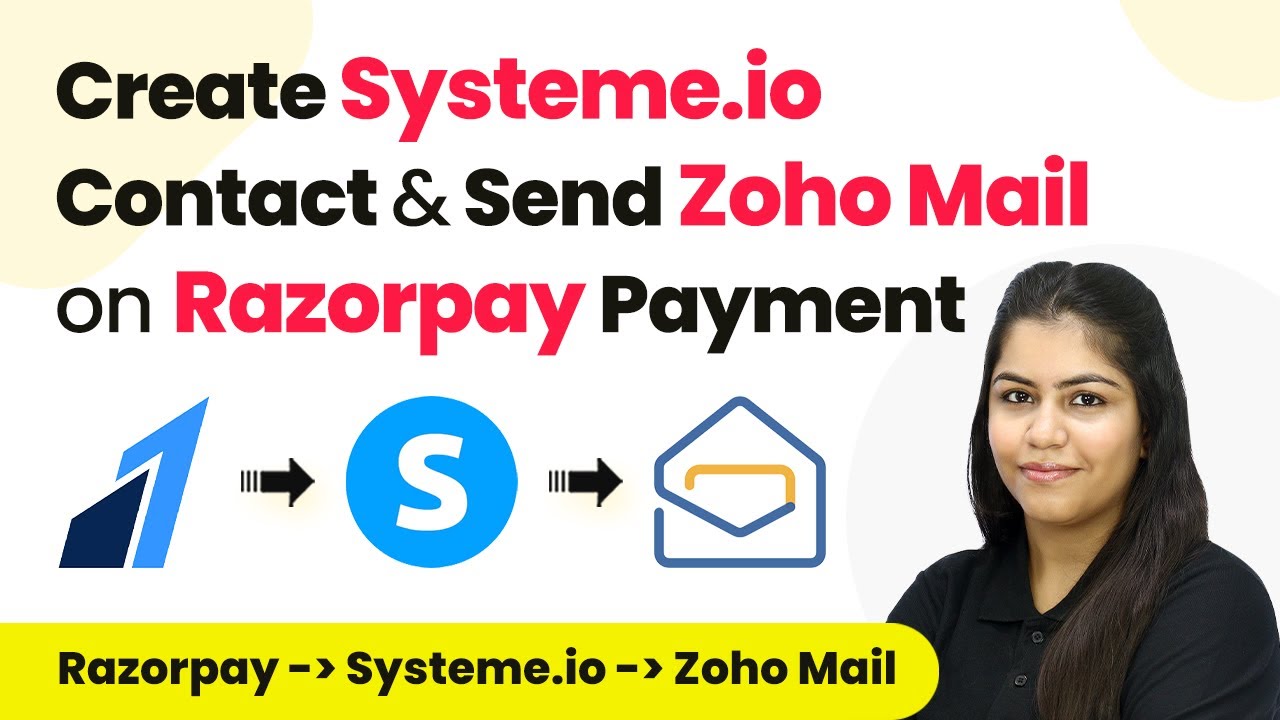
Integrating Zoho Mail and Razorpay with Pabbly Connect: A Step-by-Step Guide

Learn how to integrate Zoho Mail and Razorpay using Pabbly Connect for seamless automation. Follow our detailed tutorial for step-by-step instructions. Navigate the automation landscape confidently with clear, structured guidance suitable for professionals regardless of prior technical experience.

Watch Step By Step Video Tutorial Below


1. Accessing Pabbly Connect for Integration

To start integrating Zoho Mail and Razorpay, you first need to access Pabbly Connect. Open your browser and navigate to the Pabbly website. If you are a new user, click on ‘Sign up for free’ to create an account. Existing users can simply click on ‘Sign in’ to access their dashboard.

Once signed in, locate the option for Pabbly Connect among the listed applications. Click on ‘Access Now’ to enter the workflow creation area. This platform allows you to automate tasks without needing any coding skills.


2. Creating a Workflow in Pabbly Connect

In this section, you will create a new workflow to connect Razorpay with Zoho Mail. Click on the ‘Create Workflow’ button in your Pabbly Connect dashboard. You will be prompted to name your workflow; enter a name like ‘Create System.io Contact and Send Zoho Mail on Razorpay Payment’. using Pabbly Connect

  • Select a folder to save your workflow.
  • Click on ‘Create’ to proceed.

After creating the workflow, you will see the main workflow window. This is where you will set up the trigger and action. Remember, the trigger is the event that starts the workflow, while the action is what happens as a result.


3. Setting Up Razorpay as the Trigger

Now, let’s set Razorpay as the trigger application. In the workflow window, search for Razorpay and select it. When prompted for the trigger event, choose ‘Payment Captured’. This event will activate the workflow whenever a payment is successfully received.

Pabbly Connect will provide you with a webhook URL. Copy this URL to link it with your Razorpay account. Next, log into your Razorpay account and navigate to the ‘Developers’ section, then select ‘Webhooks’.

  • Click on ‘Add New Webhook’.
  • Paste the copied webhook URL.
  • Select ‘Payment Captured’ as the active event and click ‘Create Webhook’.

Once you save the webhook, Razorpay will be connected to your Pabbly Connect workflow, allowing it to trigger actions based on payment events.


4. Creating a Contact in System.io

After setting up the trigger, the next step is to create a contact in System.io using Pabbly Connect. Add a new action step and select System.io. For the action event, choose ‘Create Contact with Custom Fields’. This will allow you to send customer information directly into your System.io account.

You will need to connect your System.io account by providing the API key. To find this key, log into your System.io account, go to your profile settings, and navigate to ‘Pabbly API Keys’.

Click ‘Create’ to generate a new API key. Copy the API key and paste it into your Pabbly Connect workflow.

After successfully connecting, you will map the fields from Razorpay’s payment data to the corresponding fields in System.io, ensuring that customer details are accurately transferred.


5. Sending Email with Zoho Mail

The final step in this integration is to send a confirmation email using Zoho Mail. Add another action step in your Pabbly Connect workflow and select Zoho Mail. For the action event, choose ‘Send Email’. This allows you to notify customers after their payment is processed.

Connect your Zoho Mail account by entering your domain name and granting the necessary permissions. After connecting, you will need to fill in the email fields, including the recipient’s email, subject, and message body.

Map the recipient’s email from the Razorpay payment data. Customize the subject and body to include the customer’s name and payment details.

After entering all the required information, click ‘Send Test Request’ to verify that the email is sent successfully. This completes the integration, allowing you to automate the contact creation and email notification process seamlessly with Pabbly Connect.


Conclusion

In this tutorial, we demonstrated how to integrate Zoho Mail and Razorpay using Pabbly Connect. By following the steps outlined, you can automate the creation of contacts and send confirmation emails efficiently. This integration streamlines your workflow and enhances customer communication.

Ensure you check out Pabbly Connect to create business automation workflows and reduce manual tasks. Pabbly Connect currently offer integration with 2,000+ applications.