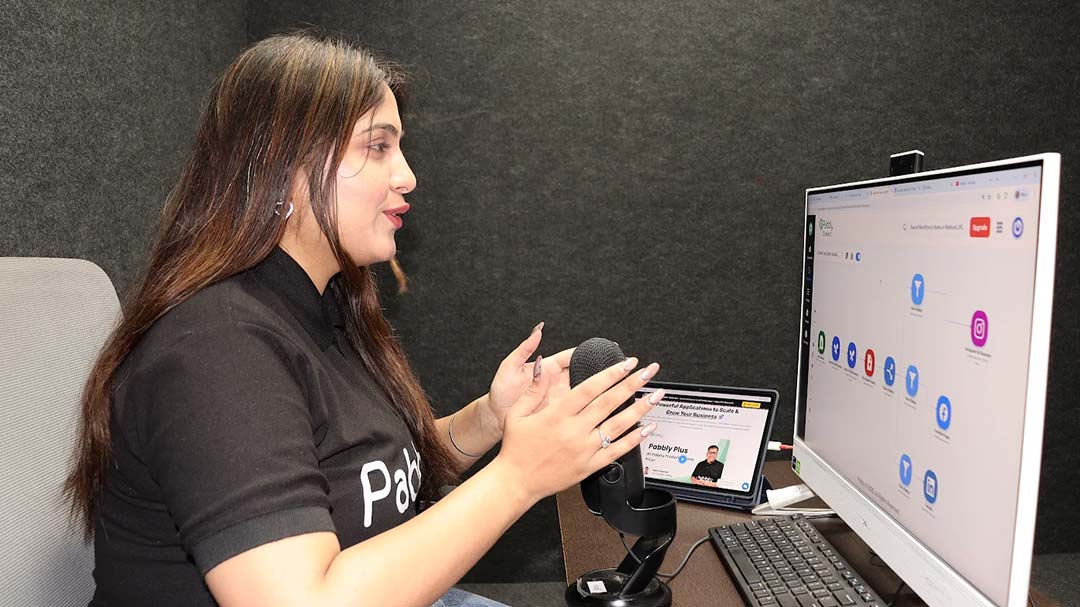

Learn how to automate WhatsApp food orders for cloud kitchens using Pabbly Chatflow. Step-by-step guide for creating your AI assistant. Discover how to design chat experiences that feel personal and responsive while handling customer inquiries automatically around the clock.

Watch Step By Step Video Tutorial Below


1. Accessing Pabbly Chatflow for WhatsApp Automation

To create an automated WhatsApp assistant for cloud kitchens, start by accessing Pabbly Chatflow. Open a new tab and search for Pabbly.com/chatflow. This platform allows you to automate WhatsApp messaging without any programming knowledge.

Once on the Pabbly Chatflow page, you’ll see options to sign in or sign up. If you are new, click on the ‘Sign Up Free’ option to get 100 free credits each month. For existing users, click ‘Sign In’ to access your dashboard.


2. Creating Your AI Assistant in Pabbly Chatflow

After logging into Pabbly Chatflow, navigate to the AI assistant section by clicking on the ‘AI Assistant’ option. This section allows you to train your assistant to respond to common inquiries related to your cloud kitchen.

  • Click on the ‘Add Assistant’ button.
  • Name your assistant, e.g., ‘WhatsApp Food Orders on Autopilot for Cloud Kitchens’.
  • Select the AI agent instructions and set the temperature for responses.
  • Choose Open AI as the model provider and select GPT4 mini.

Once you complete these steps, you will be prompted to enter your Open AI API key. After entering the key, click the ‘Connect’ button to save your settings.


3. Configuring AI Settings in Pabbly Chatflow

In this section, you will configure the AI settings for your assistant in Pabbly Chatflow. Start by setting a header message, which is displayed when the conversation begins. This could be a welcome message.

  • Define a footer message for the end of the conversation.
  • Set stop keywords that will halt the assistant’s responses.
  • Specify retry attempts for the assistant to respond to users.
  • Create a fallback message for technical failures.

Next, you will upload a knowledge source file that contains specific information about your cloud kitchen. This file helps the AI provide accurate responses. Ensure the file is in PDF or TXT format and less than 90 MB.


4. Designing Your Assistant Interface in Pabbly Chatflow

After configuring the settings, proceed to design the assistant interface using Pabbly Chatflow. Enter a heading and subheading that will be visible to users. You can also customize the initial message that greets users when they start a conversation.

In this section, you can also style your assistant by adjusting themes, colors, and shapes. Once you are satisfied with the design, enable the toggle to activate your assistant and click the ‘Save AI Assistant’ button.


5. Testing Your AI Assistant on WhatsApp

Finally, test your AI assistant created in Pabbly Chatflow by sending a message through WhatsApp. This will help you confirm that it is functioning correctly and responding to inquiries as intended.

Send messages like ‘Hi’ or ‘Tell me about the cloud kitchen’ to see how the assistant responds. You can also simulate placing an order by asking for specific menu items, and the assistant will guide you through the ordering process.

If everything works as expected, your automated WhatsApp AI assistant for cloud kitchens is ready to handle inquiries and orders efficiently.


Conclusion

In this tutorial, we explored how to automate WhatsApp food orders for cloud kitchens using Pabbly Chatflow. By following the steps outlined, you can create an efficient AI assistant that enhances customer interaction and streamlines order processing.

Ensure you check out Pabbly Connect to create business automation workflows and reduce manual tasks. Pabbly Connect currently offer integration with 2,000+ applications.